
Last Updated: October 30, 2026
Quick Summary
To safely remove a dead rodent from a wall, first pinpoint the spot where the odor is strongest, then cut a small access opening between the studs. Wear disposable nitrile gloves and a fitted N95 respirator, double-bag the carcass, and never vacuum the debris. Clean and disinfect the dead rodent wall cavity before patching the drywall.
- Cornell CALS notes odor from a dead mouse can last several days, while a dead rat can produce odor for weeks.
- Mark the spot where the smell is strongest before cutting anything into the wall.
- Use disposable nitrile gloves and a fitted N95 or higher respirator, not a loose dust mask.
- Never vacuum droppings or contaminated insulation with a standard vacuum; dampen debris with disinfectant instead.
- Call a professional if you cannot find the carcass, the odor returns after cleaning, or utilities run through the cavity.
Table of Contents
- Why a Dead Rodent in a Wall Needs Careful Handling
- How to Identify a Dead Mouse in a Wall
- Tracking Down the Source of a Dead Mouse Smell in Wall Spaces
- Deciding Whether to Open the Wall Yourself
- Safely Removing and Bagging the Carcass
- Rodent Cleanup and Disinfection of the Wall Cavity
- When to Call a Professional for Dead Rodent Removal
- Scheduling a Professional Rodent Cleanup for Your Property
- Frequently Asked Questions
Finding a dead rodent inside a wall is unpleasant, and the smell from a dead rodent wall can build for days before you know where it is coming from. Rodent Cleanup Experts helps homeowners and property managers handle this kind of problem safely. The steps below show how to find the source, decide whether to open the wall, remove the carcass, and clean the space.
Why a Dead Rodent in a Wall Needs Careful Handling
A dead mouse or rat in a wall is more than an odor problem. The body can leave bacteria and allergens behind, and it can soil nearby insulation. Cornell CALS notes that odor from a dead mouse can last several days, while a dead rat can produce odor for weeks (Cornell CALS guidance on managing mice and rats).
Careful handling protects you in three ways:
- Health: Rodents can carry germs. Wear gloves and a mask when you handle anything they touched.
- Property: Removing the carcass too roughly can damage drywall, wiring, and insulation.
- Future problems: Dead animals often mean a live infestation nearby. Finding the entry point matters as much as the smell.
How to Identify a Dead Mouse in a Wall
Most people first notice a sour, sweet smell that gets stronger over a few days. Flies or fly larvae near a wall can also point to a carcass inside.
Start by ruling out other sources. Check the drains, the water heater area, and any food stored nearby. If the smell is strongest in one spot on the wall, the carcass is likely close by.
Signs of Rodent Damage in Walls
Look for these clues before you cut anything:
- Gnaw marks on wood, wiring, or pipes
- Droppings along baseboards or inside cabinets
- Dark rub marks where mice travel along walls
Each sign helps you narrow down where the rodent got in and where it may have died.
Tracking Down the Source of a Dead Mouse Smell in Wall Spaces
Odor follows the air. Walk through the house with the door closed, then open it and notice where the smell is strongest.
Use a flashlight to look through gaps around outlets and switch plates. A mirror helps you see into tight spots behind appliances.
Mark the spot where the smell is strongest. Do not start cutting until you are confident about the location.
Deciding Whether to Open the Wall Yourself
Not every situation needs a wall opening. Sometimes the carcass is in an area you can reach through an existing opening, such as an attic or crawl space. Orkin notes that a carcass inside a wall may produce odor for several weeks, so waiting is not always a fix (Orkin guidance on dead animals in walls).
Consider opening the wall yourself if:
- The odor is strong and you can pinpoint the spot
- The area is accessible without cutting structural framing
- You are comfortable patching drywall afterward
Consider hiring help if:
- You cannot locate the carcass after a thorough search
- The smell spreads to multiple rooms
- Wiring, plumbing, or structural beams are near the spot you need to open
Safely Removing and Bagging the Carcass
This is the step where most do-it-yourself attempts go wrong. A carcass in a wall cavity is surrounded by droppings, urine, and contaminated insulation, and opening the wall releases dust and airborne particles into the room. Treat the work like a small containment job, not a quick grab.
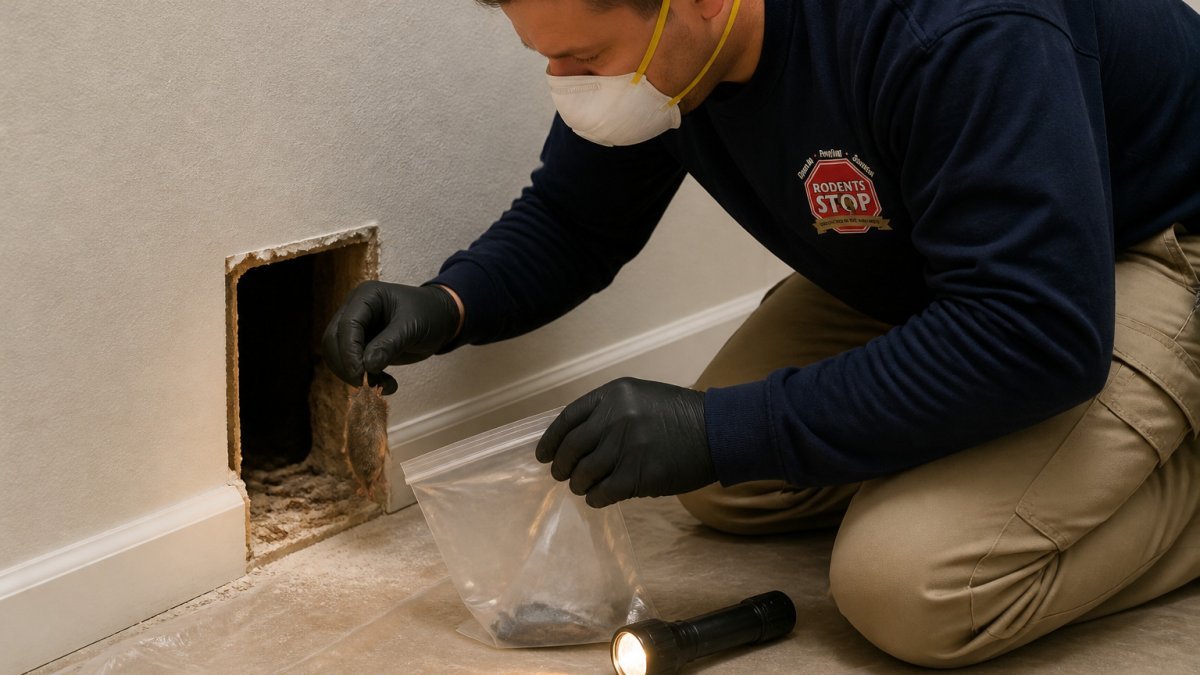
Personal protective equipment and exposure precautions
Before you touch the wall, put on:
- Disposable nitrile gloves, not reusable garden gloves, which can trap contamination.
- A fitted respirator rated N95 or higher. A loose dust mask does not seal and lets fine particles past the edges.
- Eye protection such as sealed goggles, since dust and debris fall toward your face when you cut overhead or at chest height.
Keep children and pets out of the room for the entire job. If anyone in the household has asthma or another respiratory condition, they should stay out of the area until cleanup is finished and the space is ventilated.
Wash hands with soap and water after removing gloves, and avoid touching your face during the work. Do not eat, drink, or smoke in the work area.
Never vacuum rodent droppings or contaminated insulation with a standard shop vac or household vacuum. It aerosolizes particles and spreads them through the room. Dampen debris with a light mist of disinfectant before wiping it up.
Locating utilities and framing before you cut
A 4-inch hole in the wrong spot can hit a wire, a water line, or a drain stack. Before cutting:
- Shut off power to nearby circuits at the breaker if you will be cutting near outlets or switches.
- Use a stud finder to map framing. Cut between studs, not through them.
- Look for telltale signs of pipes and wires, outlet plates, switch plates, plumbing fixtures on the opposite side of the wall, and any conduit running vertically.
- If you are unsure what is behind the drywall, stop and call a professional. A misjudged cut is far more expensive than an inspection.
Making a controlled access opening
- Mark a small square, about 4 inches across, at the spot where the odor is strongest. Score the drywall with a utility knife before sawing to reduce dust and ragged edges.
- Cut slowly with a drywall saw. Stop immediately if you feel resistance that is not drywall.
- Keep a heavy plastic bag taped open just below the opening so debris falls into it rather than the floor.
- Use a flashlight to inspect the cavity. Do not reach in blindly.
Removing and bagging the carcass
- Pick up the carcass with tongs, a dustpan, or a gloved hand covered by a plastic bag turned inside out. Never use bare hands.
- Place the carcass directly into a heavy plastic bag, then seal that bag inside a second bag. Double-bagging limits odor and leakage.
- Wipe down tongs or the dustpan with disinfectant afterward, or discard single-use tools.
- Check your local trash rules before placing the bag curbside. Some areas require double-bagging for dead animal disposal.
After removal
Wash reusable gloves, tools, and clothing in hot water with detergent. Dispose of single-use items in the same sealed bag as the carcass. Ventilate the room with a window and fan, and do not close up the wall until the cavity has been cleaned and fully dried.
Photograph the opening and the cavity before you clean it. If odor returns later or you need to show a landlord or insurer what was found, the images document the source and the extent of contamination.
The table below summarises the key safety precautions for handling a carcass in a wall cavity.
| Precaution | What to use or do | Why |
|---|---|---|
| Gloves | Disposable nitrile gloves | Reusable garden gloves can trap contamination |
| Breathing | Fitted N95 or higher respirator | Loose dust masks let fine particles past the edges |
| Eyes | Sealed goggles | Dust and debris fall toward your face |
| Clothing | Long sleeves, long pants, wipeable shoes | Limits skin contact with contaminated material |
| Cleanup | Dampen debris with disinfectant, never vacuum | Vacuuming aerosolizes particles into the room |
| Carcass | Double-bag in heavy plastic bags | Limits odor and leakage |
Rodent Cleanup and Disinfection of the Wall Cavity
Once the carcass is out of the dead rodent wall, clean the cavity to remove germs and odor.
Use a disinfectant labeled for use against bacteria. A diluted bleach solution works on hard surfaces, but never mix bleach with ammonia or other cleaners.
Keep the area ventilated while you work, and let the space dry completely before you close it up. For larger contamination, a professional Rodent infestation cleanup service can handle the full cavity.
When to Call a Professional for Dead Rodent Removal
Most guides tell you to call a pro if the job feels too big. That is not useful when you are standing in a hallway holding a flashlight. Use the decision points below instead, they are the same factors a technician weighs during an inspection.
A practical DIY-versus-professional decision framework
Work through these questions in order. A single “no” or “unsure” on a safety item is enough to stop and call for help.
1. Can you pinpoint the carcass?
- If the odor is strongest at one spot and you can confirm it with a flashlight through an outlet or a small test hole, DIY removal is reasonable.
- If the smell spreads across a room or moves between days, the carcass may be in a shared cavity, above a ceiling, or in a wall you cannot easily open. That points to professional inspection.
2. Is the cavity accessible without structural work?
- Cutting between studs in drywall is a routine repair.
- Cutting through plaster, brick, tile, or a load-bearing wall is not. Those materials require different tools and patching skills, and mistakes are costly.
3. How much contamination is present?
- A single carcass with limited staining is manageable with gloves, a respirator, and disinfectant.
- Heavy droppings, soaked insulation, or evidence of a long-term infestation means more material has to be removed and the cavity may need professional disinfection.
4. Are utilities in the way?
- If wiring, plumbing, or HVAC ducts run through the cavity, the risk of a misjudged cut rises sharply. A professional can locate and work around them safely.
5. Are you comfortable with the repair?
- Patching drywall, matching texture, and repainting is a skill. If you are not confident, factor in the cost of a drywall repair on top of the removal.
6. Is this a one-time problem or a pattern?
- A single dead rodent is usually a removal and cleanup job.
- Repeated sounds, fresh droppings, or new gnaw marks mean live rodents are still active. Removal alone will not solve that; entry points need to be sealed.
Signs that should always trigger a professional call
- You cannot find the carcass after a careful search.
- The odor returns after cleaning.
- You see or smell evidence of more than one animal.
What a professional inspection typically covers
A technician will usually confirm the source, check for additional carcasses, assess contamination in the insulation and framing, and identify entry points. They can also advise on whether insulation needs replacement and how the wall should be closed and finished. Ask for a written scope before work begins so you know what is included.
Use the six-question framework as a checklist. If you answer “yes” to accessibility, low contamination, no utilities in the way, and comfort with repair, DIY is reasonable. Any “no” or “unsure” on safety items is your signal to bring in a professional.
Scheduling a Professional Rodent Cleanup for Your Property
If you decide to hire help, a good first step is an inspection. The team can explain what needs to be removed, what can be saved, and how long the work may take.
Scheduling sooner rather than later can limit damage and odor spread. Contact Rodent Cleanup Experts to arrange an inspection for your home or rental property in Los Angeles, Ventura, San Bernardino, Riverside, or Orange County.
Frequently Asked Questions
How do you get rid of rodents in your walls?
Start by sealing entry points such as gaps around pipes, vents, and foundation cracks, then remove the animals with traps or professional help. Once the rodents are gone, clean any droppings, nesting material, or contaminated insulation using gloves, a mask, and a disinfectant. Repairing the openings they used is what keeps new rodents from moving in. If you can’t see where they are getting in, a pest control inspection can locate the entry points.
How long does a dead mouse smell last in a wall?
Odor duration depends on the size of the animal, temperature, humidity, and how enclosed the wall cavity is. Odor can last days for mice and weeks for rats, depending on conditions. Ventilating the area and checking the odor source can shorten the problem, but a persistent smell usually means the carcass is still there and needs to be located.
Is inhaling dead mouse smell harmful?
The odor itself is unpleasant, but rodents can carry bacteria and allergens, so the bigger concern is exposure to contaminated material during cleanup. Wear disposable gloves, a properly fitted respirator or N95 mask, and eye protection when handling carcasses, droppings, or insulation. If you develop symptoms such as breathing difficulty, fever, or persistent respiratory irritation, contact a medical provider.
When should you call a professional to remove a dead rodent from a wall?
Consider a professional if you cannot locate the carcass, if the odor persists after a reasonable search, if the wall needs to be opened in a large area, or if insulation or wiring is contaminated or damaged. Professionals can remove the carcass, clean and disinfect the cavity, and replace contaminated materials. Rodent Cleanup Experts can inspect the affected area and provide a quote based on the condition of the property.
