Last Updated: November 3, 2026
Quick Summary
Rodent droppings in Riverside County attics are a biohazard that can carry hantavirus, salmonella, and leptospirosis, and disturbing dried waste can aerosolize pathogens you then inhale. Hantavirus Pulmonary Syndrome has a mortality rate of roughly 38%, and the risk persists until droppings and contaminated insulation are removed and the area is disinfected.
- Never sweep or dry-vacuum droppings, since this aerosolizes pathogens into the air you breathe.
- Wear an N95 respirator, disposable gloves, and eye protection before any attic cleanup.
- Leaky return ducts or disconnected flex runs can distribute contaminated attic air into living spaces.
- Killing rodents does not clean the attic; waste stays hazardous until removed and disinfected.
- Call a professional when droppings cover a large area or insulation needs removal and replacement.
Table of Contents
- Why Riverside County Attics Become Rodent Havens
- Health Risks of Rodent Droppings: What You’re Actually Breathing In
- How Rodent Droppings Spread Disease Through Your Home’s Air
- Identifying Rodent Droppings and Attic Contamination
- How Long Rodent Droppings Remain Hazardous
- How to Clean Rodent Droppings Safely: Step-by-Step
- Preventing Rodent Reinfestation in Your Attic
- Scheduling a Professional Attic Inspection and Cleanup
- Frequently Asked Questions
Why Riverside County Attics Become Rodent Havens
The dangers of rodent droppings in Riverside County attics start with one simple fact: your attic is the perfect shelter. It is warm, dry, and quiet, and it sits above the reach of most predators. Rats and mice find their way in through gaps around vents, rooflines, and plumbing penetrations, then settle in for good.
Dry heat makes the problem worse. Research on rodent-borne viruses shows that food scarcity during dry seasons pushes rodents closer to human settlements, which raises the chance of contact with people (rodent-borne virus study). In a region with long dry stretches, that means more rodents looking for water and shelter inside homes.
Once inside, they stay. Droppings pile up in insulation, nests collect in corners, and the contamination spreads with every trip across the attic floor.
Health Risks of Rodent Droppings: What You’re Actually Breathing In
Rodent droppings are a biohazard, not just a mess. Rat and mouse waste can carry bacteria, viruses, and parasites that cause serious illness in people and pets.
The CDC guidance on rodent control names droppings, urine, and saliva as the main ways rodents spread diseases like hantavirus, salmonella, and leptospirosis. You do not have to touch the waste to be exposed. Disturbing it is often enough.
Hantavirus and Hantavirus Pulmonary Syndrome
Hantavirus is the most serious risk linked to rodent droppings. Hantavirus Pulmonary Syndrome (HPS) is a severe respiratory illness that begins with flu-like symptoms and can progress to breathing failure. HPS has a mortality rate of roughly 38%, according to research published in BioOne’s rodent pathogen review.
The virus spreads when dried droppings or nesting material are stirred up and the particles are inhaled. Sweeping, vacuuming, or rummaging through contaminated insulation sends those particles into the air. For a closer look at attic-specific exposure, see our guide to Hantavirus in residential attics.
Salmonella, Leptospirosis, and Other Pathogens
Beyond hantavirus, rodent waste carries a long list of other threats:
- Salmonella, which causes diarrhea, fever, and stomach cramps
- Leptospirosis, a bacterial infection spread through urine that can damage the liver and kidneys
- Arenaviruses, a family of viruses carried by some wild rodents
- Rat-bite fever, spread through bites, scratches, or contact with waste
Pets are at risk too. A dog that noses through attic debris or eats a dead rodent can pick up these pathogens. Our article on the top health risks of rodent droppings covers the full list.
How Rodent Droppings Spread Disease Through Your Home’s Air
Air is the pathway most homeowners miss, and it is also the one most often overstated. Dried droppings and urine crumble into fine dust when disturbed, and that dust can carry pathogens. The California Department of Public Health hantavirus guidance warns that disturbing dried rodent droppings in enclosed spaces can aerosolize pathogens that are then inhaled. The practical question is not whether dust can become airborne, it is which conditions actually move that dust into the rooms you live in.
Three pathways matter most in an attic:
- Direct disturbance. Sweeping, dry-vacuuming, rummaging through storage, or pulling up insulation sends particles into the attic air. Anyone working in the space without respiratory protection is exposed first.
- Pressure and air leaks. Attics are rarely sealed from the living space. Gaps around ceiling fixtures, recessed lights, attic hatches, plumbing penetrations, and top plates let attic air migrate downward, especially when the house is under negative pressure from exhaust fans or a running air handler.
- Ductwork. This is the pathway people ask about most. A return duct that draws air from a contaminated attic, or supply ducts with disconnected joints or torn flex, can distribute attic air into rooms. Sealed attics and older homes with leaky ductwork carry the highest risk.
Contamination does not automatically spread through an entire home. Airflow follows pressure and leakage. A well-sealed ceiling plane and intact ductwork limit migration, while a leaky return plenum or a disconnected flex run can concentrate it.
If you have ever wondered whether breathing contaminated attic air can make you sick, the honest answer is that it depends on disturbance, leakage, and duct condition.
Watch out: running a standard shop vac or leaf blower in a contaminated attic is the fastest way to turn settled waste into an airborne exposure, the exhaust stream aerosolizes fine particles and pushes them toward the hatch and living space.
Identifying Rodent Droppings and Attic Contamination
Rodent droppings are the clearest sign of an active infestation, but you have to know what you are looking at. Rat droppings are dark, shiny when fresh, and roughly the size of a grain of rice or larger. Mouse droppings are smaller, pointed at the ends, and look like dark grains of rice.

Other signs to check for:
- Scurrying noises at night, especially near the roofline
- Nests made of shredded insulation, paper, or fabric
- Grease rub marks along beams and joists
- Gnaw marks on wiring, wood, or ductwork
- A musty, ammonia-like odor in the attic or upstairs rooms
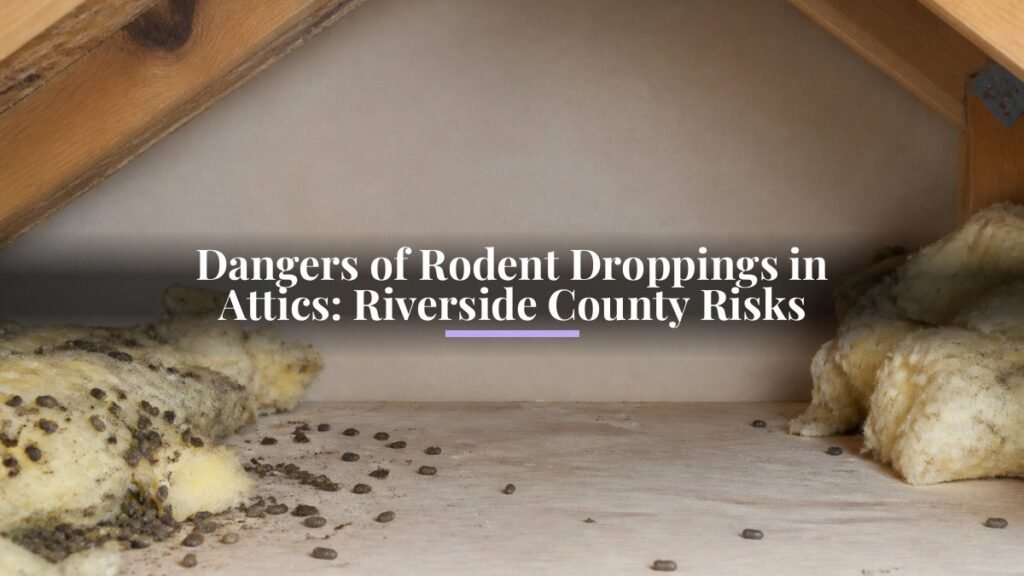
Contaminated insulation is easy to miss. Rodents tunnel through it, leaving droppings and urine behind. Insulation that looks fine from the hatch can be soaked with waste near the edges and around nests.
How Long Rodent Droppings Remain Hazardous
Rodent droppings can stay hazardous for a long time. There is no simple expiration date, and the risk does not fade just because the attic looks dry.
Hantavirus remains viable in dried droppings and nesting material for extended periods, especially in cool, dry, enclosed spaces like attics. The UC Statewide IPM Program on rats notes that rat management requires a mix of exclusion, sanitation, and trapping, because waste and contamination persist long after the rodents are gone.
That is the part most homeowners miss. Killing the rodents does not clean the attic. Droppings, urine-soaked insulation, and nesting material keep posing a risk until they are removed and the area is disinfected.
How to Clean Rodent Droppings Safely: Step-by-Step
Safe cleanup follows a strict order. Skipping a step can send pathogens into the air you breathe.
- Protect yourself first. Wear an N95 respirator, disposable gloves, and eye protection. Wear disposable coveralls if the contamination is heavy.
- Ventilate the space. Open attic vents and windows, and keep people and pets out of the area.
- Do not sweep or dry-vacuum. Sweeping and standard vacuums launch contaminated dust into the air.
- Wet the waste down. Mist droppings and nesting material with a disinfectant solution to hold dust in place.
- Remove waste with care. Wipe up droppings with disposable towels and place everything in sealed double bags.
- Disinfect hard surfaces. Clean and disinfect beams, joists, and any surface the rodents touched.
- Remove contaminated insulation. Soaked or tunneled insulation cannot be cleaned and should be bagged and replaced.
- Wash up. Remove protective gear carefully, wash hands, and shower after cleanup.
Watch out: sweeping or vacuuming dried droppings with a shop vac is the single most common mistake we see. It aerosolizes pathogens and turns a contained mess into an air quality problem.
When DIY Cleanup Is Not Enough
Small, recent droppings on a hard surface can be handled carefully by a homeowner. Larger infestations are a different job.
Call a professional when you find any of these:
- Droppings spread across a large attic area
- Contaminated insulation that needs removal and replacement
- A strong odor that lingers after cleaning
- Signs the rodents are still active
- Anyone in the home with asthma, allergies, or a weakened immune system
The dangers of cleaning rodent droppings without pro equipment go beyond exposure. Household gear cannot handle biohazard removal, HEPA filtration, or safe disposal at scale.
Safe cleanup follows a strict order, and skipping a step can send pathogens into the air you breathe.
| Step | What to do |
|---|---|
| 1 | Wear N95 respirator, disposable gloves, eye protection |
| 2 | Open attic vents and windows; keep people and pets out |
| 3 | Do not sweep or dry-vacuum |
| 4 | Mist droppings and nesting material with disinfectant |
| 5 | Wipe up waste; seal in double bags |
| 6 | Clean and disinfect beams, joists, touched surfaces |
| 7 | Bag and replace contaminated insulation |
| 8 | Remove gear carefully, wash hands, shower |
Preventing Rodent Reinfestation in Your Attic
Prevention comes down to three things: seal, starve, and monitor.
- Seal entry points. Close gaps around vents, pipes, roof edges, and utility lines with rodent-proof materials.
- Cut off food and water. Store food in sealed containers and fix leaky pipes.
- Clear the perimeter. Trim branches away from the roof and move woodpiles away from the walls.
- Monitor. Check the attic every few months for new droppings, rub marks, or nesting material.
Scheduling a Professional Attic Inspection and Cleanup
A professional inspection answers the questions DIY cannot: how far the contamination spread, whether the insulation is salvageable, and where the rodents are getting in.
At Rodent cleanup experts, we inspect the affected areas and build a cleanup plan around the condition of the property. Our services include rodent infestation cleanup, removal of droppings and nesting materials, contaminated insulation removal, HEPA vacuuming, deep cleaning and sanitizing, odor and pheromone treatment, and professional replacement of damaged insulation.
We serve homeowners, landlords, and property managers across Los Angeles, Ventura, San Bernardino, Riverside, and Orange Counties. If you are unsure whether your attic needs professional help, read our guide on when to hire professionals for attic decontamination.
Frequently Asked Questions
Is it okay to leave mouse droppings in the attic?
No. Rodent droppings, urine, and saliva are documented vectors for hantavirus, salmonella, and leptospirosis, . Leaving them in place allows pathogens to persist and dried waste to become airborne dust that circulates through your HVAC system. Hantavirus Pulmonary Syndrome is a serious illness. Even without direct contact, the contamination spreads to insulation and attic surfaces, so droppings should be removed and the area sanitized rather than ignored.
How long do mouse droppings remain toxic?
There is no fixed expiration date. Dried rodent droppings can remain hazardous for an extended period because pathogens survive in dried waste, and disturbing them later can aerosolize contaminated dust. Sweeping or vacuuming dried droppings can release hantavirus into the air in enclosed spaces. Because how long rodent droppings remain hazardous depends on moisture, temperature, and airflow, treat any droppings you find as infectious until the area has been professionally cleaned and disinfected.
Can rodent droppings contaminate attic insulation?
Yes. Insulation is porous and absorbs urine, droppings, and nesting debris, which is why contaminated insulation is generally treated as requiring specialized handling rather than simple removal. Standard vacuuming does not clean it. In most contaminated attics, the affected insulation has to be removed and replaced after the space is HEPA-vacuumed and disinfected. A professional inspection can tell you how far the contamination extends before you decide on replacement.
When should you call a professional to clean rodent droppings?
Call a professional when droppings cover a large area, when insulation or ductwork is contaminated, when the infestation is ongoing, or when you have pets or family members with respiratory conditions. Improper cleaning, especially sweeping or dry vacuuming, can aerosolize pathogens. Professional remediation uses protective equipment and disinfection, and can also help identify entry points.
If you have found droppings, a lingering odor, or damaged insulation in your attic, do not wait for the problem to spread. Rodent cleanup experts can inspect the space, remove the contamination safely, and help seal the path the rodents used to get in. Get started with Rodent cleanup experts and restore your attic to a clean, safe condition.
