
Table of Contents
- Understanding the Scope of Commercial Rodent Cleanup
- Step 1: Assess the Infestation and Document Damage
- Step 2: Remove Rodent Droppings and Contaminated Materials
- Step 3: Apply Rodent Dropping Sanitation Standards
- Step 4: Identify and Seal Entry Points for Exclusion
- Cost of Professional Attic Cleanup and Budget Planning
- Landlord Liability for Pest Control and Legal Responsibilities
- Tenant Communication and Property Recovery Timeline
- Frequently Asked Questions
Last Updated: October 1, 2026
Understanding the Scope of Commercial Rodent Cleanup
Commercial rodent cleanup for landlords goes far beyond removing a few droppings and calling it done. When rodents infest a rental property, they leave behind contamination that poses genuine health risks to future tenants. The damage includes rodent droppings scattered across insulation, nesting materials embedded in walls, urine stains that create persistent odors, and bacteria that can survive long after the rodents are gone.
Most landlords mistake pest control for complete remediation. Pest control removes active rodents; commercial rodent cleanup removes contaminated materials, pathogens, and odor-causing compounds left behind.
Cleanup scope varies by infestation location and duration. Attic, crawl space, and wall cavity infestations each require different sanitation approaches.
Understanding this distinction matters because it affects your timeline, your budget, and your liability. Tenants expect a clean, safe property. If you skip proper cleanup and a tenant gets sick, the legal consequences can be severe.
Step 1: Assess the Infestation and Document Damage
Begin with a thorough assessment to identify affected areas, contamination extent, and document findings for insurance and liability protection.
Inspect attics, crawl spaces, walls around pipes, garages, and insulated areas. Fresh droppings (dark, moist) versus old ones (dry, crumbly) indicate infestation activity level and nesting locations.
Document everything with photos and written notes. Take images of affected insulation, visible droppings, nesting materials, and any structural damage like gnawed wiring or chewed wood. This documentation serves multiple purposes: it gives contractors a clear picture of what needs to be done, it supports insurance claims, and it protects you legally by showing you took the problem seriously.
Strong ammonia or musty odors indicate heavy urine contamination requiring professional sanitation. Note odor location to identify nesting sites.
Step 2: Remove Rodent Droppings and Contaminated Materials
Removal must be professional, rodent droppings contain hantavirus and pathogens that become airborne when disturbed, creating serious health risks.
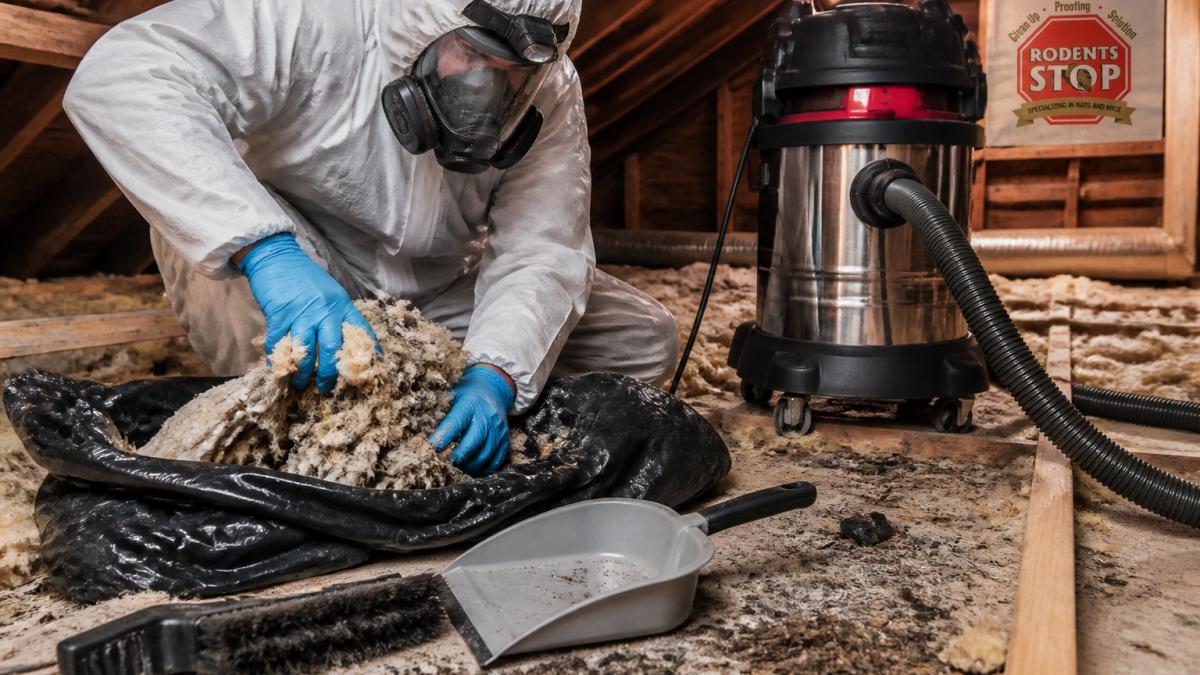
Seal work areas to prevent contamination spread. Contractors wear respiratory protection and remove all contaminated insulation, nesting materials, and urine-soaked materials as biohazard waste.
Commercial rodent cleanup removes contaminated insulation entirely and replaces it, partial removal leaves pathogens and odors behind.
HEPA-filtered vacuums capture particles; all waste is sealed and disposed per biohazard protocols. This labor-intensive step requires specialized equipment.
Step 3: Apply Rodent Dropping Sanitation Standards
After contaminated materials are removed, the space must be sanitized to eliminate remaining pathogens and prevent odor recurrence. This step is governed by specific regulatory standards that landlords must understand to ensure legal compliance and tenant safety.
Rodent droppings and urine harbor hantavirus, leptospirosis, and salmonella that survive on surfaces. CDC and OSHA guidelines establish that any surface contacting droppings or urine requires disinfection, not just cleaning.
All affected surfaces, wood, concrete, drywall, ductwork, must be treated with EPA-registered disinfectants for the manufacturer’s specified dwell time (typically 10-15 minutes). Spraying and wiping alone does not eliminate pathogens.
Urine odor requires enzymatic or oxidizing treatments (hydrogen peroxide-based) to break down uric acid crystals embedded in porous materials. Multiple applications spaced 24-48 hours apart may be needed.
Air handling systems require special attention. If rodents accessed ductwork, return-air plenums, or HVAC components, the entire system must be professionally cleaned and disinfected before operation resumes. Contaminated air circulation spreads pathogens throughout the property and poses ongoing health risks. This may require duct cleaning services separate from the main remediation work.
Sanitation standards require contaminated materials be removed and replaced, not treated in place. Porous materials absorbing urine cannot be adequately disinfected while remaining in the structure.
Documentation of sanitation work protects your liability. Ensure your contractor provides written certification that disinfection was completed according to EPA and CDC guidelines, including the specific disinfectants used, dwell times applied, and areas treated. This documentation becomes critical if a tenant later claims illness or if a health inspector questions whether proper remediation occurred.
Step 4: Identify and Seal Entry Points for Exclusion
Cleanup is only half the battle. If you don’t seal the entry points, rodents will return. This is where rodent exclusion comes in. After the infestation is cleared and the space is sanitized, you need to identify every possible entry point and seal it.
Common entry points: gaps around pipes, foundation cracks, siding holes, door gaps, and soffit/fascia openings. Rodents fit through dime-sized openings.
Sealing involves more than caulk. Rodents chew through caulk and foam. Proper exclusion uses hardware cloth, steel mesh, or metal flashing in areas where rodents might chew. Door sweeps, weatherstripping, and pipe collars prevent entry at common access points. Vents need covers that allow airflow but prevent rodent entry.
This step requires structural knowledge. A contractor needs to understand how rodents move through a building and what materials they can’t chew through. Steel and hardware cloth work. Plastic and rubber don’t. The goal is to make the property rodent-proof without creating moisture or ventilation problems.
Cost of Professional Attic Cleanup and Budget Planning
The cost of professional attic cleanup varies based on the extent of contamination, the size of the affected area, and the complexity of the remediation needed. A small attic with light contamination costs less than a large attic with heavy infestation and widespread insulation damage.
Several factors influence pricing. The amount of contaminated insulation that needs removal is a major cost driver. Labor-intensive jobs with difficult access cost more. If structural damage exists, like compromised wiring or damaged HVAC components, repair costs add up quickly. Odor treatments and specialized disinfection add to the total.
When budgeting for commercial rodent cleanup, account for inspection, removal, sanitation, replacement insulation, exclusion work, and any structural repairs. Getting multiple quotes helps you understand the scope and compare approaches. Be wary of quotes that seem unusually low, they may indicate shortcuts in sanitation or incomplete exclusion work.
Consider this an investment in tenant safety and property value.
Landlord Liability for Pest Control and Legal Responsibilities
As a landlord, you have legal responsibilities regarding pest control and property sanitation. Tenant safety laws in most jurisdictions require landlords to maintain habitable premises, which includes addressing pest infestations and the contamination they create. However, liability extends beyond simply hiring a pest control company, it includes documenting that proper biohazard remediation occurred and that the property is safe for occupancy.
Understanding Your Legal Exposure
Documentation Framework for Protection
Initial Discovery and Response Records:
- Date and time you first discovered rodent activity or contamination
- Written description of what you observed (droppings, nesting materials, odors, entry points)
- Photos or video documentation of the infestation before cleanup begins
- Date you notified affected tenants and the method of notification (email, certified mail, in-person)
- Records of any tenant complaints or reports that preceded your discovery
Professional Assessment and Work Orders:
- Written inspection report from the pest control or biohazard remediation company, including their assessment of infestation severity and affected areas
- Detailed work orders specifying what cleanup, disinfection, and exclusion work will be performed
- Contractor credentials and certifications (pest control license, biohazard remediation certification, insurance)
- Proof of insurance from all contractors working on the property
Completion and Certification:
- Written certification from the contractor that all remediation work was completed according to EPA and CDC guidelines
- Itemized invoice showing what work was performed (removal, disinfection, insulation replacement, exclusion sealing)
- Photographs or video of the completed work showing cleaned areas, new insulation, sealed entry points
- Final inspection report confirming the property is safe for occupancy
- Any air quality testing or odor assessment reports if those services were performed
Insurance Claim Documentation:
Tenant Communication Records:
Keep copies of all communications with tenants about the infestation and remediation:
- Initial notification letters explaining what was found and what steps you’re taking
- Notices about pest control treatment dates and times
- Notices about temporary relocation if the property became uninhabitable
- Final notification that remediation is complete and the property is safe for occupancy
- Any follow-up communications about monitoring or prevention measures
Prevention and Monitoring Records:
After remediation, maintain records of ongoing prevention efforts:
- Dates and results of regular pest control inspections
- Any exclusion maintenance or repairs performed
- Tenant reports of pest activity (or lack thereof) over time
- Photos or notes from routine property inspections
Legal Consultation:
Tenant Communication and Property Recovery Timeline
How you communicate with tenants about rodent infestation and cleanup significantly impacts their confidence in your management. Transparency and clear timelines matter.
Frequently Asked Questions
What are the health risks associated with rodent droppings in rental units?
Rodent droppings pose serious health hazards including transmission of hantavirus, leptospirosis, and salmonella. Airborne particles from dried fecal matter can contaminate air quality and trigger respiratory issues, allergies, and asthma in tenants. This is why rodent dropping sanitation standards require professional remediation rather than standard cleaning methods. Proper decontamination prevents pathogen transmission and protects tenant safety.
What are a landlord’s legal responsibilities for rodent cleanup?
Landlord liability for pest control includes providing a habitable premises free from pest infestations. Most jurisdictions require landlords to address rodent problems promptly, conduct professional remediation, and document compliance with health codes. Failure to manage infestations can result in tenant claims, lease violations, and regulatory fines. Proper documentation of cleanup efforts protects you legally and demonstrates due diligence in maintaining property standards.
How do you properly sanitize a property after a rodent infestation?
Professional sanitation involves HEPA vacuuming to remove fecal matter and nesting materials, applying hospital-grade disinfectants to affected surfaces, treating odor sources with enzymatic treatments, and addressing pheromone residue that attracts new rodents. Unlike standard cleaning, this process requires protective equipment, specialized chemicals, and verification that air quality and structural integrity are restored. Professional teams follow integrated pest management protocols to ensure complete decontamination.
Why is professional cleanup better than DIY methods after pest control treatment?
DIY cleaning with standard vacuums and bleach fails to address biohazard risks, pathogen transmission, and pheromone residue that attracts new rodents. Professional cleanup uses HEPA filtration, commercial-grade disinfectants, and specialized techniques to remove contaminated insulation and restore air quality. Professionals also identify structural gaps and nesting sites that pest control may have missed, providing comprehensive property recovery rather than surface-level cleaning.
Rodent infestations create cleanup challenges that go far beyond pest control. The contamination, health risks, and structural damage require professional remediation to restore a property safely. Rodent Cleanup Experts handles the complete process, from assessment and removal through sanitation and exclusion, to ensure your property is truly recovered. Contact us for a detailed inspection and cleanup plan tailored to your property’s specific needs.