Last Updated: November 2, 2026
Quick Summary
To remove rodent droppings from insulation safely, first put on a fit-tested N95 or better respirator, disposable coveralls, and gloves. Mist the droppings and insulation with disinfectant so they stay wet, then remove them by hand into sealed bags. Use a HEPA-rated vacuum only for final cleanup, never a standard vacuum.
- Never sweep, shake, or dry-vacuum droppings, because the dust spreads particles into the air.
- Mist the area with disinfectant until the droppings are wet before removing anything.
- Use a fit-tested N95 or better respirator, plus coveralls, gloves, and goggles.
- Double-bag waste and check local disposal rules before hauling it away.
- Replace urine-soaked or heavily nested insulation, since cleaning cannot fully remove the contamination.
Table of Contents
- Why Rodent Droppings in Insulation Are a Health Hazard
- Signs Your Insulation Has Been Contaminated
- Protective Gear and Preparation Before You Start
- Step-by-Step: How to Remove Droppings From Insulation
- Disinfecting the Attic and Checking for Remaining Contamination
- When to Replace Insulation and What It Costs
- Rodent Waste Cleanup Safety Protocols and Next Steps
- Frequently Asked Questions
Rodent droppings in attic insulation are more than an eyesore. They can carry bacteria and viruses, and the dust that rises when you disturb them can make you sick. If you are cleaning up after rats or mice in a home in Southern California, the safest path starts with protection, careful removal, and a clear decision about whether the insulation can stay. This guide walks you through what to do and when to call for help.
Why Rodent Droppings in Insulation Are a Health Hazard
Droppings and urine can hold pathogens, and fine particles can float into the air when they dry out and get stirred up. Breathing that dust is the main concern. Never sweep, shake, or run a regular vacuum over dry droppings, because that spreads particles into the room.
- Dry droppings crumble easily into airborne dust
- Urine stains can hold germs for a long time
- Nesting material may hide more waste below the surface
- Regular vacuums blow fine particles back out the exhaust
Signs Your Insulation Has Been Contaminated
Look for clues before you start digging. Contamination is often worse than it appears from the access hatch.
- Dark droppings, often rod-shaped, scattered on or under insulation
- Shredded paper, fabric, or insulation pulled into nests
- Greasy rub marks along beams or pipes
- A sharp ammonia-like smell that grows stronger in warm weather
- Stains or damp patches on the insulation or drywall below
If you see these signs in a large area, the job may be beyond a weekend DIY effort. A professional rodent infestation cleanup service can assess the full extent before you commit to a plan.
Protective Gear and Preparation Before You Start
Protect yourself before you open the attic. Good gear and a clear plan prevent most of the risk.
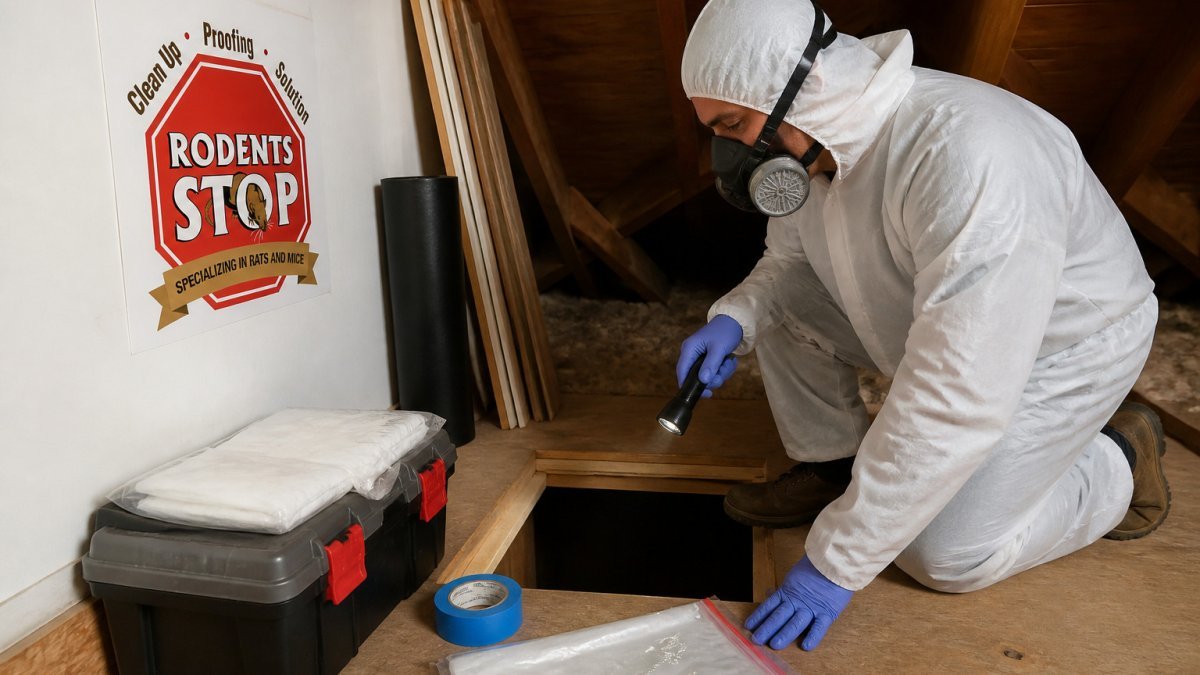
- A fit-tested N95 respirator, or better, a half-face respirator with P100 filters
- Disposable coveralls with a hood
- Nitrile gloves, with a second pair for extra protection
- Goggles that seal around the eyes
- Heavy-duty trash bags and a sealable bin for waste
Before you begin, do these things:
- Turn off power to any attic lights or fans you do not need
- Open a window or vent to ventilate, but keep the attic door closed to the living space
- Mist the area lightly with disinfectant so dust stays down
Good preparation is the difference between a controlled cleanup and a dusty mess.
Step-by-Step: How to Remove Droppings From Insulation
Work slowly and keep everything damp. Dry work is what spreads the hazard.
- Set up containment. Tape plastic sheeting over the attic access and any HVAC returns or supply registers in the attic before you start. This keeps dust from migrating into the living space through the duct system.
- Mist the area. Spray the droppings and nearby insulation with a disinfectant solution until they are wet. A pump sprayer gives you more control than a trigger bottle in a low-clearance attic.
- Remove loose droppings. Use a scoop or stiff brush and place everything into a heavy-duty bag right away. Do not let bagged waste sit open in the attic.
- Pull out contaminated insulation. Remove soiled sections and bag them while keeping them damp. Cut batts rather than tearing them so you disturb less dust.
- Clean the surfaces. Wipe wood, pipes, and framing with disinfectant, working from clean areas to dirty ones. Pay attention to the top plates of walls and the underside of roof sheathing, where droppings collect.
- Vacuum with a HEPA unit. Only after everything is wet and removed, use a HEPA-rated vacuum for final cleanup. A true HEPA vacuum is designed to capture fine particles, which is why it is used for this final cleanup step.
- Seal and dispose of waste. Double-bag all material, seal the outer bag with tape, and label it as rodent-contaminated waste.
Check disposal rules first. Disposal requirements for contaminated insulation vary by location. Before you haul anything to the curb, check with your local waste authority or your hauler about:
- Whether bagged insulation with rodent waste is accepted in regular residential pickup
- Whether your local landfill or transfer station requires the material to be double-bagged and labeled
- Whether any disinfectant-soaked material counts as liquid waste, which has separate rules
- Whether your hauler requires an appointment or a specific drop-off location
Confirm the disposal route before you start bagging, not after.
Verifying the attic is actually safe afterward. Cleaning visible waste does not prove the air is safe. After the work is done and the attic has ventilated, look for these signals that contamination remains:
- A urine odor that returns within a few days of cleaning
- Visible dust settling on surfaces you already wiped
- Droppings reappearing in the same spots, which means rodents are still active
- Condensation or damp patches that suggest moisture is feeding odor
If odor or visible residue persists, a HEPA air scrubber run in the attic for several hours can pull remaining particulates out of the air, and a follow-up inspection can confirm whether any contaminated material was missed. For attics with heavy contamination or an attached HVAC system, an air quality assessment after cleanup is the only reliable way to confirm the space is safe to use.
Watch out: never dry-sweep or use a standard shop vacuum on droppings, because it puts dust into the air you breathe and can push particles into the living space through ductwork.
Disinfecting the Attic and Checking for Remaining Contamination
After you remove the waste, disinfect the surfaces that stay in place. Let the disinfectant sit for the full contact time on the label before you wipe it away. Then inspect the area again with a flashlight. Look for missed droppings in corners, behind ductwork, and under the edges of insulation.
Also check for entry points. Gaps around vents, pipes, and eaves let rodents return. Sealing these openings is the step that keeps the problem from repeating.
When to Replace Insulation and What It Costs
Not all insulation reacts to rodent contamination the same way. The material in your attic determines whether cleaning is realistic or whether replacement is the only safe option. Treating every batt, loose-fill, and foam product as interchangeable is the most common mistake homeowners make after a rodent problem.
Fiberglass batts and rolls. The glass fibers themselves do not absorb much liquid, but urine and droppings cling to the binder and to the paper or foil facing. Lightly soiled batts at the edge of the contamination zone can sometimes be cleaned and reused. Batts that are compressed, torn, or saturated with urine should be removed and replaced, because the odor and pathogens stay trapped in the matted fibers.
Loose-fill cellulose. Cellulose is shredded paper treated with fire retardants, and it soaks up urine like a sponge. Once moisture and waste work into loose-fill cellulose, it clumps, loses its insulating value, and cannot be effectively cleaned. Plan on removing and replacing any cellulose that has been contacted by rodents.
Spray foam. Closed-cell spray foam is rigid and non-porous, so droppings and urine usually sit on the surface rather than soaking in. The foam itself can often be cleaned and disinfected in place, but any foam that was gnawed or tunneled through by rodents has to be cut out and re-applied by a contractor.
Mineral wool and denim. Mineral wool resists moisture better than fiberglass and can sometimes be cleaned if contamination is light. Denim and other natural-fiber products absorb moisture readily and generally should be replaced once soiled.
Signs that replacement is the right call regardless of material:
- A persistent ammonia or urine odor that returns after cleaning
- Deep staining that extends through the full thickness of the material
- Matted, compacted, or collapsed sections
- Nesting material woven throughout a large area
- Visible droppings below the insulation, on the drywall or ceiling
Replacement depends on attic size, the type and depth of insulation being removed, how much has to be bagged and hauled out, and how easily a crew can access the space. Removal of contaminated material involves more protective equipment, containment, and disposal steps than a standard insulation install. Because those variables differ from one property to the next, an on-site inspection is a sensible next step. Contact Rodent Cleanup Experts for an inspection of your property.
The right response depends on the insulation material, so this summary compares how each type handles rodent contamination.
| Insulation type | Can it be cleaned? | Replace when |
|---|---|---|
| Fiberglass batts | Lightly soiled batts at the edge may be reused | Compressed, torn, or urine-saturated |
| Loose-fill cellulose | No, it soaks up urine and clumps | Any contact by rodents |
| Closed-cell spray foam | Often cleaned and disinfected in place | Gnawed or tunneled through |
| Mineral wool | Possible if contamination is light | Heavily soiled |
| Denim | Generally not | Once soiled |
Rodent Waste Cleanup Safety Protocols and Next Steps
If the contamination covers a large area, if you are dealing with a rental or commercial property, or if you have pets or young children, professional cleanup is the safer choice. A trained crew can bring the right respirators, containment, and disposal practices, and can help address the entry points that let rodents in. Rodent Cleanup Experts offers rodent infestation cleanup services.
If you decide to handle a small area yourself, follow the steps above, wash your hands thoroughly after you finish, and keep children and pets out of the attic until the work is done. When you are unsure, stop and get help.
Rodent Cleanup Experts provides professional rodent damage cleanup, sanitation, and odor removal throughout Los Angeles, Ventura, San Bernardino, Riverside, and Orange Counties. Contact us for an inspection of your property.
Frequently Asked Questions
Should I remove insulation with mouse droppings?
Insulation with rodent droppings, urine stains, or nesting material is usually better removed and replaced than cleaned, especially when the material is loose-fill or the contamination is widespread. Light surface droppings on rigid or batt insulation can sometimes be cleaned using a wet method, sealed, and disinfected. Anything that is soaked, moldy, or heavily soiled should be bagged and disposed of. If you are unsure, have a rodent cleanup professional inspect the attic before deciding.
Is it safe to clean insulation contaminated with rodent droppings?
It can be done safely with the right precautions, but never by sweeping or using a standard vacuum. Dry droppings can release particles that carry hantavirus and other pathogens into the air. Wear a respirator rated N95 or higher, disposable coveralls, nitrile gloves, and eye protection. Mist the area with disinfectant before handling material, and use a HEPA-filtered vacuum for final cleanup. Ventilate the space and wash exposed clothing separately afterward.
How do professionals sanitize an attic after rodent removal?
Professionals typically remove contaminated material, vacuum surfaces with HEPA equipment, apply an EPA-registered disinfectant or sanitizer labeled for rodent-borne pathogens, and allow proper contact time before rinsing or drying. They also treat odors and check wood, framing, and ducts for residue. Sealing entry points before cleanup helps prevent new contamination. Results depend on the size of the infestation and the materials involved.
What protective gear is required for cleaning rodent waste?
At minimum, use an N95 or higher respirator, disposable coveralls, nitrile gloves taped at the wrists, and goggles or a face shield. Shoe covers help prevent tracking contamination out of the attic. Dispose of all disposable gear in sealed bags after the job. Follow CDC guidance on rodent-borne disease, and consider professional cleanup if the contamination is extensive or you have respiratory conditions.
