Table of Contents
- Identifying the Source of Rat Odor
- How to Get Rid of Dead Rodent Smell in Walls
- How Long Does Dead Rat Smell Last Without Treatment
- Cleaning and Sanitizing Affected Areas
- Best Enzyme Cleaners for Rodent Waste and Odor Removal
- Natural Odor Absorbers and Neutralizers
- When to Call a Professional Pest Control and Cleanup Service
- Preventing Future Rodent Infestations
- Frequently Asked Questions
Last Updated: September 22, 2026
Identifying the Source of Rat Odor
The smell from a rat infestation comes from multiple sources. Dead rodents decompose inside walls and attics. Their urine and droppings release ammonia. Nesting materials trap bacteria and organic matter. The longer the infestation goes untreated, the worse the odor becomes.
Finding where the smell originates is the first step toward learning how to remove rat smell. Walk through your home slowly. Pay attention to which rooms smell strongest. Check your attic, crawl space, and basement carefully. The smell is usually strongest near the source.
Dead carcasses create the most intense odors. A single dead rat can smell terrible for weeks. Urine pheromones linger even after you remove the body. Droppings contain bacteria that produce foul-smelling gases. Understanding these sources helps you target your cleanup efforts.
Use your nose as your first tool. Walk slowly through affected areas and note where the smell peaks. Mark these spots on a mental map, this is where your cleanup should focus.
How to Get Rid of Dead Rodent Smell in Walls
Removing dead rodent smell from walls requires finding the carcass first. Once located, you can remove it and treat the contaminated area. This is often where DIY efforts fall short. Many homeowners try cleaning the surface without addressing what’s inside the wall.
Locating Dead Carcasses: Detection Techniques Beyond Your Nose
A dead rat inside a wall creates an unmistakable smell. The odor typically peaks 3-5 days after death as decomposition accelerates. While your nose is a valuable tool, relying on smell alone often leads to guesswork and unnecessary wall damage.
Smell mapping remains your first step. Walk slowly through affected areas and note where the smell peaks strongest. Mark these spots mentally or on paper. The strongest odor point is usually within 3-6 feet of the carcass, though air currents can deceive you.
Moisture detection is underutilized but highly effective. Dead rodents release moisture as they decompose. Use a moisture meter (available at hardware stores for $20-$40) to scan walls in the suspected area. A spike in moisture reading often pinpoints a hidden carcass more accurately than smell alone. Scan baseboards, exterior walls, and areas near entry points where rodents commonly nest.
Thermal imaging is a professional-grade technique increasingly available to homeowners through rental services. A decomposing carcass generates heat, creating a thermal signature visible on an infrared camera. This is particularly useful in large attics or crawl spaces where smell disperses widely. If you’re considering professional help, thermal imaging is one of the fastest ways to locate a hidden body.
Stethoscope listening works for fresh carcasses with active fly larvae. Place a stethoscope against the wall in the suspected area. You may hear faint movement or buzzing sounds from maggots inside the wall cavity. This is most effective within the first 2-3 weeks after death.
Drill-and-inspect method is the most direct approach. Once you’ve narrowed the location to a specific wall section, drill a small hole (1/4 inch) near the strongest smell. Insert a flexible camera or a straightened coat hanger with a mirror attached. This confirms the carcass location before you commit to larger access holes.
Removing Contaminated Materials: Surface Cleaning vs. Structural Remediation
Once you’ve located the carcass, you face a critical decision: surface removal and treatment, or structural remediation.
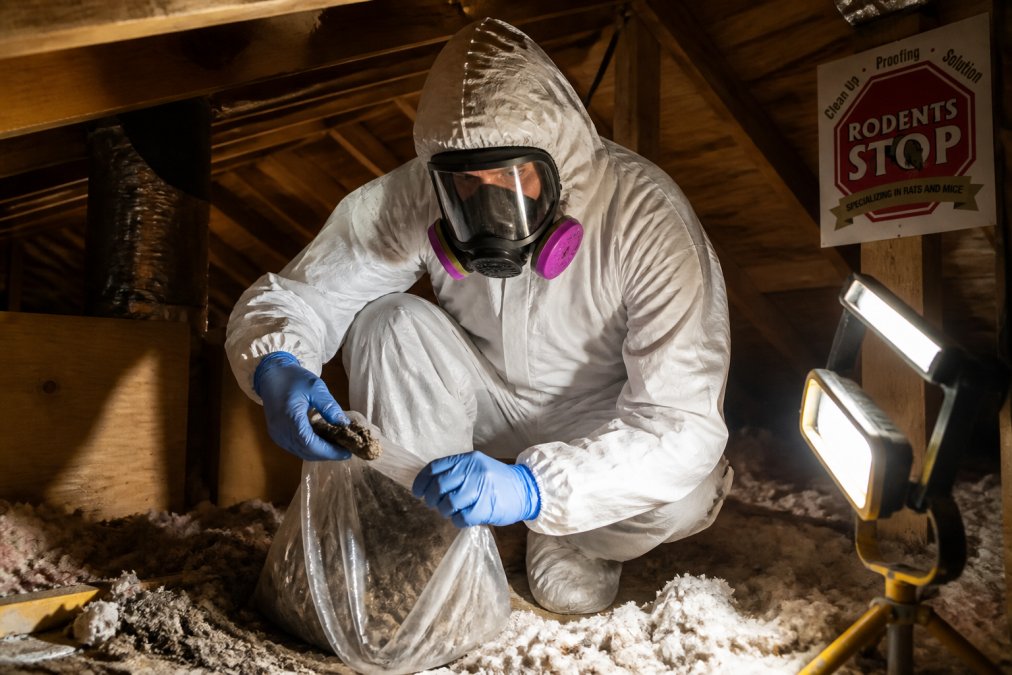
Surface removal works only if the carcass is easily accessible and decomposition is minimal. Use a utility knife to cut a small access hole in drywall, just large enough to reach inside safely. Wear nitrile gloves (double-gloved), a respirator, and eye protection. Place the carcass in a sealed plastic bag immediately. Dispose of it according to local regulations.
After removal, spray the cavity with an enzymatic cleaner. Let it saturate the area for several hours. Close the hole with a drywall patch and caulk. This approach works for fresh carcasses (within 1-2 weeks of death) in accessible locations.
Structural remediation becomes necessary when:
- The carcass has been decomposing for more than 2-3 weeks
- Urine saturation has spread to insulation, wood framing, or subflooring
- The smell persists after surface cleaning and enzymatic treatment
- The carcass is in a difficult-to-access cavity (between wall studs, inside HVAC ducts)
In these cases, simply removing the body and spraying the cavity won’t eliminate the odor. Contaminated insulation must be removed and replaced. Wood framing may need to be treated with a commercial-grade antimicrobial sealant or replaced entirely. Drywall that has absorbed urine often needs replacement.
This is where many DIY efforts fail.
Handling decomposed rodent tissue risks exposure to hantavirus and other pathogens. If you’re uncomfortable with carcass removal, or if the body has been decomposing for more than a few weeks, professional removal is the safer and more effective choice.
How Long Does Dead Rat Smell Last Without Treatment
The timeline for dead rat odor depends on several factors. In a sealed wall, the smell can persist for weeks or even months. The decomposition rate affects how long odors linger. Temperature, humidity, and airflow all play a role.
Cleaning and Sanitizing Affected Areas
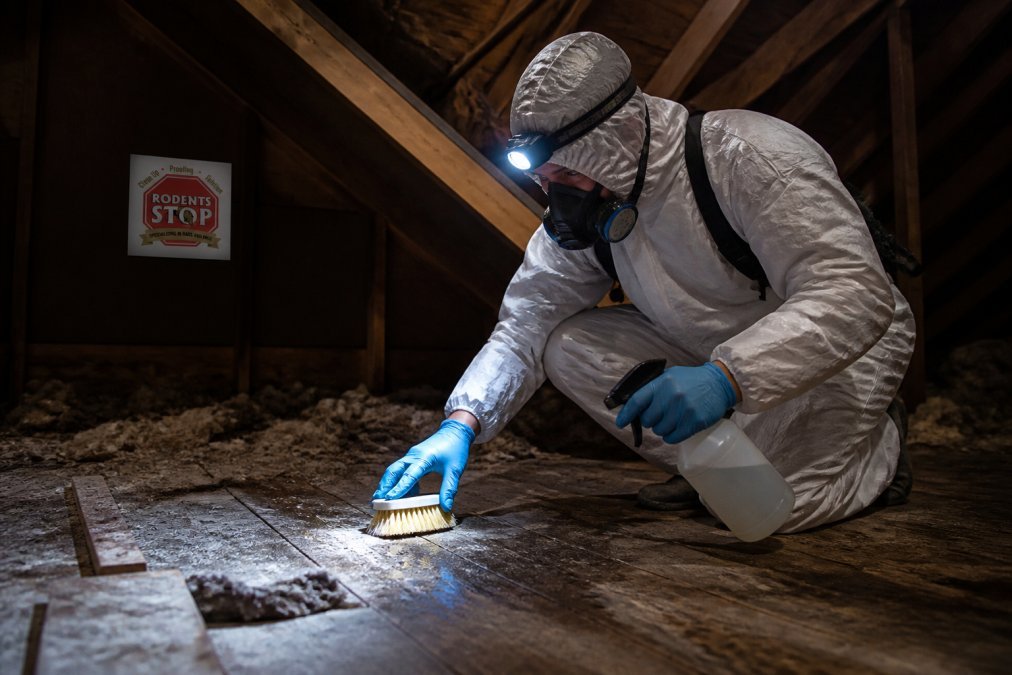
After removing a dead carcass or droppings, thorough cleaning is essential to remove rat smell completely. Surface cleaning alone won’t work. You need to sanitize the area to eliminate bacteria and break down organic matter.
Safety Precautions and Personal Protective Equipment
Rodent waste contains dangerous pathogens. Always wear proper protective equipment before cleaning.
Essential gear includes:
- Respirator or N95 mask (not just a dust mask)
- Nitrile gloves (double-glove for extra protection)
- Eye protection or safety glasses
- Long sleeves and pants
- Shoe covers or boots you can disinfect
Removing Rodent Droppings and Nesting Materials
Droppings must be removed carefully. Spray them lightly with a disinfectant solution first. This prevents particles from becoming airborne. Let the solution sit for 5 minutes. Then carefully place droppings in a sealed bag.
The difference between temporary odor relief and permanent odor removal comes down to addressing the source materials, not just cleaning the surface.
Best Enzyme Cleaners for Rodent Waste and Odor Removal
Enzyme cleaners are specifically designed to break down organic matter at the molecular level. They contain proteins called proteases and lipases that digest the compounds causing odors. Unlike bleach or ammonia-based cleaners, which only kill bacteria or mask smells, enzymes actually eliminate the material producing the odor.
How Enzymes Work Against Rodent Odors
Rodent urine contains uric acid and ammonia compounds. Rodent droppings harbor bacteria that produce volatile organic compounds (VOCs) responsible for the foul smell. Dead tissue releases mercaptans and other sulfur-based compounds. Standard disinfectants kill the bacteria but leave these organic compounds intact, which is why bleach doesn’t eliminate rodent odors permanently.
Choosing the Right Enzyme Cleaner
Look for these active ingredients:
- Proteases: Break down protein-based waste (urine, droppings, decomposition byproducts). Essential for rodent odor removal.
- Lipases: Digest fatty compounds in urine and tissue. Particularly effective on grease-based odors.
- Amylases: Break down starch and carbohydrate residues in nesting materials.
Read product labels carefully. Many general-purpose enzyme cleaners don’t contain the right enzyme blend for rodent waste. Look for cleaners specifically labeled for “biological waste,” “animal urine,” or “rodent contamination.” Generic enzyme cleaners designed for pet stains may not be strong enough for severe rodent contamination.
Application Strategy for Maximum Effectiveness
Apply enzyme cleaners generously to affected areas. The cleaner must saturate the contaminated material, not just the surface. For insulation, wood, or drywall, spray until the material is visibly wet.
Enzyme Cleaners vs. Chemical Neutralizers
Enzyme cleaners work slowly but address the root cause. They’re ideal for contaminated materials you plan to keep (wood framing, subflooring). They’re safe around pets and children once dry. They don’t produce harsh fumes.
The difference between temporary odor relief and permanent odor removal comes down to using the right enzyme blend, applying it generously, and allowing adequate contact time with the contaminated material.
Natural Odor Absorbers and Neutralizers
Several natural materials absorb and neutralize rodent odors. These work best as supplements to enzymatic cleaning, not replacements.
When to Call a Professional Pest Control and Cleanup Service
Some situations require professional help. If the infestation is large, calling a professional makes sense. If you’ve tried DIY methods and the smell persists, professionals have tools and expertise you don’t.
Preventing Future Rodent Infestations
Once you’ve removed the smell, prevent new infestations. Seal entry points where rodents entered. Check for gaps around pipes, vents, and utility lines. Caulk or seal any opening larger than a quarter-inch.
Frequently Asked Questions
What is the best way to remove rat smell permanently?
The best way to remove rat smell involves three steps: identify and remove the odor source (dead carcasses, urine, droppings), clean and sanitize affected areas with enzyme-based cleaners that break down organic matter and urine pheromones, and use odor neutralizers like activated charcoal or baking soda. For deep-seated odors in walls or attics, structural remediation, removing contaminated insulation and materials, is often necessary. Surface cleaning alone rarely eliminates persistent smells.
How long does dead rat smell last if you don’t treat it?
Without treatment, dead rat smell can persist for weeks to months depending on conditions. A dead carcass in a warm, moist environment may decompose and become undetectable within 3-4 weeks, but urine odors and pheromone trails last much longer, sometimes 6 months or more. Rodent-contaminated insulation and wall voids continue releasing ammonia and decomposition odors until the materials are removed or treated with enzyme cleaners.
Are enzyme cleaners safe for pets and children?
Most enzyme-based cleaners designed for rodent waste are safe for pets and children when used as directed, but always check product labels. These cleaners break down organic matter naturally without harsh chemicals. However, during application, keep pets and children away from treated areas. If you’re uncertain about any product’s safety, ask your professional cleanup provider about pet-safe options before treatment begins.
What should I do if the smell returns after cleaning?
Returning odor typically means the source wasn’t fully addressed. Common causes include missed contaminated insulation, decomposing carcasses still present in wall voids, or urine-saturated subflooring. This is why structural remediation, removing and replacing contaminated materials, often succeeds where surface cleaning fails. If DIY efforts haven’t worked, professional inspection using odor-mapping techniques can locate hidden sources and eliminate them permanently.
Rodent odors don’t disappear on their own. The smell lingers because contaminated materials remain. Professional cleanup removes the source and treats the area thoroughly. Rodent Cleanup Experts specializes in complete rodent damage restoration. We remove contaminated insulation, sanitize affected areas, identify entry points, and help prevent future infestations. Contact us for a comprehensive cleanup plan tailored to your property.