Table of Contents
- Why Rodent Odors Persist After DIY Cleanup
- The Best Way to Remove Rat Smell: Professional Approach
- How to Neutralize Rodent Pheromones Effectively
- Professional Rodent Sanitation Services Explained
- Health Risks of Untreated Rodent Contamination
- Rodent Odor Removal vs. Odor Masking
- Timeline and Process Expectations
- Frequently Asked Questions
Last Updated: September 2, 2026
Why Rodent Odors Persist After DIY Cleanup
Most homeowners who attempt DIY rodent cleanup discover the same frustrating reality: the smell lingers for weeks, sometimes months, even after removing visible droppings and nesting materials. The reason isn’t poor technique, it’s that rodent odors operate on a level standard cleaning methods cannot reach.
When rats or mice inhabit a space, they deposit urine and pheromones throughout their territory, marking walls, insulation, and structural cavities. These chemical markers soak into porous materials like drywall, wood framing, and fiberglass insulation. A regular vacuum, even a HEPA-filtered one, cannot extract odors embedded deep within materials. Bleach and surface disinfectants kill visible bacteria but do nothing to neutralize the volatile organic compounds creating the smell itself.
DIY cleanup typically addresses only what you can see. Professional rodent odor removal requires identifying all contaminated areas, including those hidden inside walls, above drop ceilings, and within ductwork, and treating them with equipment designed specifically for odor neutralization.
At Rodent Cleanup Experts, we’ve worked with homeowners who tried the DIY route first. Many report the same outcome: initial improvement followed by the smell returning or persisting in unexpected areas. This happens because incomplete cleanup leaves behind pheromone deposits that continue releasing odors long after rodents are gone.
Incomplete odor removal allows pheromones to continue attracting new rodents to the same location. Even after pest control eliminates the infestation, lingering odors act as a chemical beacon for new animals seeking established territories.
The Best Way to Remove Rat Smell: Professional Approach
The best way to remove rat smell involves a multi-step process combining source identification, structural assessment, deep decontamination, and specialized neutralization technology to eliminate odors at their source.
Source Identification and Structural Assessment
The first critical step is locating every contaminated area. Professional technicians use multiple methods: visual inspection reveals obvious nesting sites, thermal imaging cameras can detect heat signatures from bacterial colonies and moisture patterns indicating urine saturation, and moisture meters can identify areas saturated with rodent urine.
Once contaminated areas are identified, structural assessment determines what can be cleaned and what must be removed. Insulation heavily contaminated by rodent activity cannot be effectively sanitized in place and must be removed and replaced. Drywall, wood framing, and flooring materials that have absorbed significant urine require deep cleaning, but structural integrity must be verified first. HVAC systems, ductwork, and crawl spaces need specialized attention because they distribute odors throughout the property if contamination isn’t fully addressed.
Professional assessment typically reveals that contamination extends far beyond what homeowners initially suspected. The most common surprise is finding rodent activity spread to areas not directly visible, inside walls, above ceilings, or through ductwork into multiple rooms.
Decontamination and Deep Cleaning
Once contaminated areas are identified, deep cleaning removes biological material and reduces odor-causing compounds using equipment and techniques that differ fundamentally from standard cleaning.
HEPA vacuuming removes droppings, nesting materials, and debris from contaminated surfaces. Unlike standard vacuums, HEPA-filtered systems capture 99.97% of particles 0.3 microns and larger, preventing odor-causing dust from being redistributed into the air.
Affected insulation is typically removed entirely if contamination is significant. New, uncontaminated insulation is installed after the space is treated.
Hard surfaces like wood framing, concrete, and drywall receive enzymatic cleaning treatments. Enzymes break down the organic compounds creating odors rather than simply masking them. Structural cavities, wall voids, and ductwork are cleaned using pressurized systems that dislodge debris and allow thorough treatment of all surfaces.
How to Neutralize Rodent Pheromones Effectively
Pheromone neutralization separates professional rodent odor removal from standard cleaning. Rodent pheromones are chemical compounds that persist long after visible contamination is removed. They combine with bacterial byproducts to create the characteristic ammonia-like smell associated with rodent infestations.
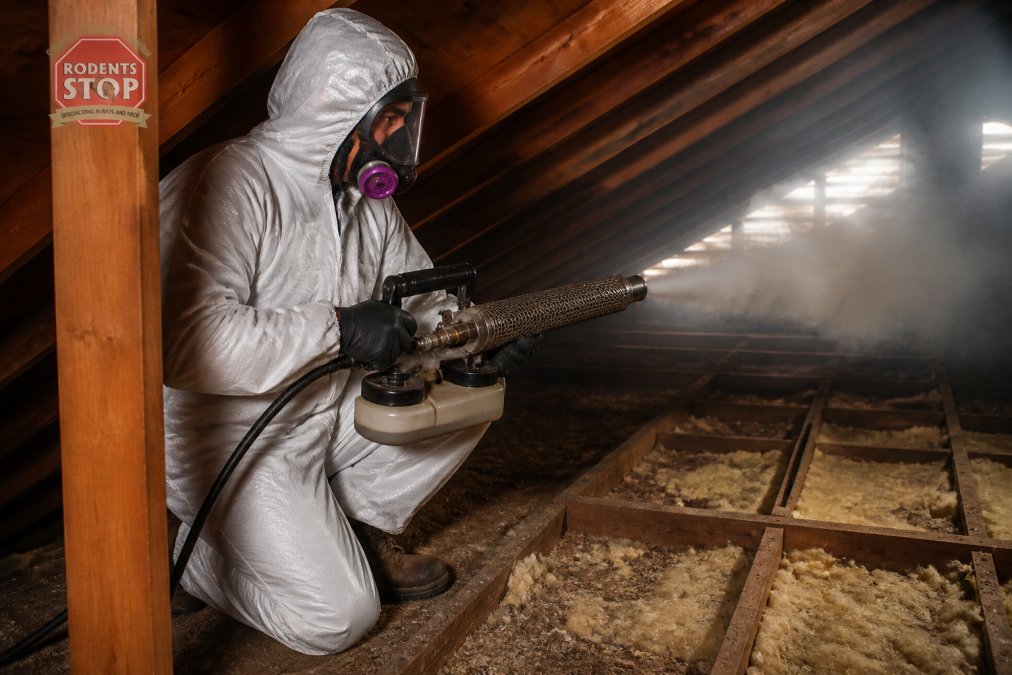
Effective pheromone neutralization requires breaking down these chemical compounds rather than covering them up. This is where professional rodent odor removal diverges completely from DIY approaches using air fresheners, ozone machines, or enzyme sprays applied to surfaces only.
Technology and Equipment Used
Professional teams deploy several categories of equipment to neutralize pheromones and eliminate odors.
Thermal fogging creates a fine mist of neutralizing agents that reaches every surface, including those inside walls and cavities. Unlike liquid sprays, thermal fog penetrates deep into structural voids and distributes evenly throughout contaminated spaces.
Hydroxyl generators produce hydroxyl radicals, highly reactive molecules that break down volatile organic compounds and eliminate odors at the molecular level. Unlike ozone, hydroxyl generators do not require the space to be vacated during treatment.
Air scrubbing equipment uses activated carbon and HEPA filtration to capture airborne odor particles and prevent them from circulating through the property.
Moisture removal is critical because rodent urine creates damp conditions that promote bacterial growth and perpetuate odors. Dehumidifiers and ventilation systems reduce moisture levels, making the environment inhospitable to odor-producing bacteria.
Microbial treatments use specialized cleaning agents that target bacteria responsible for creating the ammonia-like odor component. The combination of these technologies addresses odors through multiple mechanisms: removing contaminated materials, breaking down pheromone compounds, eliminating odor-producing bacteria, and preventing moisture that perpetuates the problem.
Professional Rodent Sanitation Services Explained
Professional rodent sanitation services represent a comprehensive approach to restoring contaminated properties, going far beyond odor removal to include pathogen elimination, structural restoration, and measures to prevent future infestations. Rodent infestation cleanup services address the complete scope of contamination, ensuring that not only are odors eliminated but all biological hazards are properly remediated.
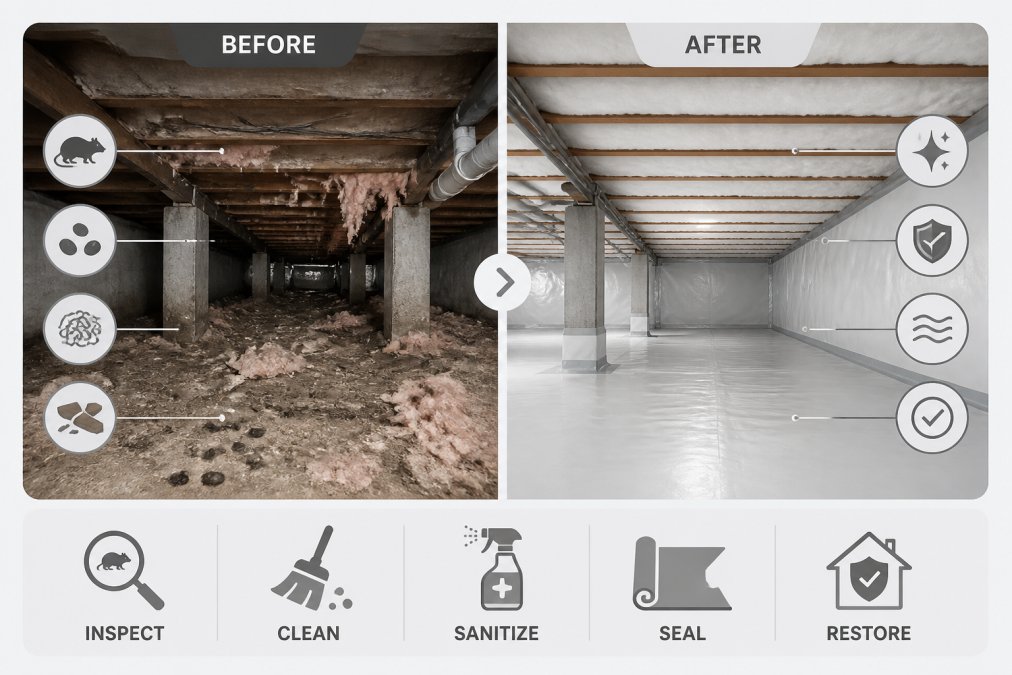
Microbial Cleaning and Pathogen Elimination
Rodent contamination creates health hazards beyond odor. Rodents carry pathogens including hantavirus, leptospirosis, and salmonella. These pathogens are present in urine, feces, and saliva and can remain viable in contaminated materials for extended periods.
Professional sanitation addresses pathogen elimination through multiple methods. Affected materials are either removed or treated with hospital-grade disinfectants that eliminate pathogens. Technicians treat structural cavities, ductwork, and hidden spaces where pathogens concentrate.
Insulation removal is particularly important for pathogen elimination because insulation that has absorbed urine cannot be reliably disinfected in place. Removing contaminated insulation eliminates the reservoir of pathogens and prevents ongoing exposure.
Air quality restoration involves removing airborne pathogens and odor particles through HEPA filtration and air scrubbing.
Post-Remediation Verification
Professional rodent odor removal services can include verification that treatment was successful. Odor assessment by trained professionals can confirm that offensive smells are no longer detectable. Air quality testing can measure volatile organic compounds and confirm that odor-causing compounds have been reduced to acceptable levels. Moisture testing can verify that treated areas are dry and will not support ongoing bacterial growth.
Documentation of remediation work can provide homeowners with records of what was treated, what materials were removed, and what verification was performed.
Health Risks of Untreated Rodent Contamination
The health implications of untreated rodent contamination extend far beyond unpleasant odors. Hantavirus, carried by some rodent species, can cause hantavirus pulmonary syndrome, a serious respiratory illness with high mortality rates. The virus remains viable in contaminated areas for weeks after rodents are removed.
Leptospirosis, transmitted through rodent urine, causes fever, muscle pain, and in severe cases, kidney failure and meningitis. Salmonella contamination from rodent feces causes severe gastrointestinal illness, with elevated risk for children, elderly individuals, and immunocompromised people.
Allergic reactions to rodent allergens trigger respiratory symptoms in sensitive individuals. Prolonged exposure can worsen asthma and create new allergies. These health risks persist as long as contamination remains untreated.
Rodent Odor Removal vs. Odor Masking
A critical distinction exists between actual odor removal and odor masking, explaining why many DIY and budget approaches fail.
Odor masking uses fragrances, ozone, or activated charcoal to cover up smells rather than eliminate them. Air fresheners temporarily overpower the rodent odor, but the underlying source remains. Ozone machines oxidize some odor compounds but do not reach odors embedded in materials. Activated charcoal absorbs some airborne odors but cannot reach contamination inside walls.
True odor removal eliminates the chemical compounds creating the smell by treating the source, contaminated materials, pheromone deposits, and bacterial colonies. Professional rodent odor removal uses enzymatic treatments, thermal fogging, and hydroxyl generation to break down odor-causing compounds at the molecular level. Masking approaches provide temporary relief followed by odor return. Removal approaches provide permanent resolution.
Timeline and Process Expectations
Understanding the timeline for professional rodent odor removal helps homeowners plan for the work and set realistic expectations.
Assessment and planning typically require time. During this phase, technicians inspect the property, identify contaminated areas, and develop a treatment plan.
Remediation work duration depends on contamination extent. Small infestations affecting a single attic or crawl space may be completed in a few days. Widespread contamination affecting multiple rooms may require more time.
Treatment application typically runs for a period, depending on the size of the affected area and contamination intensity.
Drying and ventilation periods follow treatment. Treated materials must dry completely before they are sealed or covered. This phase typically adds time.
Post-remediation verification occurs after treatment and drying. Odor assessment, air quality testing, and moisture verification can confirm that treatment was successful.
Most properties are fully remediated and verified within a reasonable timeframe from initial assessment.
Professional rodent odor removal addresses a problem that DIY approaches consistently fail to solve: complete elimination of odors embedded in structures and pheromone deposits throughout a property. Rodent Cleanup Experts handles this through systematic source identification, deep decontamination, and specialized neutralization technology that reaches every contaminated area. If you’re dealing with persistent rodent odors that standard cleaning hasn’t resolved, professional remediation can eliminate the problem entirely rather than temporarily masking it.
Frequently Asked Questions
Q: Why does rodent odor removal require professional help instead of DIY cleaning?
A: Rodent odor isn’t just surface-level smell, it’s embedded in insulation, structural materials, and air ducts through decomposition and pheromone saturation. A regular vacuum and bleach cannot neutralize these airborne contaminants or eliminate volatile organic compounds trapped in building materials. Professional rodent odor removal uses HEPA filtration, thermal fogging, and decontamination protocols to address the source, not just mask the smell. DIY approaches often leave pheromone residue that attracts new rodents back to the same location.
Q: How long does professional rodent odor removal take?
A: The duration of professional rodent sanitation services depends on the infestation size and structural complexity. Initial inspection and source identification typically take a few hours. Decontamination, microbial cleaning, and air quality restoration can span one or more days. Post-remediation verification ensures airborne contaminants are addressed before the space is cleared for occupancy. Your technician will provide a timeline during the assessment.
Q: What technology do professionals use to neutralize rodent pheromones?
A: Experts use several complementary technologies: thermal fogging disperses deodorizing agents into walls and cavities where odors hide; HEPA filtration removes airborne particles and volatile organic compounds; hydroxyl generators neutralize pheromones at the molecular level without harsh chemicals; and ozone treatment can break down organic odor molecules. Structural cleaning with sanitization protocols eliminates bacterial contamination from droppings and decomposition. This multi-layered approach addresses both the chemical and biological sources of rodent odor.
Q: Is the best way to remove rat smell guaranteed to work permanently?
A: Professional rodent odor removal eliminates existing odors, but permanent results depend on preventing re-infestation. Experts identify entry points and recommend sealing to stop new rodents from entering. However, if rodents return to an unsealed structure, new odors will develop. The best way to remove rat smell is paired with exclusion work, closing gaps in foundations, vents, and rooflines. Ask your service provider about entry-point assessment and sealing recommendations as part of your remediation plan.
This article was written using GrandRanker