Table of Contents
- Health Risks of Rodent Droppings in Your Attic
- How to Identify Rat Droppings and Infestation Signs
- Best Way to Clean Rat Urine and Fecal Matter
- How to Sanitize Your Attic After Rat Infestation
- DIY Cleanup vs. Professional Remediation
- Preventing Future Infestations and Entry Points
- Conclusion
Last Updated: August 30, 2026
Health Risks of Rodent Droppings in Your Attic
The dangers of rat droppings in attic spaces go far beyond unpleasant odors or visual contamination. When rats nest in your attic, they leave behind fecal matter and urine that harbor serious pathogens capable of causing severe illness. Rat droppings contain bacteria, viruses, and parasites that become airborne when disturbed. When you walk through an attic, sweep debris, or even open a storage box, you risk inhaling contaminated dust particles that can trigger acute illness or long-term health complications.
Hantavirus and Other Serious Diseases
Hantavirus pulmonary syndrome is one of the most dangerous rodent-borne diseases associated with rat droppings. This virus, transmitted through inhalation of aerosolized particles from contaminated fecal matter, causes severe respiratory distress and can be fatal. Symptoms appear 1-5 weeks after exposure and include fever, muscle aches, cough, and severe shortness of breath.
Beyond hantavirus, rat droppings carry leptospirosis, a bacterial infection spread through contact with urine-contaminated surfaces. This disease causes fever, chills, muscle pain, and in severe cases, kidney failure. Histoplasmosis, a fungal infection, develops when spores from contaminated insulation are inhaled. This respiratory illness mimics pneumonia and can cause permanent lung damage if left untreated.
Rodent-borne diseases also include rat-bite fever and salmonellosis, both transmitted through droppings or contaminated nesting material. These zoonotic diseases require medical treatment and can cause complications if diagnosis is delayed. The CDC tracks cases of hantavirus across the nation, with confirmed infections occurring regularly in areas with active rodent populations.
Respiratory Problems and Airborne Contamination
The airborne particles created when rat droppings deteriorate present an immediate respiratory hazard. As fecal matter breaks down, it releases dust particles containing pathogens that remain suspended in air for hours. Breathing this contaminated air triggers allergic reactions, asthma exacerbation, and acute respiratory infections even in people without pre-existing lung conditions.
Histoplasmosis spores thrive in accumulated rodent waste, particularly in warm, moist attic environments. When insulation becomes saturated with urine and covered with droppings, the fungal load increases dramatically. Inhaling these spores causes a progressive respiratory condition that may not show symptoms for weeks but can lead to chronic lung disease.
Children, elderly individuals, and people with compromised immune systems face heightened risk from airborne contamination. Pregnant women exposed to rodent pathogens risk complications and birth defects. Pet exposure is also a concern, dogs and cats can contract diseases from rodent waste and transmit secondary infections to household members.
How to Identify Rat Droppings and Infestation Signs
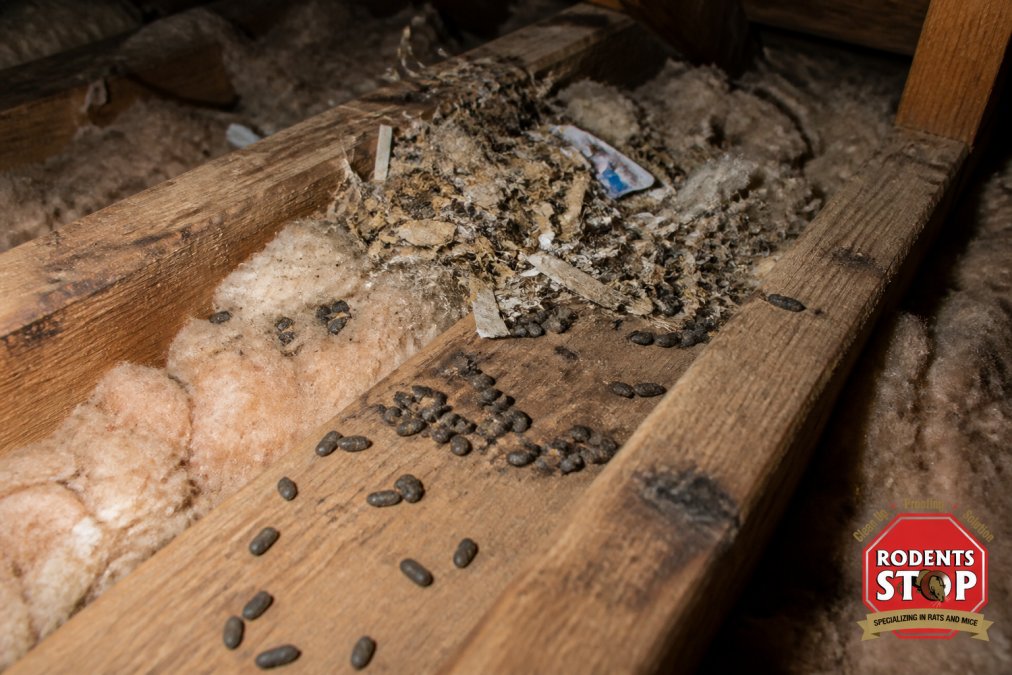
Identifying rat droppings early allows you to assess the scope of contamination before it spreads. Rat feces are dark, pellet-shaped, and roughly the size of a grain of rice. Fresh droppings appear moist and dark; older droppings become dry and crumbly. A single rat produces 40-50 droppings daily, so finding clusters indicates an active or recent infestation.
Spotting Droppings and Nesting Material
Rat droppings accumulate in concentrated areas where rodents spend the most time. You’ll typically find them near entry points, along wall cavities, in corners, and within or beneath insulation. Nesting material, shredded paper, fabric, plant matter, and dried grass, often surrounds droppings, indicating an active nest site.
Urine stains appear as dark, crusty residue on wood, insulation, and structural beams. These stains fluoresce under ultraviolet light, making them easier to identify in dark attic spaces. The smell of rodent urine is distinctive and pungent, often the first sign homeowners notice of an infestation.
Contaminated insulation becomes matted and discolored where rats have nested. Fiberglass batts or blown-in cellulose insulation saturated with urine loses its thermal effectiveness and becomes a biohazard. Rodent droppings embedded in insulation cannot be cleaned, the entire section must be removed and replaced.
Other Telltale Signs of Rodent Activity
Beyond droppings, look for chewed wiring, gnawed wood, and damaged structural components. Rats chew through electrical wiring to access insulation for nesting material, creating fire hazards. Holes in drywall, gaps in vapor barriers, and gnaw marks on joists all indicate active rodent presence.
Listen for scratching sounds in walls and attics, especially at night when rats are most active. Foul odors beyond just urine smell, including the musty scent of decomposing rodent carcasses, signal a significant infestation. Dead rodents trapped in walls or attics create secondary contamination and attract insects.
Entry points are critical to identify. Rats can squeeze through gaps as small as a dime. Inspect foundation cracks, gaps around pipes and utilities, damaged roof vents, and spaces where siding meets the foundation. Rodent fecal pellets near these entry points confirm active use.
Best Way to Clean Rat Urine and Fecal Matter
Attempting to clean rat droppings without proper protective equipment exposes you to serious health risks. The dangers of rat droppings in attic cleanup require specific safety protocols and equipment that most homeowners don’t possess. Professional rodent infestation cleanup ensures complete decontamination while protecting your health.
Personal Protective Equipment You’ll Need
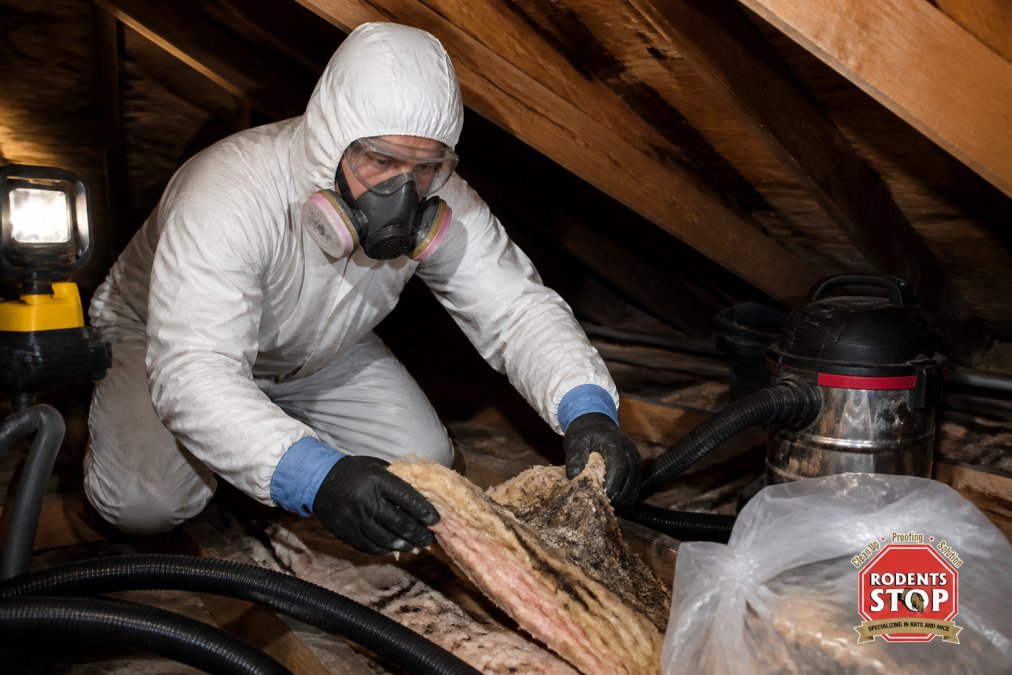
Proper PPE is non-negotiable when handling rat droppings. You must wear a NIOSH-rated respirator (N95 minimum, but P100 is preferred) to prevent inhalation of airborne pathogens. A standard dust mask provides insufficient protection against hantavirus and histoplasmosis spores.
Protective gloves should be heavy-duty, preferably double-layered to prevent contamination of your hands. Disposable coveralls protect your skin and clothing from contact with fecal matter and urine. Shoe covers prevent tracking contamination throughout your home. Eye protection shields mucous membranes from airborne particles.
A HEPA vacuum with sealed filtration is essential for any cleanup attempt. Standard household vacuums spread contamination by releasing particles back into the air. Never use a regular vacuum on rat droppings, the health consequences are severe.
Step-by-Step Cleaning Process
The proper cleanup sequence minimizes exposure and prevents cross-contamination. Begin by ventilating the attic thoroughly. Open windows and use fans to create air movement that carries contaminated particles outdoors rather than into living spaces.
Spray affected areas lightly with a disinfectant solution before disturbing any droppings. This prevents particles from becoming airborne during removal. Allow the solution to sit for several minutes before proceeding. Use a spray bottle rather than pouring liquid, which can spread contamination.
Carefully place contaminated materials into heavy-duty plastic bags. Double-bag all droppings, nesting material, and contaminated insulation. Seal bags tightly before removing them from the attic. Avoid sweeping or vacuuming dry droppings, the action creates dangerous airborne particles.
Use HEPA-filtered equipment to vacuum remaining dust and debris. Make multiple passes over affected areas. Dispose of all contaminated materials according to local regulations. In many areas, rodent-contaminated materials must be bagged separately for disposal.
After physical removal, apply a hospital-grade disinfectant to all affected surfaces. Let the disinfectant sit for the time recommended on its label, typically 10-15 minutes. Wipe surfaces clean with disposable cloths. Dispose of cloths in sealed bags.
How to Sanitize Your Attic After Rat Infestation
Sanitization goes beyond removing visible droppings. Pathogens persist on surfaces long after rodent droppings are gone. Complete decontamination requires targeting all areas where urine and fecal matter contacted insulation, wood, and structural components.
Decontamination and Disinfection Methods
Hospital-grade disinfectants designed to kill rodent-borne pathogens should be applied to all contaminated surfaces. These products kill hantavirus, leptospirosis bacteria, and histoplasmosis spores when used according to label directions. Allow adequate contact time, typically 10-15 minutes, for the disinfectant to work effectively.
Enzymatic cleaners break down organic matter and eliminate odor-causing compounds. These products work differently than standard disinfectants and are particularly effective on urine-saturated wood and insulation. Using both a disinfectant and an enzymatic cleaner provides comprehensive decontamination.
Ozone treatment and thermal fogging are advanced decontamination methods that reach areas difficult to access manually. These techniques penetrate deep into insulation and structural cavities, killing pathogens throughout the attic space. Professional equipment and expertise are required for safe application.
HEPA air filtration during and after cleanup removes airborne particles generated during decontamination. Portable HEPA units should run continuously throughout the cleanup process and for several hours afterward. This prevents contaminated air from spreading to other areas of your home.
Dealing with Contaminated Insulation
Insulation saturated with rodent urine and fecal matter cannot be adequately cleaned, it must be removed entirely. Attempting to sanitize contaminated insulation leaves pathogens embedded within the material, creating ongoing health risks. The cost of replacement is far less than the health consequences of inadequate remediation.
When removing contaminated insulation, use proper containment to prevent particles from spreading to clean areas. Seal off the attic space and direct air flow outward through windows or ducts. Wear full PPE during removal, including respirator and protective suit.
New insulation should be installed after the attic is thoroughly cleaned and disinfected. This restores thermal efficiency and prevents future moisture problems that attract rodents. Proper ventilation in the attic reduces humidity that supports fungal growth and rodent populations.
DIY Cleanup vs. Professional Remediation
Many homeowners attempt to save money by cleaning rat droppings themselves. This approach carries significant health risks and often fails to achieve complete decontamination. Understanding when professional help is necessary protects both your health and your property.
When Professional Help Is Essential
Professional remediation becomes essential when infestation is extensive or when contamination reaches insulation, HVAC systems, or structural components. Large infestations involve hundreds or thousands of droppings scattered throughout attic spaces, a scale that exceeds safe DIY cleanup.
If you have respiratory conditions, compromised immunity, or are pregnant, avoid any exposure to contaminated areas. Professional crews use equipment and expertise to eliminate health risks that DIY approaches cannot adequately address.
When rodent waste has contaminated your HVAC system, professional remediation is mandatory. Ducts and filters must be cleaned and disinfected by specialists with proper equipment. Running your HVAC system before professional cleaning spreads contamination throughout your entire home.
Rodent Cleanup Experts provides comprehensive rodent infestation cleanup services that address not only the visible droppings but also hidden contamination in insulation, crawl spaces, and wall cavities. Our team inspects affected areas thoroughly, develops a customized cleanup plan, and uses professional-grade equipment to ensure complete decontamination. We identify entry points that allowed rodents to enter, helping prevent future infestations.
Professional remediation typically includes removal of contaminated materials, HEPA vacuuming, application of hospital-grade disinfectants, and replacement of damaged insulation. Our process ensures your attic is restored to a safe, sanitary condition while protecting your family’s health throughout the process.
Preventing Future Infestations and Entry Points
Once you’ve addressed the immediate contamination, preventing rodent return is critical. Rodents can re-infest a property within weeks if entry points remain unsealed. Understanding where rats enter and how to block their access stops the cycle of infestation and cleanup.
Rats need only a dime-sized opening to enter your home. Inspect your entire exterior for gaps around pipes, utility lines, vents, and foundation cracks. Seal openings with steel mesh, caulk, or hardware cloth, materials rats cannot chew through. Pay special attention to areas where different building materials meet, as these gaps are common entry points.
Roof vents, dryer vents, and exhaust fans must have protective screening. Install one-way door vents that allow air to escape but prevent rodent entry. Trim tree branches that hang over your roof, rats use these as highways to access your home.
Remove attractants that draw rodents to your property. Secure garbage in sealed containers, clean up fallen fruit and nuts, and store pet food indoors. Eliminate standing water sources, as rodents need water to survive. Fix leaky outdoor faucets and clear gutters that collect water.
Seal gaps in foundation walls and around basement windows. Install door sweeps on exterior doors. Ensure attic vents have proper screening and that soffit vents are not blocked by insulation or debris. These preventive measures, combined with regular inspections, significantly reduce rodent infestation risk.
Discovering rat droppings in your attic creates immediate stress and legitimate health concerns. The dangers of rat droppings in attic spaces require prompt, thorough action to protect your family. Rodent Cleanup Experts specializes in professional remediation that removes contamination completely, identifies entry points preventing future infestations, and restores your attic to a safe, sanitary condition. Contact us for a comprehensive inspection and customized cleanup plan tailored to your property’s specific needs.
Frequently Asked Questions
Q: Can rat droppings in the attic make you sick?
A: Yes. Rat droppings carry serious pathogens including hantavirus, leptospirosis, and histoplasmosis. When droppings dry out, they become airborne particles that can be inhaled, causing respiratory infections, fever, and in severe cases, organ failure. Even small amounts of exposure pose health risks, especially for children, elderly family members, and those with compromised immune systems. Pregnant women are at particular risk from certain rodent-borne diseases.
Q: What is the best way to clean rat urine contamination safely?
A: Always wear respiratory protection rated for biohazards, disposable gloves, and eye protection. Spray affected areas with a disinfectant solution (diluted bleach or commercial biohazard cleaner) to prevent dust from becoming airborne. Let the solution sit for several minutes, then carefully wipe or vacuum using a HEPA-filter vacuum. Never use a standard vacuum, which spreads particles. Dispose of all materials in sealed biohazard bags. If urine saturation is extensive, contaminated insulation should be removed and replaced by professionals.
Q: How long do rat droppings remain toxic in an attic?
A: Rodent droppings can remain infectious for months to years, depending on environmental conditions. Hantavirus particles can survive in dried feces for extended periods. Temperature, humidity, and ventilation affect how long pathogens remain viable. Even old, hardened droppings pose inhalation risks when disturbed. This is why attic inspection and cleanup should not be delayed, the longer contamination sits, the greater the risk of airborne exposure and structural damage from urine saturation.
Q: Should I clean rat droppings myself or hire a professional?
A: Small, isolated droppings in a contained area can sometimes be handled with proper PPE and precautions. However, professional remediation is strongly recommended for widespread contamination, insulation damage, or if you have health vulnerabilities. Professionals have commercial-grade HEPA equipment, proper biohazard disposal protocols, and can identify hidden contamination and entry points. They also handle odor removal and can assess structural damage, which DIY cleanup cannot address comprehensively.
This article was written using GrandRanker