Table of Contents
- Why Safe Removal of Rodent Droppings Matters
- Essential PPE for Rodent Cleanup
- Preparing Your Disinfectant Solution
- Step-by-Step Procedure for the Safe Way to Remove Droppings
- How to Disinfect Your Attic After Rodent Infestation
- Best Way to Clean Rat Urine Contamination
- Safe Disposal of Contaminated Materials
- When to Call Professional Services
Last Updated: August 26, 2026
Why Safe Removal of Rodent Droppings Matters
Rodent droppings pose serious health hazards beyond being unsightly. When mice or rats invade your home, they leave contaminated surfaces, nesting materials, and urine that harbor dangerous pathogens. Rodents carry bacteria, viruses, and allergens that become airborne when you disturb their droppings without precautions. Hantavirus, a serious respiratory illness, can be transmitted through inhalation of particles from contaminated rodent waste (the CDC). Improper cleanup can spread pathogens throughout your home, making the problem worse rather than better.
The difference between surface-level cleanup and truly safe removal comes down to understanding the hazards, using proper protective equipment, and following a systematic procedure that prevents aerosolization of dangerous particles.
Rodent droppings pose serious health risks including hantavirus and bacterial contamination. Improper removal can spread pathogens throughout your property, making professional guidance essential.
Essential PPE for Rodent Cleanup
Proper personal protective equipment is the foundation of safe rodent cleanup. You cannot adequately protect yourself with standard household gloves or a dust mask.
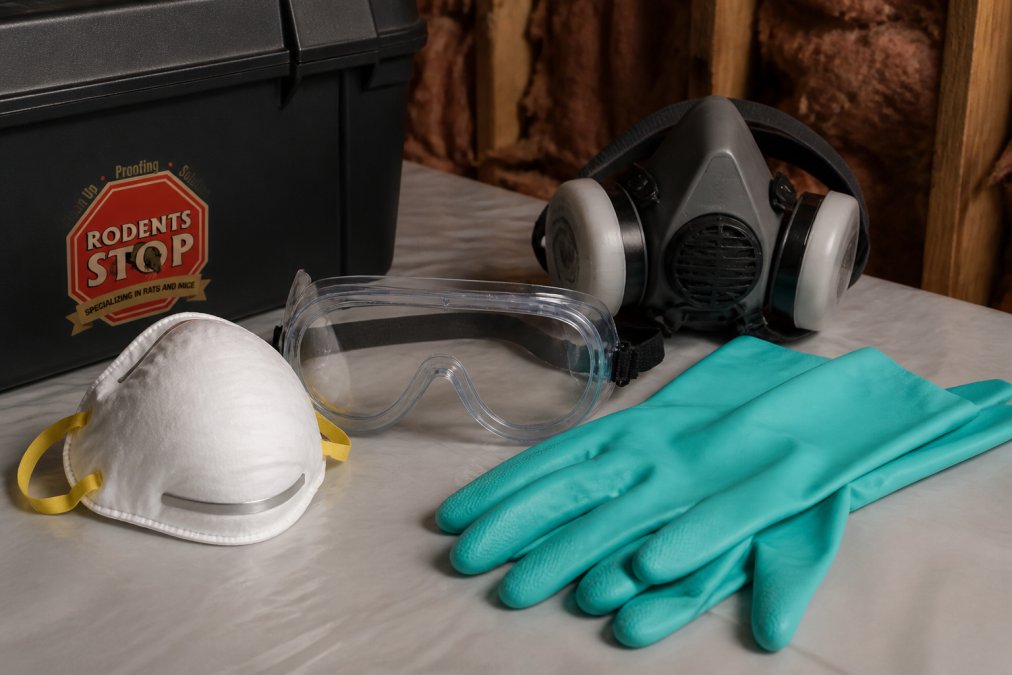
N95 masks and respirators are non-negotiable. A standard N95 mask filters particles down to 0.3 microns, critical when dealing with aerosolized pathogens (the CDC). For larger infestations or extended cleanup work, consider a HEPA respirator, which provides superior protection and reduces breathing resistance.
Rubber or plastic gloves should be heavy-duty and fit snugly at the wrist. Double-gloving, wearing one pair inside another, is common practice among professionals. When you remove the outer pair, your inner gloves remain clean, reducing cross-contamination risk.
Safety goggles or a face shield protects your eyes and mucous membranes from splashing disinfectant and airborne particles. Eye protection is essential when spraying disinfectant or working in confined spaces.
Protective clothing should cover your skin completely. Wear long sleeves, long pants, and consider disposable coveralls for large cleanup jobs. Wash dedicated cleanup clothing separately afterward.
Skipping proper respiratory protection when dealing with rodent droppings significantly increases your risk of inhaling hantavirus and other pathogens. Symptoms may not appear for weeks, making prevention critical.
Preparing Your Disinfectant Solution
A proper disinfectant solution is your chemical defense against pathogens left behind by rodents. Not all cleaning products are equally effective against bacteria and viruses in rodent waste.
Mix one part household bleach (5-6% sodium hypochlorite) with nine parts water to create a solution with approximately 0.5% bleach concentration (the EPA). This ratio is strong enough to kill most pathogens without creating excessive fumes or damaging surfaces. Let the solution sit on contaminated areas for at least 10 minutes before wiping, contact time is what kills pathogens.
An EPA-registered disinfectant offers an alternative to bleach, particularly if you have concerns about fumes or surface damage. Look for products specifically labeled as effective against rodent pathogens and follow manufacturer contact time recommendations.
Spray bottles work better than buckets for applying disinfectant solution. A trigger spray bottle gives you control and prevents over-saturating areas. For larger cleanup jobs, a pump sprayer can speed up the process while maintaining consistent coverage.
Prepare fresh disinfectant solution on the day of cleanup. Bleach loses potency over time when diluted.
Step-by-Step Procedure for the Safe Way to Remove Droppings
Following a systematic procedure prevents oversights that could leave pathogens behind or spread contamination.
Step 1: Ventilate and Isolate the Area
Open windows and doors to establish air circulation before beginning cleanup. Ventilation dilutes airborne particles and reduces pathogen concentration. If working in an attic or enclosed space, position a fan to push air toward an open window.
Isolate the contaminated area from the rest of your home by closing doors and sealing gaps with plastic sheeting if necessary. This containment prevents pathogens from spreading to clean areas. Consider turning off HVAC systems during cleanup to prevent circulation of contaminated air.
Step 2: Apply Disinfectant Before Disturbing
Before touching, sweeping, or vacuuming any contaminated materials, spray them thoroughly with your disinfectant solution. The spray wets the droppings and nesting materials, preventing them from becoming airborne when you handle them.
Let the disinfectant sit for the recommended contact time, typically 10-15 minutes depending on your chosen product. Rushing this step undermines the entire cleanup effort.
Step 3: Remove Contaminated Materials
Once the disinfectant has had adequate contact time, carefully remove contaminated materials. Use a damp cloth or paper towels to wipe up droppings and debris. The moisture keeps particles from becoming airborne. Place contaminated materials directly into a heavy-duty plastic bag.
For contaminated insulation, nesting materials, or heavily soiled areas, removal is often more effective than attempting to clean in place. Rodents nest in insulation, creating a matrix of droppings, urine, and nesting debris that’s nearly impossible to fully disinfect.
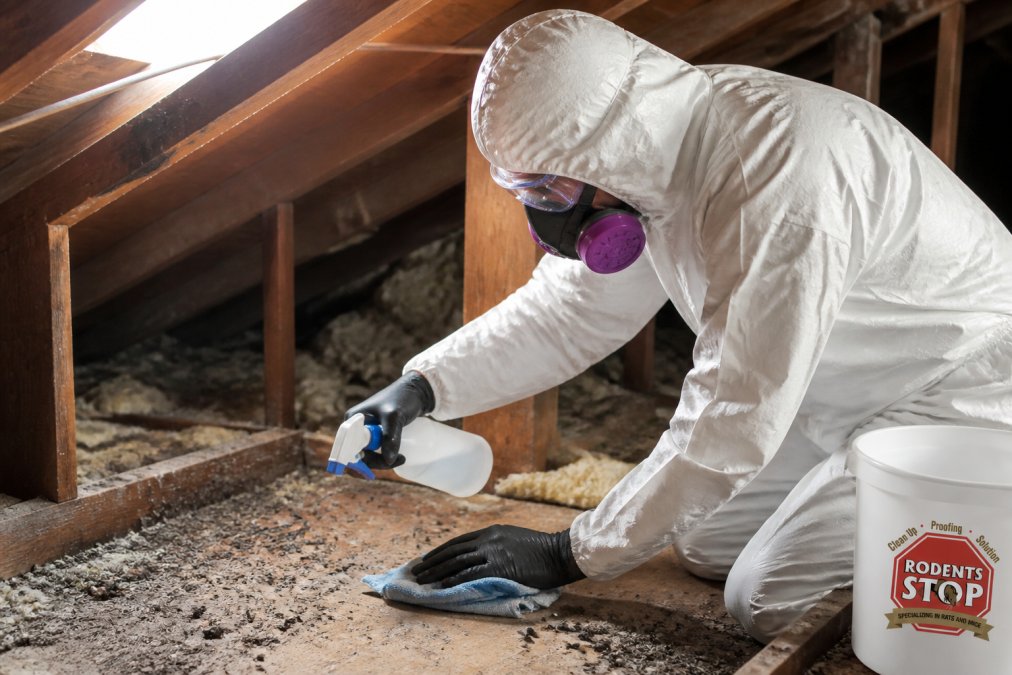
Step 4: Clean and Disinfect Surfaces
After removing visible contamination, clean all surfaces in the affected area with your disinfectant solution. Spray surfaces thoroughly, walls, beams, floors, any surface exposed to rodent urine or feces. Use clean cloths or disposable wipes to wipe down surfaces.
Don’t overlook hidden surfaces. Rodent urine often spreads beyond visible droppings. Check under insulation, behind beams, and in corners where rodents typically travel. These pathways are high-contamination zones requiring thorough disinfection.
How to Disinfect Your Attic After Rodent Infestation
Attics are prime real estate for rodents, warm, dark, and full of nesting materials. Once an infestation establishes itself, the attic becomes heavily contaminated with droppings, urine, and nesting debris.
Start by assessing contamination extent. Light infestations might involve droppings in a localized area. Heavy infestations contaminate insulation, rafters, and the entire floor space. The safe way to remove droppings from an attic often involves removing and replacing insulation rather than attempting to clean it in place.
Begin with thorough ventilation. Open attic vents, gable vents, and any access points to establish airflow. Temporarily position a fan to push air outward if your attic lacks adequate ventilation.
Apply disinfectant solution to all visible contamination. Spray droppings, nesting materials, and affected insulation. Let the solution sit for adequate contact time before proceeding. After removing visible contamination, clean all hard surfaces, rafters, joists, the attic floor. Spray and wipe these areas thoroughly.
Consider professional help for large attic infestations. The confined space, poor ventilation, and extensive contamination make attic cleanup challenging. Rodent infestation cleanup services provide comprehensive attic sanitation including contaminated insulation removal, HEPA vacuuming, and complete disinfection, restoring your attic to a clean, safe condition.
Homeowners with extensive attic contamination, poor ventilation, or health concerns. Professional attic disinfection ensures thorough contamination removal that DIY efforts often miss.
Best Way to Clean Rat Urine Contamination
Rat urine presents unique challenges because it’s invisible and spreads far beyond visible droppings. Rodents mark territories with urine, creating contamination on surfaces you can’t see. The best way to clean rat urine contamination requires understanding where urine accumulates and using methods that reach hidden contamination.
Rat urine dries and becomes invisible, but pathogens remain viable. When you inhale dust from urine-contaminated surfaces, you’re exposed to the same health risks as direct contact with fresh urine. Visual inspection alone is insufficient, you must treat likely contamination areas even when you don’t see obvious evidence.
Spray disinfectant solution on all surfaces where rats have traveled. Their pathways typically run along walls, under insulation, and through confined spaces. These travel routes are heavily contaminated with urine. Spray thoroughly and let the disinfectant sit for adequate contact time.
For porous materials like wood beams or cardboard, urine penetrates deeply. Disinfectant on the surface may not reach contamination within. This is why professionals often recommend removal and replacement of heavily contaminated materials rather than attempting to disinfect them in place.
Enzyme-based cleaners can help break down urine residue after initial disinfection. The disinfectant kills pathogens; the enzyme cleaner helps eliminate odor-causing compounds. Many homeowners use both in sequence, disinfectant first, then enzyme cleaner.
Safe Disposal of Contaminated Materials
How you dispose of contaminated materials matters as much as how you clean them. Improper disposal spreads contamination to landfill workers and potentially into the environment.
Place all contaminated materials, droppings, nesting materials, contaminated cloth and paper towels, into heavy-duty plastic bags. Double-bagging provides extra containment. Seal the bags securely so nothing can leak or spill during transport.
Check local regulations for hazardous waste disposal. Some municipalities require contaminated materials to be disposed of as hazardous waste rather than regular trash. Contact your local waste management authority to understand requirements in your area.
For large quantities of contaminated insulation or materials, professional disposal services may be necessary. Professional rodent infestation cleanup handles all aspects of contaminated material removal and disposal, ensuring compliance with local regulations and safe handling throughout the process.
Never burn contaminated materials, dispose of them in ways that might spread pathogens, compost them, or bury them on your property. Proper containment and disposal through official channels is the only safe approach.
Improper disposal of contaminated materials can spread pathogens to others and violate local regulations. Always use heavy-duty bags, seal them securely, and follow your local waste management guidelines.
When to Call Professional Services
Some situations exceed what homeowners should handle alone. Recognizing these situations and calling professionals protects your health and ensures complete contamination removal.
Extensive infestations involving large areas of your home warrant professional help. When droppings cover significant floor space, contaminate insulation throughout an attic, or appear in multiple rooms, the scope exceeds typical DIY cleanup.
Health concerns make professional cleanup the right choice. If you have respiratory conditions, immune system issues, or are pregnant, exposure to rodent pathogens carries elevated risk.
Odor problems that persist after cleanup suggest incomplete contamination removal or hidden contamination. Professional teams use specialized equipment to locate and treat hidden urine contamination causing persistent odors.
Uncertainty about contamination extent is another valid reason to call professionals. If you’re unsure whether you’ve found all contamination or whether your cleanup was adequate, professional assessment provides peace of mind.
Time constraints matter too. If you work full-time and lack hours for thorough cleanup, professionals can complete the job efficiently while you continue your normal routine.
Professional services also address the source of the problem. Beyond cleanup, professionals identify entry points where rodents accessed your home and recommend sealing strategies to prevent future infestations.
The safe way to remove droppings requires understanding the hazards, investing in proper protective equipment, and following a systematic procedure that prevents cross-contamination. Whether you handle cleanup yourself or call professionals, the principles remain the same: ventilate, disinfect, remove contamination, and dispose of materials responsibly. For extensive infestations, health concerns, or persistent odor problems, professional services ensure complete contamination removal and help prevent future rodent problems.
Frequently Asked Questions
What personal protective equipment is needed for rodent cleanup?
The minimum PPE includes an N95 mask or HEPA respirator, rubber or plastic gloves, eye protection, and long sleeves. An N95 mask filters airborne particles, while a full respirator provides greater protection against aerosolization when disturbing droppings. Double-gloving prevents cross-contamination. For extensive infestations, add a full-body suit and boot covers. Never skip respiratory protection, inhaling particles from rodent droppings poses serious health risks.
How long do rodent droppings remain toxic?
Rodent droppings can harbor pathogens for extended periods, particularly in dry environments. Hantavirus, one of the primary health concerns, can remain viable on surfaces for days to weeks depending on temperature and humidity. Bacteria and allergens persist even longer. This is why thorough disinfection with an EPA-registered disinfectant and proper soak time (typically 5-10 minutes) is essential. Never assume old droppings are safe, treat all contaminated areas as hazardous until properly sanitized.
What disinfectant should I use for the safe way to remove droppings?
Use an EPA-registered disinfectant rated for viruses and bacteria. A bleach solution (1 part bleach to 10 parts water) is effective and affordable, though commercial disinfectants designed for biohazard cleanup work well too. Apply the solution generously to all contaminated surfaces and allow adequate soak time before wiping. Ensure the product you choose is labeled for use against hantavirus or similar pathogens. Avoid dry-sweeping or vacuuming droppings without pre-treatment, as this aerosolizes particles.
When should I call a professional instead of cleaning rodent droppings myself?
Call professionals if the infestation covers a large area (more than a few square feet), if you have respiratory conditions or a compromised immune system, if the contamination includes nesting materials in insulation, or if you're uncertain about the extent of the problem. Professionals use HEPA vacuums, proper disposal protocols, and commercial-grade disinfectants that most homeowners lack. They also identify entry points to prevent reinfestation. Large attic infestations, crawl spaces, or wall cavities especially warrant professional service.
This article was written using GrandRanker