Table of Contents
- What Deep Cleaning Attic Insulation Services Actually Involve
- Why Professional Attic Sanitation and Decontamination Matters After Rodent Damage
- The Cost of Professional Attic Cleanup: What Affects Your Quote
- Rodent Damage Attic Restoration: From Removal to Replacement
- DIY vs. Professional Risk Assessment: Why Attic Cleanup Isn’t a DIY Job
- Health Impact of Attic Contaminants and Why Thorough Cleanup Protects Your Home
- Preventing Future Infestations: Sealing Entry Points and Protecting New Insulation
- Conclusion
Last Updated: August 27, 2026
What Deep Cleaning Attic Insulation Services Actually Involve
Deep cleaning attic insulation services go far beyond sweeping out dust. When rodents invade your attic, they leave behind contaminated insulation, droppings, urine, nesting materials, and bacteria that regular cleaning can’t address. Professional deep cleaning involves systematic removal of contaminated insulation, HEPA vacuuming to capture microscopic particles, chemical sanitization, odor treatment, and replacement with fresh insulation.
At Rodent Cleanup Experts, we understand that each infestation creates unique problems. Contamination spreads through insulation fibers, settles into air ducts, and embeds itself in structural materials. Surface-level cleanup leaves behind allergens and pathogens that continue to affect your home’s air quality and structural integrity.
The process starts with a thorough inspection to assess damage extent. Technicians identify contaminated areas, check for active infestations, and evaluate whether insulation can be salvaged or must be removed entirely. Most contaminated insulation requires complete removal due to how rodent urine and droppings penetrate fiberglass batts and blown-in cellulose. Once removed, the space is vacuumed with HEPA filtration to capture particles as small as 0.3 microns, something a standard household vacuum cannot do (the EPA).
The difference between DIY cleanup and professional deep cleaning comes down to equipment and thoroughness. HEPA-filtered vacuums alone cost thousands of dollars, and improper technique during removal can spread contamination further through your home’s air system.
After removal, antimicrobial treatments eliminate bacteria and viruses left behind by rodents. Decontamination products target pheromones, the chemical signals rodents leave that attract new infestations. Only after complete sanitization does new insulation get installed, often with attention to sealing entry points to prevent future problems.
Why Professional Attic Sanitation and Decontamination Matters After Rodent Damage
Rodent infestations create health hazards extending far beyond visible droppings. When mice or rats nest in insulation, they contaminate the material with urine, feces, saliva, and hair containing hantavirus, leptospirosis, and other pathogens that become airborne when disturbed. Professional rodent infestation cleanup removes these biological hazards and restores the space to safe condition.
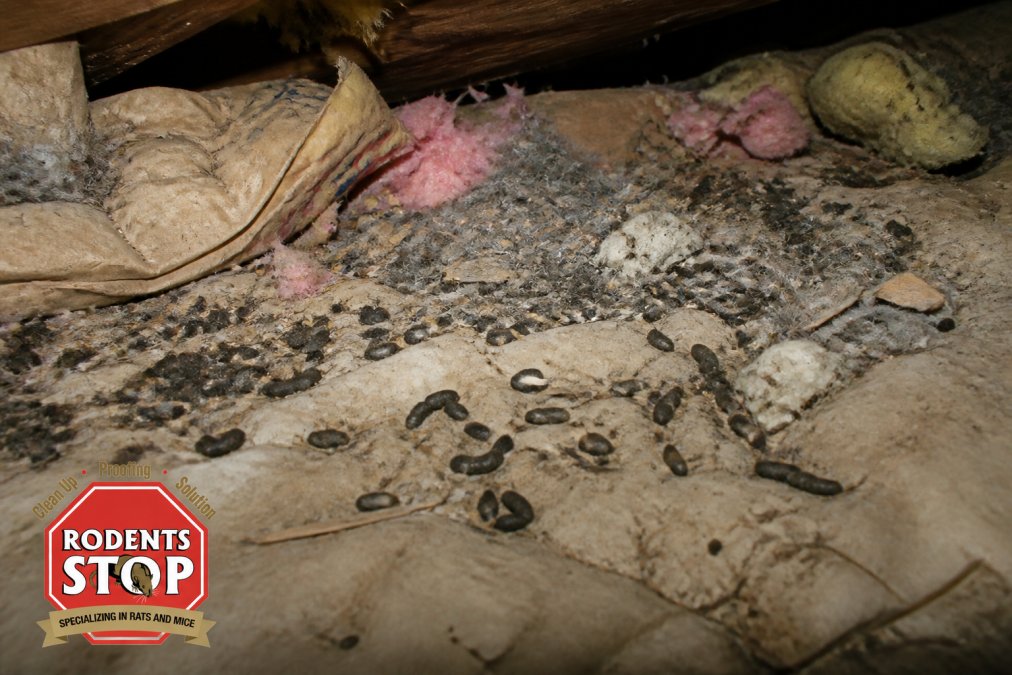
Many homeowners attempt DIY cleanup with a vacuum and bleach, missing the core issue: rodent contamination has permeated insulation at a microscopic level. Urine soaks deep into fiberglass fibers and cellulose material. Droppings fragment into dust particles settling into every crevice. A standard household vacuum actually mobilizes these particles, pushing them into your living space below.
Professional attic sanitation addresses what DIY cleanup cannot reach. Technicians use HEPA vacuuming to capture contaminated particles before they enter your home’s air. Chemical decontamination targets bacteria and viruses embedded in insulation and structural materials. Odor treatment neutralizes pheromones, the chemical markers rodents leave that can trigger new infestations months or years later. According to CDC guidance on rodent-borne diseases, proper decontamination requires removal of contaminated materials and thorough sanitization of affected spaces.
The health impact of skipping professional decontamination can be significant. Rodent droppings contain allergens triggering respiratory issues, especially in children and people with asthma. Urine contamination leads to ammonia buildup in your attic, seeping into living spaces and causing headaches, coughing, and breathing difficulties. Professional decontamination eliminates these health risks by removing source material and sanitizing thoroughly.
The Cost of Professional Attic Cleanup: What Affects Your Quote
The cost of professional attic cleanup depends on several factors that vary significantly from one property to another. Attic square footage, contamination severity, insulation type, structural damage, accessibility, entry point sealing, and new insulation replacement all influence pricing.
Several variables determine your specific quote:
- Attic square footage, Larger spaces require more time, materials, and labor
- Contamination severity, Light droppings cost less than heavy infestation with nesting material throughout
- Insulation type, Blown-in cellulose may require complete removal; fiberglass batts can sometimes be spot-treated
- Structural damage, Rodents chew wiring, damage HVAC components, and compromise wood framing
- Accessibility, Poor ventilation, low clearance, or difficult access increase labor time
- Entry point sealing, Identifying and sealing rodent entry points prevents future infestations
- New insulation replacement, R-value requirements and material choice affect costs
Most professional services require an on-site inspection to assess actual damage, determine what materials must be removed, and identify structural issues. Rodent Cleanup Experts inspects affected areas and develops a cleanup plan based on your property’s specific condition.
Unusually low quotes should raise red flags. If a quote seems significantly cheaper than others, the provider may be cutting corners on HEPA filtration, sanitization thoroughness, or insulation quality. Inadequate cleanup leaves contamination behind, defeating the purpose of professional remediation.
Request quotes from multiple providers and compare what’s included. Some services include entry point sealing; others charge separately. Understanding what each quote covers prevents surprises and ensures fair comparison.
Rodent Damage Attic Restoration: From Removal to Replacement
Rodent damage attic restoration follows a structured sequence beginning with removal and ending with new insulation installation, ensuring contamination is completely eliminated and your attic functions properly again.
Phase 1: Contaminated Insulation Removal
All contaminated insulation must be removed. Technicians carefully extract fiberglass batts or blow out cellulose insulation, placing it in sealed containers for proper disposal.
Phase 2: HEPA Vacuuming and Particle Removal
After insulation removal, technicians vacuum the entire attic using HEPA-filtered equipment, capturing rodent droppings, nesting material fragments, and microscopic particles that regular vacuums cannot handle.
Phase 3: Chemical Sanitization
Antimicrobial treatments are applied to all surfaces, rafters, joists, decking, and ductwork, eliminating bacteria, viruses, and fungi left behind by rodent activity.
Phase 4: Odor and Pheromone Treatment
Specialized odor elimination products neutralize the smell of rodent urine and droppings. Pheromone treatments prevent new rodents from being attracted to the space.
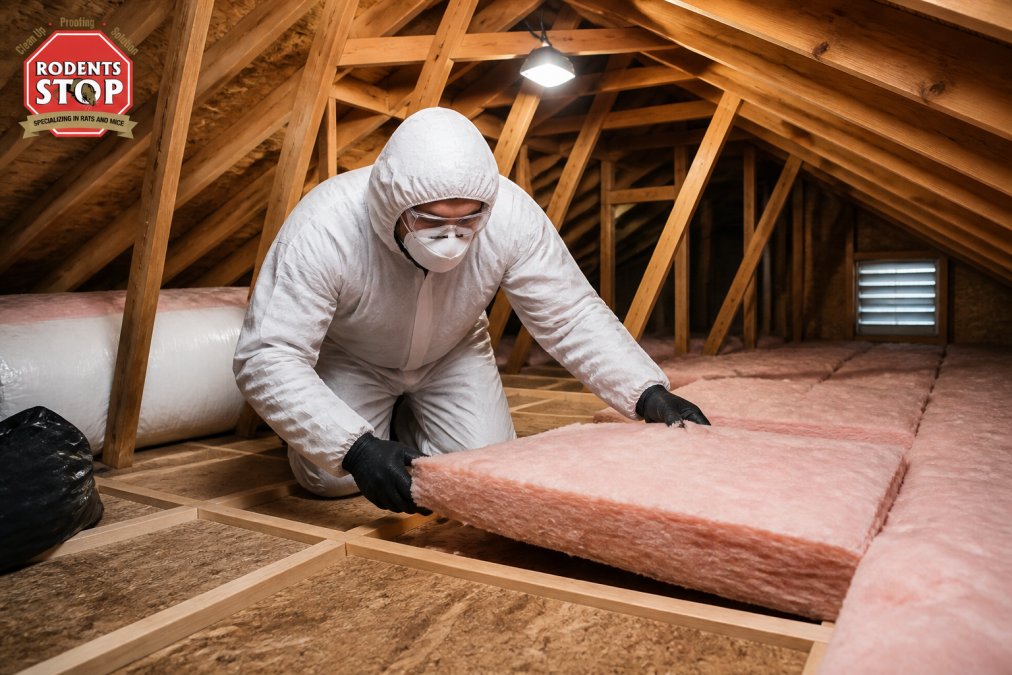
Phase 5: New Insulation Installation
Once sanitized and dry, new insulation is installed. The choice between fiberglass batts, blown-in cellulose, or spray foam depends on your attic’s structure and energy efficiency goals.
Phase 6: Entry Point Sealing
Technicians identify and seal rodent entry points, preventing future infestations and protecting your new insulation investment.
The entire restoration process typically takes several days, depending on attic size and contamination severity. Rodent Cleanup Experts coordinates the work to minimize disruption while ensuring every step is completed thoroughly.
DIY vs. Professional Risk Assessment: Why Attic Cleanup Isn’t a DIY Job
The temptation to clean up rodent damage yourself is understandable, but attic cleanup presents specific health and safety risks that make professional service the safer choice.
Health Risks of DIY Cleanup
Rodent droppings and urine contain pathogens that become airborne when disturbed. Hantavirus, leptospirosis, and other diseases can be contracted by inhaling contaminated particles. A standard household vacuum actually aerosolizes particles rather than capturing them, spreading contamination throughout your home’s air system.
Professional technicians wear respirators rated for biological hazards, full-body suits, and gloves. Most homeowners lack proper respiratory protection or understanding of correct usage. Even with equipment, improper technique exposes you to contamination.
Contamination Assessment Challenges
Determining the full extent of rodent contamination requires experience. Professionals know contamination spreads beyond visible droppings into insulation fibers, air ducts, and structural materials. A homeowner might clean visible areas and miss contamination that continues to pose health risks.
Structural and Safety Issues
Rodents damage more than insulation. They chew electrical wiring, creating fire hazards, and damage HVAC components, reducing system efficiency. Identifying these issues requires knowledge of building systems and construction.
Equipment Limitations
Professional deep cleaning requires specialized equipment homeowners typically don’t own. HEPA-filtered vacuums cost thousands of dollars. Antimicrobial sprayers, chemical decontamination products, and proper disposal containers are professional-grade tools.
The real cost of DIY cleanup isn’t just time spent, it’s the health risk, incomplete contamination removal, and potential structural damage you might miss. Professional assessment costs far less than addressing health problems or structural repairs later.
A professional assessment identifies risks you might overlook. Even if you decide to proceed with some cleanup yourself, professional guidance prevents costly mistakes.
Health Impact of Attic Contaminants and Why Thorough Cleanup Protects Your Home
Attic contamination doesn’t stay isolated in your attic. Contaminants migrate into your living space through air leakage, HVAC systems, and structural gaps.
Airborne Particulates and Respiratory Issues
Rodent droppings fragment into microscopic particles that become airborne with air movement. These particles contain allergens and pathogens traveling through your home’s air system. People with asthma, allergies, or compromised immune systems are particularly vulnerable, experiencing coughing, wheezing, shortness of breath, and sinus congestion that worsens over time.
Ammonia and Odor-Related Health Effects
Rodent urine breaks down into ammonia, accumulating in attic spaces and seeping into living areas below, causing headaches, eye irritation, throat irritation, and respiratory symptoms.
Bacterial and Viral Contamination
Rodent feces and urine contain bacteria like Salmonella and viruses causing serious illness. Hantavirus, though rare, is particularly dangerous and can be fatal if contracted through inhalation of contaminated particles. According to NIH information on hantavirus, proper decontamination and disposal of rodent-contaminated materials is critical for preventing infection.
Mold Growth from Moisture and Urine
Rodent urine creates moisture in insulation and structural materials, promoting mold growth. Mold spores trigger allergic reactions and respiratory issues. In homes with poor attic ventilation, mold spreads extensively before discovery.
Long-Term Exposure Effects
Chronic exposure to low-level contamination causes cumulative health effects. Family members may develop persistent respiratory symptoms, allergies, or infections. Children are particularly vulnerable because their developing lungs are more susceptible to damage from airborne contaminants.
Thorough cleanup eliminates these health hazards by removing the contamination source entirely. Professional deep cleaning ensures pathogens, allergens, and moisture sources are eliminated, protecting your family’s health long-term.
Preventing Future Infestations: Sealing Entry Points and Protecting New Insulation
Cleanup and restoration mean nothing if rodents return within months. Preventing future infestations requires identifying entry points and sealing them effectively.
Identifying Rodent Entry Points
Rodents can squeeze through openings as small as a dime. Common entry points include gaps around utility penetrations, cracks in foundation walls, openings where pipes and wires enter the home, damaged vents, and gaps in soffits or fascia. Professional inspection identifies these entry points systematically.
Sealing Techniques and Materials
Not all sealing materials work equally. Steel wool, hardware cloth, and caulk are commonly used, but rodents can chew through some materials. Professional-grade sealing uses materials rodents cannot penetrate, steel mesh, metal flashing, and heavy-duty caulk applied correctly.
Attic Ventilation Considerations
Sealing entry points must be balanced with proper attic ventilation. Your attic needs air circulation to prevent moisture buildup and maintain insulation performance. Sealing must be strategic, blocking rodent entry while preserving ventilation pathways.
New Insulation Protection
Fresh insulation installed after cleanup needs protection from future rodent activity. Proper installation includes attention to how insulation is positioned and secured. Loose insulation or insulation installed in ways creating hiding spaces invites rodent nesting.
Rodent entry points often cluster around the attic’s perimeter, where walls meet roof line, where utilities enter, and where additions connect to the original structure. Focusing sealing efforts on these high-risk areas prevents most reinfestation.
Prevention also includes reducing attractants around your property. Sealed garbage containers, removed food sources, and trimmed vegetation near your roof line make your home less appealing to rodents.
Rodent damage in your attic is a serious problem demanding professional attention. The contamination goes deeper than visible droppings, it penetrates insulation, embeds itself in structural materials, and poses genuine health risks to your family. DIY cleanup leaves contamination behind and exposes you to pathogens without proper protection.
Rodent Cleanup Experts specializes in comprehensive rodent damage cleanup, sanitation, and restoration throughout Southern California. Our team inspects affected areas, removes contaminated insulation, performs HEPA vacuuming and chemical decontamination, treats odors and pheromones, installs new insulation, and seals entry points to prevent future infestations.
If your attic has been damaged by rodents, contact Rodent Cleanup Experts for a professional assessment. Our experienced team restores contaminated spaces to clean, safe, and sanitary condition, protecting your home’s structural integrity and your family’s health.
Frequently Asked Questions
What is included in professional attic deep cleaning services?
Professional attic insulation deep cleaning typically includes removal of contaminated insulation, rodent droppings, and nesting materials; HEPA vacuuming to capture fine particles; chemical sanitization and decontamination; odor and pheromone treatment; and often replacement with new insulation. The exact scope depends on the extent of contamination and structural damage. A professional inspection determines which services your attic needs.
How much does professional attic cleanup cost?
The cost of professional attic cleanup varies based on attic size, contamination severity, insulation type, and whether replacement is needed. Pricing depends on the specific condition of your property and the scope of work required. Contact a local provider for a free estimate tailored to your situation.
How do I know if my attic insulation is contaminated by rodents?
Signs of rodent contamination include visible droppings, urine stains, nesting material, a strong ammonia or musty odor, and damaged or matted insulation. You may also notice entry holes, chewed wiring, or pest activity. A professional inspection can confirm contamination and assess whether insulation replacement is necessary for your health and home safety.
Is it safe to use a regular vacuum to clean rodent droppings from my attic?
No. Regular vacuums can aerosolize harmful particles and bacteria, creating serious health risks. Professional attic sanitation and decontamination uses HEPA filtration systems designed to safely capture contaminants without spreading them. Attempting DIY cleanup exposes you to hantavirus, leptospirosis, and other pathogens. Professional crews have proper safety equipment and containment protocols.
This article was written using GrandRanker