Table of Contents
- Why Pet Safe Attic Odor Removal Matters
- Step 1: Identify the Source of the Odor
- Step 2: Safety Preparation Before You Start
- Step 3: Remove Animal Waste and Contaminated Materials
- Step 4: The Best Way to Remove Rat Smell
- Step 5: Pet Safe Enzyme Cleaner for Attic Sanitization
- Step 6: Professional Attic Sanitation Services
- Step 7: Long-Term Moisture Control and Prevention
Last Updated: August 29, 2026
Why Pet Safe Attic Odor Removal Matters
When rodents infest an attic, they leave behind droppings, urine, nesting materials, and sometimes carcasses that create persistent odors seeping into living spaces. The smell signals contamination posing health risks to your family and pets. Pet safe attic odor removal requires eliminating odors at the source while protecting the animals you live with.
Rodent odors penetrate insulation and structural materials deeply. The ammonia from urine and organic decay bond to insulation fibers, drywall, and wood. Surface cleaning won’t work; without proper decontamination, the smell returns within weeks. Pet safe attic odor removal demands identifying the source, removing contaminated materials, sanitizing thoroughly, and using the right deodorizers to neutralize what remains.
Step 1: Identify the Source of the Odor
Not all attic smells are the same, and misidentifying the problem leads to wasted time and ineffective treatments.
Signs of Rodent Contamination
Rodent odors combine ammonia (from urine), mustiness (from decomposing matter), and a sharp undertone that lingers after ventilation. Look for physical evidence: small dark droppings clustered in corners, shredded insulation and nesting materials, or dead rodents. Check insulation for matting, discoloration, or visible contamination.
Distinguishing Rodent Odors from Other Sources
Musty smells can come from moisture, mold, or poor ventilation. Mold odors are earthy and damp, distinct from the sharp ammonia scent of rodent urine. If you see visible mold or water stains, moisture is your primary issue, though rodent infestations often coexist with moisture problems. Trace the odor to specific attic areas; rodent odors concentrate near nesting sites, entry points, or travel routes along rafters and joists.
Step 2: Safety Preparation Before You Start
Before entering your attic, you need proper protection. Rodent-contaminated spaces pose real health risks.
Protecting Yourself and Your Pets
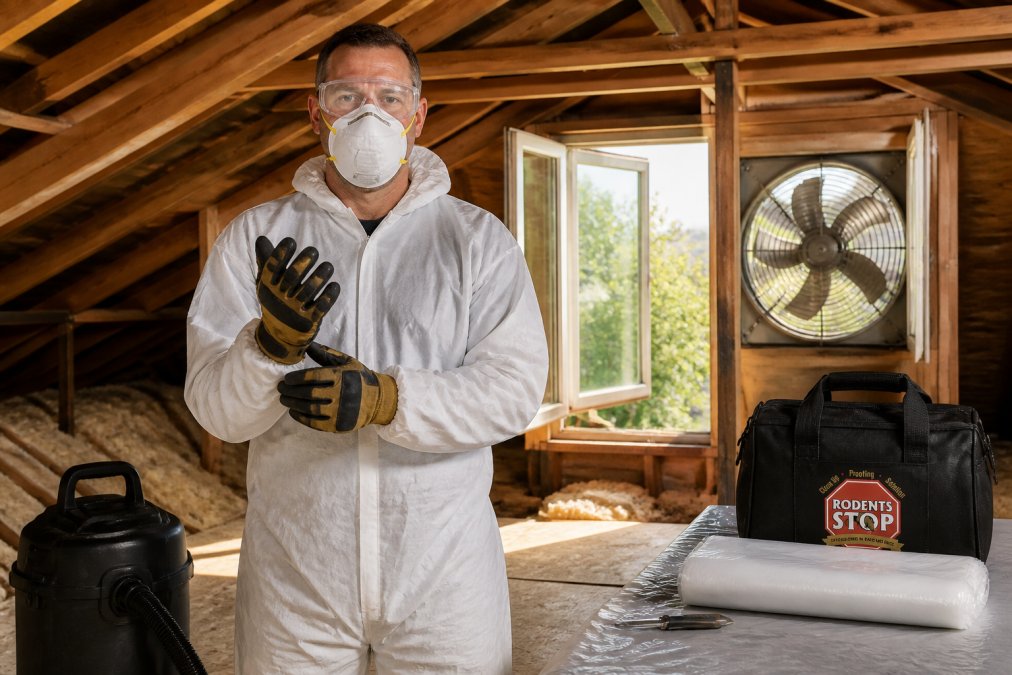
Rodent droppings carry pathogens including hantavirus and leptospirosis. You need a properly fitted N95 or P100 respirator, not a dust mask. Wear gloves, long sleeves, and pants. Keep your clothes separate from family laundry until you’ve showered.
Keep pets away from the attic during cleanup and for 24 hours afterward. Confine cats or dogs to a different area of the house and remove any pet bedding or toys from the attic before starting. Ventilation is non-negotiable. Open windows or use a fan to create air circulation before you begin.
Ventilation Requirements
Use a box fan or portable exhaust fan to pull air out through a window or vent, pointing it outward to push contaminated air outside. Keep the fan running for at least one hour after finishing. Turn off central air conditioning during cleanup; running your HVAC system while disturbing rodent-contaminated materials spreads pathogens throughout your home.
Step 3: Remove Animal Waste and Contaminated Materials
Removing contaminated materials is the foundation of effective pet safe attic odor removal. You cannot deodorize what you haven’t cleaned.
Handling Rodent Droppings and Nesting Materials
Don’t sweep or use a regular vacuum; both aerosolize particles. Spray droppings lightly with disinfectant solution (one part bleach to ten parts water) and let sit for five minutes. Use disposable gloves and place droppings in a sealed plastic bag. For heavy accumulations, remove and replace insulation in that section. Remove nesting materials, shredded insulation, paper, and fabric, these retain urine and odor compounds.
Dealing with Dead Animal Carcasses
A dead rodent creates intense odor that can persist for weeks if not removed. Use your sense of smell to locate it, checking wall cavities, spaces behind insulation, and areas under roof eaves. Place the carcass in a sealed plastic bag using gloved hands and dispose in your trash. After removal, spray the area with enzymatic cleaner to break down remaining organic matter.
Step 4: The Best Way to Remove Rat Smell
After removing contaminated materials, neutralize remaining odors. This is where most DIY attempts fail.
Enzymatic Cleaners and Bio-Enzymatic Solutions
Enzymatic cleaners break down organic compounds in urine, feces, and decomposing matter at a molecular level. They don’t mask the smell; they eliminate it. Bio-enzymatic solutions contain multiple enzyme types targeting different compounds in rodent waste. Apply generously to all contaminated surfaces, insulation, rafters, joists, and areas where droppings or urine were present. Let it sit for 24 to 48 hours as recommended on the label.
Activated Carbon and Natural Odor Absorption
Activated carbon is highly porous and absorbs odor molecules from the air. It’s non-toxic and safe for pets, making it excellent for pet safe attic odor removal. Spread activated carbon across the attic floor, particularly in heavily contaminated areas. Replace every 2-3 months or sooner if odors return.
Activated carbon works best with enzymatic treatment, not as a standalone solution. Use enzymes to eliminate the source, then activated carbon to absorb residual odors.
Chemical-Free vs. Chemical Deodorizers
Chemical deodorizers contain synthetic fragrances that cover odors temporarily without eliminating the source. Some are toxic to cats and dogs, making them unsafe for pet safe attic odor removal. Chemical-free options, enzymatic cleaners, activated carbon, baking soda, eliminate or absorb odors without introducing toxins. For homes with pets, chemical-free approaches are always safer.
Step 5: Pet Safe Enzyme Cleaner for Attic Sanitization
Enzyme cleaners are the backbone of effective pet safe attic odor removal.
Why Enzyme Cleaners Work on Organic Odors
Enzymes break chemical bonds in organic matter. Rodent urine contains urea and uric acid compounds creating ammonia smell. Enzymes target these compounds and break them into smaller, odorless molecules, fundamentally different from bleach, which kills bacteria but leaves odor-causing compounds intact. Enzymatic cleaners penetrate porous materials where odors have settled deep within insulation, wood, and drywall structure. Let enzymatic cleaner sit for 24-48 hours rather than wiping it up immediately.
Verifying Pet Safety Before Application
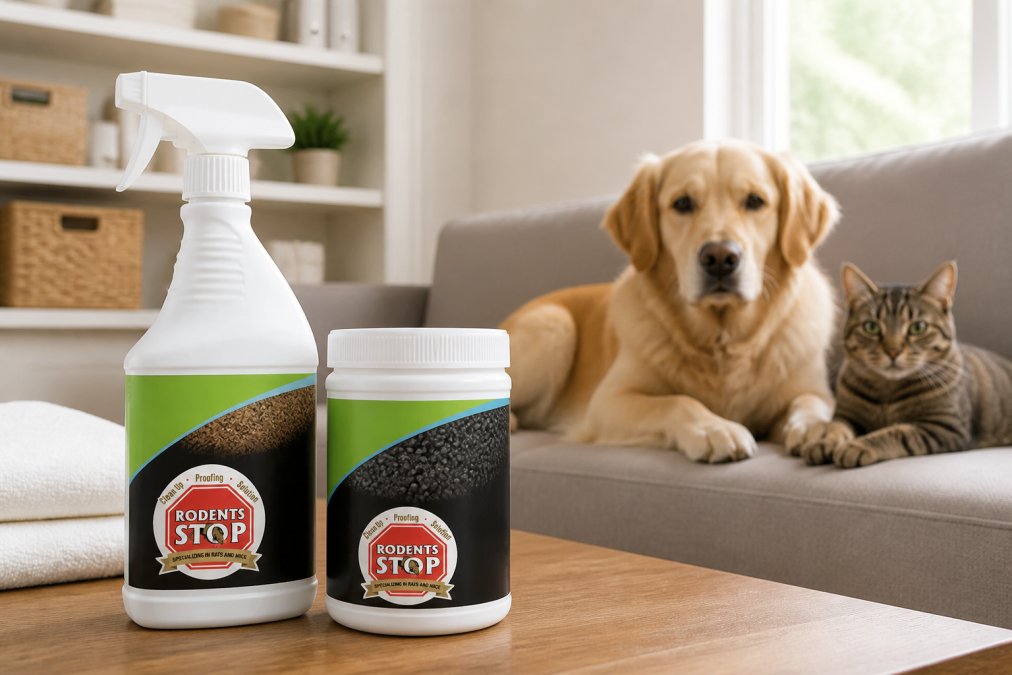
Not all enzyme cleaners are created equal. Some contain additives safe for humans but problematic for pets. Before applying any product, verify its safety for cats and dogs. Check the product label for pet safety warnings. Avoid products containing essential oils, phenols, or other compounds toxic to cats. After applying enzyme cleaner, ensure proper ventilation before allowing pets back into the home. Wait at least 24 hours and ensure the attic is well-ventilated before pets have access to lower levels.
Step 6: Professional Attic Sanitation Services
Some situations require professional intervention.
When to Call Professionals
DIY approaches work for minor contamination, a few droppings, limited nesting material, small odors. Extensive or long-standing infestations require professional sanitation. Heavy contamination means odors have penetrated deep into insulation and structural materials. Professional services are justified if you have health concerns or if you’ve already attempted DIY cleanup and odors persist. If your attic has experienced significant rodent infestation cleanup needs, professionals have the equipment and expertise to ensure complete remediation.
What Professional Sanitation Includes
Professional attic sanitation begins with inspection to assess contamination severity and identify all affected areas. The cleanup process includes removal of contaminated insulation in heavily affected areas, HEPA vacuuming to remove fine particles and pathogens, deep cleaning and sanitizing, odor and pheromone treatment, and professional replacement of damaged insulation. Professionals also identify and seal entry points where rodents entered, preventing future infestations. Comprehensive rodent infestation cleanup services address not just odor removal but also the underlying contamination and prevention of recurrence.
Attempting professional-level cleanup without proper equipment and training risks incomplete remediation. If odors persist after DIY treatment, professional services may be needed to address what was missed.
Step 7: Long-Term Moisture Control and Prevention
Eliminating current odors is only half the battle. Preventing future infestations requires addressing conditions that attract rodents and support odor development.
Moisture is critical. Rodents are attracted to damp spaces, and moisture promotes mold growth and organic decay that intensifies odors. Proper attic ventilation reduces moisture. Ensure your attic has adequate soffit and ridge venting. Insulation should be dry and properly installed with adequate ventilation space above it. Seal all entry points where rodents accessed the attic, gaps around pipes, vents, and eaves. Use steel mesh or hardware cloth for permanent seals. Monitor your attic periodically for new droppings, nesting material, or odor development.
Pet safe attic odor removal requires a systematic approach: identify the problem, remove contamination, apply effective deodorization, and prevent future infestations. DIY methods work for minor contamination, but extensive infestations demand professional expertise. Professional services provide comprehensive attic sanitation that eliminates odors at the source while protecting your family and pets. A professional team inspects contaminated areas, removes damaged insulation, applies professional-grade enzymatic treatments, and seals entry points to prevent rodents from returning. Get started with a professional assessment and restore your attic to a clean, safe condition.
Frequently Asked Questions
What is the best way to remove rat smell from an attic?
The most effective approach combines three steps: removing contaminated materials and fecal matter, applying enzymatic cleaners that break down organic odor sources, and using activated carbon or charcoal to absorb remaining odors. Enzymatic cleaners work by breaking down the proteins in urine and droppings that cause the musty smell. For persistent odors, professional attic sanitation services use HEPA vacuuming and decontamination treatments. The key is addressing the source, not just masking the smell with air fresheners.
Are enzyme cleaners safe for pets in the attic?
Most enzymatic cleaners are pet-safe when used correctly, but verification is essential. Look for products labeled non-toxic, biodegradable, and free from harmful chemicals. Before application, check the product label for pet safety warnings and follow all dilution instructions. Keep pets away from treated areas during application and until the product dries completely. If your pets have respiratory sensitivities, ensure proper ventilation during treatment. Professional services can recommend or use pet-friendly enzyme cleaners specifically formulated for homes with animals.
How do I know if attic odors are from rodents or pets?
Rodent odors typically smell musty, ammonia-like, or pungent and are concentrated in specific areas where droppings accumulate. Pet odors are usually stronger near bedding areas or litter boxes and smell distinctly like urine. Look for rodent droppings (small, dark pellets), nesting materials, or chewed insulation, these confirm rodent contamination. Rodent urine stains may appear under UV light. If you're unsure, inspect the attic for physical evidence of rodent activity.
How long does pet-safe attic odor removal take?
DIY odor removal typically takes 1-3 days depending on the extent of contamination and ventilation conditions. Professional attic sanitation services usually complete the work in 1-2 days for residential properties. The timeline depends on the size of the affected area, the severity of contamination, and whether contaminated insulation needs replacement. Most treatments require 24-48 hours for enzymatic cleaners to fully work and odors to dissipate. Discuss timeline expectations with your service provider before starting.
This article was written using GrandRanker