Table of Contents
- Understanding Rodent Odor and Decomposition
- How Odor Neutralizers Work Against Decomposition Molecules
- The Best Way to Remove Rat Smell: Product Solutions and Methods
- How to Find a Dead Rodent in the Wall or Crawl Space
- Safety Precautions When Handling Rodent Carcasses
- Professional Rodent Sanitation Services and Post-Removal Protocols
- When DIY Odor Removal Falls Short
- Preventing Future Rodent Infestations
- Frequently Asked Questions
Last Updated: September 26, 2026
Understanding Rodent Odor and Decomposition
A dead rodent in your home creates one of the most persistent and unpleasant smells you’ll encounter, and knowing the 5 best odor neutralizers for rodent carcasses can help you address it effectively. The odor comes from decomposition molecules released as the animal’s body breaks down. These molecules, including compounds from biological decay, can penetrate walls, insulation, and crawl spaces, making the problem far worse than you’d expect from something so small.
The smell signals active decomposition and airborne particles that affect air quality. Understanding the cause is the first step toward choosing the right solution.
Odor peaks within the first week, then gradually decreases. Without proper treatment, it lingers for months in enclosed spaces. Opening windows or using air fresheners only masks the smell, they don’t address the source.
How Odor Neutralizers Work Against Decomposition Molecules
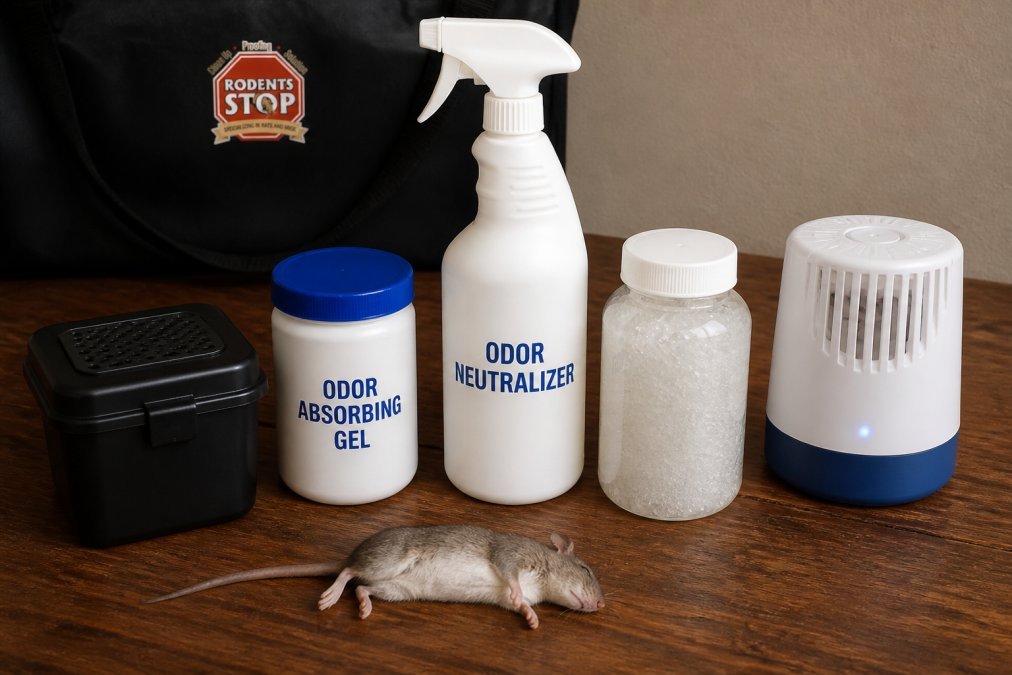
Odor neutralizers break down or absorb the molecules creating the odor, rather than just masking it. Different types work through absorption, chemical reactions, or air filtration. Understanding each mechanism helps you choose the right approach.
Absorption-based neutralizers like charcoal and baking soda trap odor molecules in their porous structure, preventing the smell from spreading.
Enzyme-based neutralizers break down organic compounds at their source, making them more thorough than absorption alone.
Air purification systems filter particles and circulate fresh air, especially useful in enclosed spaces where odor concentrates.
The Best Way to Remove Rat Smell: Product Solutions and Methods
Eliminating rat smell requires combining products with proper technique, and the 5 best odor neutralizers for rodent carcasses work best when used together as part of a comprehensive approach.
Activated Charcoal-Based Neutralizers
Activated charcoal absorbs odor molecules in contained spaces. Place it in bowls near affected areas, most see improvement within 24-48 hours. It’s non-toxic and safe around pets, but works best for localized odors, not large spaces or wall voids.
Enzyme-Based Odor Eliminators
Enzyme cleaners break down organic matter at a molecular level and are particularly effective after carcass removal. Apply to contaminated insulation, soiled surfaces, and urine stains. Most require several hours and may need reapplication for stubborn odors. Test on delicate materials first.
Baking Soda and Natural Absorption Methods
Baking soda is affordable, non-toxic, and works on most surfaces in small to medium spaces. Replace every few days as it saturates. For larger spaces, use as part of a multi-step approach rather than alone.
Commercial Chemical Deodorizers
Professional-grade deodorizers combine absorption, chemical neutralization, and antimicrobial properties for persistent odors. Follow instructions carefully and check labels for pet or child precautions.
Air Purification and Ventilation Systems
HEPA air purifiers filter out airborne particles and odor molecules. In enclosed spaces like attics or crawl spaces, they significantly improve air quality.
Proper ventilation is equally important. Opening windows and using fans creates air exchange, which dilutes concentrated odors. In sealed spaces, mechanical ventilation becomes essential for odor control.
Combine air purification with other neutralization methods for best results. Purifiers alone won’t eliminate odors trapped in materials, they work best alongside absorption or enzyme treatments.
How to Find a Dead Rodent in the Wall or Crawl Space
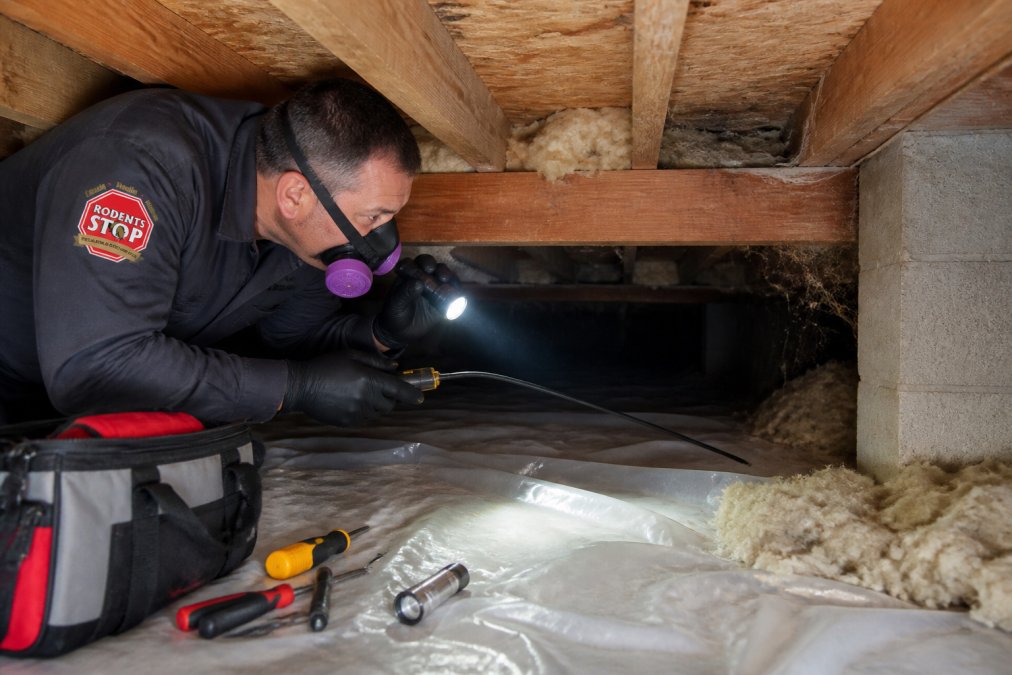
The smell tells you a rodent died somewhere in your home, but finding it requires systematic searching. Start in the area where the odor is strongest, this is usually closest to where the carcass is located.
Check these common locations first:
- Attics and roof voids
- Crawl spaces under the house
- Wall cavities between studs
- Behind appliances and HVAC equipment
- Inside ductwork and ventilation systems
- Garage rafters and storage areas
Use a flashlight and look for visual signs: droppings, nesting material, or the carcass itself. In wall voids, you may need to drill small inspection holes to locate the body. Mark each hole for later repair.
Trust your nose. The odor grows stronger as you get closer to the source. If you narrow it down to a wall cavity but can’t access it easily, professional help becomes the practical choice. Rodent cleanup experts can locate hidden carcasses using specialized equipment and techniques without causing unnecessary damage to your home.
Safety Precautions When Handling Rodent Carcasses
Never handle a dead rodent with bare hands. Rodent carcasses carry genuine health hazards that extend beyond simple discomfort. Understanding these risks underscores why proper protective equipment and technique are non-negotiable.
Health Risks from Decomposing Rodent Matter
Airborne pathogens released during decomposition pose documented health concerns. Hantavirus, leptospirosis, and salmonella can be transmitted through inhalation of dust and particles from contaminated areas. Histoplasmosis, a fungal infection, can develop from exposure to rodent droppings and nesting materials. These aren’t theoretical risks, they’re documented by public health agencies as genuine occupational hazards for pest control professionals and homeowners alike.
Decomposition also releases volatile organic compounds (VOCs) and bacterial endotoxins into the air. Prolonged exposure to these compounds can trigger respiratory irritation, allergic reactions, and in immunocompromised individuals, serious infections. The longer a carcass remains undiscovered, the greater the pathogen load in surrounding materials like insulation, drywall, and flooring.
Required Protective Equipment
- Disposable gloves (nitrile or latex), change gloves if they tear or become visibly soiled
- N95 or N100 respirator mask, a cloth or surgical mask is insufficient; you need a particulate respirator rated for biological hazards
- Long sleeves and pants to minimize skin exposure
- Eye protection if there’s any risk of splashing or aerosolized particles
- Shoe covers or dedicated shoes that won’t track contamination through your home
Proper Handling and Disposal
Ventilation and Air Quality During Removal
Professional Rodent Sanitation Services and Post-Removal Protocols
After removing a carcass, the work isn’t finished. Thorough sanitation prevents health risks, eliminates lingering odors, and stops secondary pest infestations. This is where most DIY efforts fail, homeowners remove the visible carcass but leave behind contaminated materials that continue to harbor pathogens and odor-causing compounds.
Why Post-Removal Sanitization Matters
- Viable bacteria and viruses that can survive for weeks or months in dried material
- Odor-causing compounds trapped in insulation fibers and wall cavities
- Pheromone trails that attract new rodents to the same location
- Allergens and fungal spores that accumulate in dust
Surfaces and Materials Requiring Professional Treatment
- Insulation: Contaminated batts or loose-fill insulation must be removed and replaced. Enzyme treatments alone cannot fully disinfect porous insulation material.
- Drywall and subflooring: Urine and feces penetrate these materials. Affected sections may need removal and replacement, or professional-grade antimicrobial treatment if structural integrity isn’t compromised.
- HVAC ductwork and returns: Rodents often travel through ductwork, leaving droppings and urine throughout the system. Standard duct cleaning misses contamination; specialized biohazard ductwork sanitization is required.
- Crawl space surfaces: Soil, concrete, and wooden joists in crawl spaces require deep disinfection to eliminate pathogens and prevent future infestations.
- Wall cavities: Even after carcass removal, cavity walls retain odor and pathogens. Professionals use fogging or injection techniques to treat inaccessible voids.
Professional Sanitization Protocols
Comprehensive post-removal sanitation includes:
- HEPA vacuuming of all affected areas to remove droppings, nesting material, and contaminated dust
- Enzyme-based deep cleaning of hard surfaces to break down organic matter and odor compounds
- Antimicrobial fogging or misting to disinfect air and surfaces in enclosed spaces like attics and crawl spaces
- Removal and replacement of contaminated insulation when material is heavily soiled or poses health risks
- Ductwork sanitization using specialized equipment to clean and disinfect HVAC systems
- Pheromone treatment to neutralize scent markers that attract new rodents to the area
- Moisture remediation if decomposition fluids have created damp conditions that promote mold growth
DIY Sanitization Limitations
- Standard disinfectants don’t penetrate porous materials like insulation or drywall
- Household cleaners lack the antimicrobial strength needed for biohazard-level contamination
- DIY efforts rarely address hidden contamination in wall cavities, ductwork, or crawl spaces
- Without proper equipment, homeowners can’t safely apply treatments to large areas without spreading contamination
- Incomplete sanitization leaves behind enough pathogens and odor compounds to cause recurring problems
When DIY Odor Removal Falls Short
Some situations require professional intervention. Attempting DIY removal in these cases wastes time and money.
Call a professional if:
- The carcass is in an inaccessible location
- Odor persists after 2-3 weeks of treatment
- The infestation affects large areas like entire attics
- You have health concerns or immune system issues
- Multiple carcasses are involved
- The smell is affecting adjacent units in multi-family properties
Preventing Future Rodent Infestations
Eliminating the current odor is only half the battle. Preventing new infestations stops the problem from recurring.
- Pipes and utility lines
- Foundation cracks
- Roof vents and eaves
- Doors and window frames
- Gaps in siding or trim
Frequently Asked Questions
How long does the smell of a dead rodent last?
The odor from a dead rodent typically peaks within 3-5 days as decomposition accelerates, then gradually fades over 1-2 weeks if left untreated. However, without proper removal and sanitization, the smell can persist for months, especially in enclosed spaces like walls or crawl spaces where airflow is limited. The duration depends on temperature, humidity, and whether the carcass remains in place.
What is the best way to remove rat smell from your home?
The best way to remove rat smell combines locating and removing the carcass, treating affected surfaces with enzyme cleaners or chemical deodorizers, and addressing underlying contamination like urine stains and fecal matter. Activated charcoal or baking soda can absorb residual odors, while ventilation and air purification help clear airborne particles. For severe infestations, professional sanitation ensures complete odor elimination and biohazard removal.
Is it dangerous to breathe in the smell of a dead rodent?
Yes. Dead rodents release airborne pathogens and decomposition molecules that can cause respiratory irritation, nausea, and headaches. Prolonged exposure to fecal matter dust and urine particles increases the risk of hantavirus, leptospirosis, and other serious infections. Vulnerable populations, children, elderly people, and those with respiratory conditions, face higher health risks. Proper protective equipment and professional removal are essential.
Can I use baking soda to neutralize dead rodent smells?
Baking soda can help absorb some odors on porous surfaces and in enclosed spaces, but it is not a complete solution for dead rodent smell. It masks odors temporarily rather than neutralizing the source. For effective odor removal, combine baking soda with carcass removal, enzyme cleaners, and sanitization. Chemical deodorizers and activated charcoal work faster and more thoroughly than baking soda alone.