Table of Contents
- 1. Identify the Source of the Odor
- 2. Prepare With Safety Precautions and Protective Gear
- 3. Use Natural Deodorizing Solutions
- 4. Apply Commercial Odor Eliminators and Enzymatic Cleaners
- How Long Does Dead Mouse Smell Last in Walls
- Professional Rodent Carcass Removal and Sanitizing Walls After Rodent Infestation
- Prevent Future Infestations by Sealing Entry Points
- Frequently Asked Questions
Last Updated: September 30, 2026
1. Identify the Source of the Odor
Learning 7 ways to remove dead mouse smell from walls starts with finding where the odor is coming from as your first step. The odor typically comes from decomposition happening inside walls, attics, or crawl spaces. Once you know the location, you can target your cleanup efforts more effectively.
The smell from a dead rodent comes from volatile organic compounds released during decomposition and bacterial growth. This process usually peaks between 3-5 days after death, then gradually fades over weeks. However, if the carcass remains trapped in a wall cavity, the odor can persist much longer.
To locate the source:
- Follow the strongest smell to its origin
- Check areas where you’ve seen droppings or rodent activity
- Look for dark stains on walls or insulation (signs of urine)
- Listen for buzzing sounds (indicates active decomposition with insects)
- Use your nose, move systematically through affected areas
If the smell is concentrated in one wall section, the carcass is likely behind that wall. If it’s dispersed throughout a room, check your HVAC system and air circulation patterns. Sometimes odor spreads through ductwork, making the source harder to pinpoint.
Some professional services use thermal imaging to locate carcasses without opening walls. This specialized approach can save time and prevent unnecessary damage to your home.
Don’t assume the smell is coming from the most obvious location. Rodents often travel through walls before dying, so the odor source may be several feet away from where you first notice the smell strongest.
2. Prepare With Safety Precautions and Protective Gear
Before you start any cleanup, protect yourself from airborne pathogens and contamination. Dead rodents carry bacteria, viruses, and allergens that can make you sick if you breathe them in or touch contaminated materials.
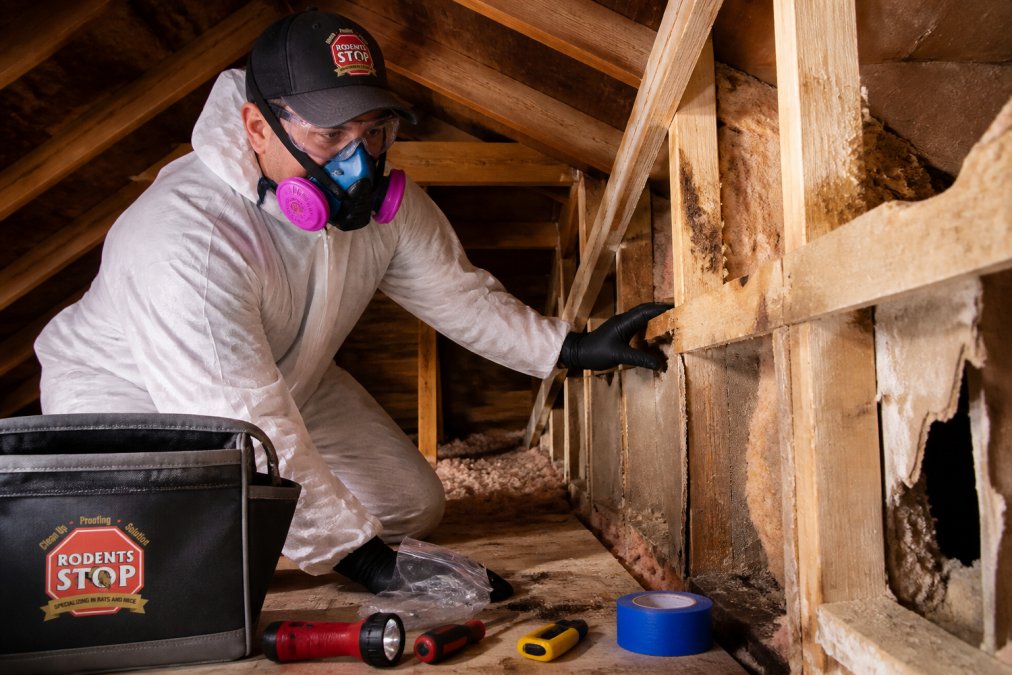
Essential protective equipment includes:
- Respirator mask: Use an N95 or better, regular dust masks won’t filter rodent pathogens
- Gloves: Nitrile or latex, double-layered for extra protection
- Eye protection: Safety glasses to keep dust and debris out
- Long sleeves and pants: Cover all skin to prevent contact with contaminated materials
- Shoe covers or dedicated cleanup shoes: Rodent fecal matter can contaminate floors
Ventilation is critical. Open windows and doors to increase air circulation. If possible, use a HEPA-filtered air purifier in the affected room. Never use a standard vacuum, it spreads pathogens into the air. If you must vacuum, use only a HEPA vacuum designed for biohazard cleanup.
Wash your hands thoroughly after any cleanup work. Change clothes and shower if you’ve been in heavy contamination. Keep children and pets away from the affected area during cleanup.
If you have respiratory issues, asthma, or a compromised immune system, avoid this work entirely. The airborne pathogens pose serious health risks. This is where professional help becomes essential, trained teams have proper equipment, training, and insurance to handle biohazard cleanup safely.
Never mix bleach with ammonia or other cleaners. This creates toxic chlorine gas that can cause serious respiratory damage or death. Use one disinfectant at a time, and rinse thoroughly between applications.
3. Use Natural Deodorizing Solutions
Natural methods work best for mild odors or as a first step before using commercial products. These solutions neutralize odors rather than just masking them, which is important for long-term results.
Baking soda is the simplest natural deodorizer. Sprinkle it generously on affected areas, leave it for 24-48 hours, then vacuum with a HEPA vacuum. Baking soda absorbs odor molecules rather than covering them up. Repeat applications may be needed for stubborn smells.
Activated charcoal works similarly to baking soda but is more effective for strong odors. Place charcoal bags or loose charcoal near the odor source. Charcoal absorbs volatile organic compounds that cause the smell. Leave it in place for several days and replace as needed.
White vinegar is effective for sanitizing and deodorizing. Mix equal parts white vinegar and water in a spray bottle. Spray affected areas lightly, don’t saturate. Vinegar kills bacteria and neutralizes some odor compounds. The vinegar smell fades as it dries.
Coffee grounds absorb odors naturally. Spread fresh grounds on affected areas or place them in open containers nearby. Coffee is particularly effective in enclosed spaces like closets or small rooms.
Lemon juice or citrus peels provide natural deodorizing properties. Simmer lemon peels in water to release citrus oils into the air, or place fresh peels in affected areas. The natural acidity helps neutralize odors.
These methods work best for odors that are 1-2 weeks old. For fresher, stronger smells, commercial enzymatic cleaners deliver faster results.
Natural solutions are safest for homes with pets and children, but they work slower than commercial products. Use them for mild odors or combine them with enzymatic cleaners for stronger infestations.
4. Apply Commercial Odor Eliminators and Enzymatic Cleaners
Enzymatic cleaners break down the organic compounds causing the smell, rather than just masking it. These products contain bacteria or enzymes that consume the odor-causing molecules at a molecular level.
Enzymatic cleaners are specifically designed for biohazard cleanup. They work by breaking down proteins and other organic matter left behind by decomposition. Products like Nature’s Miracle or Rocco & Roxie are effective for rodent odors. Apply according to product instructions, typically spraying or pouring the solution on affected areas and letting it sit for 24-48 hours.
Odor neutralizers use chemistry to convert odor molecules into neutral compounds. Products containing activated charcoal or specialized polymers trap odor particles. These work faster than enzymatic cleaners but may require multiple applications for severe smells.
Disinfectant sprays kill bacteria and reduce odor-causing microbes. Use a hospital-grade disinfectant like Lysol or a bleach solution (1 part bleach to 10 parts water). Apply to all contaminated surfaces. Let the solution sit for the time recommended on the label, usually 5-10 minutes.
Ozone generators neutralize odors chemically but require you to leave the area during treatment.
Application steps:
- Ventilate the area well before starting
- Wear protective gear throughout
- Apply product generously to all contaminated surfaces
- Allow the recommended dwell time
- Repeat applications if odor persists after 48 hours
How Long Does Dead Mouse Smell Last in Walls
Dead mouse smell typically lasts 3-10 weeks if the carcass remains in the wall. The timeline depends on temperature, humidity, and whether insects are present.
Professional Rodent Carcass Removal and Sanitizing Walls After Rodent Infestation
Removing the carcass yourself is possible but carries serious health and structural risks. Professional removal is faster, safer, and more thorough.
When to call a professional:
- The carcass is in a wall cavity you can’t access
- The smell has persisted for more than 2 weeks
- You have health concerns or respiratory issues
- The infestation is large or widespread
- You want guaranteed odor elimination
Professional rodent infestation cleanup involves:
- Locating the exact carcass location using detection methods
- Carefully removing the carcass and contaminated materials
- Proper disposal following local biohazard regulations
- Deep cleaning of the affected area
- Application of professional-grade enzymatic cleaners and odor treatments
- Replacement of contaminated insulation if necessary
Sanitizing walls after rodent infestation requires more than surface cleaning. Rodent urine soaks into insulation and drywall. Fecal matter contaminates materials deeply. Professional sanitization includes:
- HEPA vacuuming to remove all droppings and nesting materials
- Chemical disinfection of all contaminated surfaces
- Enzymatic treatment to break down odor-causing compounds
- Replacement of heavily contaminated insulation
- Air purification to remove airborne pathogens
Professional removal is best for anyone who doesn’t want to handle biohazard cleanup themselves, or when the infestation is severe and affects large areas of your home.
Prevent Future Infestations by Sealing Entry Points
Preventing future infestations is as important as removing the current one. Rodents enter homes through surprisingly small openings, mice can squeeze through holes the size of a dime.
Common entry points:
- Gaps around pipes and utilities
- Cracks in foundations
- Openings under doors and windows
- Vents without screens
- Holes in siding or trim
- Gaps where electrical lines enter the house
Sealing techniques:
- Use steel wool or hardware cloth for larger gaps (rodents can chew through caulk alone)
- Seal with caulk or expanding foam after inserting steel wool
- Install door sweeps on exterior doors
- Screen all vents with 1/4-inch hardware cloth
- Trim tree branches away from the roof
- Keep vegetation cleared from the foundation
Exclusion strategies:
- Remove food sources (store pantry items in sealed containers)
- Eliminate water sources (fix leaks, dry up standing water)
- Remove clutter and hiding spots
- Keep trash in sealed containers
- Don’t leave pet food out overnight
Frequently Asked Questions
What kills the smell of dead mice in walls?
Enzymatic cleaners and odor neutralizers break down volatile organic compounds left behind by decomposition. Natural options like activated charcoal and baking soda absorb odors, while commercial products containing oxidizing agents neutralize rather than mask the smell. For persistent odors in wall cavities, professional-grade sanitization combined with proper ventilation and air circulation works best. The key is addressing the source, removing the carcass, rather than relying on masking agents alone.
How long does dead mouse smell last without removal?
Dead mouse smell typically persists for 3 to 10 days after death, depending on temperature, humidity, and airflow. In sealed wall cavities with poor ventilation, the odor can linger for weeks or even months as decomposition continues. Warmer temperatures accelerate decomposition and intensify the smell initially, while cooler conditions may slow the process. Without removing the carcass, the odor will gradually fade as bacterial growth and decomposition complete their cycle, but active smell can dominate your home for extended periods.
Is it dangerous to leave a dead mouse in the wall?
Yes. Dead rodents pose health risks through airborne pathogens, bacterial growth, and contaminated fecal matter that can spread through wall cavities and into living spaces. Decomposition releases volatile organic compounds and biohazards that affect air quality. Additionally, leaving a carcass attracts other pests and can damage structural integrity if insulation becomes contaminated. Professional removal and sanitization eliminate health hazards and prevent secondary infestations that compromise your home’s safety and air quality.
Can you mask dead mouse smell or does it need to be removed?
Masking only temporarily covers the odor, the smell will return as decomposition continues. True odor neutralization requires removing the carcass and sanitizing the affected area with enzymatic cleaners and disinfectant solutions. Chemical masking products may suppress the smell for hours, but odor neutralizers that break down the compounds causing the smell provide lasting relief. Professional treatment combines removal, deep cleaning, and air purification to eliminate the source rather than just hiding it.