Table of Contents
- Signs of a Rodent Infestation and Why DIY Cleanup Falls Short
- Rodent Waste Removal and Sanitization: The Professional Process
- Attic Insulation Replacement After Rodent Infestation
- Rodent Proofing Home Exterior: Sealing Entry Points
- What Rodent Exclusion and Cleanup Services Cost in 2026
- Insurance Coverage for Rodent Damage
- Long-Term Maintenance and Preventative Measures
- Frequently Asked Questions
Last Updated: September 18, 2026
Signs of a Rodent Infestation and Why DIY Cleanup Falls Short
Rodent exclusion and cleanup services exist because the mess rodents leave behind is not ordinary dirt. It is contaminated material that requires containment, filtration, and disposal. At Rodent cleanup experts, we see the same pattern repeatedly: a homeowner finds droppings, vacuums them up, sprays bleach, and assumes the problem is solved.
It isn’t. The signs that matter most are the ones you cannot see from the attic hatch:
- Grease trails along rafters and baseboards where rodents travel
- Shredded insulation, cardboard, and fabric gathered into nests
- Ammonia-like urine odor that returns within days of cleaning
- Gnaw marks on wiring, HVAC ducts, and plumbing lines
- Staining on ceiling drywall from absorbed moisture and waste
A standard shop vacuum aerosolizes contaminated dust rather than removing it. According to the CDC guidance on rodent control and disease prevention, rodent droppings and urine can carry pathogens that become airborne when disturbed, which is why containment matters more than scrubbing effort.
Vacuuming dry droppings with a household vacuum spreads contaminated dust through the room and into your HVAC system. The particles settle on surfaces you never cleaned, and the odor returns within a week.
Rodent Waste Removal and Sanitization: The Professional Process
Professional rodent waste removal and sanitization follows a fixed sequence: contain the space, remove contaminated material, HEPA vacuum every surface, apply a disinfectant rated for the pathogens present, and verify the result. Skipping any step means the contamination stays, or comes back.
Containment and Negative Air
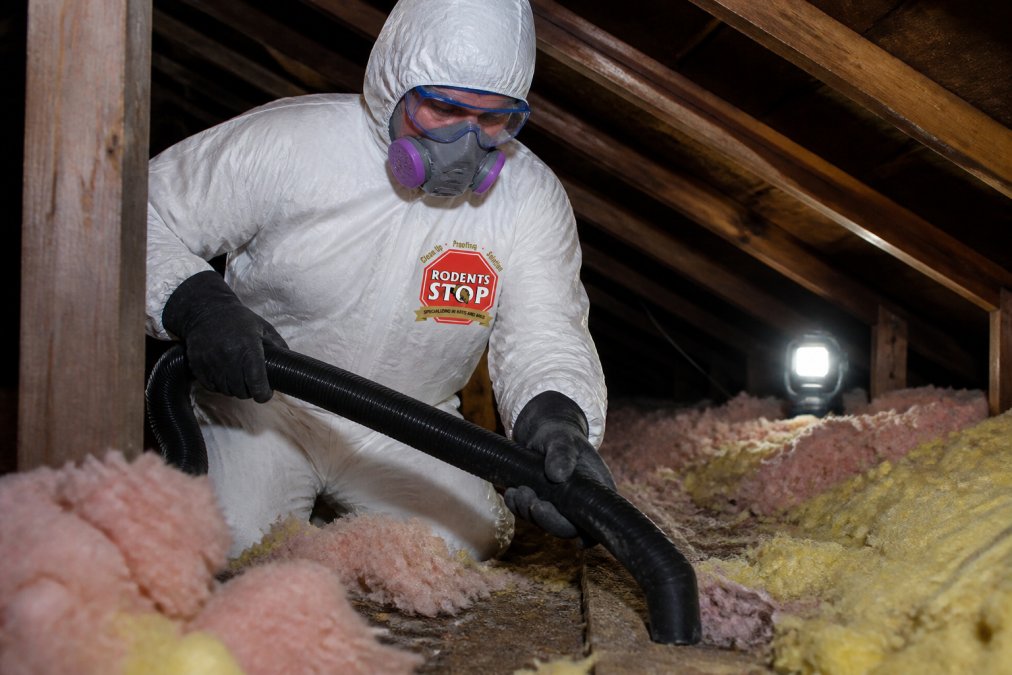
Before anything is touched, the work area is sealed off from the rest of the home. Technicians hang plastic sheeting over doorways and HVAC registers, then run a negative air machine so air flows into the work zone rather than out of it. This is the step that keeps a single attic cleanup from dusting the living room below. Without negative air, every bag of insulation you carry down the ladder is trailing contaminated particles behind it.
HEPA Filtration and Biohazard Cleanup
HEPA filtration is the use of high-efficiency particulate air equipment to capture particles that standard vacuums release back into the room. A true HEPA filter is rated to capture 99.97% of particles at 0.3 microns, the size range where rodent-dust particulates and attached pathogens travel. In biohazard cleanup, technicians bag droppings and nesting material at the source, seal it, and remove it without cross-contaminating clean areas of the home.
Disinfection and Dwell Time
Disinfectants do not work on contact. Most EPA-registered products labeled for rodent-associated pathogens require a specific dwell time, commonly around 10 minutes of visible wet contact, before the surface is considered treated. Spray-and-wipe defeats the purpose. Technicians apply the product, let it sit for the labeled interval, then wipe or allow it to air dry.
Odor Neutralization and Air Quality Testing
Odor neutralization targets the source, not the smell. Urine soaks into wood, drywall, and insulation, so surface sprays only mask it. Technicians apply enzyme-based treatments that break down the compounds causing the odor, then verify results.
If a provider cannot explain how they verify a completed cleanup, swab, air sample, or both, ask what standard they are using. “It looks clean” is not a verification method.
Attic Insulation Replacement After Rodent Infestation
Attic insulation replacement after rodent infestation is usually unavoidable once nesting and urine saturation have occurred. Insulation is porous. Once contaminated, it cannot be cleaned effectively, only removed and replaced.
The process typically involves:
- Removing and bagging all contaminated insulation
- HEPA vacuuming the decking and rafters
- Disinfecting framing and sheathing
- Sealing entry points before new material goes in
- Installing fresh insulation to the correct depth
Rodent Proofing Home Exterior: Sealing Entry Points
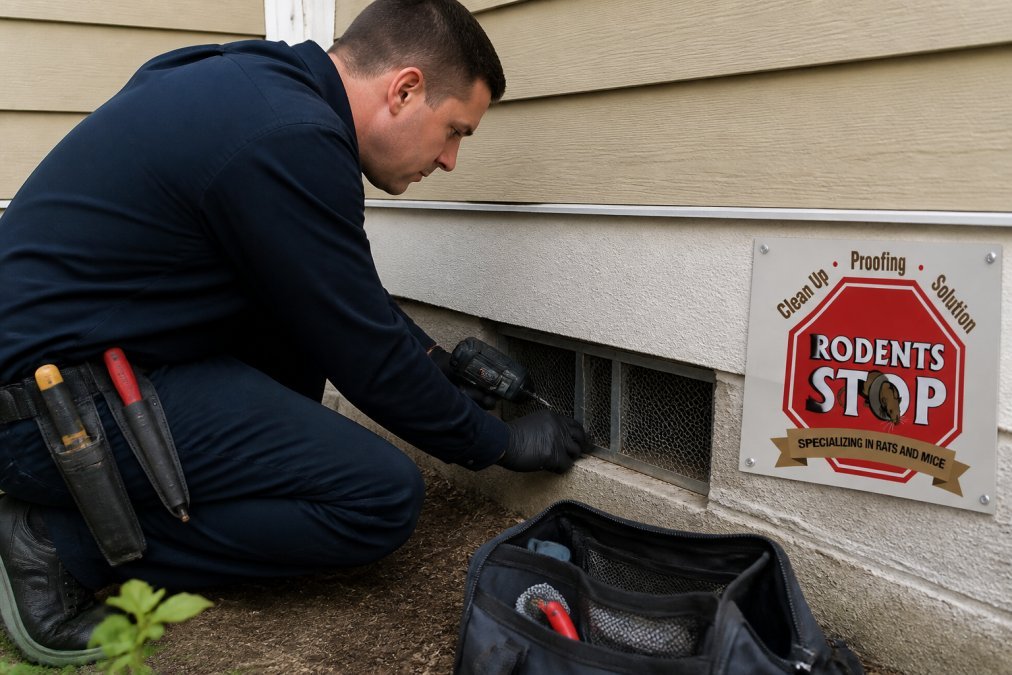
Rodent proofing home exterior work focuses on one question: where is the gap? Mice fit through openings the width of a pencil, so sealing must be thorough rather than obvious.
Expanding foam alone is a temporary fix. Rodents chew through it within days. Any gap wider than a quarter inch should be backed with steel mesh before sealing.
What Rodent Exclusion and Cleanup Services Cost in 2026
Pricing for rodent exclusion and cleanup services depends on the size of the affected area, the volume of contaminated material, whether insulation must be replaced, and how many entry points need sealing. A single attic with light contamination costs far less than a crawl space with saturated insulation and chewed ductwork.
- Square footage of contaminated area, the primary multiplier. Attic and crawl space work is priced by the area treated, not by the number of rodents caught.
- Volume of material removed, bagged insulation, nesting debris, and droppings are hauled and disposed of as contaminated waste, which carries its own handling cost.
- Insulation replacement, if the existing insulation is saturated, it is removed and replaced. This is often the single largest line item.
- Number and type of entry points, sealing a handful of soffit gaps is a different job than reworking a roofline, chimney flashing, and utility penetrations.
- Access difficulty, low-clearance crawl spaces, steep rooflines, and finished attics take longer and require more containment setup.
- Verification scope, whether the provider includes ATP swab testing, air sampling, or both after cleaning.
Insurance Coverage for Rodent Damage
Insurance coverage for rodent damage is one of the most misunderstood parts of this process. Most standard homeowners policies treat rodent damage as a maintenance issue rather than a sudden peril, which means cleanup and insulation replacement are frequently excluded.
Photograph and document the damage before any material is removed. Once contaminated insulation is bagged and hauled away, you have no evidence for an insurance claim.
Insurance Coverage for Rodent Damage
Insurance coverage for rodent damage is one of the most misunderstood parts of this process. Most standard homeowners policies treat rodent damage as a maintenance issue rather than a sudden peril, which means cleanup and insulation replacement are frequently excluded.
Long-Term Maintenance and Preventative Measures
Preventative measures matter more than any single cleanup. A treated home without exclusion work is a home waiting for the next infestation.
A simple quarterly checklist keeps the problem from returning:
- Walk the exterior and check for new gaps at vents and utility lines
- Inspect the attic for fresh droppings or nesting material
- Confirm door sweeps and garage seals sit flush
- Trim tree branches back from the roofline
- Keep stored boxes off the floor and away from walls
Frequently Asked Questions
Do pest control companies clean up rodent droppings?
Most pest control companies focus on trapping and removal, not sanitation. Rodent waste removal and sanitization require specialized equipment like HEPA vacuums and hospital-grade disinfectants to handle pathogens such as hantavirus. Many pest control firms subcontract this work to professional cleanup services. If you hire a company that only handles trapping, you will still need a separate team to remove contaminated insulation, disinfect surfaces, and neutralize odors. Always confirm whether your provider offers full-service removal or just pest exclusion.
How much do rodent exclusion and cleanup services cost?
Pricing depends on the size of the infestation, the square footage affected, and whether insulation removal is necessary. Attic cleanups cost more than crawl space work because of access challenges and the volume of contaminated material. Sealing entry points is typically quoted separately from sanitation. Rodent exclusion and cleanup services vary widely by provider and region. Request an on-site inspection and a written quote that breaks down labor, materials, and disposal fees before committing.
How long does a professional rodent cleanup process take?
A typical attic or crawl space cleanup takes one to three days. Day one involves inspection, PPE setup, and HEPA vacuuming of droppings and nesting materials. Day two covers disinfection, odor treatment, and insulation removal if needed. Insulation replacement may add another day. Larger properties or severe infestations can take longer. Most crews work in stages so you are not displaced for the entire project. Ask your provider for a timeline before work begins.
I cleaned my attic myself with bleach. Why do I need professional sanitization?
Bleach kills some bacteria on contact but does not address airborne pathogens stirred up during cleaning. A standard vacuum disperses rodent urine and droppings into the air, where you can inhale hantavirus or other rodent-borne diseases. Professional sanitization uses HEPA filtration to capture particles at 0.3 microns, then applies EPA-registered disinfectants. Without proper PPE and containment, DIY cleanup can make air quality worse. If you already cleaned, an inspection can confirm whether contamination remains.
Are the chemicals used during cleanup safe for pets?
Reputable providers use EPA-registered disinfectants and typically instruct homeowners to keep pets away from treated areas until surfaces are dry, usually a few hours. Odor treatments may require longer ventilation. Tell your technician about pets before work begins so they can adjust products or scheduling. If you have birds or reptiles, which are more sensitive to airborne chemicals, board them during treatment. Once dry and ventilated, treated areas are safe for pets to re-enter.
Will my homeowners insurance cover rodent damage cleanup?
Most standard homeowners policies exclude rodent damage because it is considered preventable maintenance. However, some policies cover resulting damage, such as a broken pipe caused by gnawed wiring. Coverage varies by insurer and policy language. Document the infestation with photos and a professional inspection report. Ask your adjuster specifically whether attic restoration, insulation removal, or biohazard cleanup is covered. If denied, request the denial in writing and review your policy exclusions.
How do I prevent rodents from returning after cleanup?
Seal every entry point larger than a quarter inch, including gaps around pipes, vents, and foundation cracks. Install door sweeps and repair torn vent screens. Trim tree branches at least six feet from the roofline. Store food in sealed containers and remove outdoor debris piles. Schedule annual inspections, especially before winter when rodents seek warmth. Preventative measures cost far less than repeat cleanup. A professional rodent proofing home exterior service can identify and seal access points you might miss.
For Los Angeles County homes, see our guides to pet-safe rat and mouse control and rodent infestation cleanup in Los Angeles County.