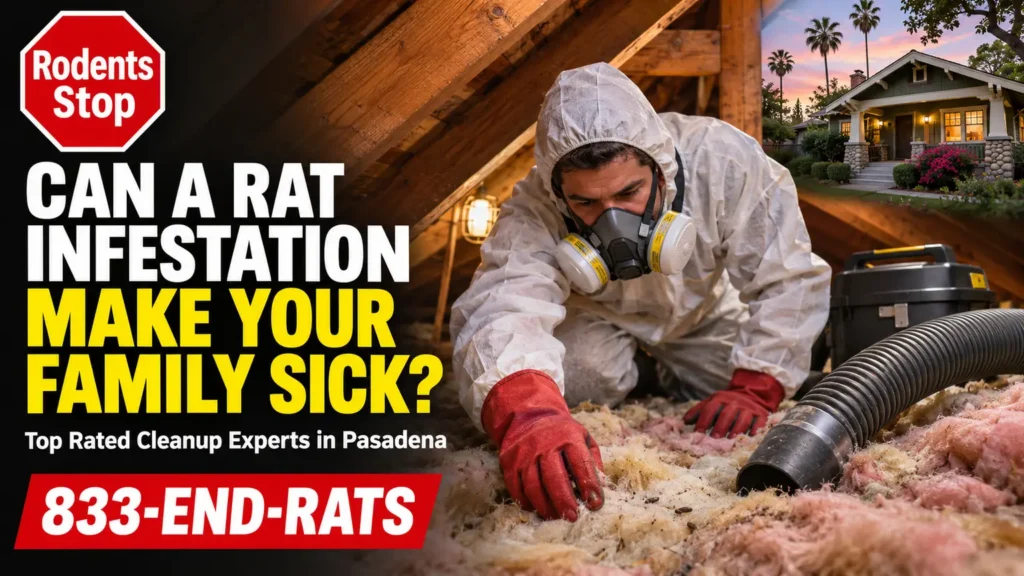
A few rat droppings in an attic may look like a pest problem. A long-running infestation can become a contamination problem affecting the spaces where your family lives, sleeps, stores belongings, and moves air through the home. If you are searching for “Can a Rat Infestation Make Your Family Sick? Top Rated Cleanup Experts in Pasadena,” the short answer is that rodent contamination can create health concerns, especially when droppings, urine, nesting debris, and damaged insulation are disturbed.
The right response is not panic. It is careful inspection, containment, removal, sanitation, odor treatment, and prevention. Traps may address active rodents, but they do not remove what rats leave behind.
Can a Rat Infestation Make Your Family Sick?
Rats can contaminate areas with droppings, urine, hair, nesting material, and debris brought in from outside. When contamination collects in an attic, crawlspace, wall cavity, garage, or storage area, it can leave behind odors and particles that should not be casually swept, vacuumed, or handled without proper precautions.
Health effects depend on the amount of contamination, how long it has been present, ventilation, and whether the material has been disturbed. Children, older adults, people with respiratory sensitivities, and anyone with a weakened immune system may have greater reason to avoid contaminated spaces. Even where no one feels sick, the presence of rodent waste is a property condition worth correcting promptly.
The risk is often highest during cleanup. Dry sweeping or using a standard household vacuum on droppings can stir contaminated dust into the air. Moving old insulation, lifting nesting material, or opening a heavily contaminated attic can do the same. That is why a surface-level cleanup is not always enough.
Can rat droppings make you sick?
Droppings from an infected rodent can carry germs. If you find what looks like vermin droppings, avoid sweeping or vacuuming them dry. Follow the CDC’s cleanup instructions to avoid stirring up contaminated dust.
Can mice make you sick?
Can mouse droppings make you sick? Yes. Droppings from an infected mouse can carry germs. If you find them in a cabinet or attic, follow the CDC’s guidance on cleaning up after rodents before disturbing the area.
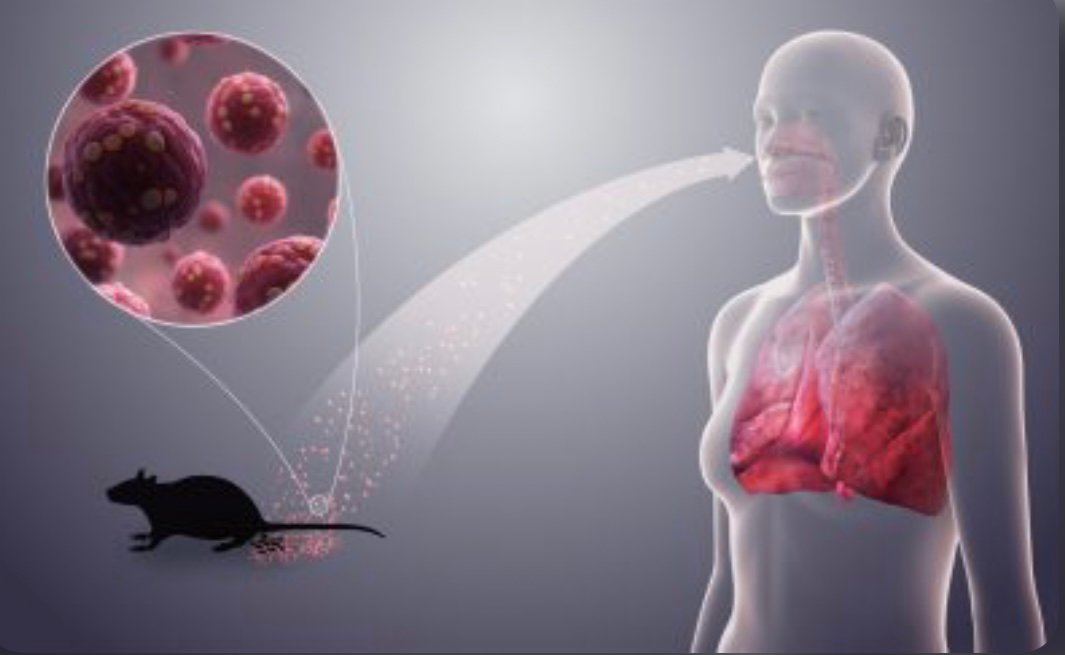
Yes. Some mice carry germs that can spread through their urine, droppings, or saliva. Disturbing contaminated nesting material can release particles you may breathe in. If you feel ill after cleaning an area where mice have been, tell your healthcare provider about the exposure. CDC guidance on wild rodents.
Can exposure to rats cause a fever or trigger allergies?
These are different health concerns. Some infections associated with rodents can cause fever. If you develop a fever after contact with rodent waste, tell your healthcare provider when and how the contact happened. CDC information on leptospirosis.
For people who are sensitive to rats or mice, proteins in their urine or dander can trigger allergy or asthma symptoms. A healthcare provider can help assess symptoms. For droppings or nests in your home, call 833-END-RATS for a cleanup assessment. EPA guidance on indoor asthma triggers.
Why Attics and Crawlspaces Need Special Attention
Attics and crawlspaces give rats the quiet, concealed access they prefer. They also make it easy for contamination to go unnoticed for months. A homeowner may first notice scratching at night, a musty or urine-like odor near a ceiling vent, stained drywall, or insulation that has shifted around ductwork.
In an attic, rats often tunnel through insulation and create nests near framing, HVAC equipment, or electrical wiring. Urine and droppings can spread over a much larger area than the visible nest. Contaminated insulation may no longer perform as intended and can continue holding odor after the rodents are gone.
Crawlspaces present a different challenge. Moisture, limited access, exposed plumbing, and low air circulation can intensify odors and make sanitation more difficult. In some properties, contaminated crawlspaces affect indoor air through gaps around pipes, ducts, and flooring. A proper inspection identifies where the contamination is concentrated and whether it has spread into adjacent areas.
For apartment owners, property managers, and commercial building operators, one overlooked attic or utility void can affect more than one unit. Cleanup should account for the building layout, shared walls, access points, and the source of recurring activity.
Signs the Problem Is More Than a Few Droppings
One old dropping in a seldom-used garage does not automatically mean the entire property needs restoration. The scope depends on evidence of active or repeated rodent activity. Strong urine odor, widespread droppings, torn or flattened insulation, nests, grease marks along access paths, and sounds from ceilings or walls all point to a more established problem.
A persistent odor is especially telling. Air fresheners and household cleaners may mask it briefly, but they do not remove urine contamination embedded in insulation, wood, dust, or debris. If the odor returns when temperatures rise or the HVAC system runs, there may be contamination in an area that has not been cleaned.
Visible droppings around a water heater, under kitchen cabinets, or in a garage may also be only part of the picture. Rats travel through hidden routes. An experienced inspection looks beyond the first visible evidence and identifies the likely entry points, nesting locations, and affected materials.
What Professional Rat Cleanup Should Include
Rat cleanup is not simply picking up droppings. It is a restoration process designed to remove contamination and reduce the conditions that allow odors and rodents to persist.
A thorough service begins with an inspection of the attic, crawlspace, garage, roofline access areas, wall penetrations, and other likely travel routes. The purpose is to document contamination, identify damaged or compromised insulation, and determine how rodents entered the property.
Cleanup crews should use appropriate protective procedures while removing droppings, nests, urine-contaminated debris, and affected insulation. Materials that cannot be effectively cleaned may need to be removed. The area can then be professionally sanitized and deodorized, with treatment tailored to the surfaces and level of contamination.
Odor removal deserves its own step. Rodent scent can remain after visible waste is removed, particularly in porous materials. Rodent Cleanup Experts uses a proprietary rodent scent neutralization treatment as part of a complete cleanup approach. The goal is to address the source of persistent odor rather than cover it up.
The final part is prevention. Entry points should be identified and sealed where appropriate, using humane, poison-free methods designed with family, pet, and environmental safety in mind. Cleanup without exclusion can leave a property vulnerable to the same issue again.
Why Basic Cleaning Can Leave Contamination Behind
Homeowners understandably want to handle a small problem quickly. For a very limited, accessible area, careful cleaning may be possible. But attic and crawlspace contamination is rarely a simple surface task. It can be hidden under insulation, behind stored items, around ductwork, or inside difficult-to-reach voids.
The trade-off is straightforward: a quick cleanup may cost less at first, but it can leave odor sources, contaminated material, and entry routes untouched. On the other hand, full insulation removal is not necessary for every property. A professional inspection helps determine whether targeted removal, partial replacement, or more extensive restoration is warranted.
This distinction matters for landlords and facility managers as well. A visible cleanup in a common area does not resolve contamination above ceilings, inside utility rooms, or in vacant units. Documentation of the affected areas and work performed can support a more responsible property-maintenance decision.
Pasadena Cleanup Experts for the Right Scope of Work
A Pasadena property with rat activity needs more than a generic pest visit when contamination is present. The work should address what rodents left behind: rat droppings, urine odor, nests, damaged insulation, and possible access routes.
Rodent Cleanup Experts brings more than 20 years of hands-on Southern California rodent experience through Rodents Stop. We provide professional attic cleaning, crawlspace sanitation, contaminated insulation removal, rodent odor removal, and post-infestation restoration for homes, apartments, commercial properties, warehouses, schools, and managed facilities.
Our service is built around honest inspections and practical recommendations. Some properties need focused cleanup and entry-point sealing. Others need deeper attic or crawlspace restoration because contamination has been accumulating for a long time. The right answer depends on what is actually present, not on a one-size-fits-all package.
When to Schedule an Inspection
Schedule an inspection when you smell rodent urine, find recurring droppings, hear activity overhead, discover nesting material, or see damaged attic insulation. It is also wise to call after rodents have been trapped or removed, since the contamination may remain even after activity stops.
For Pasadena and throughout Los Angeles, Ventura, Orange, Riverside, and San Bernardino counties, professional cleanup can restore a contaminated space and help prevent the next infestation. Contact Rodent Cleanup Experts at 833-END-RATS (833-363-7287) to schedule a professional inspection.
A clean attic or crawlspace should not be an ongoing question mark above or beneath your property. Address the contamination at its source, protect the people who use the building, and leave the space in better condition than a simple trap-and-go solution can provide.