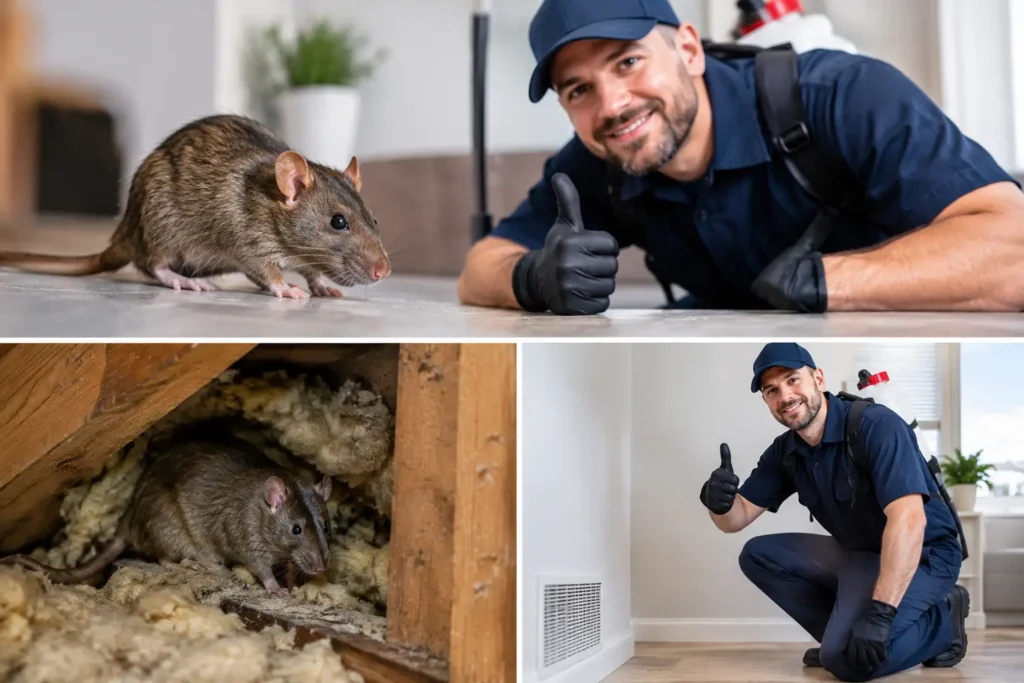
A quiet house after rodent service is what most property owners expect. If you are still hearing rats after exterminator visits, especially above a ceiling or below a floor, do not assume the problem is over or that the treatment failed. The sound may come from remaining rodent activity, a separate entry route, disturbed nesting material, or rodents moving through an area that was never fully inspected.
For Southern California homeowners, landlords, and facility managers, the next step is not simply waiting for the noise to stop. It is determining where the sound is coming from, whether rodents still have access, and what contamination was left behind in the attic, crawlspace, walls, or insulation.
Something is in my attic at night. What should I listen for?
From the room below, note the time, whether the sound travels across the ceiling or stays in one spot, and whether it starts when the air system turns on. If you’ve already had rodent work done, tell us whether the scratching came back along the original route or started in a different room. Those details give the technician a place to start checking for fresh activity and missed openings. See what a rodent cleanup assessment covers in a Los Angeles County home.
Why You May Still Hear Rats After Exterminator Service
Rodent activity does not always stop the same day an exterminator completes a visit. Rats often travel along familiar routes inside attics, wall voids, crawlspaces, utility chases, and rooflines. If entry points remain open, new rodents can continue using those routes even after an initial control effort.
In some cases, the sound is not a live rat at all. A rodent that has died inside a wall or attic can shift as materials settle, and other rodents may investigate the area. Loose insulation, branches against a roof, HVAC equipment, plumbing movement, and ductwork can also create sounds that resemble scratching or scurrying. That is why a careful inspection matters. Guessing based on noise alone can leave the real source untouched.
Timing can provide a useful clue. Noises that occur mainly after dark, repeat in the same area, and include scratching, gnawing, or quick movement are more consistent with active rodent traffic. A persistent odor, fresh droppings, new rub marks, or disturbed insulation are stronger signs that the issue needs attention.
Control and Cleanup Are Different Services
A pest control visit may address active rodent pressure, but it does not automatically restore contaminated areas. Rats and mice leave droppings, urine residue, nesting debris, food waste, grease marks, and damaged insulation behind. These materials can remain in place long after activity decreases.
This distinction is especially important in an attic or crawlspace. Rodents may have traveled across insulation for months, built nests near ducts or wiring, or used remote corners that are not visible from an attic hatch. In a rental property, warehouse, school, or commercial building, contamination may extend farther than the original noise location.
Cleaning only the droppings that are easy to see is rarely enough. Contaminated insulation may hold odor and urine residue. Nesting material can be tucked behind equipment or inside framing gaps. If these conditions are left in place, the property may continue to smell like an active rodent area, which can attract future activity even after the original infestation has been addressed.
What a Post-Exterminator Inspection Should Check
When sounds continue, the inspection should look beyond a single trap location or visible hole. A proper evaluation identifies the likely travel path, verifies whether access remains available, and documents the level of contamination before cleanup begins.
In a residential attic, that means checking insulation for droppings, urine staining, tunnels, nests, and compressed pathways. The inspection should also consider roofline gaps, vents, pipe penetrations, access around utility lines, and openings where construction details meet.
In a crawlspace, technicians should look for droppings on soil or vapor barriers, nesting material around plumbing and ductwork, chewed or damaged insulation, and gaps around foundation vents and penetrations. Crawlspaces can hold odor for a long time because airflow is limited and contamination is often hidden.
Wall and ceiling noises require added care. Opening finished surfaces without identifying the likely route can create unnecessary repair work. A professional assessment helps narrow down whether the sound is tied to active rodent movement, building systems, or another source before restoration decisions are made.
Signs the Rats May Still Be Active
Fresh evidence matters more than old evidence. Rat droppings can remain long after activity ends, so their presence alone does not confirm a current infestation. New droppings, fresh gnaw marks, recently disturbed nesting debris, or a new odor increase the likelihood that rodents are still entering or moving through the structure.
Property owners should also watch for changes around known access areas. A gap that was not sealed, a damaged vent screen, an opening near a roof return, or a loose utility penetration can keep the problem going. Rats need only a practical route into protected interior spaces. Once inside, an attic or crawlspace offers cover, warmth, and access to building materials.
If activity appears to have moved from one area to another after service, it may mean rodents are following a different route. It can also mean the original inspection focused on a limited area while a larger access problem remained. This is common in properties with multiple roof sections, additions, shared walls, large storage areas, or aging utility connections.
Do Not Ignore the Contamination
The absence of scratching does not mean the area is clean. Rodent contamination can remain in insulation, framing cavities, crawlspaces, and around HVAC components. Odor may become more noticeable when temperatures rise, ventilation changes, or an attic is disturbed during other work.
Professional cleanup is designed to remove droppings, urine-contaminated material, nests, and damaged insulation using controlled work practices. The goal is to restore the affected area rather than cover up the evidence with fragrance or leave contaminated debris behind. Deodorization should follow removal and sanitation, not replace them.
At Rodent Cleanup Experts, our work focuses on the condition left behind after rodent activity: attic cleaning, crawlspace sanitation, contaminated insulation removal, rodent odor removal, and property restoration. We also identify access concerns so cleanup is supported by practical prevention, not treated as a temporary cosmetic fix.
What to Do While You Arrange an Inspection
Avoid sweeping or vacuuming visible droppings with ordinary household equipment. Disturbing dry rodent waste can spread debris into the surrounding area. Keep children, pets, tenants, and employees out of heavily affected attic or crawlspace areas until the condition is evaluated.
If you can safely observe from a distance, note where and when the sound occurs. Record whether you notice odor, fresh debris, ceiling staining, damaged insulation, or activity near vents and utility openings. These details help a technician focus the inspection, particularly in larger homes, apartment buildings, warehouses, and multi-unit properties.
Do not close an opening blindly if you suspect rodents may still be inside. Exclusion work should be planned around the evidence found at the property. The objective is to prevent re-entry without creating a new problem inside walls, ceilings, or inaccessible building spaces.
When to Call for Professional Rodent Cleanup
Call for a professional inspection when sounds continue for several nights, when fresh droppings or odor are present, or when you know rodents have been in the attic, crawlspace, or insulation. It is also appropriate to call when a prior service addressed activity but did not remove the contamination or assess the affected materials.
For property managers, prompt action can protect adjacent units and reduce the chance that odors and debris become a larger maintenance issue. For homeowners, it can prevent a small attic problem from turning into widespread insulation damage and recurring rodent odors. The right solution depends on the extent of entry, activity, and contamination found during the inspection.
Rodent Cleanup Experts serves Los Angeles, Ventura, Orange, Riverside, and San Bernardino counties. Call 833-END-RATS (833-363-7287) to schedule an assessment and get a clear plan for cleanup, sanitation, odor removal, and rodent entry-point sealing.
Persistent noises deserve a direct answer. Once the source is identified and the contaminated area is properly restored, your property can move past the infestation instead of continuing to live with its evidence.