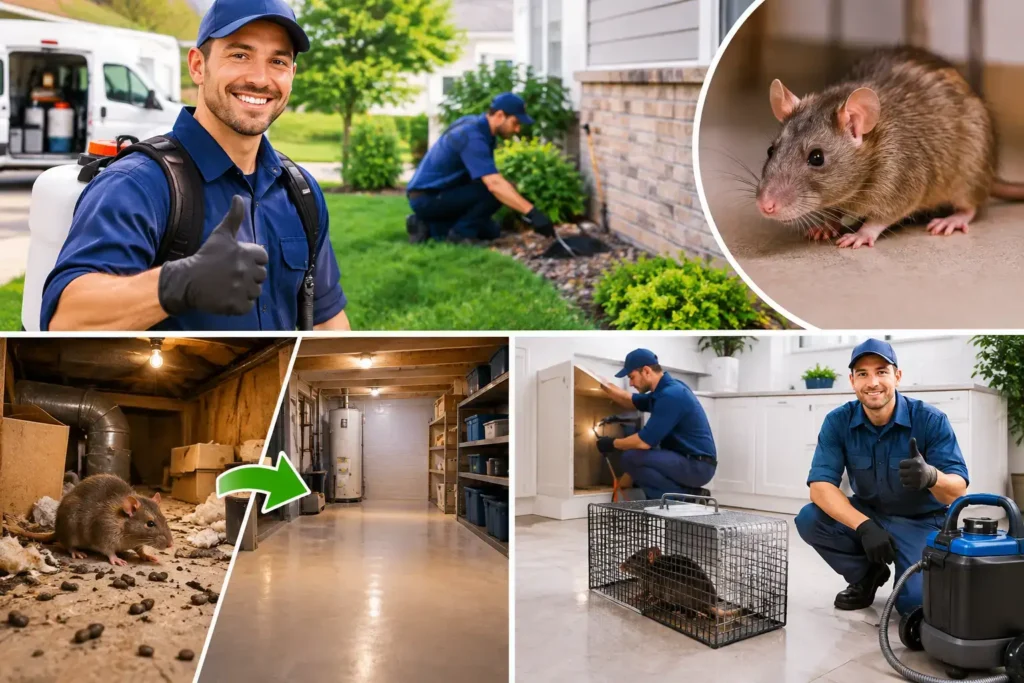
A rat problem rarely ends when the scratching stops. Vermin pest control must address what rodents leave behind: droppings in the attic, urine odor in wall cavities, torn insulation, nesting debris, and entry points that allow the problem to return. For Southern California property owners, cleanup is often the missing step between catching rodents and truly restoring the property.
Traps can reduce activity. They do not remove contamination. A conventional pest service may help control an active rodent issue, but contaminated attic insulation, crawlspace debris, and persistent odors require a different level of work. The goal is not simply to make rodents go away. It is to return the affected space to a clean, usable condition and help prevent another infestation.
What Vermin Pest Control Should Actually Include
Effective vermin pest control has two connected parts: controlling rodent activity and correcting the damage left behind. If either part is missed, the property can continue to smell contaminated, attract new rodent activity, or create ongoing concerns for residents, tenants, employees, and visitors.
A thorough service begins with an inspection. Attics, crawlspaces, utility penetrations, roofline gaps, garages, storage areas, and other concealed spaces need to be evaluated for signs of rats or mice. Fresh droppings, rub marks, nesting material, damaged insulation, chewed openings, and urine staining each tell part of the story.
The inspection should also determine the extent of contamination. A few isolated droppings near a garage door are different from a heavily contaminated attic where rodents have nested in insulation for months. The right cleanup plan depends on the affected materials, the size of the area, odor conditions, and whether rodents have accessed HVAC-related areas, wall voids, or occupied spaces.
Rodent Droppings Are Not Just a Surface Cleaning Issue
Rat and mouse droppings are often found in places people cannot easily reach. In attics, they may be scattered throughout insulation, concentrated near nesting areas, or hidden along framing and duct runs. In crawlspaces, moisture, limited access, and old debris can make the contamination harder to identify and remove properly.
Dry sweeping, blowing, or casually vacuuming droppings can disturb contaminated material. More importantly, it does not address urine-soaked insulation, nesting debris, or odor sources below the visible surface. A professional cleanup process focuses on controlled removal, detailed sanitation, and appropriate handling of affected materials.
When insulation has been heavily contaminated, cleaning the top layer is usually not enough. The material may retain odor and contamination throughout its depth. Removal and replacement can be the more practical long-term solution, particularly when the attic has recurring rodent activity or a persistent smell that returns during warm weather.
Why Attics and Crawlspaces Need Specialized Cleanup
Attics and crawlspaces are common rodent entry and nesting areas because they are quiet, sheltered, and seldom inspected. They are also where problems can become expensive if left unresolved. Rodents can damage insulation, contaminate stored items, chew around utility lines, and create odors that travel into living or working areas.
Attic cleaning is not simply a matter of removing visible debris. It may involve extracting contaminated insulation, removing nesting materials, sanitizing structural surfaces, and deodorizing the space. If entry points remain open, however, new rodents can contaminate the area again. Cleanup and exclusion need to work together.
Crawlspaces present their own challenges. Low clearance, uneven ground, plumbing lines, and older construction can conceal activity for a long time. Rodent urine odors may move upward through floor penetrations, while droppings and nesting debris remain beneath the building. For rental properties and commercial buildings, these conditions can create repeated tenant or staff complaints without an obvious source.
A professional inspection helps separate a current infestation from old evidence. That distinction matters. Some properties need immediate active rodent control and exclusion before cleanup begins. Others have already had rodents removed but still need restoration because the odors, droppings, and damaged insulation were never addressed.
Odor Removal Requires More Than Covering the Smell
Rodent urine odor is one of the most frustrating parts of an infestation. Air fresheners and surface sprays may temporarily mask it, but they do not remove the source. As temperatures rise, especially in Southern California attics, trapped odors can become more noticeable.
The most reliable approach is source removal first. Contaminated nesting material and insulation need to be identified and removed when necessary. After cleanup, professional sanitation and targeted deodorization address remaining odor on structural surfaces and in affected areas. Rodent Cleanup Experts also uses a proprietary rodent scent neutralization treatment designed to address persistent odor conditions rather than merely cover them.
Results depend on the extent of the contamination. A small, recent issue may require limited treatment. A long-term attic infestation with saturated insulation and multiple nesting zones may require more extensive restoration. An honest inspection should explain that difference before work begins.
Exclusion Helps Keep the Cleanup From Being Repeated
A clean attic is not protected if rats or mice can still enter. Rodent exclusion is the practical step of identifying and sealing access points around the structure. Common access areas include gaps around pipes and cables, openings at rooflines, damaged vents, garage penetrations, and construction gaps that are easy to miss from the ground.
The work should be targeted to the property, not based on a generic checklist. Older homes in Los Angeles and Ventura County may have different vulnerabilities than newer multifamily buildings in Orange County or warehouses in Riverside and San Bernardino counties. Building design, landscaping, utility access, and prior repairs all affect where rodents get in.
Poison-free, humane rodent control methods are a sensible choice for properties with children, pets, tenants, customers, or sensitive facility operations. The priority is to reduce access, remove active rodents through appropriate methods, and correct the conditions that allow repeat activity. Long-term prevention is usually more valuable than a short-term response that leaves openings unaddressed.
When to Call for Professional Vermin Pest Control
Visible droppings are a clear reason to schedule an inspection, but they are not the only sign. Persistent musty or urine-like odors, scratching sounds above ceilings, insulation falling from attic access points, chewed materials, and unexplained smells near vents can all point to concealed rodent contamination.
Property managers should act quickly when residents report odors or noises in upper-floor units, shared walls, or utility rooms. Commercial property owners and facility managers should also take attic, crawlspace, and warehouse activity seriously before contamination spreads into storage areas or occupied spaces. Early evaluation can limit the amount of damaged material that needs to be removed.
After more than 20 years of hands-on experience, Rodent Cleanup Experts understands that customers want a clear answer, not vague advice. Our work is focused on rodent droppings cleanup, contaminated insulation removal, sanitation, odor removal, and entry-point sealing for homes and properties throughout Southern California.
If your attic, crawlspace, or building has signs of rat or mouse contamination, call 833-END-RATS (833-363-7287) to schedule a professional inspection. The useful next step is not to live with the smell or hope the problem is gone. It is to identify the source, clean the damage correctly, and close the paths that let rodents return.