Table of Contents
- What Is Hantavirus and How Does It Spread in Attics?
- Signs of Rodent Activity in Attic Spaces
- Symptoms of Hantavirus Pulmonary Syndrome (HPS)
- Personal Protective Equipment for Rodent Cleanup
- Best Way to Clean Rat Urine and Droppings in Attics
- Professional vs. DIY Attic Remediation: Decision Matrix
- Post-Cleaning Verification and Prevention
- Frequently Asked Questions
Last Updated: September 11, 2026
What Is Hantavirus and How Does It Spread in Attics?
Hantavirus is a family of viruses carried primarily by wild rodents that can cause severe respiratory illness in humans, and attics are among the highest hantavirus risks for exposure. At Rodent cleanup experts, we treat every contaminated attic as a respiratory hazard first and a cleaning job second. The virus lives in rodent urine, droppings, and saliva, and becomes dangerous when those materials dry out and get disturbed.
That last part is what most homeowners miss: an undisturbed dropping isn’t the problem, the vacuum, broom, or footstep that turns it into airborne dust is.
How Hantavirus Spreads Through Rodent Droppings and Urine
The primary transmission route is inhalation of aerosolized particles. When rodent droppings, urine, or saliva dry in a low-humidity attic, they bind to dust and insulation fibers. Any disturbance, from moving a storage box to running a shop vac, releases those particles into the air you’re breathing.
The deer mouse and white-footed mouse are the main carriers in North America, though other rodents can carry related strains. This is a zoonotic disease, meaning it moves from animals to humans, and it is not spread person-to-person.
Never dry-sweep or vacuum rodent debris with a standard shop vac. Standard vacuums exhaust fine particles back into the room and concentrate them. This is the single most common way homeowners expose themselves during a DIY cleanup.
Signs of Rodent Activity in Attic Spaces
You can often identify an infestation before you ever see a rodent. The signs of rodent activity in attic spaces are consistent once you know what to look for.
Look for these indicators:
- Droppings along joists, on top of insulation, or near entry points
- Yellowish staining and ammonia-like odor from urine saturation
- Shredded insulation, paper, or fabric gathered into nesting materials
- Grease trails and rub marks along rafters and wiring runs
- Gnaw marks on wiring, PVC, and HVAC ducting
- Scurrying or scratching sounds at dusk and dawn
The odor is the tell most people notice first. A persistent ammonia smell in an attic or upper-floor closet usually means urine has soaked into insulation or drywall, and surface cleaning won’t fix it.
Symptoms of Hantavirus Pulmonary Syndrome (HPS)
Hantavirus pulmonary syndrome is the severe respiratory condition caused by hantavirus infection, and early symptoms resemble a bad flu before escalating quickly. The incubation period typically runs one to eight weeks after exposure, so people often don’t connect their illness to a cleanup weeks earlier.
Watch for this progression:
- Fever, chills, and muscle aches, particularly in the thighs, hips, and back
- Fatigue, headache, and dizziness
- Nausea, vomiting, or abdominal pain
- Shortness of breath and a tight feeling in the chest as fluid builds in the lungs
- Rapid respiratory distress requiring emergency care
The gastrointestinal phase can delay recognition because it looks nothing like a respiratory illness at first. If you’ve had rodent exposure and develop fever plus breathing difficulty, tell the treating clinician explicitly, early supportive care in an ICU matters enormously.
Personal Protective Equipment for Rodent Cleanup
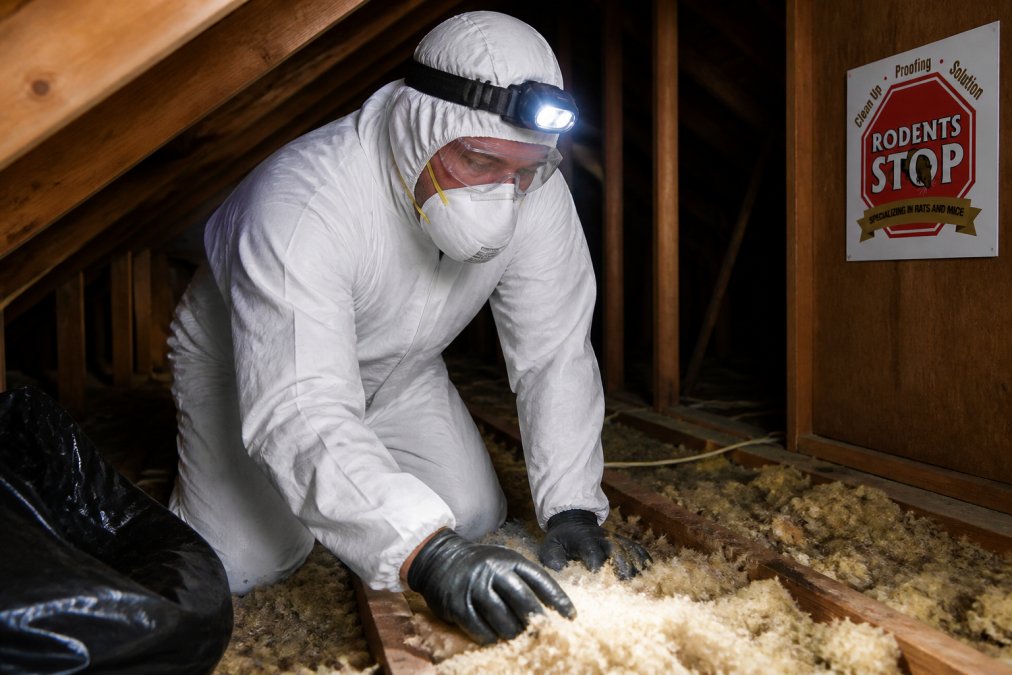
Proper personal protective equipment for rodent cleanup is not optional when hantavirus risks are present, and it’s not the gear you’d wear for routine housework. Hantavirus exposure happens through inhalation and, less commonly, broken skin or mucous membranes. In an attic, the hazard is compounded by heat, low headroom, and fiberglass insulation that shreds skin and gives the virus a portal of entry.
Essential PPE for Attic Decontamination
At minimum, a safe cleanup requires:
- N-95 respirator fitted and seal-checked before entry
- Sealed safety goggles or a full-face shield, not open-sided glasses
- Disposable coveralls with hood and elastic cuffs
- Nitrile or rubber gloves, doubled for heavy contamination
- Rubber boots or disposable shoe covers
- Heavy-duty garbage bags rated for construction debris
Gloves and coveralls come off inside the contaminated zone, bagged, and discarded. Removing PPE in the wrong order re-contaminates your clothing and skin.
Why the Respirator Is the Weak Link
The respirator is where most DIY cleanups fail. An N-95 only works if it seals against your face, and a seal is easy to break:
- Facial hair at the sealing surface defeats the fit. A beard, stubble, or even a few days of growth lets air bypass the filter.
- Heat and sweat in an attic cause the mask to shift as you move your jaw. Re-check the seal after you climb in, not just before.
- A used, crushed, or damp mask loses its shape and no longer seals. Replace it if it gets wet or visibly soiled.
- The smell test is not a fit test. If you can smell the attic through the mask, the seal has failed. Come out, refit, and go back in.
A P-100 or HEPA-rated respirator offers a higher margin than an N-95 and holds its seal better in humid attic conditions. For heavy contamination or confined spaces, a powered air-purifying respirator (PAPR) with a hood removes the fit problem entirely via positive pressure.
Fit-test your respirator before you climb up. Facial hair breaks the seal on an N-95, and a leaking respirator gives you false confidence. If you can smell the attic, your seal has failed and you need to come out.
Donning and Doffing Order Matters
Getting into the gear is easy; getting out without contaminating yourself is the part people get wrong. A common pattern:
Donning (before entry):
- Coveralls first, hood up, cuffs over your boots.
- Boots or shoe covers over the coverall cuffs.
- Respirator, seal-checked.
- Goggles or face shield over the respirator straps.
- Gloves last, taped or pulled over the coverall cuffs.
Doffing (inside the work zone, before you leave):
- Wipe gloves with disinfectant, then remove gloves and bag them.
- Remove coveralls by rolling them inward, touching only the inside.
- Remove goggles and bag them or disinfect them.
- Remove the respirator last, by the straps, and bag it.
- Shower and change clothes immediately. Do not sit in your vehicle in work clothes.
The rule of thumb: the dirtiest item comes off first, and the respirator comes off last because it protects your airway until everything else is gone.
Attic-Specific Hazards That Change Your Gear Choices
An attic is not a clean room, and the gear has to account for what else is up there:
- Fiberglass and mineral wool irritate skin and lungs. Coveralls with tight cuffs and a hood keep fibers off your forearms and neck.
- Heat stress is real. Attics routinely run well above outdoor temperatures in summer. Work in short sessions, hydrate, and never work alone.
- Footing and access. Exposed joists, no floor decking, and a narrow hatch mean falls are a bigger immediate risk than the virus. A headlamp keeps both hands free.
- HVAC connections. If ducting or a return plenum runs through the attic, contaminated dust can migrate into living space. That changes the scope from a cleanup to a containment job.
If any of those conditions are present, the gear list above is the floor, not the ceiling. Confined access, no cross-ventilation, or contamination near HVAC components is where a professional with supplied air and containment equipment belongs.
Best Way to Clean Rat Urine and Droppings in Attics
The best way to clean rat urine and droppings is to never let them go airborne: soak, seal, and remove rather than sweep or vacuum. Ventilation first, then wetting, disposal, and disinfection.
Step-by-Step Safe Cleaning Procedures
Total time: 2 to 6 hours for a typical single attic, longer for heavy contamination.
What you’ll need: N-95 respirator, goggles, coveralls, gloves, spray bottle with disinfectant or a diluted bleach solution, paper towels, sealable heavy-duty bags, and a HEPA filter vacuum for final pass only.
- Ventilate before entry. Open attic vents, windows, and the access hatch. Leave the space to air out before you start.
- Do not sweep or dry-vacuum. This is the step that causes most exposures.
- Soak contaminated materials. Spray droppings, urine stains, and nesting material with disinfectant until fully wet. Let it sit per the product label.
- Wipe, don’t scatter. Use paper towels to lift soaked material and place it directly into a sealed bag.
- Bag and seal. Double-bag all waste, seal, and remove from the home immediately.
- Disinfect hard surfaces. Apply bleach solution or disinfectant to joists, sheathing, and ducting. Keep the surface wet for the contact time on the label.
- Damp-mop or damp-wipe floors and flat surfaces rather than dry sweeping.
- HEPA vacuum only after all wet material is removed.
- Remove and discard PPE inside the work zone, then shower and change clothes.
Remove or replace saturated insulation rather than cleaning it, contaminated insulation holds the pathogen and odor, and surface spraying never reaches the interior of a batt.
Professional vs. DIY Attic Remediation: Decision Matrix
DIY works for small, recent, surface-level contamination with good access and ventilation. Professional remediation is the right call for saturated insulation, widespread urine staining, or confined crawlspace conditions.
| Situation | DIY Appropriate? | Recommended Approach |
|---|---|---|
| Few droppings, hard surface, good ventilation | Yes | Wet-clean with disinfectant and full PPE |
| Droppings on insulation batts | No | Remove and replace affected insulation |
| Persistent ammonia odor after cleaning | No | Source removal plus odor treatment |
| Heavy staining across joists and sheathing | No | Full decontamination with HEPA and sanitizing |
| Limited access, low headroom, no cross-ventilation | No | Professional remediation with supplied air |
| Contamination near HVAC return or ducting | No | Professional assessment before any cleaning |
The honest limitation of DIY: you can remove what you can see. You cannot verify what soaked into the insulation, sheathing, or wall cavities behind it. That’s where structural integrity concerns and recurring odor problems live.
If the odor returns within two weeks of a DIY cleanup, the contamination source was never removed. Surface disinfection does not neutralize urine that has soaked into porous material.
Post-Cleaning Verification and Prevention
Verification is the step almost every guide skips, and it determines whether the problem is actually solved. Cleaning removes what you can see; verification tells you whether the source is gone. A cleanup that isn’t verified is a cleanup that gets repeated.
When Is It Safe to Re-Enter the Attic?
Use this checklist before treating the attic as a normal space again. All four items should pass:
- No residual odor. Walk the attic and the adjacent living space. A sharp ammonia smell means urine has soaked into porous material that surface cleaning didn’t reach.
- No new droppings after seven days. Place a few clean sheets of paper or cardboard on joists and flat surfaces. Check them after a week. Fresh droppings mean rodents are still getting in.
- No visible staining on previously affected surfaces. Re-inspect joists, sheathing, and insulation edges under a bright light. New or lingering yellow-brown staining means the source wasn’t fully removed.
- No signs of activity at entry points. Check soffits, gable vents, and utility penetrations for fresh rub marks, gnaw marks, or nesting material.
If any item fails, do not re-enter for extended work without PPE. The contamination source is still present, and the next disturbance will put it back in the air.
If the odor returns within two weeks of a DIY cleanup, the contamination source was never removed. Surface disinfection does not neutralize urine that has soaked into porous material.
How to Monitor for Recurring Rodent Activity
A one-time inspection is not monitoring. Set up an ongoing check:
- Tracking paper or cardboard squares on joists and near suspected entry points. Replace them monthly and look for droppings, urine stains, or gnaw marks.
- A phone reminder to re-inspect at 30 and 90 days after cleaning. Rodent activity often returns seasonally as temperatures drop.
- A written log of what you find and where. Patterns across months tell you which entry point is still open.
- A flashlight sweep of the attic hatch and the first few feet inside every time you go up for storage. Early detection is far cheaper than a second remediation.
Attic-Specific Rodent-Proofing: Sealing the Entry Points
Generic advice says “seal gaps.” In an attic, that means specific construction details. Mice and rats pass through openings far smaller than most homeowners assume, so the target is any gap wider than a pencil.
Common attic entry points and how to close them:
- Soffit vents. These are a primary entry route. Inspect the screen or perforated panel for tears and gaps at the framing. Repair with hardware cloth (quarter-inch mesh), not insect screen, which rodents chew through.
- Gable vents. Check the screen behind the louvers. A torn or missing screen is an open door. Replace with quarter-inch hardware cloth fastened at the edges.
- Ridge and roof vents. Less common as an entry point but worth checking after storms. Loose flashing or damaged vent screens create gaps.
- Utility penetrations. Where electrical conduit, plumbing, or HVAC lines pass through the attic envelope, seal the annular gap with copper mesh packed tight, then cover with a sealant rated for the material. Steel wool works short-term but rusts and compresses over time.
- Chimney chase and flue gaps. The gap between the flue and the chase framing is a classic entry point. Seal with metal flashing or hardware cloth, never with combustible foam near a heat source.
- Roof-to-wall intersections and fascia gaps. These are common on older homes where trim has pulled away. Re-secure trim and seal behind it.
- Attic hatch and pull-down stairs. Check the perimeter for gaps. Weatherstripping and a tight latch close the easiest access point in the house.
Materials that work and materials that don’t:
- Works: quarter-inch hardware cloth, copper mesh, metal flashing, concrete patch for masonry gaps, and rodent-resistant sealants.
- Doesn’t work: expanding spray foam alone (rodents chew through it), plastic mesh, insect screen, and steel wool in wet areas.
Reduce Attractants Inside the Attic
Sealing is half the job. The other half is making the attic uninteresting:
- Store items in sealed plastic bins, not cardboard boxes. Cardboard is nesting material.
- Avoid storing birdseed, pet food, or paper goods in the attic.
- Trim tree limbs back from the roof line so rodents can’t drop onto it.
- Keep the exterior perimeter clear of debris, woodpiles, and dense ground cover that shelters rodents.
- Repair roof and plumbing leaks. Moisture draws rodents and degrades the materials you’re relying on to seal gaps.
When Prevention Becomes a Professional Job
Some conditions are beyond a homeowner’s checklist:
- Contamination has reached insulation, wall cavities, or HVAC ducting.
- Entry points are numerous, hidden behind finished surfaces, or require roof work to access.
- The infestation is recurring despite sealing efforts, which usually means an entry point hasn’t been found.
- The property is a rental or multi-unit building where a missed entry point means the whole cycle repeats.
Rodent cleanup experts handles rodent infestation cleanup for homeowners, landlords, and property managers across Los Angeles, Ventura, San Bernardino, Riverside, and Orange Counties, including contaminated insulation removal, HEPA vacuuming, deep sanitizing, and odor and pheromone treatment. We inspect the affected areas first, build a cleanup plan around the property’s actual condition, and identify likely entry points so the problem doesn’t come back. If you’re managing several properties, get a walkthrough before committing to a scope.
Frequently Asked Questions
Can rat droppings in the attic make you sick?
Yes, rat droppings can make you sick. They may carry hantavirus, which causes Hantavirus Pulmonary Syndrome (HPS), a severe respiratory illness. The virus spreads when contaminated dust from droppings, urine, or nesting materials becomes airborne and is inhaled. Other pathogens like salmonella and leptospira are also possible. Never sweep or vacuum dry droppings without proper protection. If you find significant rodent waste in your attic, avoid disturbing it and contact a professional cleanup service.
Do regular house mice carry hantavirus?
The deer mouse and white-footed mouse are the primary carriers of hantavirus in the U.S. Common house mice (Mus musculus) are not typical carriers of the dangerous hantavirus strains that cause HPS. However, they can still spread other bacteria and allergens. In Southern California, the deer mouse is the main concern. Any rodent infestation in an enclosed space like an attic creates health risks, so proper cleanup is essential regardless of the species.
How long does hantavirus survive in dried rodent waste?
Hantavirus can remain infectious in dried rodent urine, droppings, and nesting materials for several days to weeks, depending on temperature, humidity, and sunlight. In cool, dark attic environments, the virus may persist longer. This is why disturbing old droppings is dangerous. Never assume that because waste looks dry and old, it is safe. Always use wet cleaning methods and wear an N-95 respirator. Professional remediation ensures complete decontamination.
What is the safest way to clean rodent-infested insulation?
The safest approach is to avoid dry sweeping or vacuuming, which aerosolizes the virus. Instead, wear full personal protective equipment, ventilate the area, and lightly mist contaminated surfaces with a disinfectant or bleach solution before removal. HEPA vacuuming is recommended for final cleanup. However, insulation that is heavily contaminated often needs professional removal and replacement. For significant infestations, especially in attics, hiring a professional cleanup service is the safest option.
When should you call a professional for attic decontamination?
Call a professional if you find widespread droppings, nesting materials, or dead rodents, or if you smell a persistent odor. Also seek professional help if you have respiratory conditions, pets, or if the infestation is in a hard-to-reach area. Professionals have the training, equipment, and disinfectants to safely remove contaminated materials, verify cleanliness, and prevent future issues. DIY cleaning can spread the virus if not done with proper precautions.
How much does professional attic decontamination cost?
Pricing for professional attic decontamination depends on the size of the affected area, the severity of the infestation, and the amount of contaminated insulation that needs removal. Costs also vary based on accessibility and whether structural repairs are needed. We recommend contacting Rodent Cleanup Experts directly for a personalized quote. They serve Los Angeles, Ventura, San Bernardino, Riverside, and Orange Counties and can provide an accurate estimate after inspection.