
Table of Contents
- Why Rodent Smell Lingers in Your Attic
- Safety Gear and Health Risks Before You Start
- Step-by-Step: How to Remove Rodent Smell From Attic
- How to Find a Dead Rodent in an Attic
- Attic Insulation Decontamination: When to Clean vs. Replace
- Odor Neutralizers, Ventilation, and Long-Term Prevention
- DIY vs. Professional Rodent Sanitation Services
- Frequently Asked Questions
Last Updated: September 16, 2026
Why Rodent Smell Lingers in Your Attic
Rodent smell is the odor produced when urine, feces, and decomposing carcasses soak into porous materials, and it lingers because those materials keep releasing odor compounds long after the animal is gone. At Rodent Cleanup Experts, we see attics where the rodent smell has been building for months before anyone notices. The animal leaves, but the contamination stays.
How Urine and Feces Penetrate Insulation and Drywall
Rodent urine is a liquid that wicks into fiberglass, cellulose, and drywall paper the same way water soaks into a sponge. Once inside, it dries into crystals that reactivate every time humidity rises. That is why the musty smell seems worse on warm, damp days.
Safety Gear and Health Risks Before You Start
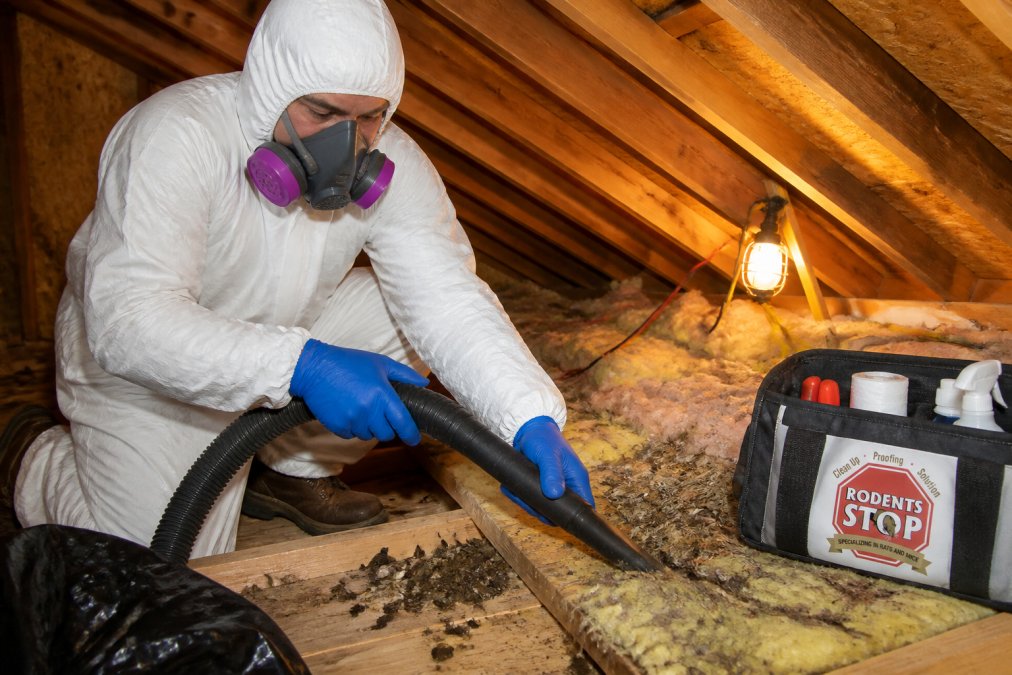
Rodent droppings and urine can carry pathogens, and disturbing dried contamination sends those particles airborne. Before you touch anything, put on personal protective equipment, or PPE. At minimum: an N95 or P100 respirator, disposable gloves, eye protection, and coveralls you can throw away.
Dry-sweeping or using a household vacuum on rodent droppings aerosolizes pathogens and pushes the odor deeper into the room. The consequence is a worse smell and a real health risk. Wet the material down with a disinfectant spray before you touch it.
Step-by-Step: How to Remove Rodent Smell From Attic
The short answer: ventilate, remove all contaminated material, HEPA vacuum every surface, then treat with an enzymatic cleaner. Skipping any one of those steps leaves odor behind.
Step 1: Ventilate the Attic and Seal Off Living Spaces
Open windows, vents, and the attic hatch to create cross-flow. Set a box fan at one end blowing outward so air moves through rather than recirculating. Ventilation will not remove the odor on its own, but it lowers the airborne concentration while you work and helps materials dry after cleaning.
Step 2: Remove Droppings, Nesting Debris, and Contaminated Materials
Spray droppings and nests with a disinfectant first, then scoop them into sealed heavy-duty bags. Remove any insulation that is saturated with urine or packed with nesting material. Bagged contaminated insulation goes straight into an outdoor trash container, not a garage corner.
Step 3: HEPA Vacuum and Apply Enzymatic Cleaner
A HEPA vacuum captures the fine particles a shop vac releases. Vacuum rafters, joists, the tops of drywall, and the floor decking. Then apply an enzymatic cleaner to every surface the rodents touched. Enzymatic cleaners use bacteria and enzymes to break down the proteins in urine and feces rather than covering them up. Let the product dwell per the label, then allow the area to dry completely.
Odor crystals reactivate with humidity, so run a dehumidifier in the attic for several days after cleaning. Many homeowners clean thoroughly, then blame the cleaner when a rainy week brings the smell back. Drying the space is part of the job.
How to Find a Dead Rodent in an Attic
A dead rodent in an attic produces a sharp, rotting odor that is distinct from the ammonia smell of old urine. The smell peaks within a few days and then fades as the carcass dries out, but it can linger for weeks in cool weather. The key difference: urine odor is constant and worsens with humidity, while a carcass odor is strongest in the first week and gradually diminishes.
Why the Smell Is Stronger in Some Spots Than Others
A decomposing carcass releases sulfur-based compounds and other gases as bacteria break down tissue. Warmth accelerates that process, which is why a carcass near a hot chimney chase or sun-baked roof deck smells worse than one in a shaded corner. Airflow matters too: a carcass in a sealed wall void concentrates odor, while one near a gable vent disperses it.
A Zone-by-Zone Search Method
Instead of wandering the attic, work through it in a fixed order. Start at the point where the smell is strongest and move outward in a grid.
- The perimeter where the roof meets the wall. This is the most common death zone because rodents travel along the sill plate. Check every few feet, not just where the smell is loudest.
- Inside and under insulation batts. Peel back batts in the hot zone. Rodents often burrow into insulation and die there, so the carcass may be hidden under a layer you already walked past.
- Wall voids near plumbing chases. A rodent that dies inside a wall cavity will smell strongest at the top plate where the wall meets the attic floor. Look for gaps around pipes and wiring.
- Near HVAC ductwork and chimney chases. These are warm, sheltered runs that rodents use as highways. Check where ducts penetrate the attic floor.
- Under stored items and in corners. Boxes, holiday decorations, and old furniture create dark, undisturbed pockets.
Tools That Help You Locate the Source Faster
- A bright flashlight with a tight beam. Shadows reveal carcasses that ambient light hides.
- A thermal imaging camera. A decomposing carcass is warmer than surrounding materials for the first few days. Thermal cameras can reveal a heat signature through insulation or drywall. These are available for rent at many home improvement stores.
- A borescope or inspection camera. For wall voids and tight chases, a flexible camera lets you look inside without cutting a large hole.
- A respirator and gloves. Wear them the entire time. Disturbing a carcass can release pathogens and worsen the odor.
What to Do When You Find It
Do not grab the carcass with bare hands or a household vacuum. Spray it and the surrounding area with a disinfectant, then use gloves to place it in a sealed heavy-duty bag. Double-bag it and put it in an outdoor trash container immediately. After removal, HEPA vacuum the area and apply an enzymatic cleaner to the surface where the carcass rested.
When You Cannot Find It
If the odor is strong but you cannot find the source after a systematic search, the carcass is likely inside a wall cavity, under a subfloor, or in a crawlspace. Those areas are harder to access safely and are worth a professional inspection. A pest control or restoration professional may use a borescope, thermal camera, or access panel to locate and remove the carcass without unnecessary demolition.
Never use a standard shop vac or household vacuum on or near a dead rodent. The vacuum aerosolizes bacteria and odor compounds, pushing them into the air you are breathing and spreading the smell to other parts of the home.
Attic Insulation Decontamination: When to Clean vs. Replace
Attic insulation decontamination means treating insulation that has been exposed to rodent urine, feces, and nesting debris so it no longer releases odor or pathogens. The deciding factor is saturation.
| Situation | Best Action | Why |
|---|---|---|
| Light droppings on top, no saturation | HEPA vacuum and enzymatic clean | Contamination has not soaked in |
| Urine-soaked or compressed insulation | Remove and replace | Odor returns with humidity |
| Nests inside insulation | Remove and replace | Debris holds moisture and pathogens |
| Contamination in wall voids | Professional inspection | Hard to reach and seal safely |
Odor Neutralizers, Ventilation, and Long-Term Prevention
Odor neutralizers and absorbers help after the source is gone, not before. Charcoal bags, baking soda, and zeolite-based deodorizers pull residual odor molecules from the air. Place them around the attic and replace them on the schedule the product recommends. They are a finishing step, not a fix.
DIY vs. Professional Rodent Sanitation Services
DIY cleanup works for small, surface-level problems in an accessible attic. It stops working when contamination is heavy, when the odor has spread into wall voids or HVAC ducts, or when you cannot find the source. The decision comes down to three factors: scope, access, and health risk.
When DIY Is the Right Call
- The contamination is light and visible. A few droppings on top of insulation, no saturation, no nests.
- The attic is accessible. You can stand or kneel safely, and there are no confined spaces.
- You can find the source. The odor is coming from a specific, reachable area.
- You have the right equipment. A HEPA vacuum, a respirator, disposable coveralls, and an enzymatic cleaner.
- No one in the home has respiratory issues or a compromised immune system.
If all five apply, a careful DIY cleanup can work. Expect to spend a full day on a small attic, plus several days of dehumidification afterward.
When to Call a Professional
- The odor has spread into wall voids, crawlspaces, or HVAC ducts. These areas require specialized access and equipment.
- Insulation is saturated or compressed. Removal and replacement is a bigger job than most homeowners expect.
- You cannot find the source. A professional inspection with thermal imaging and borescopes can locate it without guesswork.
- The infestation was large or long-standing. Heavy contamination means more material to remove and more surfaces to treat.
- You have health concerns. Hantavirus, salmonella, and other rodent-borne pathogens are a real risk when disturbing dried droppings and nesting materials.
- You are a landlord or property manager. A single missed wall void means a tenant complaint next month and another service call.
What Drives the Cost of Professional Sanitation
Professional rodent sanitation is not a flat fee. The price depends on:
- Attic size and accessibility. A low, cramped attic takes longer to work in than a full-height one.
- How much insulation must be removed. Contaminated insulation is bagged and disposed of, and new insulation is installed after sanitizing.
- How many areas are affected. A single corner is cheaper than contamination spread across the whole attic and into wall voids.
- Whether ductwork needs cleaning. HVAC ducts that have pulled in rodent odor may need specialized cleaning.
- Whether entry points need sealing. Exclusion work is often quoted separately from sanitation.
The Cost-Benefit Calculation
DIY saves money on labor but costs you time, equipment rental, and disposal fees. It also carries risk: if you miss a contaminated wall void or fail to seal entry points, the rodents return and you repeat the process. Professional sanitation costs more upfront but typically includes inspection, full removal, HEPA vacuuming, enzymatic treatment, and exclusion work in one pass.
The smell only stays gone when three things happen in order: remove the contaminated material, kill the odor at the source with enzymatic treatment, and seal the entry points so rodents cannot return. Miss the third step and you will be doing this again next season.
Frequently Asked Questions
Why does the rodent smell persist after the animals are gone?
Rodent urine and feces soak into porous materials like insulation, wood framing, and drywall. As those materials stay damp or warm, they release airborne odors for weeks or months. Dead rodents inside wall voids or between insulation layers also decompose slowly. Masking sprays do not reach the source, so the smell returns. Removing contaminated materials and treating surfaces with an enzymatic cleaner breaks down the odor compounds at the source.
Do I need to replace insulation to get rid of rodent smells?
Not always, but heavily contaminated insulation usually needs removal. If droppings, urine stains, or nesting debris cover more than a small area, the insulation loses its R-value and holds odor. Attic insulation decontamination can save lightly affected sections, but saturated batts or loose-fill should be bagged and replaced. A professional inspection determines whether cleaning or full replacement is the better option for your attic.
Is it safe to stay in a house with a rodent smell?
Lingering rodent odor means pathogens and allergens are still present in the air. Hantavirus, salmonella, and leptospirosis can spread through dried droppings and urine. People with asthma, allergies, or weakened immune systems face higher risk. Sealing off the attic from living spaces, running air purifiers with HEPA filters, and scheduling professional rodent sanitation services reduces exposure. If the smell is strong, avoid the affected area until cleanup is complete.
How long does it take for a rodent smell to go away?
After a full cleanup, most attics smell noticeably better within a few days. Complete odor removal can take one to three weeks as residual moisture and treated surfaces dry out. If a dead rodent remains in a wall void, the smell can last months. Professional treatment that includes source removal, enzymatic cleaning, and ventilation typically resolves the issue faster than DIY methods alone.
Rodent odor that keeps coming back usually means contamination is still trapped in insulation, wall voids, or ductwork. Rodent Cleanup Experts handles professional rodent damage cleanup, contaminated insulation removal, HEPA vacuuming, deep sanitizing, and odor and pheromone treatment for homes and businesses across Los Angeles, Ventura, San Bernardino, Riverside, and Orange Counties. Get started with Rodent Cleanup Experts and restore your attic to a clean, sanitary, odor-free condition.