
Table of Contents
- Why Rodent Smell Persists After the Pest Is Gone
- How Long Does Dead Rodent Smell Last?
- The Best Way to Remove Rat Smell: A Step-by-Step Guide
- Neutralizing Rodent Pheromones vs. Masking the Odor
- Health Risks and Structural Damage From Lingering Odors
- DIY vs. Professional Odor Removal: Where to Draw the Line
- Conclusion: A Clean Home Starts With the Right Approach
- Frequently Asked Questions
Last Updated: September 6, 2026
The dead mouse is gone, yet the odor remains. This is the reality for countless homeowners who discover that removing the pest is only the first step. Rodent smell is a persistent problem because it originates from fluids and pheromones that penetrate deep into porous building materials, far beyond what a simple wipe-down can reach. In this guide from Rodent cleanup experts, we’ll explain why rodent smell stays behind and provide a clear, safety-conscious roadmap for eliminating it permanently.
The reason most DIY attempts fail is that they treat the surface while the contamination lives below it. Urine, feces, and decomposition fluids soak into wood, drywall, and insulation, creating a reservoir of odor that re-emits for weeks or months. Understanding the science of this process is the key to fixing it correctly.
Below, we’ll walk through the chemistry of rodent odor, how long you can expect the smell to last, and the step-by-step process for removing it. We’ll also cover when professional help is worth the investment, especially for homes in Southern California where warm conditions accelerate the problem.
Why Rodent Smell Persists After the Pest Is Gone
Rodent smell persists because the source of the odor is not the animal itself, but the biological waste and decomposition fluids left behind. These substances contain proteins and fatty acids that break down into volatile organic compounds, which are the chemicals your nose detects as a foul odor.
The Chemistry of Rodent Odor: More Than Just Dirt
Rodent urine contains high concentrations of urea, which bacteria convert into ammonia over time. This is why the smell often intensifies rather than fades in the days after a pest is removed. The decomposition process, known as putrefaction, releases additional gases including sulfur compounds that create that distinctive, sickly-sweet decay odor.
How Building Materials Trap the Smell
Porous materials act like sponges for these odor-causing compounds. Drywall paper, wood studs, and fiberglass insulation all have microscopic gaps that trap urine crystals and bacteria. Once absorbed, these contaminants resist standard cleaning because they are physically embedded in the material, not sitting on its surface.
Using bleach on porous materials can actually make the problem worse. Bleach breaks down proteins but leaves behind nitrogen compounds that bacteria continue to feed on, prolonging the odor cycle.
How Long Does Dead Rodent Smell Last?
A dead rodent’s odor typically lasts between one and three weeks for a small mouse, but can persist for a month or more with larger rats. The duration depends heavily on temperature, humidity levels, and where the carcass is located. A body in a wall void during summer will decompose far faster than one in a cool crawl space during winter.
The Decay Cycle and Temperature’s Role
Decomposition accelerates in warm, humid conditions. Bacteria thrive between 70 and 100 degrees Fahrenheit, which means attics in Southern California summers create ideal conditions for rapid putrefaction. Higher temperatures also increase the rate at which volatile organic compounds are released, making the smell more intense but shorter-lived.
Why You Can’t ‘Just Wait It Out’
Waiting for the smell to fade naturally is rarely effective because the contamination outlives the decay cycle. Even after the carcass fully decomposes, urine-soaked wood and insulation continue to release odor for months. Olfactory fatigue can also trick you into thinking the smell has disappeared when it has only become less noticeable to your nose.
The Best Way to Remove Rat Smell: A Step-by-Step Guide
The best way to remove rat smell is to address the contamination at its source, not just mask the odor. This requires locating the carcass or nesting site, removing contaminated materials, and sanitizing the area with enzyme-based cleaners that break down organic waste at a molecular level.
Step 1: Locate the Source
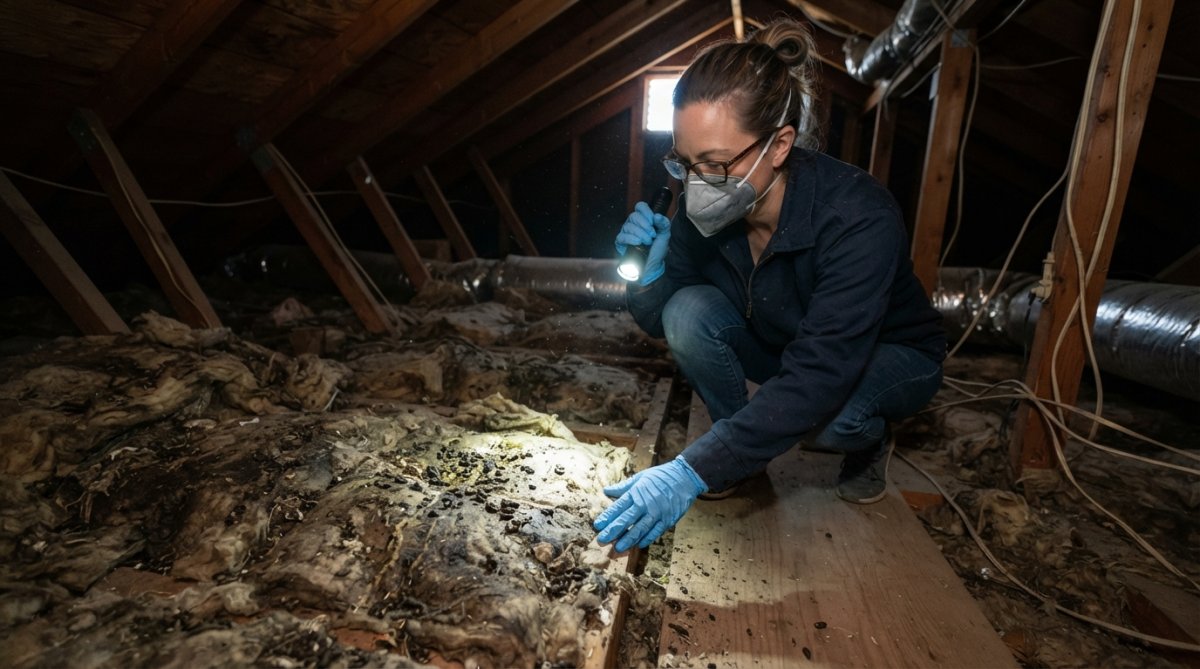
Start by identifying where the odor is strongest. Move through the room slowly and note where the smell intensifies. Common locations include wall voids, attic spaces, crawl spaces, and areas near air ducts or subflooring. Use your nose, but also look for visual clues like droppings, gnaw marks, or staining on ceilings and walls.
Step 2: Remove Contaminated Materials
Once you find the source, remove any porous materials that cannot be fully cleaned. This includes soiled insulation, stained drywall, and heavily contaminated wood. Place these materials in sealed plastic bags before disposal. For the carcass itself, always wear gloves and a respirator to avoid direct contact with pathogens.
Step 3: Deep Clean and Sanitize
After removing contaminated materials, clean all hard surfaces with an enzyme cleaner designed for organic waste. These products break down the proteins and fatty acids in urine and decomposition fluids rather than simply covering the smell. For porous surfaces that must remain, consider applying an activated carbon-based odor neutralizer.
A common mistake is using a regular household disinfectant instead of an enzyme cleaner. Disinfectants kill bacteria but do not break down the organic residue that causes the odor, so the smell returns within days.
Neutralizing Rodent Pheromones vs. Masking the Odor
Neutralizing rodent pheromones is fundamentally different from masking the odor with air fresheners. Pheromones are chemical signals that rodents use to communicate, and they are designed to persist in the environment. Masking agents simply add a stronger scent on top, which fails to address the underlying contamination and does nothing to prevent future infestations.
Effective neutralization requires breaking down the pheromone molecules themselves. Enzyme cleaners and oxidizing agents like hydrogen peroxide-based products can achieve this, but they must be applied directly to the contaminated surface and given time to work. Odor neutralizing sprays that simply fragrance the air are a temporary fix at best.
Health Risks and Structural Damage From Lingering Odors
Lingering rodent odors are not just unpleasant; they signal an ongoing health risk. Dried urine and feces can become airborne and cause respiratory irritation, especially in people with asthma or allergies. Rodents also carry pathogens that can survive in contaminated materials long after the animal is gone.
Is It a Health Hazard?
The primary health concern is not the odor itself but the pathogens and allergens that travel with it. Hantavirus, salmonella, and leptospirosis are all associated with rodent infestations, and their presence is indicated by the same contamination that causes the smell. According to the Centers for Disease Control and Prevention guidance on rodent control, proper cleanup requires avoiding direct contact with rodent waste and using appropriate PPE.
What Carcass Fluids Do to Your Home
Carcass fluids seep into subflooring and wall cavities, causing staining and structural degradation over time. The moisture from decomposition can promote mold growth, while the acidic nature of the fluids can corrode metal fasteners and damage wood. This is why professional remediation often involves removing and replacing affected building materials rather than attempting to clean them.
DIY vs. Professional Odor Removal: Where to Draw the Line
DIY odor removal is appropriate for small, accessible contamination sites, such as a single dead mouse in a garage or a minor urine stain on a concrete floor. For these situations, enzyme cleaners and careful disposal may be sufficient. However, the line should be drawn when contamination has spread to insulation, wall voids, or HVAC systems.
A critical distinction between DIY and professional results lies in the equipment used. Most consumer-grade products are designed to mask or lightly scent an area, not to eliminate the source of the odor at a molecular level. Professional remediation relies on a different class of tools that homeowners rarely have access to, and understanding the difference is key to knowing why some smells never go away.
Consumer Sprays vs. Enzyme Cleaners: The average grocery store spray is a masking agent. It uses fragrances to overwhelm your sense of smell, but it does nothing to address the underlying organic material. True enzyme cleaners, which are available at hardware stores, are a step up. They introduce specific bacteria and enzymes that digest proteins, fats, and uric acid. However, they require dwell time (often 15-30 minutes) and may need multiple applications to be effective on porous surfaces. A common mistake is applying an enzyme cleaner and then wiping it up immediately, which removes the product before it has a chance to work.
The Professional Arsenal: Professionals use equipment that changes the game for odor removal.
- Hydroxyl Generators: Unlike ozone machines, hydroxyl generators are safe for occupied spaces. They produce hydroxyl radicals (OH) that are naturally present in the atmosphere and work by oxidizing and destroying odor-causing VOCs at the source. They are highly effective for penetrating porous materials like drywall and wood, neutralizing the smell without the need for demolition in some cases.
- Ozone Machines: These are powerful tools that generate ozone (O3), a highly reactive gas that oxidizes organic compounds. Ozone is effective at neutralizing odors in a whole room or structure, but it is dangerous to humans and pets. The area must be completely evacuated during treatment, and the ozone must be allowed to dissipate before re-entry. Ozone can also degrade certain materials like rubber and some plastics.
- Thermal Foggers: These machines create a fine, dry fog of a deodorizing agent that can penetrate deep into wall cavities, ductwork, and other inaccessible areas. The fog particles are small enough to reach the same places the odor originates, neutralizing contaminants that surface cleaning cannot reach.
- HEPA Vacuuming and Air Scrubbers: After removing contaminated materials, professionals use HEPA-filtered vacuums to capture fine particles of dried urine and feces that have become airborne. Air scrubbers with activated carbon filters are then used to continuously filter the air, removing VOCs and particulate matter, which is crucial for addressing the respiratory health risks associated with lingering odors.
The ‘Phantom Smell’ and Health Reality: A unique challenge in rodent odor remediation is the ‘phantom smell’ phenomenon. After living with the odor for weeks, your brain can become sensitized to it, and you may continue to perceive the smell even after the source has been completely removed. This is a neurological response, not a sign of failure. In contrast, other times the smell seems to disappear because of olfactory fatigue, where your nose simply stops registering the constant stimulus. This is dangerous because it can give a false sense of security while the contamination, and its health risks, remain. The actual respiratory risks come from inhaling microscopic particles of dried rodent urine, feces, and dander, which can trigger allergic reactions and asthma attacks. The VOCs from decomposition can also cause headaches and nausea. A professional with a hydroxyl generator and air scrubber addresses both the source and the airborne particles, providing a more complete and safer solution than a DIY spray-down.
| Situation | DIY Approach | Professional Help |
|---|---|---|
| Single dead mouse, accessible | Enzyme cleaner, sealed disposal | Not usually needed |
| Urine staining on concrete | Enzyme cleaner, repeated application | If odor persists after 2 attempts |
| Contaminated attic insulation | Not recommended | Required for full removal and disposal |
| Odor in wall voids or ducts | Not feasible | Required for access, hydroxyl/ozone treatment |
| Lingering ‘phantom smell’ after cleanup | Ventilation and time | Hydroxyl generator to ensure complete neutralization |
The decision also depends on your health status and tolerance for risk. Pregnant women, young children, and people with respiratory conditions are more vulnerable to the pathogens in rodent waste, making professional remediation a safer choice. Additionally, professionals can identify and seal entry points, reducing the risk of future infestations, a service that goes beyond simple odor removal.
Conclusion: A Clean Home Starts With the Right Approach
Rodent smell is a stubborn problem because it lives in the structure of your home, not just on its surfaces. Understanding why rodent smell stays behind is the first step toward a lasting solution. Whether you tackle a small cleanup yourself or call in professionals for extensive contamination, the goal is the same: complete removal of the organic material causing the odor, not just a temporary cover-up.
For homeowners facing large-scale contamination, rodent infestation cleanup from Rodent cleanup experts offers a comprehensive solution. Our team removes contaminated insulation, performs HEPA vacuuming, and applies professional-grade sanitization to restore your home to a safe condition. We also inspect for entry points to help prevent rodents from returning.
Get started with Rodent cleanup experts and eliminate the smell for good.
Frequently Asked Questions
How long does it take for a rodent smell to go away?
Without proper removal, a dead rodent smell can last 2 to 4 weeks as the carcass dehydrates. However, the pheromones and bacteria left in urine and nesting materials can cause the smell to persist for months or even years after the body is gone. The ‘5-day mouse rule’ refers to the peak of the odor, but lingering smells in porous materials like insulation and drywall require active treatment, not just time.
What is the best way to remove rat smell from an attic?
The best way to remove rat smell involves three steps: locate and remove the carcass or contaminated nesting, dispose of porous materials like insulation that have absorbed the odor, and then deep clean hard surfaces with an enzyme cleaner. Enzyme cleaners break down the uric acid and bacteria rather than just masking the smell. For severe cases, sealing the area with a shellac-based primer after cleaning prevents the odor from seeping back into the room.
What effectively neutralizes rodent pheromones?
Rodent pheromones are oily and resistant to standard cleaners. An enzyme-based cleaner is the most effective neutralizer because it breaks down the organic proteins and uric acid crystals. Bleach and vinegar only sanitize the surface, but they do not eliminate the pheromone residue that rodents use to mark territory. For deep-set smells in walls or HVAC systems, professional ozone or hydroxyl generators may be needed to oxidize the odor molecules that DIY methods cannot reach.
Can rodent odors cause health issues if left untreated?
Yes, lingering rodent odors can trigger respiratory irritation, especially for people with asthma or allergies. The smell comes from bacteria, pathogens, and allergens in urine, droppings, and decaying flesh. Over time, airborne particles from dried urine can become trapped in dust and continue to circulate through your HVAC system, causing ongoing symptoms. Professional sanitization removes these contaminants and restores indoor air quality, which is why addressing the source is critical for your health.