
Table of Contents
- Signs of Rats in Walls: Fresh Evidence vs. Old Traces
- Rat Noises in Walls at Night: What Active Rats Sound Like
- How Long Can Rats Stay in Walls: Activity Patterns and Timeline
- Step-by-Step: How to Monitor for Active Rat Activity
- What to Do When You Hear Rats in the Walls
- Distinguishing Rats from Mice and Other Animals
- After the Activity Stops: Confirming the Infestation Is Over
- Frequently Asked Questions
Last Updated: October 21, 2026
Signs of Rats in Walls: Fresh Evidence vs. Old Traces
The key to knowing how to tell if rats are still in your walls is distinguishing fresh activity from old signs. Rats leave droppings, gnaw marks, and nesting materials, but some evidence lingers for months after they leave.
Fresh droppings look shiny and dark; old ones turn gray and crumbly. Fresh gnaw marks are light-colored and sharp-edged; older marks look weathered and dull. Nesting materials still in use feel soft and moist; abandoned nests become dry and compressed.
Droppings: Age and Activity Indicators
Rat droppings are one of the easiest signs to read. Fresh droppings are moist, dark, and glossy; old ones are dry, gray, and crumbly.
Location matters too. Fresh droppings appear along active travel routes, since rats reuse the same paths. Droppings concentrated in one area mark where rats are moving through your walls right now.
Fresh droppings also smell stronger, sharp and ammonia-like. A strong ammonia scent near droppings means the rats are likely still present.
Gnaw Marks, Nesting Materials, and Debris
Gnaw marks tell you where rats have been chewing. Fresh marks show light wood or insulation underneath with clean, sharp edges. Old gnaw marks are darker and rougher around the edges.
Rats shred fabric, paper, and insulation to build nests.
Falling debris is another clue. When rats gnaw through wood or insulation, small pieces fall inside the walls. New dust or crumbles below a gnaw mark indicate recent activity.
Rat Noises in Walls at Night: What Active Rats Sound Like
Rats make distinct sounds when they move through walls, and recognizing them helps confirm whether activity is happening right now. The sounds are loudest at night when the house is quiet.
Scratching is the most common sound, a rapid, repetitive noise as rats claw through walls and ceilings. Squeaking is high-pitched and often means rats are communicating. Scurrying is a quick, light patter as rats run across surfaces. All come from inside the wall cavity, not the surface.
Scratching, Squeaking, and Scurrying Sounds
Scratching sounds happen when rats use their claws to climb or dig, sharp and persistent, heard in short bursts near entry points or along established travel routes inside the walls.
Squeaking is communication between rats: young rats squeak when hungry or distressed, adults to warn each other of danger. It usually means multiple rats are present.
Scurrying is rapid movement, lighter and faster than scratching.
When and Where You’ll Hear Them Most
Rats are nocturnal, most active between midnight and 4 a.m., when you’ll hear the loudest and most frequent noises. During the day they rest in their nests, so sounds are rare.
Listen near baseboards, in attics, and inside crawl spaces. Rats travel along edges where they feel protected, so noises there are strong indicators of active movement.
After dark, turn off background noise and listen near the affected area. Consistent scratching or scurrying every night means the infestation is active.
How Long Can Rats Stay in Walls: Activity Patterns and Timeline
Rats are adaptable and can live inside wall cavities for extended periods given food, water, and shelter. A single rat needs little food daily, and wall voids provide stable temperatures and protection from predators, so an infestation can persist for weeks or months without obvious signs.
Typical Activity Patterns
Rats are nocturnal and follow predictable routines. Activity peaks shortly after dark and again before dawn, with the heaviest movement between midnight and 4 a.m. Daytime noises are less common and may indicate a different animal, such as a squirrel.
Seasonal changes affect activity. In colder months, rats seek warmth and may move deeper into wall voids or attics.
How Long Activity Can Persist
There is no fixed timeline for how long rats stay in walls. Some infestations resolve on their own if rats find a better food source or are displaced, but many persist until the animals are removed or entry points are sealed.
Activity commonly continues until a food source is removed or professional treatment is performed. Even after treatment, some rats may survive or new rats may enter through unsealed gaps, which is why post-treatment monitoring matters.
Using Activity Patterns to Confirm an Active Infestation
Activity patterns are most useful compared over time. Scratching or scurrying at the same time and place for several consecutive nights points to an active infestation rather than a one-time noise.
Pair sound patterns with physical evidence. Fresh droppings, new tracks in a tracking patch, or fresh gnaw marks confirm ongoing activity; old evidence alone does not. Log both over a 7-14 day window before deciding whether the infestation is active.
Activity patterns are clues, not proof. The most reliable confirmation comes from combining nighttime listening with fresh physical evidence over several days. If you are unsure, keep monitoring and avoid sealing entry points until you are confident the rats are gone.
Step-by-Step: How to Monitor for Active Rat Activity
Most guides tell you to look for droppings and listen for noises but stop short of a repeatable way to confirm how to tell if rats are still in your walls. The method below answers one question: is the activity ongoing, or are you looking at old evidence? It takes about 10-15 minutes per check and works best over a 7-14 day window.
Step 1: Build a Simple Monitoring Map
Walk the interior perimeter of the affected wall with a flashlight. Mark every spot with droppings, gnaw marks, rub marks, shredded nesting material, or staining.
Focus on areas rats actually use: along baseboards, inside attic spaces, at the top and bottom plates of walls, around plumbing penetrations, and near vents or gaps. Rats travel along edges, so evidence clusters in lines rather than spreading evenly.
Keep a simple log: date, location, what you saw, and whether it looked fresh or old. A notebook or a phone note is enough. The log is what turns scattered clues into a clear answer.
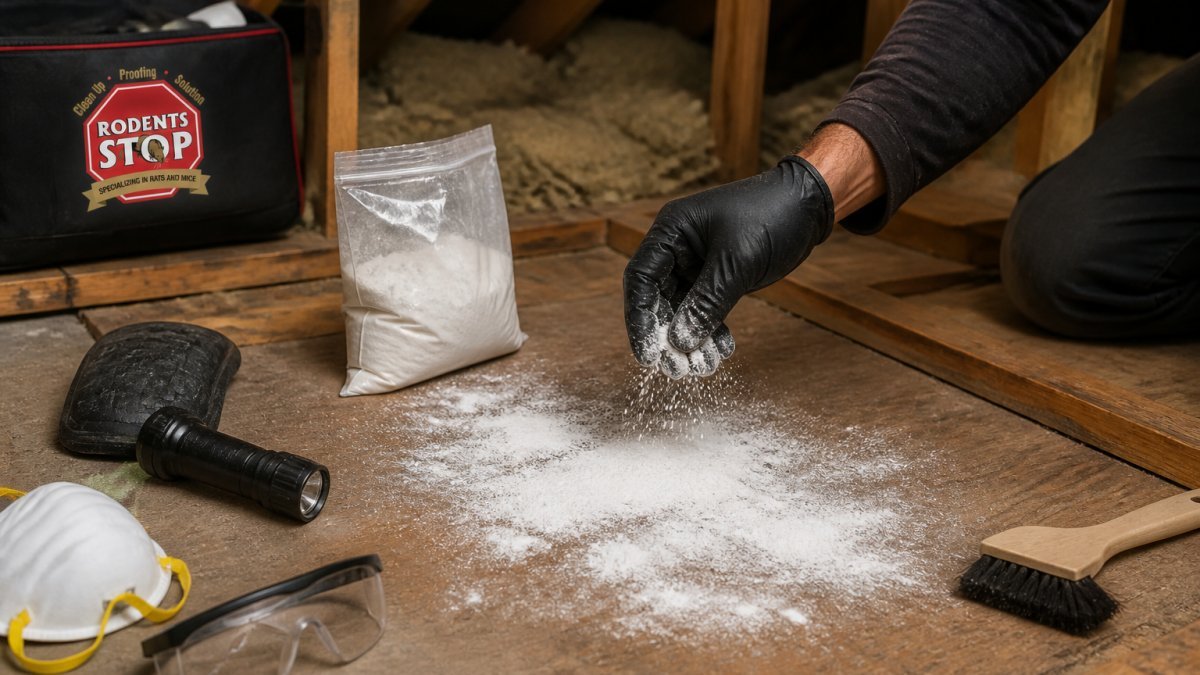
Step 2: Use a Tracking Patch to Confirm Movement
A tracking patch is the most reliable low-cost way to confirm active movement.
Check the patch the next morning. Fresh tracks, tail drags, or droppings in the powder confirm a rat moved through overnight. If the patch stays undisturbed for several nights, that route is likely inactive. Reapply the powder after each check so you can tell new activity from old.
Step 3: Check for Fresh Versus Old Evidence
Not all signs mean the same thing. Use the following criteria to judge whether evidence is recent:
- Droppings: Fresh droppings are dark, moist, and glossy, and they smear slightly when pressed. Old droppings are gray, dry, and crumbly. Fresh droppings also carry a sharper ammonia odor.
- Gnaw marks: Fresh chew marks expose light-colored wood or insulation and have sharp edges. Old marks are darkened and rounded from wear.
- Nesting material: Material still in use feels soft and may be damp; abandoned nests are dry, compressed, and matted.
- Debris: New wood shavings or insulation fragments below a gnaw point indicate recent chewing.
- Rub marks: Fresh grease marks along edges are darker and slightly tacky; old marks are dull and dry.
A single old sign does not prove current activity. Look for a pattern of fresh evidence across multiple monitoring points before drawing a conclusion.
Step 4: Record Nighttime Sound Activity
Set aside two or three nights to listen carefully between midnight and 4 a.m., when rats are most active. Turn off TVs, fans, and radios, and listen near the affected wall. Note the time, location, and type of sound, scratching, scurrying, squeaking, or gnawing.
Use a phone recording app to capture sounds you are unsure about.
Step 5: Interpret the Results
After 7-14 days, review your log and photos. Active activity is confirmed when you see fresh droppings, new tracks in a tracking patch, fresh gnaw marks, or repeated nighttime sounds. If all evidence is old and no new signs appear, the rats may have moved on, but do not seal anything yet. Continue monitoring for another week before treating the area as inactive.
Do not open walls or ceilings to look for rats. Disturbing contaminated insulation and droppings can release pathogens into the air, and you may encounter electrical wiring that rats have damaged. If you suspect a serious infestation, contact a licensed pest professional before any wall is opened.
What to Do When You Hear Rats in the Walls
Hearing rats in your walls is unsettling. The first instinct is to act fast. But taking hasty steps can make the problem worse or create safety risks.
Immediate Safety Steps
Do not open walls or ceilings without professional guidance. Rats can carry diseases. Their droppings and urine contain harmful bacteria.
Seal off the affected area if possible. Keep pets and children away from spaces where rats are active. Do not attempt to trap rats yourself unless you have experience.
Increase ventilation in your home. Open windows when weather permits. Use exhaust fans in bathrooms and kitchens. This helps reduce odors and airborne contaminants.
When to Call a Professional
Call a pest control professional as soon as you confirm active rat activity. Professionals have the tools and training to safely remove rats and can identify and seal entry points.
After rats are removed, rodent infestation cleanup becomes important. This specialized service removes contaminated insulation, sanitizes affected areas, and treats odors that remain after the animals are gone.
Professional cleanup ensures your home is safe and sanitary and removes health hazards that DIY cleaning cannot address.
Distinguishing Rats from Mice and Other Animals
Rats and mice leave similar signs, but there are key differences. Rat droppings are larger, about the size of a grain of rice.
Rats make louder sounds when they move. Their scratching is heavier and more pronounced. Mice make quieter, higher-pitched sounds.
Other animals can also enter walls. Squirrels make similar scratching sounds but are active during the day.
Listen to the timing and intensity of sounds. Rats are most active at night; squirrels during the day.
After the Activity Stops: Confirming the Infestation Is Over
After pest control treatment, activity should stop within a few days. But confirming the infestation is truly over requires patience and monitoring.
Continue checking your monitoring points for 2-3 weeks after treatment.
Listen for sounds at night.
Inspect entry points and gaps.
The smell should fade over time after activity stops. If odors persist or worsen, decomposing rats may be trapped inside walls.
Frequently Asked Questions
How long can rats stay in your walls?
Rats can remain in walls indefinitely if they have access to food, water, and nesting materials. Once established in wall cavities, they may stay for months or years, continuously reproducing and expanding their presence. The longer they remain, the more damage they cause to insulation, wiring, and structural materials. Regular monitoring helps you catch ongoing activity early before the infestation becomes severe.
What sounds do rats make in walls at night?
Active rats produce scratching, squeaking, and scurrying noises as they move through wall cavities and ceilings. You may hear rapid scratching sounds as they gnaw or travel, high-pitched squeaks during social interactions, and the patter of their feet running across surfaces. These sounds are most noticeable after dark when rats are foraging and most active. Hearing these noises consistently indicates an active infestation rather than old, dormant evidence.
What should I do if I hear rats in my walls?
First, avoid opening walls or disturbing the area, as this can spread contamination and drive rats deeper into your home. Document the sounds you hear, including when and where they occur most frequently. Check for fresh droppings, gnaw marks, and nesting materials in accessible areas like attics and crawl spaces. If activity persists for more than a few days or you find extensive evidence, contact a professional for inspection and cleanup services to address both the infestation and any contamination left behind.
How can you tell if rat droppings are fresh?
Fresh rat droppings are dark, moist, and sticky to the touch, while old droppings are dry, crumbly, and gray or dusty in appearance. Fresh droppings indicate recent or ongoing activity, whereas aged droppings suggest the infestation occurred weeks or months ago. You can perform a simple test by placing flour or chalk dust near suspected areas overnight, new rat activity will leave fresh tracks and droppings in the powder. This method helps you confirm whether rats are actively moving through your walls right now.