Table of Contents
- Step 1: Inspect the Foundation for Rodent Access Points
- Step 2: Choose the Right Rodent Exclusion Materials
- Step 3: Seal Cracks and Small Gaps in Concrete
- Step 4: Seal Gaps Around Pipes in Foundation Walls
- Step 5: Seal the Gap Between Foundation and Sill Plate
- Step 6: Reinforce Large Openings with Metal Mesh and Flashing
- Common Mistakes That Let Rodents Back In
- When to Call a Professional for Rodent Access Points
- Frequently Asked Questions
Last Updated: October 18, 2026
Step 1: Inspect the Foundation for Rodent Access Points
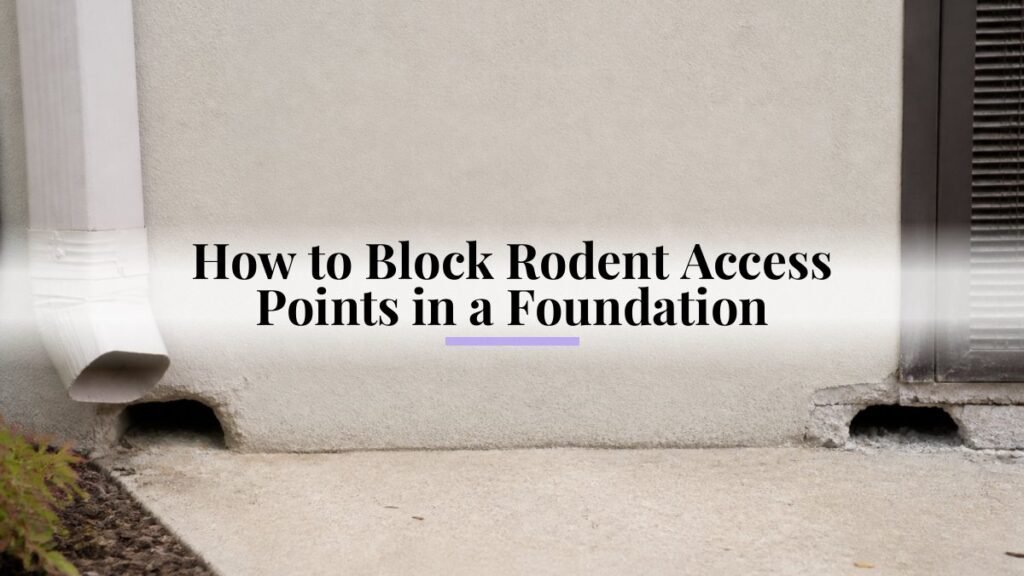
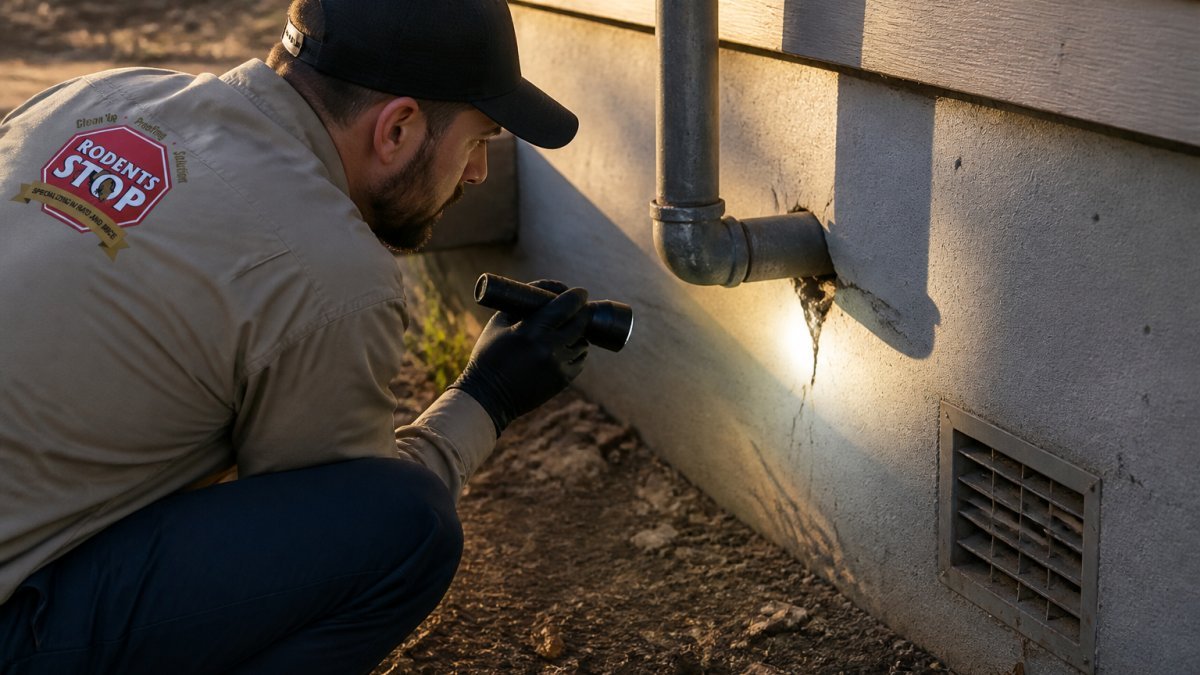
Blocking rodent access points in a foundation starts with a slow, systematic walk around the outside of the house, flashlight in hand. This guide from Rodent cleanup experts covers the same inspection sequence we use when we evaluate a property, and it begins at the ground line.
Rats and mice rarely chew a new hole when an old one already works. They reuse the same seams, cracks, and utility openings for years. Your job is to find those openings before the next cold snap drives rodents back inside.
Foundation Inspection Checklist
Work clockwise around the foundation and check each item in order. Note the location and approximate width of every opening you find.
- Foundation wall: vertical cracks, corner cracks, spalling concrete, and cold joints between pours
- Sill plate junction: the horizontal seam where wood framing meets concrete, especially at corners and along long runs
- Utility penetrations: water lines, gas lines, electrical conduit, cable bundles, dryer vents, and HVAC lines
- Crawl space vents and access doors: torn screens, missing covers, and gaps at the frame
- Garage and porch slabs: expansion joints, slab-to-wall seams, and cracks at the garage door threshold
- Below grade: soil line against the foundation, buried utility chases, and any visible burrow openings
- Drainage features: weep holes, French drains, and downspout discharges that rodents may use as runways
Gap-Sizing Guide
Match the repair method to the opening size. Rodents can pass through openings far smaller than most homeowners expect.
| Opening Width | Typical Location | Inspection Note |
|---|---|---|
| Hairline to 1/4 inch | Concrete cracks, sill plate seam | Easy to overlook; seal with caulk or mortar |
| 1/4 to 1 inch | Pipe penetrations, vent frames | Pack with mesh before sealing |
| 1 to 3 inches | Corner cracks, damaged sill plate | Needs rigid mesh plus sealant |
| Over 3 inches | Crawl space vents, old foundation holes | Requires metal mesh, flashing, or concrete patch |
Confirming an Opening Is Active
An opening is active if you find droppings, chewed edges, or fresh rub marks nearby. Rodents leave dark grease trails where their bodies brush against concrete. Set a small piece of paper or a light dusting of flour at the gap overnight. Tracks in the morning confirm traffic.
Distinguishing Rodents by Sign
Different rodents leave different clues, and the clues point to different entry strategies:
- Mice: small droppings the size of rice grains, gnaw marks on wood and foam, and travel along edges and corners
- Rats: larger droppings, rub marks along walls, burrows in soil against the foundation, and gnaw marks on harder materials
- Squirrels and other climbers: entry often at the roofline or attic vents rather than the foundation, so foundation sealing alone will not solve the problem
When to Address Rodents Inside First
If you find live rodents, nesting material, or droppings inside the crawl space or wall cavities, address the infestation before sealing. Sealing active entry points can trap rodents inside, where they die and create odor and contamination problems. Set traps or call a professional, confirm the space is clear, then complete the exclusion work.
Step 2: Choose the Right Rodent Exclusion Materials
Rodent exclusion materials fall into three groups: chew-resistant fillers, sealants, and rigid barriers. Pick based on gap size, location, and exposure, not convenience. A material that works on a dry interior crack can fail in a wet below-grade joint.
Material Comparison by Location and Exposure
| Material | Best Use | Exposure Limits | Chew Resistance |
|---|---|---|---|
| Steel wool | Small dry gaps, sill plate seam | Rusts outdoors and in damp soil | High when packed tight |
| Copper mesh | Damp spots, pipe penetrations, below grade | Holds up better than steel wool in moisture | High |
| Exterior caulk and sealant | Hairline cracks, finished seams | Flexible; may shrink over time | Low alone |
| Expanding foam | Odd shapes, irregular voids | Rodents chew through it; degrades in UV light | Low alone |
| Mortar and concrete patch | Larger cracks in foundation wall | Good above and below grade once cured | High |
| Heavy-duty flashing and angle iron | Wide openings, vent covers, sill plate gaps | Durable outdoors; needs proper fastening | High |
| Galvanized metal mesh | Crawl space vents, large holes | Corrosion-resistant; must overlap edges | High |
Matching Material to the Joint
- Above-grade, dry cracks: exterior caulk or mortar is sufficient once the crack is cleaned.
- Below-grade or wet joints: copper mesh plus hydraulic cement or a moisture-tolerant sealant; avoid steel wool that will rust.
- Moving joints: flexible sealant over mesh, leaving room for slight pipe or framing movement.
- Long, thin seams: mesh packed into the seam followed by flashing or a rigid cover.
- Large voids: metal mesh fastened with washers and screws, edged with flashing or angle iron.
Durability and Limitations
No single material handles every condition. Foam and caulk are covers, not barriers, and rodents can chew through both. Steel wool rusts and loses integrity outdoors. Concrete and mortar crack if the substrate moves. Metal mesh and flashing last longest but must be fastened so rodents cannot pry the edges loose.
Pack steel wool or copper mesh first, then seal over it. Foam and caulk alone will not stop a determined rat. The metal does the real work.
Tools to Have on Hand
A basic exclusion kit includes a flashlight, wire brush, screwdriver or packing tool, tin snips for mesh, drill and screws with washers, exterior sealant and caulk gun, mortar and trowel, gloves, and safety glasses. Most small repairs can be completed in a single afternoon; larger vent or sill plate projects may take a full day.
Step 3: Seal Cracks and Small Gaps in Concrete
Small cracks are the easiest fix and the one most homeowners skip. Clean the crack with a wire brush and remove loose concrete. Pack copper mesh or steel wool into the opening with a screwdriver. Then cover the packed gap with exterior-grade sealant or mortar.
Press the sealant in firmly so it sits flush with the wall. Let it cure per the label before backfilling soil. For hairline cracks under a quarter inch, a quality exterior caulk alone can work, but packing mesh first adds a layer rodents cannot chew through.
Step 4: Seal Gaps Around Pipes in Foundation Walls
Utility penetrations are the most common entry point we find. Seal gaps around pipes in foundation walls by packing copper mesh around the pipe first. Leave a small gap so the pipe can still move slightly.
Then apply exterior sealant or expanding foam over the mesh. Do not fill the entire void with foam alone. Rodents chew through foam quickly. Check cable bundles and dryer vents the same way, and add a metal collar where the pipe meets the wall.
Step 5: Seal the Gap Between Foundation and Sill Plate
The seam where the foundation meets the sill plate is a long, thin entry point that runs around the whole house. Inspect it with a bright light. Where you find gaps, pack steel wool or copper mesh into the seam, then seal with exterior caulk.
For wider gaps, use heavy-duty flashing bent to fit, secured with construction adhesive. Check the sill plate for rot while you are there. Soft, damaged wood invites rodents and needs replacement, not just sealing.
Do not seal the sill plate gap before checking drainage. Trapping moisture against the wood causes rot, which creates a bigger problem than the rodents did.
Step 6: Reinforce Large Openings with Metal Mesh and Flashing
Large openings, such as crawl space vents or old foundation holes, need a rigid barrier. Cut galvanized metal mesh to size, leaving a one-inch overlap on each side. Fasten it with washers and screws or construction adhesive.
Cover the mesh edge with heavy-duty flashing or angle iron to prevent rodents from prying it loose. Burrowing rodents can dig under a barrier placed at grade, so extend the mesh below the soil line where possible.
| Opening Type | Best Material | Why |
|---|---|---|
| Hairline cracks | Exterior caulk | Fast, flexible seal |
| Gaps under 1 inch | Steel wool plus sealant | Chew-resistant core |
| Pipe penetrations | Copper mesh plus foam | Handles odd shapes |
| Sill plate seam | Mesh plus flashing | Long, thin coverage |
| Large holes or vents | Metal mesh plus angle iron | Rigid, chew-proof barrier |
Common Mistakes That Let Rodents Back In
The biggest mistake is sealing one gap and calling it done. Rodents find the next opening within days. Walk the full perimeter and check every utility line, vent, and seam.
Other frequent errors:
- Using foam alone, which rodents chew through
- Skipping the sill plate seam because it looks tight
- Sealing over soil piled against the siding
- Ignoring gaps below grade where burrowing rodents dig
Metal mesh or wool plus a sealant is the only combination that reliably stops rodents. Foam, caulk, and mortar work as covers, not barriers.
When to Call a Professional for Rodent Access Points
Call a professional when the damage goes beyond the wall. If you find contaminated insulation, droppings in the crawl space, or a persistent odor, the cleanup is a separate job from sealing. Rodent access points that lead into wall cavities or attics often hide nests and damaged wiring.
At Rodent cleanup experts, we inspect the affected areas and identify potential entry points as part of our rodent infestation cleanup service. We remove droppings and nesting material, pull contaminated insulation, and treat odors at the source. That way, sealing the foundation is the last step, not the first.
Frequently Asked Questions
How do you find rodent access points in a foundation?
Walk the exterior perimeter at dusk or early morning when rodents are active. Look for gaps wider than a quarter inch, rub marks, droppings, and chewed edges near the sill plate, pipe penetrations, and foundation vents. Push a flashlight along the base of the wall and check for daylight showing through cracks. Stuffing a small piece of paper in a suspect gap and checking it the next day confirms whether rodents are pushing through. Any opening you can fit a pencil through is large enough for a mouse to use.
Can rodents chew through expanding foam?
Yes. Mice and rats can chew through spray foam and most caulks over time, especially foam used alone in wide gaps. Foam works best as a sealant and adhesive around a chew-resistant core, not as the barrier itself. Pack the opening with steel wool or copper mesh first, then cover it with foam or caulk to hold the material in place and block airflow. For larger gaps, use metal mesh or heavy-duty flashing backed by mortar or sealant so the rodent meets metal before it reaches wood or insulation.
What materials can block mice from entering through foundation gaps?
Steel wool, copper mesh, and galvanized metal mesh are the most reliable rodent exclusion materials because rodents cannot chew through metal. Pair them with exterior-grade caulk, polyurethane sealant, hydraulic cement, or mortar to hold the material and close the gap. Heavy-duty flashing and angle iron work for larger openings around vents, utility penetrations, and sill plate junctions. Avoid using foam, wood, or plastic mesh alone, since mice can gnaw through these within days and re-enter the same opening.
When should you call a professional to seal rodent entry points?
Call a professional when the opening is wider than a few inches, when it involves structural elements like the sill plate or foundation wall, or when you cannot tell whether the gap is an entry point or a drainage or ventilation feature. Pros also help when rodents are still active inside, since sealing without removal traps animals and worsens odors. In Southern California, foundation and crawl space damage often hides behind insulation and stored items, so an inspection can catch entry points you would miss on your own.
Rodents will test every gap you leave open, and one missed seam undoes a weekend of work. If you are dealing with droppings, soiled insulation, or a smell that will not quit, the cleanup has to come before the seal. Rodent cleanup experts handles inspection, contaminated insulation removal, HEPA vacuuming, and odor treatment across Los Angeles, Ventura, San Bernardino, Riverside, and Orange Counties. Get started with Rodent cleanup experts and close the entry points for good.