Table of Contents
- Identifying Rodent Urine Contamination in Your Subfloor
- Step 1: Remove Contaminated Materials and Prepare the Area
- Step 2: Deep Clean and Neutralize Uric Acid
- Using Enzymatic Cleaners for Rodent Urine
- Step 3: Apply Odor-Blocking Primer for Subfloor Protection
- Subfloor Replacement for Rodent Damage: When It’s Necessary
- Ventilation and Airflow Techniques to Eliminate Odors
- Preventing Rodent Return: Sealing Entry Points
- Frequently Asked Questions
Last Updated: October 5, 2026
Identifying Rodent Urine Contamination in Your Subfloor
The rodent urine smell subfloor creates is unmistakable once you know what to look for. It’s a sharp, acrid odor that grows stronger in warm weather and spreads through walls and floors. The problem goes deeper than a bad smell, rodent urine contains uric acid, a compound that bonds to porous materials and resists standard cleaning. This is why most homeowners struggle to eliminate the odor on their own.
At Rodent Cleanup Experts, we’ve helped property owners across Southern California identify and remove rodent contamination. The first step is always the same: pinpoint exactly what you’re dealing with and where it’s coming from.
Distinguishing rodent urine from pet urine
Rodent urine and pet urine smell different. Rodent urine has a much sharper, more pungent ammonia smell that lingers in the air. Pet urine smells like ammonia too, but it’s usually localized to one spot and fades faster. Rodent urine spreads across large areas because rodents mark territory with multiple small deposits.
Here’s how to tell them apart:
- Rodent urine: Sharp, strong ammonia smell that gets worse in heat. Scattered across wide areas. Often found in attics, crawl spaces, and along walls.
- Pet urine: Stronger in one location. Fades over time. Usually in main living areas where pets spend time.
If you have both pets and a rodent problem, the rodent smell will be the one that makes your eyes water. It’s also the one that doesn’t go away with standard enzymatic cleaners made for pet accidents.
Locating the source of the odor
Finding where the smell is strongest tells you where rodents have been most active. Start by walking through your home and noting which rooms smell worst. The odor is usually strongest near entry points, nesting areas, and along travel routes.
Common locations for rodent urine contamination:
- Attic spaces and rafters
- Crawl spaces under the house
- Inside wall cavities
- Under flooring and subfloor areas
- Garage corners and storage shelves
- Basement or foundation spaces
Use your nose as your first tool. Open closets, check under sinks, and smell near baseboards. The stronger the smell in one spot, the more contamination is there. If the smell is coming from below the floor, you’re dealing with subfloor contamination, which requires deeper cleaning than surface odors.
Step 1: Remove Contaminated Materials and Prepare the Area
The first real step in eliminating rodent urine smell subfloor creates is removing whatever the rodents have contaminated. This means taking out insulation, padding, and subflooring materials that have absorbed urine.
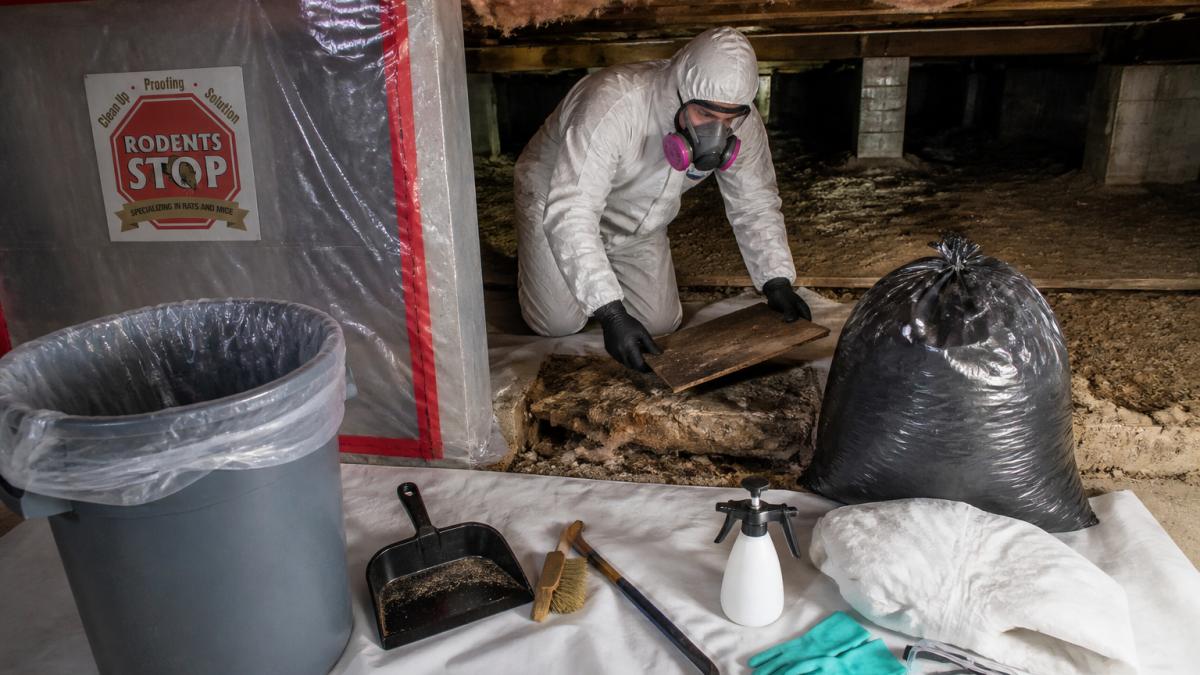
Before you start, protect yourself. Rodent droppings and urine can carry serious health risks. Wear a respirator (N95 minimum), disposable gloves, and a full-body suit if possible.
Remove all visibly contaminated materials:
- Take out insulation that smells like urine or shows rodent droppings
- Remove carpet padding if it’s in the affected area
- Cut away sections of subflooring (OSB or plywood) that are wet or heavily soiled
- Bag all contaminated materials in sealed, heavy-duty trash bags
- Dispose of bags according to local biohazard guidelines
This step is physical work, but it’s essential. Once you’ve removed the source materials, you’re halfway to solving the problem.
Step 2: Deep Clean and Neutralize Uric Acid
After you’ve removed contaminated materials, the remaining surfaces still hold uric acid. This is the compound that makes rodent urine smell so persistent. Uric acid doesn’t break down like regular urine, it crystallizes and bonds to porous surfaces.
You need a targeted approach. Start by vacuuming up any remaining droppings or debris with a HEPA filter vacuum. Then move to chemical treatment.
For concrete subfloors:
- Vacuum thoroughly with HEPA filtration
- Mix a solution of white vinegar and water (equal parts) or use a commercial uric acid neutralizer
- Apply the solution generously to all affected areas
- Let it sit for 24 hours
- Scrub with a stiff brush to break up the bonded crystals
- Rinse thoroughly and allow to dry completely
For remaining wood subflooring:
- Vacuum all surfaces
- Apply enzymatic cleaner (see next section) to break down organic compounds
- Allow 24-48 hours for the enzyme to work
- Wipe clean with a damp cloth
- Allow complete drying before moving to the next step
Drying is critical. Moisture trapped in the subfloor will keep odors alive and can lead to mold growth. Use fans and dehumidifiers to speed up drying. In humid climates, this step can take a week or more.
Using Enzymatic Cleaners for Rodent Urine
An enzymatic cleaner for rodent urine works differently than bleach or standard disinfectants. Enzymes are biological catalysts that break down the organic compounds in urine, including the uric acid crystals that cause the smell. They don’t mask the odor; they eliminate the source.
Enzymatic cleaners are most effective on organic material like wood, drywall, and insulation. They’re less effective on concrete alone, but they work well in combination with other treatments.
How enzymatic cleaners work:
- Enzymes target protein, fat, and uric acid molecules
- They break these molecules into smaller compounds that don’t smell
- The process takes time, usually 24-48 hours for full effect
- They work best in warm, moist conditions
When choosing an enzymatic cleaner:
- Look for products specifically labeled for rodent urine or animal urine
- Avoid all-purpose enzyme cleaners, they’re not strong enough
- Check that the product contains protease and lipase enzymes (these break down uric acid)
- Follow the manufacturer’s instructions for dilution and contact time
Apply enzymatic cleaner generously to affected wood surfaces, subflooring, and any remaining contaminated materials. Saturate the area so the enzyme solution can penetrate deeply. Cover the treated area with plastic sheeting to keep it moist while the enzyme works.
Step 3: Apply Odor-Blocking Primer for Subfloor Protection
Once you’ve cleaned and dried everything, you need a barrier to prevent any remaining odor from seeping back up through the subfloor. An odor-blocking primer for subfloor creates a sealed layer that traps any residual smell beneath it.
Primers designed for odor blocking contain special resins that block odor molecules from passing through. They’re different from regular paint primers, they’re specifically formulated to seal in persistent smells like rodent urine, smoke, and water damage.
Application steps:
- Ensure all surfaces are completely dry (moisture will prevent adhesion)
- Sand any rough areas lightly to improve primer adhesion
- Apply the odor-blocking primer with a roller or brush
- Use 2 coats for maximum effectiveness
- Allow full drying time between coats (follow product instructions)
- Once dry, you can install new subflooring or carpet
The primer acts as your insurance policy. Even if trace amounts of uric acid remain, they won’t reach your nose.
Subfloor Replacement for Rodent Damage: When It’s Necessary
Sometimes the damage is too severe to clean. If the subfloor is soft, warped, or crumbling, it’s compromised structurally and needs to be replaced. A damaged subfloor can lead to floor sagging, mold growth, and ongoing odor problems.
Signs you need subfloor replacement for rodent damage:
- Soft or spongy spots when you walk on the floor
- Visible rot or crumbling wood
- Severe water damage or mold growth
- Persistent odor even after cleaning (indicates deep saturation)
- Structural movement or creaking that wasn’t there before
Material-specific replacement guides
Different subfloor materials require different approaches.
OSB (Oriented Strand Board): OSB is cheaper than plywood but absorbs moisture more readily. If rodent urine has saturated OSB, replacement is usually the best option. OSB doesn’t dry well once saturated, and the smell tends to return.
Plywood: Plywood is denser and holds up better to moisture than OSB. If contamination is surface-level, cleaning and sealing may work. If the damage goes deep into the layers, replacement is safer.
Concrete slab: Concrete is porous and holds uric acid. If the odor is severe, you may need to seal the concrete with an epoxy coating after cleaning. In rare cases, a new concrete overlay can be poured over the damaged area.
Long-term structural integrity checks
After replacement or repair, monitor the subfloor for new problems. Check annually for:
- Signs of new moisture or water damage
- Soft spots or movement
- Any return of odors
- Cracks or separation in new materials
If you’ve sealed entry points properly (covered in the final section), rodent return should be rare. But if moisture returns, new odors can develop quickly. Keeping the subfloor dry and well-ventilated is your best long-term defense.
Ventilation and Airflow Techniques to Eliminate Odors
Even after cleaning, the smell can linger in the air. Proper ventilation removes odor molecules before they settle back into materials. This step is often overlooked, but it makes a real difference in how quickly the smell disappears from your home.
Ventilation strategy:
- Open windows and doors to create cross-ventilation, air flowing through the house, not just around one room
- Use exhaust fans in bathrooms and kitchens to pull air out of the house
- Run a whole-house fan if you have one, this pulls fresh air through the entire structure
- Place box fans in windows pointing outward to push contaminated air outside
- Use portable HEPA air filters in affected rooms to capture odor particles
In crawl spaces and attics, ventilation is especially important. These areas trap odors because air doesn’t naturally circulate. Install or improve vents to allow steady airflow.
Timing matters too. Odors are stronger in warm weather because heat releases more odor molecules into the air. During warmer months, ventilate more aggressively. Run fans longer and keep windows open when possible.
Preventing Rodent Return: Sealing Entry Points
The final step is making sure rodents don’t come back. Rodent urine smell returns fastest when new rodents move in and start marking territory. Prevention is far easier than remediation.
Rodents need only a small opening to enter. A gap the size of a dime is enough for a mouse; a quarter-sized hole lets rats in. Walk around your home’s exterior and look for:
- Gaps around pipes and utilities entering the house
- Cracks in the foundation or concrete
- Holes in siding or trim
- Gaps under doors or around window frames
- Openings in vents or soffit areas
- Damaged screens or weather stripping
Seal every opening you find:
- Use steel mesh or hardware cloth for large gaps (rodents can chew through caulk and foam)
- Caulk smaller cracks with silicone caulk
- Install door sweeps under exterior doors
- Repair or replace damaged screens
- Trim tree branches that touch the roof (rodents use them as highways)
Inside the home, eliminate food sources and hiding spots. Store food in sealed containers, clean up crumbs immediately, and remove clutter where rodents can nest.
At Rodent Cleanup Experts, we help identify entry points during our inspection process. Sealing these openings is just as important as cleaning up the damage.
Dealing with rodent urine smell in your subfloor is a multi-step process that requires patience and attention to detail. When the damage is severe or the smell persists after your own efforts, professional rodent infestation cleanup makes sense.
Frequently Asked Questions
How do you get animal urine smell out of a wooden subfloor?
The most effective approach combines enzymatic cleaning and odor-blocking treatment. First, remove any contaminated padding or carpet. Clean the wood subfloor thoroughly with an enzymatic cleaner designed for rodent urine, which breaks down uric acid crystals that cause persistent odors. After the wood dries completely, apply an odor-blocking primer rated for subfloors. For heavily saturated wood, replacement may be the only permanent solution.
Does an enzymatic cleaner work on porous subfloor materials?
Yes, enzymatic cleaners are highly effective on porous materials like OSB and plywood. These cleaners contain lipid-breaking enzymes that penetrate porous surfaces and neutralize uric acid deposits at the source. However, porous materials absorb urine more deeply than concrete, so you may need multiple applications. Allow adequate drying time between applications, typically 24 to 48 hours, to ensure the enzyme solution reaches all contaminated areas.
When do you need to replace the subfloor after rodent damage?
Replacement is necessary when the subfloor shows structural damage, deep saturation that enzymatic cleaning cannot resolve, or signs of moisture retention and mold growth. OSB and plywood are more prone to permanent damage than concrete slabs. If the odor persists after professional cleaning and primer application, or if you notice soft spots, warping, or visible deterioration, replacement is the most reliable long-term solution to prevent future odor and pest issues.
Can you use odor-blocking primers like KILZ on subfloors?
Yes, odor-blocking primers designed for subfloors can seal in remaining odors after enzymatic cleaning. These primers create a moisture barrier that prevents odor molecules from rising into living spaces. Apply primer only after the subfloor is completely dry and all contaminated materials have been removed. Follow the product’s application guidelines for subfloor use, as some primers require specific surface preparation or multiple coats for maximum effectiveness.