A faint scratching sound above the ceiling can become a much larger property problem. Roof rats in California are common around homes, apartment buildings, warehouses, and commercial properties, especially where trees, rooflines, utility lines, and attic openings give them easy access. Knowing the signs of roof rats and when to arrange roof rat cleanup Los Angeles County property owners can rely on helps protect the areas people do not see every day: attics, crawlspaces, wall voids, and insulation.
Traps may reduce active rodent activity, but they do not remove droppings, urine residue, nesting debris, odors, or damaged insulation. That is where professional cleanup and restoration matter.
Why Roof Rats Become an Indoor Contamination Problem
Roof rats are agile climbers. They often travel along fences, trees, vines, utility lines, and roof edges before finding gaps around vents, eaves, roof returns, ducts, or utility penetrations. Once inside, they tend to nest in elevated, protected spaces such as attics and ceiling voids. In some properties, they also enter crawlspaces, garages, storage rooms, and HVAC-adjacent areas.
Southern California’s mild weather allows rodent activity to continue throughout much of the year. A quiet attic can still have an active contamination issue. By the time an odor becomes noticeable in a hallway, bedroom, office, or unit below, urine residue and droppings may already be spread across insulation, framing, ducting, and stored belongings.
The damage is not limited to what is visible. Rodents can compress and contaminate insulation, shred materials for nests, leave urine trails along travel paths, and damage wiring or duct-related materials. For landlords and facility managers, a single attic issue can affect multiple units or shared areas if it is not handled thoroughly.
Signs of Roof Rats in Attics and Crawlspaces
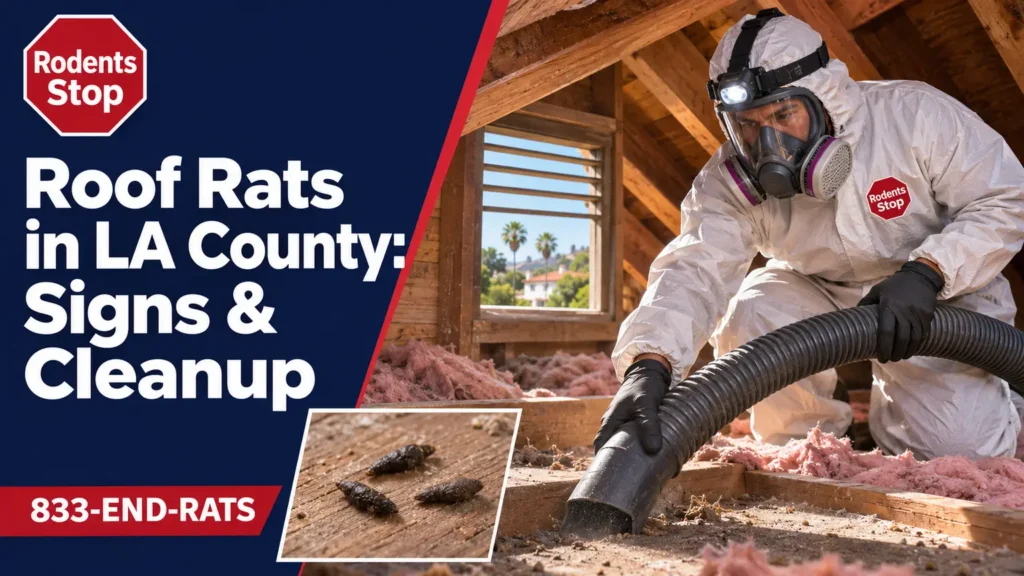
The most obvious sign is rodent droppings. Roof rat droppings are generally dark, narrow, and pointed at one or both ends. Fresh droppings may look darker and feel softer, while older droppings become dry and dull. However, the amount of droppings does not always reveal the full extent of the problem. Rodents can concentrate activity along edges, behind insulation, under platforms, and in areas that are difficult to inspect.
Other signs of roof rats include scratching or scurrying sounds after dark, persistent musky or ammonia-like odors, greasy rub marks near openings, chewed material, and shredded insulation or paper-like nesting debris. Homeowners may also find droppings near water heaters, in garages, above ceiling tiles, behind stored boxes, or around attic access points.
A few conditions deserve prompt attention:
- Droppings or urine odor around attic insulation, crawlspace vapor barriers, or HVAC equipment
- New noises in ceilings, walls, or above upper-floor rooms
- Stained ceiling areas or odors that worsen when the home is warm or closed up
- Torn screens, open vent gaps, damaged eaves, or visible entry points along the roofline
- Repeat rodent activity after traps or routine pest treatment
For property managers, recurring tenant reports should not be treated as isolated complaints. Repeated odors, ceiling noises, or sightings can indicate a shared entry route or a contamination area above several units.
Why Basic Cleaning Is Usually Not Enough
Vacuuming visible droppings or spraying an odor into the air does not solve an attic or crawlspace contamination problem. The material causing the odor may be inside insulation, beneath debris, along framing, or in areas that are not accessible without proper inspection and removal. If contaminated insulation stays in place, odor can continue even after the rodents are gone.
Cleanup also requires care. Disturbing dry droppings, urine-soaked nesting material, or contaminated insulation without the right containment and removal process can spread debris into other areas. This is especially concerning in occupied homes, apartment communities, schools, offices, and facilities where people need the space to remain usable during the work.
The right cleanup scope depends on the conditions. A small, recent issue near one entry point may need targeted removal and sanitation. A long-running infestation may require larger insulation removal, detailed cleaning of structural surfaces, deodorization, and repairs to exclusion points. An honest inspection should distinguish between these situations rather than treating every property the same way.
What Professional Roof Rat Cleanup Should Address
Effective roof rat cleanup begins with finding where activity occurred and how rodents got in. The cleanup itself should not be separated from prevention. If entry points remain open, rodents can return and contaminate the same attic or crawlspace again.
Rodent Cleanup Experts starts with a detailed inspection of the affected areas. This includes looking for droppings, nests, urine staining, contaminated insulation, odors, active travel routes, and accessible entry points. In older homes throughout Los Angeles County, gaps around rooflines, vents, plumbing penetrations, and utility access points are often part of the larger problem.
After inspection, contaminated nesting debris and waste are professionally removed. Insulation is evaluated for contamination and removed when needed. The exposed surfaces can then be sanitized, followed by targeted deodorization using a proprietary rodent scent neutralization treatment. The purpose is to address the odor source, not simply cover it with a fragrance.
The final part is exclusion. Identifying and sealing rodent entry points helps prevent future activity. This work is especially important after cleanup because a clean attic will not stay clean if roof rats retain access to the structure. The approach uses humane, poison-free rodent control methods designed with children, pets, and environmental safety in mind.
Roof Rat Cleanup for Homes, Rentals, and Commercial Buildings
A roof rat issue looks different depending on the property. In a single-family home, the concern may be an attic odor, contaminated insulation, or noises above a bedroom. In an apartment building, it may involve shared rooflines, multiple attic sections, tenant complaints, and a need to protect occupied units. In warehouses and commercial facilities, rodent contamination may affect storage areas, offices, ceiling systems, and difficult-to-reach mechanical spaces.
Schools, government facilities, and managed commercial properties often need a clear scope of work, careful site coordination, and dependable documentation of the affected areas. The goal remains the same: remove contamination, reduce persistent odors, restore damaged spaces, and help close off the routes rodents use to return.
Property owners should also consider timing. Waiting until a smell becomes severe or insulation damage is widespread can increase the scope of restoration. Early inspection is often the more practical choice when fresh droppings, new scratching noises, or a recurring attic odor appear.
When to Schedule a Professional Inspection
Schedule an inspection when you see droppings in an attic or crawlspace, notice an unexplained urine odor, hear repeated nighttime activity, or suspect rodents have been living above ceilings or inside walls. It is also wise to call after rodent control has been completed if odors and contamination remain. Rodent removal and rodent cleanup are related, but they are not the same service.
For professional attic cleaning, crawlspace sanitation, contaminated insulation removal, odor treatment, and exclusion throughout Los Angeles, Ventura, Orange, Riverside, and San Bernardino counties, contact Rodent Cleanup Experts at 833-END-RATS (833-363-7287). A thorough inspection can turn an unpleasant, uncertain rodent problem into a clear plan for cleanup, restoration, and prevention.
A clean, odor-controlled property starts with addressing what roof rats leave behind, not just the noises they make at night.