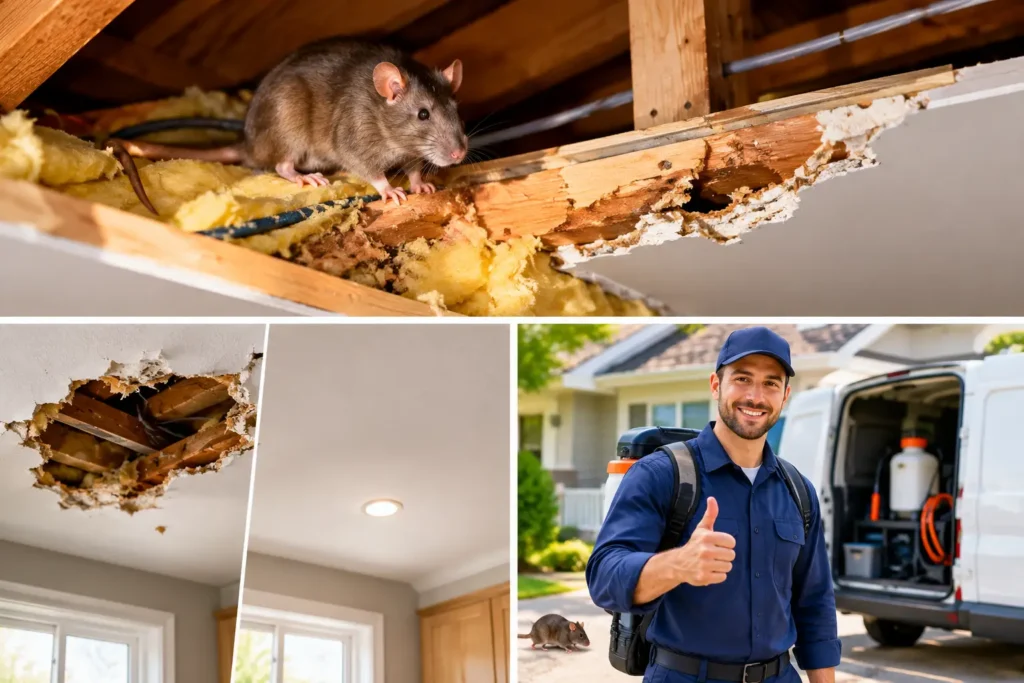
Scratching above the bedroom at night is often the first warning. By the time rats in ceilings become noticeable, they may have already left droppings, urine staining, nesting debris, and odor inside insulation or ceiling cavities. Trapping the animals is one part of the problem. Removing the contamination and repairing the conditions that allowed access are what restore the space.
Rats in ceilings are more than a noise problem
Rats commonly travel through attic spaces, wall voids, and ceiling areas because these locations are dark, sheltered, and rarely disturbed. In Southern California homes and commercial buildings, roof gaps, vent openings, utility penetrations, and damaged eaves can give rodents a path into these hidden areas.
Once inside, rats may shred insulation and stored materials for nests. They can leave droppings along travel paths and repeatedly urinate in the same areas. That contamination can create a stale, ammonia-like odor that moves through light fixtures, ceiling gaps, return-air areas, and adjacent rooms.
The visible evidence in a room below the ceiling may be limited. A few droppings near an access panel, a ceiling stain, or an unfamiliar odor can point to a much larger issue overhead. Waiting for the noise to stop does not remove the waste, nesting material, or damaged insulation left behind.
Signs of rats in a ceiling or attic
Noises are a common clue, especially scratching, gnawing, or movement after dark. But activity can be intermittent, and an occupied building may have significant contamination before anyone hears it.
Property owners should also watch for persistent odors, dark stains near ceiling penetrations, droppings in attic access areas, chewed wiring or duct materials, and insulation that appears flattened, scattered, or heavily soiled. In apartments, offices, warehouses, and schools, reports of odors from multiple rooms can indicate rodent movement through shared ceiling or wall spaces.
A professional inspection helps determine whether the problem is active, where the rats entered, and how far the contamination extends. This matters because cleaning only the area that is easy to see can leave odor sources and rodent waste behind in inaccessible sections.
Why basic cleanup is often not enough
Rat droppings and urine are not ordinary household dirt. Disturbing dry droppings or contaminated insulation without the right containment, protective equipment, and removal process can spread debris into the surrounding area. Vacuuming, sweeping, or spraying fragrance over an odor does not correct the underlying contamination.
Ceiling and attic cleanup also requires judgment. Light, isolated contamination may allow for targeted removal and sanitation. Heavy droppings, urine saturation, nests, or widespread insulation damage can require removal of contaminated insulation before sanitation and odor treatment can be effective. The right scope depends on what is found during the inspection.
At Rodent Cleanup Experts, the work focuses on the damage rodents leave behind: droppings cleanup, nesting material removal, contaminated insulation removal, sanitation, deodorization, and restoration. Entry points are also identified and sealed to help reduce the chance of another infestation.
A complete response protects the property
An effective ceiling-rat response starts by addressing active access with humane, poison-free methods. After rodent activity is controlled, the contaminated areas need careful cleanup rather than a surface-level treatment.
The process typically includes inspecting attic, ceiling, and crawlspace areas; removing contaminated debris and insulation where needed; sanitizing affected surfaces; treating persistent rodent odors; and sealing likely entry points. If rats have damaged wiring, ducting, or building materials, those conditions should be evaluated and repaired by the appropriate qualified professional.
For landlords and property managers, prompt action can also prevent a small ceiling problem from becoming a tenant complaint, odor issue, or larger restoration project. Commercial and public facilities benefit from the same approach: inspect thoroughly, remove contamination, sanitize properly, and correct the access points.
Get help before the damage spreads
Rats do not stay neatly contained in one ceiling bay. They follow routes through attics, walls, crawlspaces, and utility openings, leaving contamination as they go. If you have odors, scratching sounds, visible droppings, or suspected attic damage, a detailed inspection can clarify what needs to be cleaned and what needs to be sealed.
Rodent Cleanup Experts serves Los Angeles, Ventura, Orange, Riverside, and San Bernardino counties. Call 833-END-RATS (833-363-7287) to schedule a professional inspection and take the next practical step toward a clean, odor-free property.