
Table of Contents
- Method 1: Wet Cleanup with Disinfectant Solution
- Method 2: HEPA Vacuuming for Contaminated Surfaces
- Method 3: Removal of Contaminated Materials and Nesting
- How to Clean Up Rat Feces Safely and Effectively
- Rodent Cleanup Protective Equipment: What You Need
- Attic Rodent Waste Removal: Special Considerations
- When to Hire Professional Rodent Cleanup Services
- Prevention: Sealing Entry Points and Reducing Rodent Activity
- Frequently Asked Questions
Last Updated: October 12, 2026
Method 1: Wet Cleanup with Disinfectant Solution
Wet cleanup with disinfectant solution is one of the most effective approaches for rodent waste removal in small to moderate contamination areas. This method involves dampening contaminated surfaces, applying a disinfectant, and carefully collecting materials to prevent airborne particles from spreading pathogens.
The process works by breaking down bacterial contamination and neutralizing health risks before you remove anything. Here’s how to do it safely.
Step-by-Step Process
-
Prepare your workspace. Open windows and doors for ventilation. Put on disposable gloves, a respirator mask, and eye protection before starting any work.
-
Mix your disinfectant solution. Combine one part bleach with nine parts water in a spray bottle. Let the solution sit for a few minutes before use.
-
Dampen the contaminated area. Spray the solution generously over rodent droppings, urine stains, and nesting material. The moisture prevents dust and particles from becoming airborne.
-
Wait for contact time. Allow the disinfectant to sit for at least 5-10 minutes. This gives it time to kill pathogens effectively.
-
Wipe and collect materials. Use paper towels to wipe up the wet material. Place everything in a sealed plastic bag immediately.
-
Disinfect the surface again. Spray the area once more and let it dry completely.
-
Dispose of waste properly. Seal the bag and place it in your regular trash. Wash your hands thoroughly afterward.
When to Use This Method
Wet cleanup works best for small areas with light contamination. Use it when rodent droppings are visible but isolated. This method is ideal for garage corners, storage spaces, or areas with a few nests.
Avoid this approach if contamination covers a large area or if you suspect significant insulation damage. Professional help becomes necessary when the cleanup area exceeds what you can safely handle alone.
Method 2: HEPA Vacuuming for Contaminated Surfaces
HEPA vacuuming removes rodent waste and contaminated dust from surfaces without stirring particles into the air. A HEPA filter traps particles as small as 0.3 microns, preventing pathogens from spreading during cleanup.
Standard vacuums actually make contamination worse by aerosolizing particles. HEPA-equipped units contain particles safely inside the machine. This method works well for attics, crawl spaces, and areas where rodent activity was moderate.
Use HEPA vacuuming only after you’ve dampened surfaces with disinfectant solution. Never vacuum dry rodent waste. The moisture prevents particles from becoming airborne and keeps contamination contained.
Wear full protective equipment while operating the vacuum. After finishing, seal the vacuum bag in a plastic bag before disposal. Some professionals prefer to dispose of the entire vacuum bag rather than emptying it.
Method 3: Removal of Contaminated Materials and Nesting
Contaminated insulation, drywall, and nesting materials often need complete removal rather than cleaning. Rodents damage insulation with urine, feces, and nesting activity. Once insulation is heavily soiled, cleaning cannot fully restore it.
Removing contaminated materials is the most thorough approach to rodent waste removal. This method eliminates the source of odors and health risks completely. It’s especially important in attics where insulation protects your home’s temperature control.
Start by identifying all affected materials. Look for discolored insulation, visible nests, and areas with strong odors. Mark these sections clearly before removal begins.
Wear protective equipment including gloves, respirator mask, and eye protection. Place removed materials directly into heavy-duty sealed plastic bags. Never leave contaminated materials exposed during transport.
After removal, the space needs thorough disinfection before new insulation is installed. This prevents residual contamination from affecting replacement materials.
How to Clean Up Rat Feces Safely and Effectively
Rat feces pose serious health risks. Rodent droppings contain bacteria, viruses, and allergens that can cause illness. Safe cleanup requires proper technique, protective equipment, and careful disposal.
Identifying Rodent Droppings
Rat droppings are larger than mouse droppings and typically measure about half an inch long. They’re dark, pellet-shaped, and often found in clusters near nesting areas.
Mouse droppings are smaller, about a quarter inch, and pointed at the ends. Both types indicate active or recent rodent activity.
Look for droppings in these common locations:
- Attics and crawl spaces
- Behind appliances
- Inside cabinets and storage areas
- Along walls and baseboards
- Near food storage areas
Fresh droppings appear moist and dark. Old droppings look dry and dusty. Both require the same careful handling and disinfection approach.
Containment and Disposal
Never touch rodent droppings with bare hands. Always wear disposable gloves and a respirator mask rated for particulates.
Place all contaminated materials in sealed plastic bags. Double-bag if possible for extra containment. Label the bags clearly as biohazard waste.
Dispose of sealed bags in your regular trash. Most municipalities allow bagged rodent waste in standard garbage collection. Check your local waste management guidelines for specific requirements.
Avoid spreading contamination during cleanup. Don’t sweep or dry-vacuum droppings. These actions release particles into the air and increase health risks.
Clean the area thoroughly after removing all visible droppings. Use disinfectant solution and let it sit for adequate contact time before wiping.
Rodent Cleanup Protective Equipment: What You Need
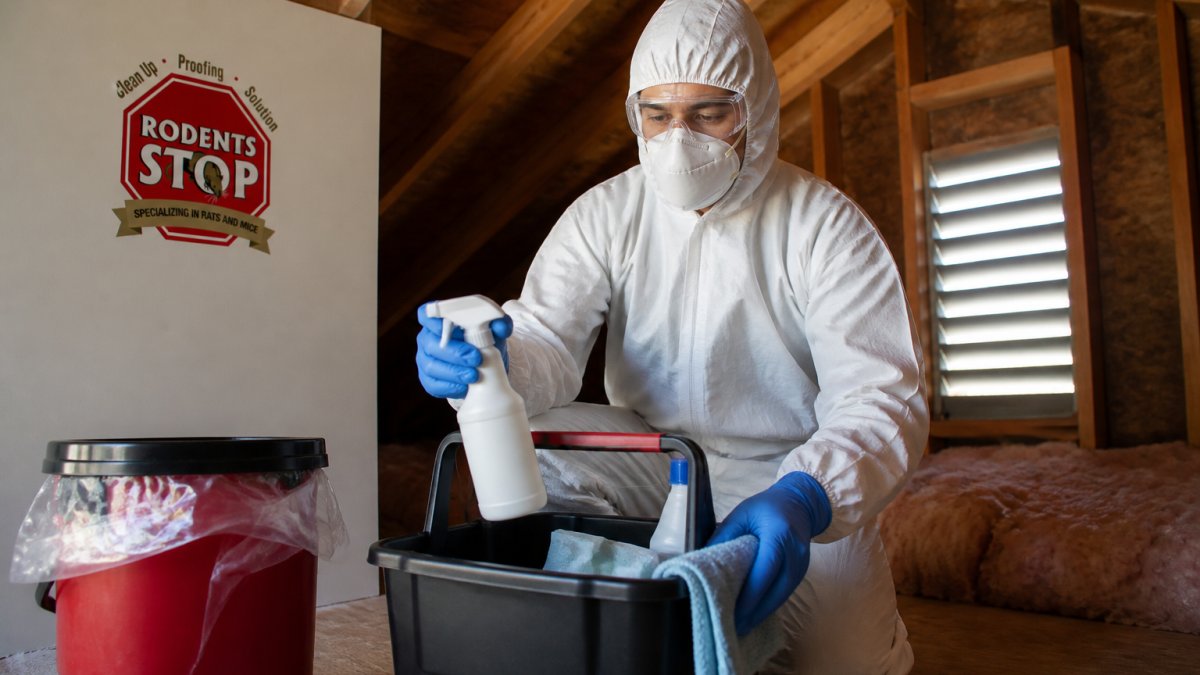
Proper protective equipment prevents exposure to pathogens and contamination. Never attempt rodent waste removal without full PPE.
Essential PPE Checklist
- Disposable nitrile gloves (heavy-duty, non-latex)
- Respirator mask rated N95 or higher
- Eye protection (safety glasses or goggles)
- Long-sleeved shirt or protective coveralls
- Closed-toe shoes with good grip
- Hat or head covering
Wear all items together as a complete system. Partial PPE leaves gaps that allow contamination exposure.
Respiratory Protection and Ventilation
A respirator mask is essential for rodent waste removal. Standard dust masks don’t provide adequate protection. Use an N95-rated mask or higher for particle filtration.
Fit the mask properly over your nose and mouth. A loose mask allows contaminated air to pass around the edges. Test the seal by inhaling sharply.
Open windows and doors to create air circulation. Cross-ventilation removes contaminated air from your work area. Run a fan to push air outward if possible.
Ventilation becomes even more critical when removing contaminated insulation or cleaning large areas. Professional crews often use negative air machines to contain contamination in a specific space.
Never work alone when dealing with significant contamination. A second person can help monitor your safety and provide assistance if exposure occurs.
Attic Rodent Waste Removal: Special Considerations
Attics present unique challenges for rodent waste removal. Limited space, poor ventilation, and extensive contamination make attics more complex than other areas.
Contaminated Insulation Assessment
Inspect insulation carefully before deciding on cleanup versus removal. Lightly contaminated insulation might be salvageable with thorough disinfection. Heavily soiled insulation usually needs complete replacement.
Look for these signs that removal is necessary:
- Visible urine stains throughout the insulation
- Extensive nesting material embedded in insulation
- Strong ammonia odor from urine
- Discolored or matted insulation sections
- Evidence of rodent activity across large areas
Attic insulation serves critical functions for temperature control and energy efficiency. Contaminated insulation loses effectiveness and creates ongoing health risks. Replacement ensures proper protection and eliminates odor sources.
Before removal, seal all entry points where rodents entered. This prevents new rodents from accessing the attic during cleanup work.
Odor and Pheromone Treatment
Rodent urine creates persistent odors that regular cleaning cannot eliminate. Urine contains pheromones that attract new rodents to the same areas. Treating these odors is essential for preventing reinfestation.
Enzymatic cleaners break down urine compounds at the molecular level. These products work better than bleach alone for odor elimination. Apply enzymatic cleaners to all areas where urine contamination is suspected.
Odor treatment becomes more effective after removing contaminated materials. Once new insulation is installed, apply odor treatment to prevent pheromone attraction.
Some areas benefit from additional treatments like activated charcoal or ozone therapy. These approaches work best when combined with thorough cleaning and material removal.
When to Hire Professional Rodent Cleanup Services
Professional rodent cleanup services handle severe infestations and complex contamination scenarios. Knowing when to call experts prevents health risks and ensures thorough remediation.
Signs You Need Professional Help
Contact professionals if contamination covers more than a few small areas. Large infestations require specialized equipment and expertise that DIY cleanup cannot match.
Call professionals if you find:
- Extensive rodent droppings throughout an attic or crawl space
- Contaminated insulation covering significant areas
- Evidence of rodent activity in HVAC systems or ductwork
- Severe odors that indicate widespread urine contamination
- Multiple nests in different locations
- Signs of rodent damage to electrical wiring or structural components
Health concerns also warrant professional help. If you have respiratory issues, immune system problems, or other health vulnerabilities, professional cleanup reduces your exposure risk.
Time constraints make professional services valuable too. Complete cleanup of a contaminated attic might take days of work. Professionals complete the job efficiently while you maintain normal routines.
What Professionals Handle
Professional teams provide comprehensive rodent infestation cleanup services. They assess contamination, remove damaged materials, disinfect surfaces, and treat odors.
Services typically include removal of rodent droppings and nesting materials, contaminated insulation removal and replacement, HEPA vacuuming of affected areas, deep cleaning and sanitizing with professional-grade disinfectants, odor and pheromone treatment, and identification of entry points to prevent reinfestation.
Professional cleanup provides peace of mind that the job is done correctly. Thorough remediation prevents health risks and reduces the chance of rodents returning.
Prevention: Sealing Entry Points and Reducing Rodent Activity
Preventing future infestations requires eliminating rodent entry points and removing attractants. Rodents enter homes through surprisingly small gaps.
Inspect your property for potential entry points. Rodents squeeze through gaps as small as a dime. Check around:
- Utility line penetrations
- Foundation cracks and gaps
- Roof vents and soffits
- Gaps around doors and windows
- Openings in basement walls
- Holes around pipes and cables
Seal identified gaps with steel mesh, caulk, or hardware cloth. These materials resist rodent gnawing better than foam or plastic.
Reduce food and water sources that attract rodents. Store food in sealed containers. Clean up spills immediately.
Eliminate standing water sources. Fix leaky pipes and ensure proper drainage. Rodents need water daily, so removing access discourages them significantly.
Keep garbage bins tightly sealed and stored away from your home. Clean up fallen fruit from trees.
Maintain proper sanitation throughout your property. Regular cleaning removes food residue and odors that attract rodents. Declutter storage areas where rodents hide.
Trim tree branches away from your roof. Rodents use branches as highways to reach attics.
These prevention steps work best after professional rodent cleanup.
Rodent infestations create serious cleanup challenges that go far beyond visible droppings.
Frequently Asked Questions
What is the best way to clean up rat feces?
The safest approach combines wet cleanup with disinfectant solution to avoid stirring up airborne particles. Spray rodent droppings and contaminated surfaces with a bleach solution (1 part bleach to 10 parts water) and let sit for 5 minutes. Wipe up with disposable paper towels, place waste in sealed plastic bags, and disinfect the area again. Always wear disposable gloves, a respiratory mask rated N95 or higher, and eye protection. Ensure proper ventilation throughout the process to reduce exposure to pathogens.
What protective equipment should you wear when cleaning rodent waste?
Minimum protection includes disposable gloves (nitrile or latex), an N95 or HEPA-rated respiratory mask, and eye protection such as safety glasses. For larger contaminated areas or attic work, add a full-body protective suit and booties to prevent cross-contamination of clothing and shoes. Ensure the space has adequate ventilation before, during, and after cleanup. If you have respiratory conditions, asthma, or compromised immunity, consider hiring professional rodent cleanup services instead of handling it yourself.
When should you hire a professional for rodent waste cleanup?
Hire professionals if the infestation covers a large area (more than 100 square feet), involves contaminated insulation or HVAC components, affects multiple rooms, or if you have health concerns that make exposure risky. Professionals have specialized equipment like HEPA vacuums, commercial-grade disinfectants, and odor-removal treatments that are more effective than household methods. They also identify and seal entry points to prevent rodent activity from recurring, addressing the root cause of the problem.
How do you disinfect an area contaminated by rodent waste?
After removing rodent droppings and nesting materials, spray all contaminated surfaces with a bleach solution (1:10 ratio) or commercial disinfectant rated against pathogens found in rodent waste. Let the solution sit for at least 5 minutes, then wipe thoroughly with paper towels. For porous surfaces like drywall or insulation that cannot be cleaned effectively, removal and replacement may be necessary. Ensure adequate ventilation during and after disinfection, and dispose of all contaminated materials in sealed plastic bags according to local waste disposal guidelines.
Who removes boxes with mouse droppings from a basement?
If you or a family member needs help with contaminated storage boxes, call 833-END-RATS for an assessment. Tell us which belongings you want to keep so we can discuss cleanup and removal with you.
Watch our senior-assistance video, Senior Savings + Helping Hands.