
Table of Contents
- Why Professional Rodent Cleanup Matters
- Sign 1: Extensive Rodent Droppings Cleanup Needed
- Sign 2: Rodent-Contaminated Attic Insulation Requires Removal
- Sign 3: Persistent Rodent Urine Odor Removal Efforts Have Failed
- Sign 4: Rodent Damage to Wiring and HVAC Systems
- Sign 5: Active Rodent Activity Persists After Initial Cleanup
- What Professional Rodent Cleanup Includes
- How to Inspect for Rodent Activity
- Frequently Asked Questions
Last Updated: October 10, 2026
Why Professional Rodent Cleanup Matters
Rodent invasions leave contaminated insulation, chewed wiring, foul odors, and dangerous bacteria. Homeowners who attempt DIY cleanup often discover the infestation is far worse than they realized.
A regular vacuum won’t capture health hazards, bleach won’t eliminate odor, and spot-cleaning won’t address entry points where rodents keep returning. Professional rodent cleanup is fundamentally different from surface cleaning.
This guide covers the five clearest signs that you need professional help to restore your property safely and thoroughly.
Sign 1: Extensive Rodent Droppings Cleanup Needed
Identifying droppings and contamination scope
Rodent droppings are the most obvious sign of infestation. Rat droppings are dark and pellet-shaped; mouse droppings are smaller. Droppings scattered across an attic, crawl space, or garage indicate weeks or months of activity.
Extensive droppings indicate the infestation has been active long-term, rodents have established multiple nesting areas, and contamination has spread to insulation, walls, and HVAC ducts. If droppings appear in multiple rooms or across a large area, DIY cleanup is risky and incomplete.
Health risks from accumulated waste
Rodent droppings carry hantavirus, leptospirosis, and salmonella. Dried droppings become airborne particles that can be inhaled. Professional cleanup uses HEPA filtration and proper containment to safely remove contaminated materials. The more droppings present, the higher the contamination level, a clear sign that rodent infestation cleanup is needed.
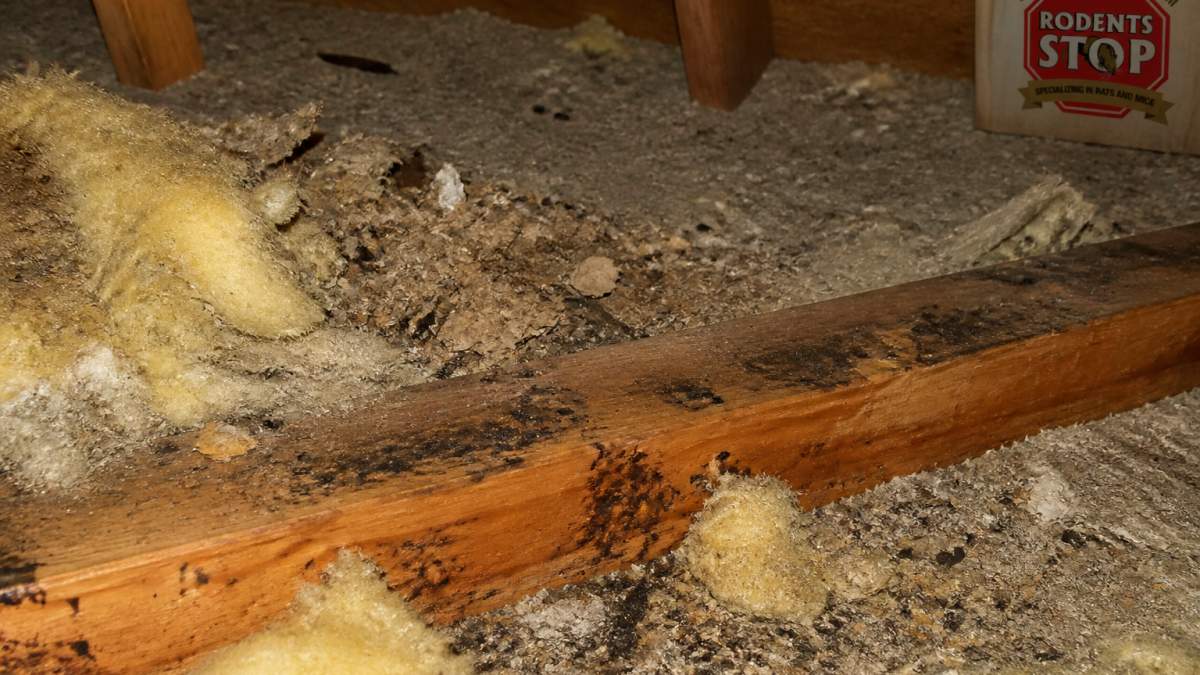
Never attempt to clean large accumulations of rodent droppings without respiratory protection. Disturbing dried droppings releases airborne particles that can cause serious respiratory illness.
Sign 2: Rodent-Contaminated Attic Insulation Requires Removal
Why contaminated insulation cannot be salvaged
Once attic insulation is contaminated with rodent droppings and urine, it cannot be cleaned and reused. The material becomes matted, compressed, and loses its thermal properties. Bacteria and allergens remain embedded even after surface cleaning. Professional removal is the only safe solution.
Replacement and restoration
Professional rodent infestation cleanup includes complete removal of contaminated insulation and replacement with new material. This restores insulation value, eliminates health hazards, prevents future infestations, and improves air quality. When rodent activity is present in your attic, full removal and replacement should be part of your cleanup plan.
Ask your cleanup provider about the R-value of replacement insulation. Proper attic insulation should match your climate zone requirements for energy efficiency.
Sign 3: Persistent Rodent Urine Odor Removal Efforts Have Failed
Why standard cleaning doesn’t eliminate odor
Rodent urine soaks into wood, drywall, insulation, and flooring. Standard cleaning products only mask the smell temporarily; the odor returns because the source material hasn’t been treated. Rodent urine also contains pheromones that attract other rodents. Complete elimination is necessary to prevent future infestations.
Professional odor and pheromone treatment
Professional teams use enzymatic cleaners, pheromone-neutralizing treatments, ozone treatment, or thermal fogging to eliminate rodent urine odor. If standard cleaning fails and odor persists after a few weeks, professional rodent infestation cleanup is necessary. The longer urine sits, the deeper it penetrates.
Persistent rodent urine odor is a sign the infestation was active longer than you realized and contamination is widespread.
Sign 4: Rodent Damage to Wiring and HVAC Systems
When wiring damage requires professional assessment
Rodent wiring damage falls into visible and hidden categories. Hidden damage inside walls or conduit is far more dangerous and impossible to evaluate without professional tools. Do not attempt to assess or repair electrical damage yourself. Before cleanup begins, a licensed electrician must inspect all areas where rodents were active to identify shock hazards, wall damage, compromised panels, and unsafe appliances. If you discover chewed wires, turn off power to that circuit and call an electrician before proceeding with cleanup.
HVAC system contamination and circulation risk
Rodent nesting in attics or crawl spaces near ductwork contaminates HVAC systems. Droppings and urine particles circulate through ducts, spreading pathogens throughout your home. Nesting material blocks airflow and creates breeding grounds for bacteria. Urine-soaked material causes persistent odor. Professional cleanup includes HVAC inspection and duct cleaning using specialized equipment. If contamination is severe, ductwork sections may need replacement by licensed technicians. Assume your HVAC system is contaminated if rodents were active in your attic or crawl space.
Do not run your HVAC system if you suspect rodent contamination in ducts. Running the system circulates contaminants throughout your home. Have the system inspected before resuming normal operation.
Sign 5: Active Rodent Activity Persists After Initial Cleanup
Indicators of ongoing infestation
Active rodent activity after initial cleanup, scratching sounds, fresh droppings, or returning odor, indicates entry points were missed or pest control didn’t eliminate the entire population. Ongoing infestation requires finding and sealing every entry point, not just cleaning.
Entry point identification and exclusion
Professional rodent infestation cleanup services include thorough inspection to identify entry points, gaps around pipes, cracks in foundation, gaps under doors, holes in roof vents, and spaces where wiring enters. A professional inspection identifies these systematically and seals them properly. If rodent activity persists after cleanup, contact a professional to seal entry points.
Sealing entry points without removing the current infestation will trap rodents inside, making the problem worse. Exclusion work must happen after pest control treatment.
What Professional Rodent Cleanup Includes
Professional rodent cleanup is a multi-step process that goes far beyond removing visible droppings. Understanding what happens during a cleanup visit helps you know what to expect and why each step matters.
Step 1: Comprehensive inspection and contamination mapping
Professional inspection maps contamination across attics, crawl spaces, basements, walls, and HVAC systems. The team identifies all contaminated areas, entry points, nesting sites, materials requiring removal, and structural damage. This assessment determines the scope of cleanup and should be clearly outlined in an inspection report.
Step 2: Containment and safe removal of contaminated materials
Once contamination is mapped, removal begins. This step requires strict containment to prevent spreading pathogens throughout your home.
Professional teams set up:
- Negative air containment: HEPA-filtered air scrubbers create negative pressure in contaminated areas, pulling air out and preventing particles from escaping into clean spaces.
- Plastic sheeting barriers: Contaminated zones are sealed off from the rest of the home using heavy plastic sheeting and duct tape.
- Dedicated removal pathways: Materials are removed through designated routes to avoid tracking contamination through living spaces.
All contaminated materials, droppings, nesting material, insulation, and affected drywall, are placed in heavy-duty bags and disposed of according to environmental regulations. This is not trash-can disposal; contaminated materials are handled as biohazard waste.
Insulation removal is particularly important. Once insulation is contaminated with rodent urine and droppings, it cannot be cleaned and reused. It must be completely removed and replaced with new material.
Step 3: Disinfection and odor treatment
After contaminated materials are removed, affected surfaces are cleaned and disinfected. This step uses specialized treatments, not household bleach.
Professional disinfection includes:
- Enzymatic cleaners: These break down organic compounds in urine and droppings, eliminating odor at the source rather than masking it.
- Hospital-grade disinfectants: Surfaces are treated with EPA-approved disinfectants that kill pathogens including hantavirus, leptospirosis, and salmonella.
- Pheromone neutralizers: Rodent urine contains pheromones that attract other rodents. Specialized treatments break down these chemical markers, reducing the likelihood of future infestation in the same areas.
- Ozone or thermal fogging (in severe cases): For widespread odor, some teams use ozone generators or thermal fogging to penetrate areas standard cleaning cannot reach.
Odor treatment is critical. If urine odor persists after cleanup, it means contamination remains, either in hidden areas or in materials that weren’t fully removed. Professional teams don’t consider the job complete until odor is eliminated.
Step 4: Insulation replacement and air-sealing
Once contaminated insulation is removed, new insulation is installed to restore your home’s thermal efficiency. The replacement insulation should match the R-value appropriate for your climate zone.
During this phase, air-sealing also occurs. Small gaps and cracks in attics, crawl spaces, and walls are sealed to prevent future rodent entry and improve energy efficiency. This is different from full exclusion work (sealing all entry points), but it addresses obvious gaps in contaminated areas.
Step 5: Final inspection and verification
Before the job is considered complete, a final inspection confirms:
- All contaminated materials have been removed
- Disinfection is complete and odor is gone
- New insulation is properly installed
- No contamination remains in HVAC ducts or other systems
- The property is safe to occupy
You should receive documentation of what was removed, what was treated, and what was replaced. This record is valuable for insurance claims and future reference.
What cleanup does NOT include
It’s important to understand the limits of cleanup services:
- Pest control treatment: Cleanup removes contamination but does not kill active rodents. Pest control (trapping or baiting) must happen separately, ideally before cleanup begins.
- Full exclusion: While cleanup teams may seal obvious gaps, comprehensive entry-point sealing is a separate service. Full exclusion requires identifying and sealing every possible rodent entry point, which is more extensive than cleanup alone.
- Structural repairs: If rodent damage has compromised beams, joists, or load-bearing walls, structural repair is a separate contractor’s job.
- Electrical or HVAC repair: Damaged wiring or ductwork requires licensed electricians or HVAC technicians, not cleanup crews.
A complete rodent remediation involves cleanup, pest control, and exclusion, three separate services that work together. Cleanup alone will not prevent future infestation if entry points remain open or if pest control doesn’t eliminate the current population.
Ask your cleanup provider for a detailed scope of work before they begin. Confirm what will be removed, what will be cleaned, what will be replaced, and what services are NOT included. This prevents surprises and ensures you understand what happens next.
How to Inspect for Rodent Activity
Visual inspection checklist
Before calling a professional, you can perform a basic inspection to understand the scope of the problem. Look for these signs:
- Rodent droppings in corners, along baseboards, or in cabinets
- Chewed food packaging or cardboard boxes
- Gnaw marks on wood, plastic, or wiring insulation
- Nesting material (shredded paper, fabric, insulation) in hidden areas
- Greasy rub marks along walls where rodents travel
- Holes in walls, baseboards, or foundation
Document what you find with photos. This information helps a professional understand the infestation’s extent.
Common hidden locations
Rodents hide in places you don’t see regularly:
- Attic spaces and rafters
- Behind kitchen cabinets
- Inside wall cavities
- Under appliances
- Crawl spaces and basements
- Garage corners and storage areas
- Behind stored boxes or furniture
Check these areas carefully. Use a flashlight to look into dark corners. Listen for scratching or scurrying sounds, especially at night when rodents are most active.
If you find evidence of infestation in multiple locations, the problem is established and widespread. This is when professional cleanup becomes necessary.
The signs above tell you when cleanup has moved beyond a simple DIY task.
Frequently Asked Questions
When should you call a professional for rodent cleanup?
Call a professional when rodent droppings cover a large area (more than a few spots), contamination reaches insulation or HVAC components, odors persist after initial cleanup attempts, wiring or structural damage is visible, or active rodent activity continues after pest control treatment. Professional cleanup ensures safe removal of contaminated materials, proper sanitation, and identification of entry points to prevent reinfestation.
Can rodent urine and droppings contaminate insulation?
Yes. Rodent urine and droppings contaminate insulation with bacteria, allergens, and pathogens that create health hazards and foul odors. Once contaminated, insulation loses its effectiveness and becomes a source of ongoing odor and health risk. Professional cleanup involves removal of contaminated insulation and replacement with clean material, along with HEPA vacuuming and disinfection to eliminate urine pheromones and odors.
How do you safely clean rodent droppings?
Safe cleanup requires protective equipment including N95 respirators, gloves, and eye protection to avoid inhalation of harmful particles. Never sweep or vacuum droppings with standard equipment, as this spreads contamination. Spray affected areas with disinfectant, allow dwell time, then carefully remove waste. Professional cleanup uses HEPA-filtered equipment and proper disposal procedures to eliminate health risks that DIY methods cannot safely address.
What are signs rodents have damaged wiring or HVAC components?
Look for chewed insulation around wires, visible gnaw marks on metal ductwork, nesting material inside HVAC returns, reduced airflow, unusual odors from vents, or electrical issues like flickering lights or tripped breakers. Rodent damage to wiring creates fire hazards, while HVAC contamination spreads allergens throughout your home. Professional inspection and cleanup address both hazards and restore system function.