Table of Contents
- Why Safe Removal of Rodent Droppings Matters
- Signs of Rodent Infestation in Attic and Other Areas
- Essential PPE and Equipment Before You Start
- Step-by-Step Cleanup Procedure for Rodent Droppings
- How to Disinfect Areas After Rodent Removal
- Safe Disposal of Rodent Waste and Contaminated Materials
- Cost of Professional Attic Cleanup and When to Call Experts
- Post-Cleanup Prevention and Long-Term Protection
- Frequently Asked Questions
Last Updated: September 23, 2026
Why Safe Removal of Rodent Droppings Matters
Rodent droppings pose serious health risks that go far beyond the visible mess. When rats or mice infest your home, they leave behind contaminated surfaces that can harbor dangerous pathogens. The most concerning threat is hantavirus, a potentially fatal respiratory illness spread through exposure to infected rodent urine and feces.
Signs of Rodent Infestation in Attic and Other Areas
Spotting an infestation early prevents extensive contamination. Look for these telltale signs that rodents have invaded your space.
Droppings and Urine:
- Small, dark pellets (about the size of a grain of rice)
- Clustered in corners, along walls, or near food sources
- Fresh droppings appear shiny; older ones look dull and crumbly
- Urine stains visible under UV light (dark yellow or brown streaks)
Nesting Materials:
- Shredded insulation, paper, or fabric in corners
- Nests built inside walls, attics, or crawl spaces
- Visible damage to insulation batts
Physical Damage:
- Gnaw marks on wood, wiring, or stored items
- Holes in walls or baseboards (dime-sized for mice, quarter-sized for rats)
- Damaged HVAC ducts or compromised ventilation
Odor:
- Strong, musty smell indicating active or past infestation
- Ammonia-like scent from concentrated urine
Essential PPE and Equipment Before You Start
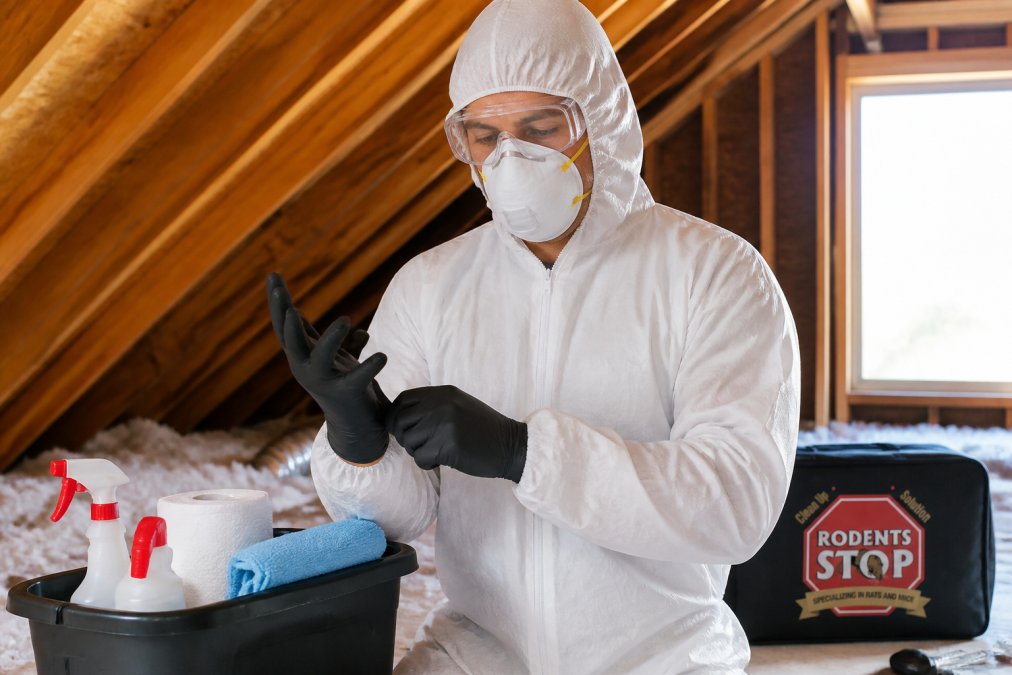
Never attempt rodent dropping removal without proper personal protective equipment. The right gear protects you from airborne pathogens and direct contact with contaminated materials.
Respiratory Protection and Gloves
An N95 respirator is the minimum standard for small, localized contamination in well-ventilated spaces. For larger infestations or enclosed areas like attics, a powered air-purifying respirator (PAPR) with HEPA filtration provides superior protection by maintaining positive pressure inside the hood.
Glove Requirements:
- Double-glove with heavy-duty nitrile or latex
- Change gloves frequently to prevent cross-contamination
- Never touch your face while wearing contaminated gloves
Eye and Skin Protection:
- Safety goggles or face shield to prevent splashes
- Long sleeves and pants to minimize skin exposure
- Disposable coveralls for extensive cleanup
Disinfection Supplies and Tools
Stock these items before you begin:
- Bleach (unscented, 3-8% sodium hypochlorite)
- Spray bottles for bleach solution application
- HEPA-filter vacuum (if vacuuming is necessary)
- Heavy-duty trash bags for double-bagging waste
- Disinfectant wipes (EPA-registered)
- Damp cloth or mop for final sanitization
Step-by-Step Cleanup Procedure for Rodent Droppings
Following a structured process reduces risk and ensures thorough decontamination. Each step builds on the previous one.
Preparation and Ventilation
Open windows and doors to maximize air circulation. If mechanical ventilation exists, turn it on. Seal off the contaminated area from the rest of your home using plastic sheeting to prevent contamination spread.
Handling Nesting Materials and Contaminated Surfaces
Do not disturb nesting materials with bare hands or inadequate protection. Spray with bleach solution, wait 5 minutes, place in a heavy-duty trash bag, double-bag, and seal tightly.
Bleach Solution Mixing and Application
Standard Bleach Solution: Mix 1 part bleach to 10 parts water (0.5% sodium hypochlorite) for most surfaces. For Heavy Contamination: Mix 1 part bleach to 5 parts water (1% solution) and allow 10-15 minutes contact time.
How to Disinfect Areas After Rodent Removal
After removing droppings and nesting materials, disinfection methods must match the surface type, porous and non-porous materials require different approaches.
Non-Porous Surfaces (Tile, Hardwood, Concrete, Metal)
Disinfection Process:
- Spray with EPA-registered disinfectant or bleach solution (1:10 ratio)
- Keep wet for 10 minutes contact time
- Wipe clean with a damp cloth from least to most contaminated area
- Use soft-bristled brush for stubborn residue
- Final wipe with fresh damp cloth
Bleach at 0.5% concentration is sufficient for non-porous surfaces and less likely to damage finishes.
Porous Surfaces (Drywall, Insulation, Carpet, Upholstery, Wood Framing)
For Drywall and Wood Framing:
- Spray with bleach solution (1:5 ratio) and allow 15 minutes contact time
- Wipe thoroughly with a damp cloth
- If discoloration or odor persists, replace the material, attempting to salvage heavily contaminated sections creates ongoing health risk
For Carpet and Upholstery:
- Light contamination: Spray with disinfectant, allow 15 minutes, then extract with wet-vac or HEPA-filter vacuum
- Moderate to heavy contamination: Professional steam cleaning with EPA-registered disinfectant
- Extensive contamination: Replacement is safer than salvage
- Never dry-vacuum, this aerosolizes pathogens
For Insulation:
- Light, localized contamination: Spray with disinfectant and allow 20 minutes contact time
- Moderate or widespread contamination: Removal and replacement is standard, insulation absorbs pathogens and becomes a reservoir
HVAC Ducts and Vents
If rodents accessed ductwork, professional duct cleaning is necessary. Inspect accessible ductwork for visible droppings or nesting material. Do not run your HVAC system before cleaning, this spreads contamination. Technicians use negative-pressure equipment, HEPA-filter vacuums, and disinfectant to clean ducts safely.
Final Verification
After disinfection, your space should show no visible contamination and no musty or ammonia odor. If odor persists, contamination has penetrated deeper, this signals the need for professional assessment or material replacement. For extensive contamination, professional HEPA vacuuming provides verification that the space is safe.
Safe Disposal of Rodent Waste and Contaminated Materials
Proper disposal prevents environmental contamination and protects sanitation workers. Never throw contaminated materials in regular household trash without following the protocol below.
Double-Bagging Protocol for Waste
What to Dispose Of:
- All rodent droppings and nesting materials
- Contaminated insulation, wipes, cloths, and paper towels
- Outer gloves and disposable coveralls
Bagging Steps:
- Place contaminated materials in a heavy-duty trash bag (at least 3 mil thickness)
- Seal the first bag tightly
- Place the sealed bag inside a second heavy-duty bag
- Seal the outer bag completely
- Label as biohazard material if required by local regulations (check with your waste management authority)
- Place in regular household trash for collection
Double-bagging contains any residual pathogens and prevents sanitation workers from direct contact with contaminated materials. The outer bag protects the worker; the inner bag prevents leakage during transport.
Cleaning and Disposing of Tools
Tools used during cleanup can harbor pathogens and spread contamination if not properly handled. This step is often overlooked but is critical to prevent recontamination of your home.
Brooms and Brushes:
- Do not reuse brooms or brushes that contacted contaminated areas
- Dispose of in a sealed trash bag, or soak bristles in bleach solution (1:10 ratio) for 10 minutes, rinse thoroughly, and air dry before reusing
Mops and Cleaning Cloths:
- Soak in bleach solution (1:10 ratio) for 10 minutes, rinse thoroughly, and wash separately in hot water
- Or dispose of disposable mop heads and cloths in sealed trash bags
Vacuum Cleaners:
- Do not use standard vacuums on contaminated areas, they spread pathogens
- If used, remove the filter and bag, place in a sealed trash bag, and dispose
- Wipe the vacuum interior with a damp cloth and disinfectant
- For future cleanup, use a HEPA-filter vacuum only, or dispose of the filter and bag after each use
Spray Bottles and Containers:
- Rinse thoroughly with clean water, spray interior with disinfectant (10 minutes contact time), rinse again, and air dry completely
Protective Equipment:
- Disposable coveralls, gloves, and respirator filters go directly into sealed trash bags
- Do not reuse disposable PPE
- If using reusable respirators, follow manufacturer instructions for disinfection (typically involves wiping with a damp cloth and air drying)
Local Disposal Regulations
Check with your local waste management authority or health department for specific requirements:
- Some areas require biohazard bags for rodent-contaminated materials
- A few jurisdictions have special disposal facilities for biohazard waste
- Most areas allow double-bagged household rodent waste in regular trash
- Never burn contaminated materials, this aerosolizes pathogens and spreads them into the environment
- Never bury contaminated materials, this contaminates soil and groundwater
Contact your county or municipal waste management office to confirm the correct disposal method for your area. When in doubt, double-bagging and labeling as biohazard material is the safest approach.
Cost of Professional Attic Cleanup and When to Call Experts
DIY cleanup works for small, isolated contamination. But many situations demand professional help. Understanding when to call experts saves money and prevents health risks.
Call Professionals When:
- Contamination covers more than 100 square feet
- Rodent infestation affects insulation throughout an attic
- You have respiratory conditions, immune system issues, or are pregnant
- Contamination is in HVAC systems or ductwork
- Nesting materials are inaccessible or in wall cavities
- You’re uncertain about the extent of contamination
Post-Cleanup Prevention and Long-Term Protection
Learning how to remove rodent droppings safely is only half the battle. Preventing reinfestation protects your investment and your health.
Seal Entry Points:
- Inspect foundation, siding, and roof for gaps larger than 1/4 inch
- Seal holes with steel mesh, caulk, or hardware cloth
- Check where utilities enter the building
- Seal gaps around pipes and vents
Remove Attractants:
- Store food in airtight containers
- Keep garbage in sealed bins
- Clean up spilled pet food immediately
- Remove clutter that provides nesting material
Maintain Your Space:
- Keep attics and crawl spaces dry
- Ensure proper ventilation to prevent moisture buildup
- Trim tree branches away from roof and siding
- Store items off the ground in sealed containers
Professional Monitoring:
- Schedule annual inspections to catch early signs of infestation
- Monitor for new droppings or nesting activity
- Address any entry points immediately
Frequently Asked Questions
What health risks come from exposure to rodent droppings?
Rodent droppings can carry hantavirus, a serious respiratory illness, along with other pathogens and bacteria. When droppings dry and break down, airborne particles can be inhaled, causing illness. Even small amounts of exposure pose a risk. This is why proper PPE, ventilation, and safe removal procedures are critical. Never sweep or vacuum dry droppings without respiratory protection, as this increases aerosolization of pathogens.
What bleach solution ratio should I use to disinfect rodent-contaminated areas?
Mix one part household bleach with nine parts water to create an effective disinfectant solution. This ratio is strong enough to kill pathogens while remaining safe for most household surfaces. Apply the solution generously to all contaminated surfaces and allow adequate soak time of at least 5-10 minutes before wiping clean. For heavily soiled areas, consider letting the solution sit longer. Always ensure good ventilation when using bleach.
When should I call a professional for rodent cleanup instead of doing it myself?
Professional cleanup is recommended if the infestation is extensive, affects large areas like attics or crawl spaces, involves contaminated insulation, or if you have respiratory conditions, are pregnant, or have young children at home. Professionals have specialized training in biohazard decontamination, and can help identify entry points to prevent future infestations. They also handle disposal according to local hazardous waste protocols, which DIY cleanup may not.
Is it safe to live in a home with rodent droppings present?
No. Living with rodent droppings poses ongoing health risks from hantavirus, bacterial contamination, and airborne pathogens. Even if rodents are no longer present, the droppings remain hazardous until properly cleaned and disinfected. The longer droppings remain, the more they break down and become airborne, increasing exposure risk. Prompt removal and thorough disinfection are essential for a safe living environment.