
Table of Contents
- Why Removing Old Attic Insulation Matters for Your Home
- Energy Efficiency Gains and Lower Heating and Cooling Costs
- Signs Old Attic Insulation Needs Replacing
- Should I Remove Old Attic Insulation Before Adding New?
- Rodent Contaminated Attic Insulation Removal and Health Risks
- How to Clean an Attic After Rodents and Prevent Future Infestations
- Air Sealing and Indoor Air Quality Improvements
- Frequently Asked Questions
Last Updated: October 10, 2026
Why Removing Old Attic Insulation Matters for Your Home
When rodents invade an attic, they don’t just leave droppings behind. They contaminate insulation, create nesting materials mixed with waste, and leave behind bacteria and allergens that compromise both your home’s comfort and your family’s health. At Rodent Cleanup Experts, we’ve seen firsthand how removing old attic insulation after a rodent infestation is often the difference between a truly clean home and one that still harbors hidden health risks.
Understanding when to remove old attic insulation helps you make an informed choice about your home’s safety and efficiency.
Removing old attic insulation addresses multiple problems at once. It eliminates contaminated material that traps bacteria and odors. It allows you to inspect the attic floor and framing for hidden damage. It creates an opportunity to seal air leaks that waste energy. And it gives you a clean slate for installing new, effective insulation that performs as designed.
Energy Efficiency Gains and Lower Heating and Cooling Costs
How Insulation Loses Effectiveness
When fiberglass or cellulose settles due to gravity, vibration, or moisture, the air spaces compress and R-value drops significantly. A 6-inch layer of fiberglass rated at R-19 may perform at only R-12 or R-14 after settling, a loss of 25-35%. Rodent contamination, dust, and moisture further reduce performance.
R-Value and Climate Requirements
Most homes in moderate climates benefit from R-38 to R-60 in the attic. If your existing insulation is only 4-5 inches deep (R-13 to R-19), it falls short of current standards. New insulation at the correct depth restores the thermal envelope and reduces HVAC workload.
Air Leakage and Thermal Bypass
Air leakage around penetrations, top plates, and ductwork allows conditioned air to escape. Removing old insulation creates an opportunity to seal these gaps while the attic floor is exposed, delivering energy benefits that insulation replacement alone cannot achieve.
Measurable Outcomes and Verification
After removal and new insulation installation, you can verify improvements through blower-door testing (which quantifies air leakage reduction), thermal imaging, and utility bill comparison.
Energy Savings Factors
Energy savings depend on climate, existing insulation depth, air leakage severity, energy prices, and HVAC efficiency.
Most homeowners notice lower utility bills within the first heating or cooling season. The payback period typically ranges from 3-7 years, with savings continuing for 50+ years.
Beyond Utility Bills
Energy efficiency improvements also enhance comfort by reducing temperature stratification and eliminating drafts.
Signs Old Attic Insulation Needs Replacing
Several warning signs indicate that old insulation should come out rather than be topped up. If you notice persistent musty odors in your home that don’t fade after pest control treatment, contaminated insulation is likely the source. Rodent urine and feces create compounds that settle into fiberglass and cellulose, and these odors can linger for months without professional removal.
Visible rodent droppings, nesting material, or urine staining on insulation are clear indicators that the material is compromised. Once rodents nest in insulation, that material becomes a biohazard. Leaving it in place and adding new insulation on top traps the contamination underneath, where it continues to harbor bacteria and allergens.
Water stains, mold growth, or soft, spongy areas in insulation signal moisture problems that require removal and remediation. Compressed insulation that has settled significantly also loses effectiveness. If you can see the attic floor through gaps in the insulation, or if the material feels thin and flattened, replacement is more effective than topping up.
Should I Remove Old Attic Insulation Before Adding New?
The decision to remove old attic insulation depends on four key factors: insulation condition, contamination history, moisture status, and your planned air sealing scope. A clear framework helps you avoid unnecessary removal while ensuring you don’t leave hidden hazards in place.
Condition Assessment
If your insulation is clean, dry, and still maintains its original depth and R-value, adding new material on top can be cost-effective. However, if the insulation is compressed, settled, or has lost more than 20-30% of its depth, removal is more effective than topping up.
Contamination and Health Factors
Rodent droppings, urine staining, or visible nesting material are clear indicators for removal. Once rodents nest in insulation, that material becomes a biohazard reservoir.
Moisture and Mold
Water stains, soft or spongy areas, or visible mold growth indicate moisture damage that requires removal and remediation. Wet or damp insulation loses R-value and can harbor mold spores. Covering it with new insulation traps moisture and accelerates mold growth.
Air Sealing Opportunity
If your energy audit or blower-door test reveals significant air leakage in the attic, removal creates a critical opportunity for comprehensive air sealing.
When Existing Insulation Can Stay
If all four factors are favorable, clean material, good depth, no moisture, and no air sealing planned, adding new insulation on top is acceptable. However, the combined layers will not perform as well as a single, properly installed layer of new insulation at the correct depth and R-value.
Safe Removal Procedures and Hazardous Materials
If you decide removal is necessary, professional handling is essential. Old insulation, particularly material installed before the 1980s, may contain asbestos fibers. Asbestos-containing insulation, pipe wrap, or duct tape poses serious health risks if disturbed. A qualified professional should inspect for suspected asbestos before any removal begins.
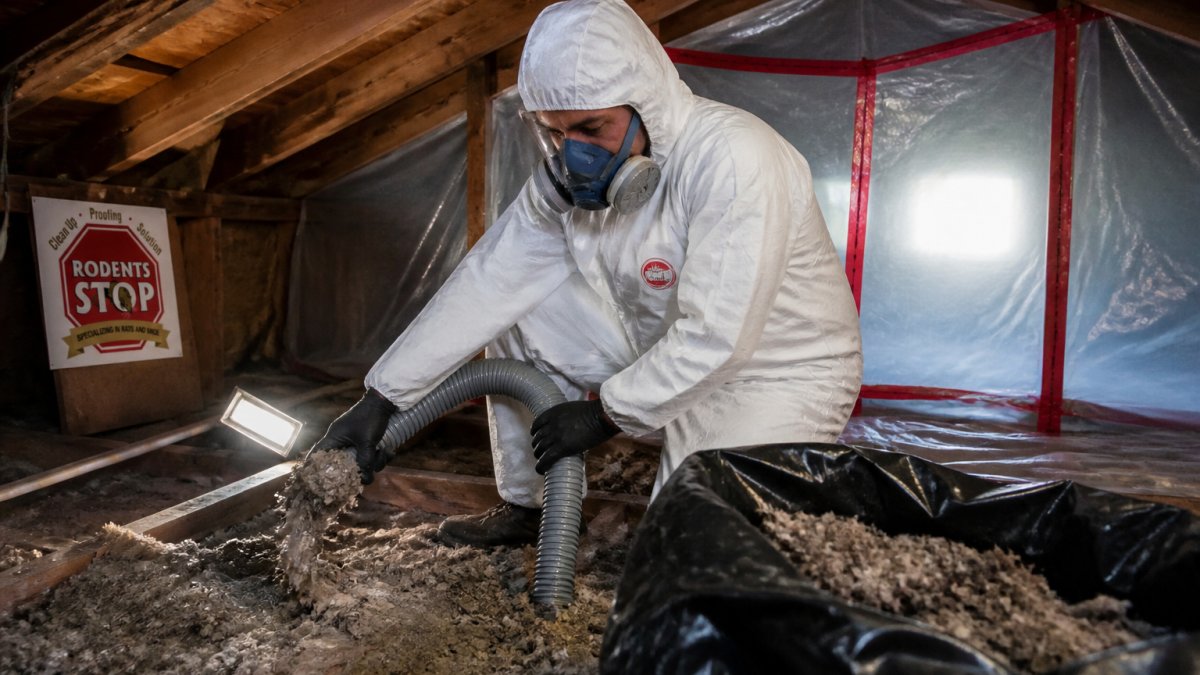
Even non-asbestos insulation removal requires proper containment and protective equipment. Disturbing old fiberglass or cellulose releases particles and dust that can spread throughout your home if not controlled. Professional removal includes:
- Inspection and containment: Sealing the attic space and creating negative pressure with HEPA-filtered equipment to prevent particle escape into living areas.
- Protective equipment: Respirators, gloves, and full-body coverage for workers to prevent inhalation and skin contact.
- Vacuum removal: Industrial HEPA vacuums (not standard household vacuums) to capture insulation and debris safely.
- Cleanup and disposal: Proper bagging and disposal of contaminated material according to local regulations.
- Air sealing: Identifying and sealing gaps while the attic floor is exposed.
- Reinstallation: Installing new insulation at the correct depth and R-value for your climate zone.
Attempting removal yourself with a standard vacuum spreads particles throughout your home and creates health risks. The cost of professional removal is justified by the safety and effectiveness it provides.
Rodent Contaminated Attic Insulation Removal and Health Risks
Rodent-contaminated insulation poses direct health risks that many homeowners underestimate. Rodent urine and feces contain bacteria, viruses, and parasites that can become airborne when disturbed. When your HVAC system pulls air through contaminated insulation, these pathogens can circulate through your home’s ductwork and into living spaces.
Hantavirus, leptospirosis, and other rodent-borne illnesses have been linked to exposure in contaminated attics. Even after pest control eliminates the rodents, the insulation remains a reservoir of these hazards. Breathing dust and particles from rodent-contaminated material can trigger respiratory symptoms, allergies, and more serious illness in vulnerable household members.
Professional removal is essential because it requires proper containment, protective equipment, and HEPA filtration. Attempting to clean or remove contaminated insulation yourself with a regular vacuum spreads particles throughout your home. Rodent infestation cleanup uses specialized equipment and protocols to safely remove contaminated material, seal the attic to prevent particle escape, and dispose of waste properly.
The health risks don’t end when you remove the contaminated insulation. The attic space itself may harbor residual contamination that requires deep sanitizing. Professional cleanup includes HEPA vacuuming, antimicrobial treatment, and odor removal to address the complete contamination picture.
How to Clean an Attic After Rodents and Prevent Future Infestations
After rodent removal and insulation cleanup, thorough attic sanitation prevents health risks and reduces the chance of reinfestation. The process begins with inspection to identify all contaminated areas, nesting sites, and entry points. Professional teams use HEPA filtration systems to vacuum droppings and debris safely, then apply antimicrobial treatments to eliminate bacteria and odors.
Odor removal requires more than surface cleaning. Rodent urine and feces break down into ammonia compounds that penetrate wood, insulation, and other materials. Pheromone treatment addresses the chemical signals that attract new rodents to the space. Without this step, your freshly cleaned attic remains attractive to future infestations.
Preventing future infestations starts with identifying how rodents entered. Common entry points include gaps around roof vents, damaged soffit, holes in siding, and gaps where utilities enter the home. Sealing these penetrations with hardware cloth, caulk, or metal flashing eliminates pathways for rodents. This step is critical because pest control alone doesn’t prevent new rodents from entering through the same openings.
Maintaining proper attic ventilation and moisture control also discourages rodent activity. Rodents are attracted to attics with moisture, clutter, and food sources. Ensuring your attic has adequate air flow, fixing roof leaks promptly, and keeping the space clear of stored items makes it less appealing to pests.
Air Sealing and Indoor Air Quality Improvements
Removing old attic insulation creates a unique opportunity for comprehensive air sealing that improves indoor air quality and energy efficiency simultaneously. With the attic floor exposed, technicians can identify and seal gaps around penetrations, top plates, and ductwork that would be difficult to access otherwise.
Air leaks in the attic allow unconditioned outside air to enter your home. This air carries dust, pollen, and outdoor allergens directly into your living spaces. By sealing these gaps while replacing insulation, you reduce the amount of unfiltered outside air entering your home. The result is cleaner indoor air and lower heating and cooling costs.
Proper air sealing also prevents rodent entry. Gaps that allow air to leak also allow rodents to enter. Sealing these penetrations with rigid materials creates a barrier that rodents cannot chew through easily. This combined benefit, better air quality, lower energy costs, and rodent prevention, makes air sealing during insulation replacement one of the most cost-effective home improvements you can make.
Indoor air quality improvements extend beyond reduced allergen entry. When old, contaminated insulation is removed and the attic is properly sanitized, airborne bacteria and odor compounds stop circulating through your home’s HVAC system. Many homeowners report noticing improved air quality and fewer respiratory symptoms within weeks of professional attic cleanup and air sealing.
Removing contaminated or deteriorated attic insulation is often the most effective way to restore your home’s comfort, safety, and efficiency after a rodent infestation. The process requires professional expertise to handle contaminated material safely, identify hidden damage, and execute proper air sealing. Rodent Cleanup Experts provides comprehensive attic sanitation, contaminated insulation removal, air sealing, and new insulation installation designed to address the complete scope of rodent damage. Our team inspects your attic, develops a customized cleanup plan, and restores your space to a clean, safe, and energy-efficient condition.
Frequently Asked Questions
Should I remove old attic insulation or just add new insulation on top?
Removal is recommended when existing insulation is compressed, contaminated by rodents, moldy, or severely settled. Compressed or damaged insulation loses thermal resistance and won’t perform well even with new material layered on top. If your insulation is dry, clean, and still maintains adequate depth and R-value, topping up may be acceptable. A professional inspection can determine whether your specific situation warrants full removal or a partial approach.
What are the main benefits of removing old attic insulation?
Removing old attic insulation improves thermal performance by eliminating compressed or settled material that no longer provides effective R-value. It eliminates health hazards from rodent contamination, mold, and airborne contaminants. Removal also allows for air sealing of gaps and penetrations that reduce heating and cooling efficiency. You gain the opportunity to inspect the attic floor for structural damage, verify proper ventilation, and install fresh insulation with better thermal resistance, leading to lower energy costs and improved indoor air quality.
Can old attic insulation contain rodent waste or allergens that affect my family’s health?
Yes. Rodent droppings and urine contaminate insulation with bacteria, pathogens, and allergens that can become airborne and enter living spaces. Fiberglass and cellulose insulation are particularly susceptible to contamination. Dust and allergens from degraded or moldy insulation can trigger respiratory issues, especially in households with pets or family members with asthma or allergies. Professional removal and proper sanitization eliminate these health risks and restore safe indoor air quality.
How does removing old insulation and air sealing help reduce energy costs?
Old, compressed, or settled insulation loses its thermal resistance over time, allowing heat and cooling to escape through the attic floor. Removing it exposes air leaks around penetrations, gaps, and top plates that were hidden. Sealing these gaps with caulk or weatherstripping prevents conditioned air from escaping. Installing new insulation with proper R-value on top of sealed surfaces dramatically improves thermal performance. Homeowners typically see measurable reductions in heating and cooling costs, with savings increasing in extreme weather months.