Table of Contents
- Signs of Rodent Infestation in Attic: When to Call a Pro
- Cost of Professional Attic Cleanup: What Affects the Price
- Attic Insulation Removal and Replacement: Why It Matters
- DIY vs. Professional Attic Cleanup: A Side-by-Side Comparison
- The ROI of Professional Attic Cleanup: Energy Savings and Home Value
- Safety Protocols for Homeowners and Environmental Impact
- Frequently Asked Questions
Last Updated: September 14, 2026
Signs of Rodent Infestation in Attic: When to Call a Pro
Determining whether professional attic cleanup is worth it starts with recognizing what you’re actually dealing with. Rodent infestations rarely announce themselves. They leave evidence that accumulates quietly, often for months, before a homeowner notices the smell or hears scratching above the ceiling.
At Rodent cleanup experts, we’ve inspected attics across Los Angeles, Ventura, San Bernardino, Riverside, and Orange Counties, and the pattern is consistent: by the time a homeowner calls, the contamination has usually spread well beyond the initial entry point.
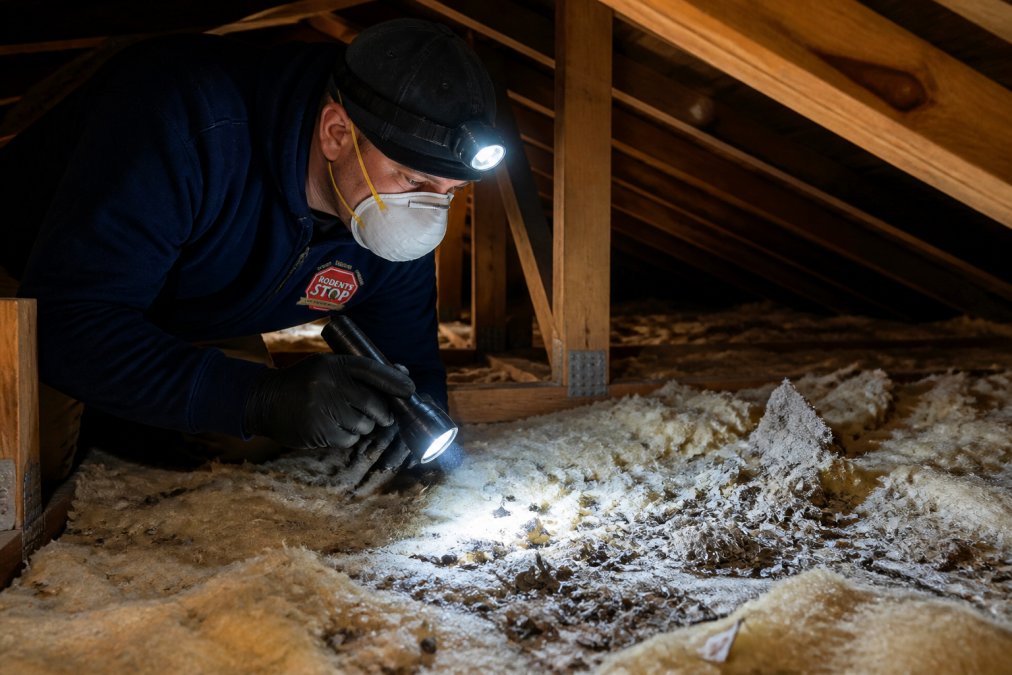
Watch for these warning signs:
- Dark, rice-shaped droppings near insulation or along joists
- Greasy rub marks where rodents travel repeatedly
- Urine stains that appear as dark rings on wood or drywall
- Chewed wiring, cardboard, or insulation backing
- A persistent musty or ammonia-like odor that worsens in warm weather
- Nesting material made from shredded insulation, paper, or fabric
One or two droppings might mean a brief visit. Consistent evidence across multiple areas means an established population.
Health Risks of Attic Contamination
Rodent contamination in an attic is a genuine health concern, not just a nuisance. Rodent droppings and urine can carry pathogens that become airborne when disturbed, including hantavirus and histoplasmosis, according to the CDC guidance on rodent-borne diseases. The risk concentrates when insulation is disturbed during DIY cleaning, which is one reason professional remediation matters.
Beyond infectious disease, rodent debris degrades indoor air quality. Droppings break down into fine particles that circulate through HVAC systems, spreading allergens through living spaces. For households with pets, children, or anyone with respiratory conditions, that cross-contamination is the part most people underestimate.
Cost of Professional Attic Cleanup: What Affects the Price
The cost of professional attic cleanup depends on contamination severity, attic size, and whether insulation must be removed. There’s no single flat rate, and any provider quoting a firm number over the phone without an inspection is guessing. What separates a fair bid from a lowball is whether the scope is itemized, and whether the line items match the actual condition of your attic.
Several variables drive the final price:
- Square footage of the affected attic area
- Contamination depth, from surface droppings to saturated insulation
- Insulation type, since blown-in insulation is harder to remove than batt insulation
- Access difficulty, including low-clearance or obstructed attics
- Odor treatment needs, which scale with how long the infestation lasted
- Disposal requirements, since contaminated materials are treated as hazardous waste
How a Real Quote Is Built
A defensible quote is scoped in stages, and each stage carries its own labor and material cost. Ask any provider to break their number into these buckets:
- Inspection and moisture mapping, confirms whether contamination is surface-level or has soaked into the insulation and framing.
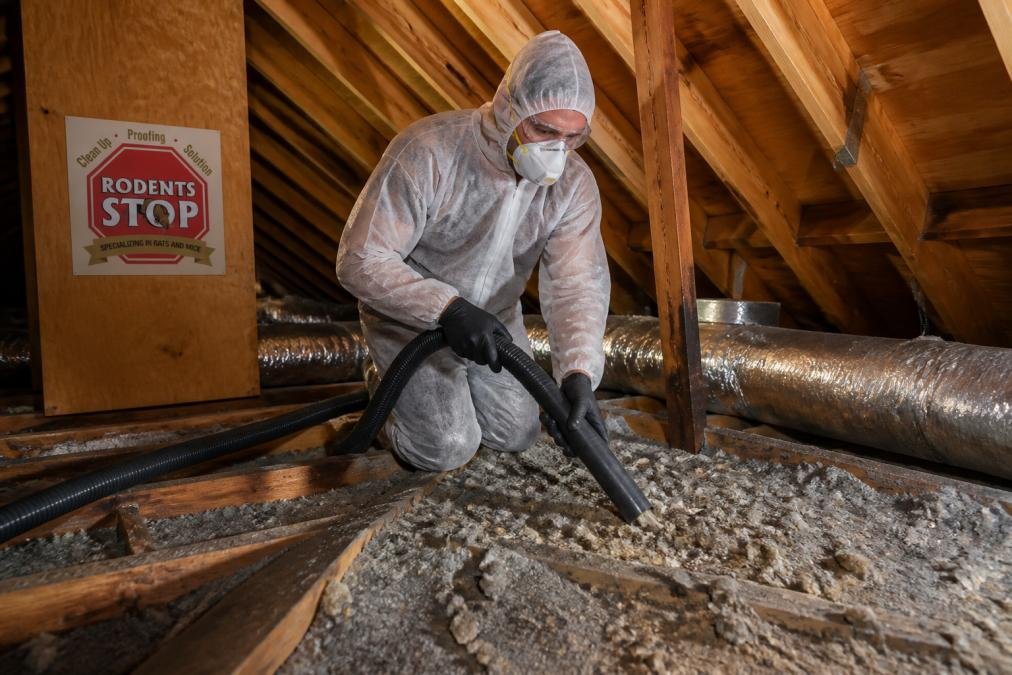
- Containment setup, plastic sheeting, negative air pressure, and HEPA filtration to keep disturbed particles out of the living space.
- Debris and insulation removal, bagging and hauling contaminated material. Blown-in insulation is slower to remove than batt because it has to be vacuumed rather than pulled.
- HEPA vacuuming and sanitization, treating joists, top plates, and ductwork surfaces, not just the open floor.
- Odor and pheromone treatment, the step that determines whether rodents return.
- Exclusion work, sealing entry points so the job doesn’t repeat.
- Insulation replacement, new material installed to the correct depth for your climate zone.
- Disposal, contaminated material routed through hazardous-waste handling rather than curbside trash.
A quote that only covers items 3 and 4 is a surface clean. A quote that covers all eight is a remediation.
Pricing Breakdown and Comparison
| Cost Factor | What Raises the Price | What Keeps It Lower |
|---|---|---|
| Attic size | Large, multi-section attics | Single compact attic |
| Contamination level | Saturated insulation, deep nesting | Surface droppings only |
| Insulation type | Blown-in, hard to remove | Batt insulation, intact |
| Odor severity | Long-standing, embedded odor | Recent, localized smell |
| Access | Low clearance, obstructions, no pull-down stair | Full-height, clear walkway |
| Disposal | Hazardous waste handling | Minimal material removed |
| Exclusion | Multiple entry points, roofline gaps | One obvious entry point |
Ask any provider whether their quote includes insulation removal and disposal or just surface cleaning. The two are very different jobs, and a low quote often means the contaminated insulation stays in place. Also ask whether the quote is fixed or time-and-materials, a fixed quote protects you if removal uncovers more contamination than the inspection showed.
Red Flags in a Low Bid
- No on-site inspection before the number is given
- No mention of HEPA filtration or containment
- Insulation removal listed as “optional”
- Disposal described as “standard trash”
- No exclusion or entry-point sealing in the scope
- No written post-cleanup verification step
For an accurate figure, request an on-site inspection. Rodent cleanup experts provides quotes based on the actual condition of your attic rather than a generic estimate, and every quote is itemized so you can see exactly which stages are covered.
When the Cost Isn’t Worth It
Professional cleanup isn’t always the right call. If the attic shows only a single, recent entry point, no nesting material, and no odor, a targeted exclusion and spot treatment may be enough. The math shifts toward professional remediation once insulation is saturated, odor has set in, or the infestation has recurred, because each DIY round that fails adds cost without resolving the source.
Attic Insulation Removal and Replacement: Why It Matters
Attic insulation removal and replacement is often the step homeowners try to skip, and it’s usually the step that determines whether the problem actually goes away. Once rodents have nested in insulation, the material holds urine, droppings, and pheromones that continue attracting new rodents even after the current population is gone.
Contaminated insulation also loses its thermal performance. When insulation settles or is compressed by nesting, its R-value drops, and your HVAC system works harder to maintain temperature. Removing the compromised material and installing fresh insulation restores both the R-value and the air-sealing properties of the attic envelope.
Here’s what most guides miss: cleaning droppings without removing contaminated insulation leaves the pheromone trail intact. That’s why rodents return. Professional remediation addresses the material itself, not just the visible mess.
DIY vs. Professional Attic Cleanup: A Side-by-Side Comparison
DIY attic cleanup looks straightforward until you factor in the safety and verification gaps. A shop vacuum and bleach can address surface mess, but they don’t capture airborne pathogens, don’t verify entry points, and don’t restore insulation performance.
| Factor | DIY Approach | Professional Attic Cleanup |
|---|---|---|
| Pathogen exposure | High, no containment | Controlled with HEPA filtration |
| Insulation handling | Often left contaminated | Removed and replaced |
| Odor treatment | Temporary masking | Pheromone and odor treatment |
| Entry point sealing | Rarely addressed | Pest exclusion included |
| Disposal | Standard trash | Hazardous waste protocols |
| Verification | None | Post-cleanup inspection |
Using a standard vacuum on rodent droppings aerosolizes pathogen particles and spreads them through the room. This is the single most common DIY mistake, and it can turn a contained attic problem into a whole-home air quality issue.
For landlords managing multiple properties, the DIY math rarely works. One thorough professional job typically outlasts several rounds of self-cleaning that never fully resolve the odor.
The ROI of Professional Attic Cleanup: Energy Savings and Home Value
Professional attic cleanup pays back through energy performance and property value, not just cleanliness. But the payback isn’t automatic, it depends on whether the work restores the thermal envelope and whether you can document it. That documentation angle is where most guides stop short, and it’s where the real return lives.
The R-Value Mechanism
Insulation performance is measured in R-value, which describes resistance to heat flow. When rodents nest in insulation, two things happen: the material is compressed, and it’s displaced. Both reduce the effective R-value of the assembly, even if the nominal rating on the packaging hasn’t changed. A compressed batt loses performance because trapped air, the actual insulator, is squeezed out.
The DOE guidance on home insulation and energy efficiency explains how insulation performance directly affects heating and cooling costs. The practical takeaway: restoring insulation to its correct depth for your climate zone reduces the load on your HVAC system, which shows up as lower monthly utility bills. The size of that reduction depends on how much R-value was lost, your system’s efficiency, and your local climate, which is why no honest provider quotes a fixed savings figure before inspecting.
What to Measure Before and After
You can build your own ROI case with four data points:
- Pre-cleanup R-value, noted during inspection, along with visible compression or displacement.
- Post-installation R-value, the depth and rating of the new material.
- Utility bills, pull the same month from the prior year to compare like-for-like weather.
- HVAC runtime, if your thermostat logs runtime, shorter cycles at the same setpoint indicate reduced load.
Most practitioners find the clearest signal in the first full heating or cooling season after replacement, not the first month.
Home Value and Inspection Outcomes
On the property side, unresolved rodent damage and odor are disclosure issues. A buyer’s inspector will flag contaminated insulation, and the smell is nearly impossible to hide. Addressing it proactively protects your sale price and avoids last-minute negotiation losses.
What most homeowners don’t realize is that the remediation record itself has value. A documented scope, inspection findings, photos of pre- and post-condition, disposal receipts, and the insulation spec sheet, gives a buyer’s inspector something to verify rather than something to flag. That same record supports insurance claims if rodent damage to wiring or ductwork is discovered later, since most policies require evidence that the damage predates the claim.
Keep the paper trail. Inspection report, before-and-after photos, disposal documentation, and the insulation R-value spec are the four items that turn a cleanup into a verifiable asset at resale and a supportable claim at insurance time.
The Strongest ROI Case
The strongest ROI case for professional attic cleanup isn’t the cleaning itself. It’s the combination of restored insulation performance, eliminated odor, and a documented remediation record that supports your home’s value. Cleaning without replacing contaminated insulation leaves the pheromone trail intact and the R-value degraded, which means you pay twice and still don’t get the return.
Safety Protocols for Homeowners and Environmental Impact
Homeowners can reduce risk before and after professional work, but some steps are best left to trained crews. If you must enter the attic, wear an N95 or P100 respirator, gloves, and eye protection, and never dry-sweep or vacuum droppings with standard equipment.
Environmental responsibility matters too. Contaminated insulation and nesting materials shouldn’t go into regular trash. Proper disposal follows hazardous waste guidelines, which is one reason professional remediation includes it as a standard step. EPA guidance on household hazardous waste disposal outlines why contaminated materials require special handling.
Rodent cleanup experts handles removal, HEPA vacuuming, sanitization, odor and pheromone treatment, and insulation replacement as a single coordinated process. We also identify entry points so the problem doesn’t return.
The real question isn’t whether you can clean an attic yourself. It’s whether you can remove the contamination that keeps drawing rodents back. Rodent cleanup experts provides full-service rodent damage cleanup, including contaminated insulation removal, HEPA vacuuming, deep sanitization, and odor treatment, for homes and properties across Los Angeles, Ventura, San Bernardino, Riverside, and Orange Counties. Get started with Rodent cleanup experts and restore your attic to a clean, safe, and sanitary condition.
Frequently Asked Questions
What are the health risks of rodent droppings in an attic?
Rodent droppings and urine can carry bacteria and viruses, including hantavirus and histoplasmosis, which become airborne when disturbed. Inhaling contaminated dust can cause respiratory issues, flu-like symptoms, and in severe cases, long-term lung damage. Professional attic cleanup uses HEPA filtration and sanitization to safely remove these hazards and restore indoor air quality. Homeowners should avoid disturbing droppings without proper protective gear.
Can rodent urine in attic insulation cause structural damage?
Yes. Rodent urine is acidic and can degrade insulation, drywall, and wood over time. It also promotes mold growth, which weakens structural integrity and reduces R-value. In many cases, contaminated insulation must be removed and replaced to restore thermal performance and eliminate odors. A professional inspection can determine the extent of damage and whether attic insulation removal and replacement is necessary.
Does homeowners insurance cover attic cleanup after a rodent infestation?
Most standard homeowners insurance policies do not cover damage from rodents, as infestations are considered preventable. However, some policies may cover resulting damage like torn ductwork or electrical issues if it’s sudden and accidental. Review your policy or speak with your insurer. Professional cleanup providers can document the damage to support your claim and help you understand what’s covered.
Why is professional sanitation required after pest removal?
Pest removal eliminates live rodents but leaves behind droppings, urine, nesting materials, and pheromones that attract new rodents. Professional sanitation involves HEPA vacuuming, decontamination, and odor treatment to remove these traces. It also includes sealing entry points to prevent re-infestation. Without proper cleanup, health risks remain and the infestation is likely to return. This step is critical for a safe, lasting solution.