
Table of Contents
- Why Attic Insulation Matters in Southern California’s Climate
- Comparison of the Best Attic Insulation Types
- Recommended R-Value for Attic Insulation in Southern California
- Signs of Rodent Damage in Attic Insulation
- The Cost of Professional Attic Cleanup and Insulation Replacement
- DIY vs. Professional Installation: What to Know
- Conclusion
- Frequently Asked Questions
Last Updated: September 27, 2026
Why Attic Insulation Matters in Southern California’s Climate
Attic insulation is the material layer that slows heat transfer between your living space and the attic above it, and in Southern California it works overtime. This guide from Rodent cleanup experts covers what actually performs in our climate, and where most homeowners waste money. Summer attic temperatures routinely climb high enough to turn an under-insulated attic into a radiant heater sitting directly above your bedrooms.
The attic is the single largest uncontrolled heat path in most Southern California homes. Insulation, air sealing, and ventilation have to work as a system, not as three separate projects.
Comparison of the Best Attic Insulation Types
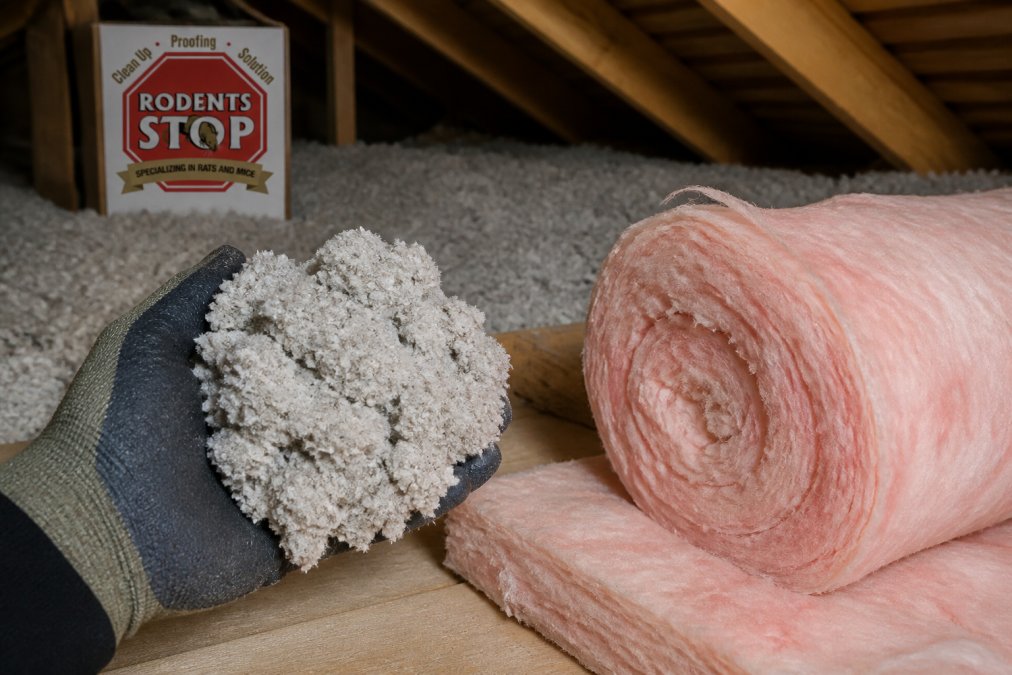
No single material wins everywhere. Fiberglass batts, blown-in cellulose, spray foam, and radiant barriers each solve a different problem, and the right pick depends on your attic’s shape, your budget, and whether rodents have already compromised what’s up there.
| Insulation Type | Best For | Relative Cost | Key Strength |
|---|---|---|---|
| Fiberglass batts | Straightforward DIY retrofits | Lowest | Widely available, easy to cut |
| Blown-in cellulose | Irregular framing, coverage gaps | Moderate | Fills voids and odd cavities |
| Spray foam | Air sealing plus insulation in one | Highest | Seals leaks and insulates together |
| Radiant barrier | Reducing radiant heat gain | Low to moderate | Reflects heat before it enters |
Fiberglass Batts: Affordable and Widely Available
Fiberglass batts are pre-cut blankets of spun glass fibers that fit between joists and studs. They cost the least of the four options and you can buy them at any home improvement store. The catch is fit: batts only perform at their rated R-value when they sit flush with no gaps, and attic framing is rarely perfectly square. Compressed or gapped batts lose thermal performance fast.
Blown-In Cellulose: Good Coverage for Irregular Spaces
Blown-in cellulose is shredded recycled paper treated for fire resistance, installed with a blower to a measured depth. It flows around pipes, wiring, and blocking, which makes it the better choice for attics with irregular framing. Density matters more than depth alone, so insist on an installed-density target rather than a bag count.
Spray Foam: High Performance, Higher Cost
Spray foam expands on contact and bonds to the surfaces it touches, delivering insulation and air sealing in one pass. It is the strongest performer in a hot attic, and it is also the most expensive. Professional installation is effectively mandatory because the chemicals require proper equipment and protective gear.
Radiant Barriers: Reflecting Heat in Hot Climates
A radiant barrier is a reflective foil surface, usually installed on the roof deck or rafters, that reflects radiant heat rather than absorbing it. It is not a substitute for insulation. It reduces heat gain from the roof above, which is exactly the load Southern California attics face most.
Never install a radiant barrier over the top of existing attic floor insulation. The foil needs an air space to work, and covering insulation traps moisture against the material below.
Recommended R-Value for Attic Insulation in Southern California
The recommended R-value for attic insulation in Southern California generally falls in the R-30 to R-49 range, but the right target depends heavily on which climate zone your home sits in. The U.S. Department of Energy divides the country into climate zones by county, and the ranges shift as you move from the coast to the inland valleys and desert edge.
As a working rule of thumb:
- Coastal and marine-influenced areas (much of Los Angeles County and Ventura County near the water, plus coastal Orange County) sit in milder zones where R-30 to R-38 is often adequate for an existing attic.
- Inland valleys and foothills (the San Fernando Valley, the Inland Empire, and much of Riverside County and San Bernardino County) see far more extreme summer heat, and R-38 to R-49 is the more common target.
- Desert-edge and high-heat communities push toward the top of that range, and new construction or major renovations are frequently held to stricter targets than a simple top-up.
Measure Before You Add
Two things matter more than hitting an exact number. First, measure what you already have before adding material. Insulation depth is easy to read with a tape measure or a marked stick pushed down to the attic floor, and most manufacturers print the R-value per inch on the bag. If you already have several inches of fiberglass or cellulose, you may only need a top-up rather than a full replacement, which changes both the scope and the cost of the job.
Fire Safety Ratings Matter Here
One factor most generic guides skip: fire performance. Given the wildfire risk across much of Los Angeles County, Riverside County, Ventura County, Orange County, and San Bernardino County, the fire characteristics of your insulation are not a footnote. Fiberglass and mineral wool are naturally non-combustible. Cellulose is treated with fire retardants and carries a Class 1 fire rating when installed to spec.
Pick your target R-value by climate zone, not by a single national number. Then verify the fire rating of the product you choose, because in this region that detail is not optional.
Signs of Rodent Damage in Attic Insulation
Signs of rodent damage in attic insulation include compressed or tunneled material, visible droppings, urine staining, nesting debris, and a persistent musty odor that returns after cleaning. Rodents flatten insulation as they travel, which destroys the lofted structure that gives the material its thermal resistance.
Look for these specific indicators:
- Tunnels and matted channels running through the insulation
- Dark staining or crusting where urine has soaked into the material
- Shredded paper, fabric, or insulation used as nesting material
- Droppings along joists, near the attic hatch, and around HVAC equipment
- Gnaw marks on wiring, duct insulation, or PVC pipes
Photograph the attic before any cleanup begins. Documented damage supports insurance claims and gives you a baseline to compare against if rodents return.
The Cost of Professional Attic Cleanup and Insulation Replacement
The cost of professional attic cleanup depends on the square footage affected, how deeply contamination has penetrated, whether ductwork or wiring needs attention, and how much insulation must be replaced. There is no honest flat rate, because a lightly soiled attic and one with years of nesting debris are entirely different jobs. What you can do is understand the cost drivers so you can evaluate a quote instead of guessing.
What Drives the Number
- Attic square footage and accessibility. A low, cramped attic with limited access takes longer to work in than a walkable one, and labor is the largest line item in most cleanup jobs.
- Depth of contamination. Surface droppings and nesting debris are a lighter scope than urine-soaked insulation that has to come out down to the decking.
- Insulation volume removed. The more material that has to be bagged and hauled out, the higher the disposal and labor cost.
- Condition of wiring, ducts, and vapor barriers. Chewed wiring or damaged duct insulation adds trade work that a cleanup crew cannot legally or safely perform.
- Odor and pheromone treatment. This is a separate step from physical removal, and skipping it is why odors return.
Pricing is quoted after inspection for that reason. A proper inspection maps the affected areas and builds a cleanup plan around the actual condition of the property, which may include droppings and nesting removal, contaminated insulation removal, HEPA vacuuming, deep cleaning and sanitizing, odor and pheromone treatment, and insulation replacement. Request a quote for your property rather than comparing online estimates that assume nothing about your attic.
DIY vs. Professional: A Realistic Breakdown
DIY insulation work makes sense in a clean, accessible attic with no contamination and no air sealing complications. In that scenario, you are paying for materials and your own time, and the math can work in your favor. It stops making sense the moment rodent damage is involved, because the cost of doing it wrong is not just money.
- Attic is free of droppings, nesting material, and odor
- No chewed wiring, damaged ducts, or compromised vapor barrier
- Framing is regular and accessible without moving stored items
- You can safely work in high heat with proper respiratory protection
- You have confirmed your target R-value and measured existing depth
Rebates and Incentives Are Worth Checking
Before you commit to a scope, check whether any utility rebate or incentive program applies to your project. Programs vary by utility and by county, and they change from year to year, so the only reliable move is to check directly with your utility provider and confirm current eligibility for your address. Insulation upgrades and air sealing are common categories for these programs, and a qualifying project can offset a meaningful share of the material cost.
Ask any contractor you consider whether they can document the work in the format a rebate program requires. A quote that ignores incentives may not be the lowest net cost.
DIY vs. Professional Installation: What to Know
DIY insulation work makes sense in a clean, accessible attic with no contamination and no air sealing complications. It stops making sense the moment rodent damage is involved.
- Attic is free of droppings, nesting material, and odor
- No chewed wiring, damaged ducts, or compromised vapor barrier
- Framing is regular and accessible without moving stored items
- You can safely work in high heat with proper respiratory protection
- You have confirmed your target R-value and measured existing depth
Conclusion
The hardest part of this project is not choosing between cellulose and spray foam. It is making sure the material you install is not sitting on top of contamination that will keep the odor coming back and keep rodents interested in your attic. Rodent cleanup experts provides contaminated insulation removal, HEPA vacuuming, deep cleaning and sanitizing, odor and pheromone treatment, and professional replacement of damaged insulation, along with an inspection to identify potential entry points so you can reduce the risk of rodents returning.
Frequently Asked Questions
What is the best type of attic insulation for Southern California homes?
There is no single best type. For most Southern California homes, blown-in cellulose or fiberglass batts offer a good balance of cost and performance. Spray foam provides superior air sealing but costs more. Radiant barriers work well in hot, sunny climates when combined with traditional insulation. The right choice depends on your attic’s condition, your budget, and whether you need to address rodent damage or air leaks first.
What is the recommended R-value for attic insulation in Southern California?
The U.S. Department of Energy recommends R-30 to R-49 for attics in Southern California’s climate zones. Many older homes have R-11 to R-19, which is insufficient. Upgrading to at least R-38 helps reduce heat gain during summer and lowers cooling costs.
What are the signs of rodent damage in attic insulation?
Look for compressed or torn insulation, visible droppings, dark stains from urine, and a strong ammonia-like odor. Rodents often tunnel through batts and nest in cellulose, reducing its R-value. You may also find chewed wires or nesting materials. If you notice these signs, professional cleanup and insulation replacement are often necessary to restore energy efficiency and remove contaminants.
How much does professional attic cleanup cost?
The cost of professional attic cleanup depends on the extent of contamination, attic size, and whether insulation replacement is needed. Pricing varies based on the amount of debris, accessibility, and required sanitation. For an accurate quote, contact a professional rodent cleanup service that serves your county. They can inspect your attic and provide a detailed estimate.