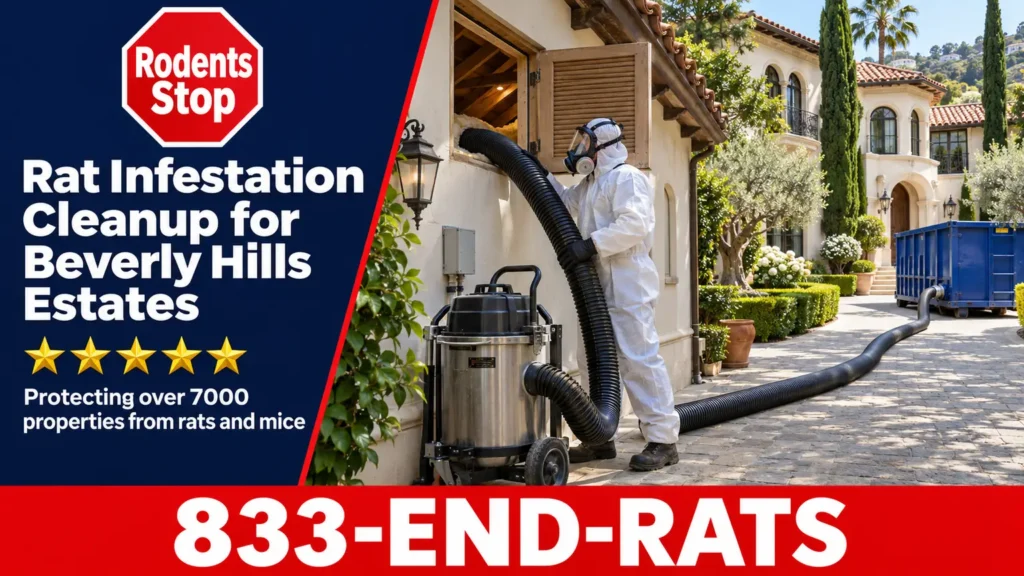
A rat problem can leave an estate looking fine on the surface while the attic, crawlspace, wall voids, and insulation tell a different story. Estate rat infestation cleanup is the work of removing the contamination rats leave behind, addressing the odor that remains, and correcting the access points that allowed the problem to develop.
For homeowners, landlords, estate representatives, and property managers, this is not simply a matter of setting traps and sweeping up visible droppings. Rats can contaminate insulation, leave urine trails along framing, build nests around stored materials, and create odors that persist after the rodents are gone. A thorough cleanup protects the condition of the property and helps prepare it for occupancy, sale, renovation, or continued use.
Why Estate Rat Infestation Cleanup Requires More Than Pest Control
Pest control and cleanup are related, but they are not the same service. Removing active rats is necessary, but it does not remove droppings, nesting debris, urine contamination, damaged insulation, or the odors left in enclosed spaces.
This distinction matters in larger homes, inherited properties, apartment buildings, and commercial estates that may have been vacant or lightly used for a period of time. Rodent activity can continue unnoticed in an attic or crawlspace for months. By the time scratching noises, ceiling stains, or a strong odor become noticeable indoors, contamination may be spread across a much larger area.
A proper inspection looks beyond the first visible evidence. It identifies where rats traveled, nested, fed, and entered the structure. It also determines whether contamination is isolated to one area or has reached multiple parts of the building, including attic insulation, HVAC-adjacent areas, crawlspaces, storage rooms, and wall cavities.
The scope of cleanup depends on the property. A newer home with a small, recent attic issue may need focused removal and sanitation. An older estate with extensive droppings, matted insulation, and repeated rodent access may require more substantial restoration. The right approach is based on the condition found during inspection, not a one-size-fits-all package.
Common Signs of Rat Contamination on a Property
Rat infestations often leave clear evidence, although much of it may be hidden in areas owners rarely inspect. Droppings are usually the first sign, especially in attics, garages, utility areas, crawlspaces, and near stored belongings. Fresh droppings can indicate current activity, while older droppings still show where rats have traveled and nested.
Persistent odor is another common concern. Rat urine can absorb into insulation, wood framing, dust, cardboard, and nesting material. Simply airing out the property or using household odor products may cover the smell briefly, but it does not remove the source. When humidity rises or an attic warms up, the odor can return.
Other warning signs include shredded insulation, torn duct wrap, chewed wires, gnawed wood or plastic, grease marks along travel paths, and piles of nesting material. In occupied properties, tenants or family members may report scratching overhead at night, odor near ceiling vents, or debris falling from attic access points.
For property managers in Los Angeles County, Orange County, Ventura County, Riverside County, and San Bernardino County, these signs should be addressed promptly. Delaying cleanup can allow contamination, odor, and damage to become more difficult to remove.
What a Professional Rat Cleanup Process Should Include
A complete cleanup begins with an honest assessment of the affected areas. The goal is to understand the extent of contamination before removal begins. Professionals should inspect the attic, crawlspace, accessible wall and utility areas, insulation condition, rodent entry points, and any spaces where odor has been reported.
The cleanup itself should focus on physical removal first. Rat droppings, nests, contaminated debris, and damaged insulation need to be safely removed rather than pushed deeper into the space or left beneath new materials. Dry sweeping or using a standard household vacuum can disturb contaminated dust, which is why these areas are better handled with proper equipment and controlled removal methods.
After debris removal, the affected surfaces need targeted sanitation. This includes framing, sheathing, accessible subflooring, and other areas where rodent activity occurred. The purpose is to clean the areas rats used, not merely spray a fragrance into the attic or crawlspace.
Odor treatment is a separate and essential step. Urine odor can remain after visible droppings are removed because the source may be inside insulation, nesting materials, or porous surfaces. Rodent Cleanup Experts uses a proprietary rodent scent neutralization treatment as part of a professional approach to persistent odor. The method selected should match the materials affected and the severity of the contamination.
Finally, the property needs exclusion work. If gaps around rooflines, vents, utility penetrations, crawlspace openings, or other access points remain open, rats can return and contaminate the area again. Cleanup without prevention can solve the immediate mess while leaving the property vulnerable to another infestation.
Attic Insulation Often Determines the Scope of Cleanup
Insulation is one of the most common materials affected by rat activity. Rats tunnel through it, use it for nesting, and leave droppings and urine throughout the material. In severe cases, insulation becomes compressed, soiled, and unable to perform as intended.
Spot cleaning is not always appropriate. If contamination is limited to a small, clearly defined section, targeted removal may be possible. When droppings and urine are widespread, however, removing contaminated insulation is often the more reliable choice. Leaving affected insulation in place can allow odor to continue and may make future inspections more difficult.
Once contaminated insulation is removed, the exposed attic can be cleaned and sanitized before restoration work begins. This gives owners, buyers, and property managers a clearer view of the structure itself. It also makes it easier to identify old damage, entry points, and areas that need repair.
Crawlspaces need the same attention. These confined areas can hold nesting debris, droppings, urine odor, and damaged vapor barriers for long periods. Because crawlspaces are rarely visited, they can become a recurring source of odor or activity unless the area is thoroughly inspected and cleaned.
Avoid Partial Cleanup When the Property Is Changing Hands
Estate properties often change hands after a sale, inheritance, tenant turnover, renovation, or a long vacancy. These are the moments when rodent contamination should be handled completely, not concealed.
A quick surface cleaning may improve appearance temporarily, but it can leave attic odor, contaminated insulation, and nesting debris in place. That can become a problem when new occupants move in, contractors begin work, or a home inspection identifies evidence that was not addressed.
For landlords and commercial property owners, a documented professional cleanup can also support a cleaner turnover process. It demonstrates that the property was assessed, contamination was removed, and conditions that encouraged rodent entry were identified for repair.
Humane, poison-free rodent control methods are especially valuable for properties where children, pets, tenants, employees, or customers may be present. The goal is to stop access and resolve the conditions behind the infestation without creating avoidable risks inside the building.
When to Schedule an Inspection
Schedule an inspection when you find rat droppings, notice urine odor, hear activity in walls or ceilings, discover damaged insulation, or are preparing an estate property for sale or occupancy. Early inspection is also wise when a building has been vacant, particularly if there are signs of roofline gaps, open vents, or crawlspace access points.
A professional inspection should give you a clear picture of what needs to be removed, what can remain, where odor is coming from, and how rats entered. That clarity helps prevent unnecessary work while ensuring the actual contamination is not overlooked.
Rodent Cleanup Experts provides professional attic cleaning, crawlspace sanitation, contaminated insulation removal, odor treatment, and rodent entry-point sealing throughout Southern California. For an inspection in Los Angeles, Ventura, Orange, Riverside, or San Bernardino County, call 833-END-RATS (833-363-7287).
A clean estate is not just one that looks ready from the driveway. It is one where the hidden spaces have been inspected, contamination has been removed, and the conditions that allowed rats inside have been addressed.