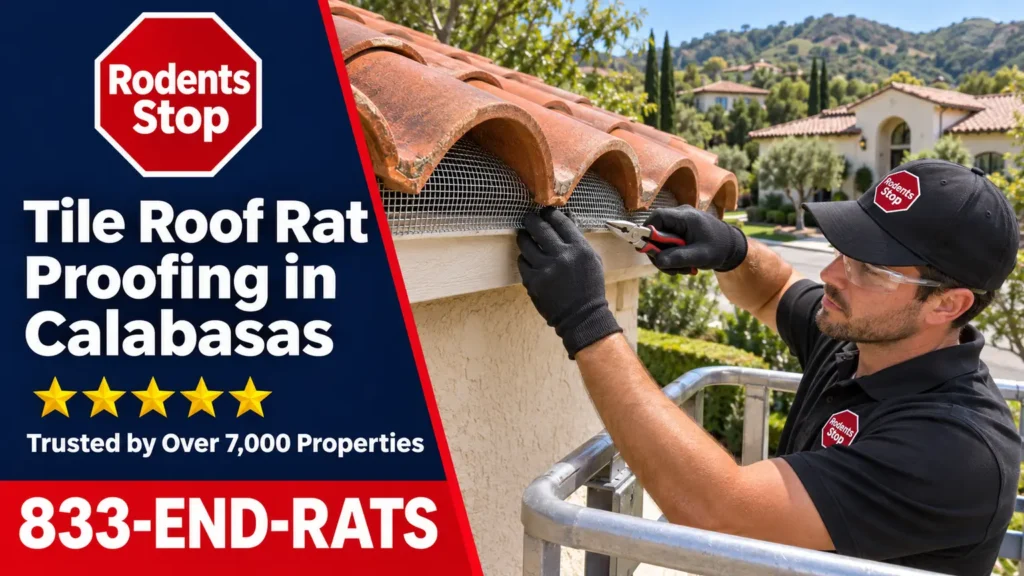
A rat can enter an attic through a roofline opening that looks too small to matter from the ground. On tile roofs, gaps around eaves, flashing, vents, fascia, and tile edges can create protected travel routes into the structure. By the time scratching noises or attic odors become noticeable, there may already be droppings, urine contamination, nesting debris, and damaged insulation overhead.
Tile roof rat proofing is not simply about putting traps in an attic. It is about finding how rodents are reaching the roof, closing the entry points without damaging the roof system, and addressing the contamination they leave behind. For Southern California homeowners, landlords, and facility managers, that combination is what helps stop a recurring problem.
Why Tile Roofs Need Specialized Rat Proofing
Tile roofs are durable and common throughout Los Angeles, Orange, Ventura, Riverside, and San Bernardino counties. Their design also creates spaces that rodents can use for cover. Rats can travel along fences, trees, utility lines, block walls, and roof edges before moving beneath or alongside tile components.
The tile itself is not always the entry point. The weak areas are often where roof sections meet: open eaves, deteriorated fascia, roof-to-wall connections, plumbing penetrations, attic vents, damaged screens, and gaps around flashing. Older homes and buildings may have prior repairs that left openings behind. Newer properties can also have small construction gaps that become accessible as materials shift or weather over time.
A roofline can look intact from the driveway while still allowing rodents into the attic. That is why a proper inspection matters. The goal is not to guess where rats may be entering. The goal is to identify active access points, signs of rodent travel, and the damage that needs attention.
Signs Rats May Be Entering Through Your Tile Roof
Scratching or scurrying sounds at night are often the first warning. Those sounds may come from the attic, ceiling voids, or upper walls near the roofline. A persistent musky odor, especially during warm weather, can also point to urine-soaked insulation or nesting activity above the ceiling.
Other signs include rat droppings in the attic, chewed wiring or duct materials, shredded insulation, nesting material around vents, and stains near ceiling penetrations. Property managers may hear tenant complaints about noises overhead, odors in upper-level units, or recurring rodent activity despite previous trapping.
Exterior clues matter as well. Rub marks near roof access areas, damaged vent screens, gaps under eaves, and nearby branches touching the roof can all contribute to the problem. A single opening may be enough, but many properties have multiple access routes.
Tile Roof Rat Proofing Starts With a Full Inspection
Effective rat proofing begins before any opening is sealed. If rodents are still active inside, closing every visible access point too early can leave them trapped in wall or attic spaces. That can lead to more damage, odor problems, and difficult removal conditions.
A professional inspection should evaluate the roofline, attic, crawlspace where applicable, vents, utility penetrations, garage connections, and other structural transitions. It should also determine whether the issue involves current rodent activity, old contamination, or both.
This distinction matters. Old droppings and odor can remain after rodents are gone. Conversely, a clean-looking attic may still have active entry points that invite the next infestation. The inspection should identify the condition of insulation, nesting debris, urine contamination, and any damage that may require restoration.
Entry Points Commonly Found Around Tile Roofs
Roof-related rodent access is rarely limited to one obvious hole. Common problem areas include openings at the eaves, gaps behind fascia boards, unscreened or damaged attic vents, roof-to-wall joints, loose flashing, and areas around pipes or conduits. Gaps near garage roofs and second-story transitions are also frequent trouble spots.
The right repair depends on the roof design and the condition of the materials. Sealing methods must be durable, properly fitted, and compatible with the roof system. A rushed repair can crack tile, block needed ventilation, create water intrusion concerns, or simply fail when rodents test the barrier again.
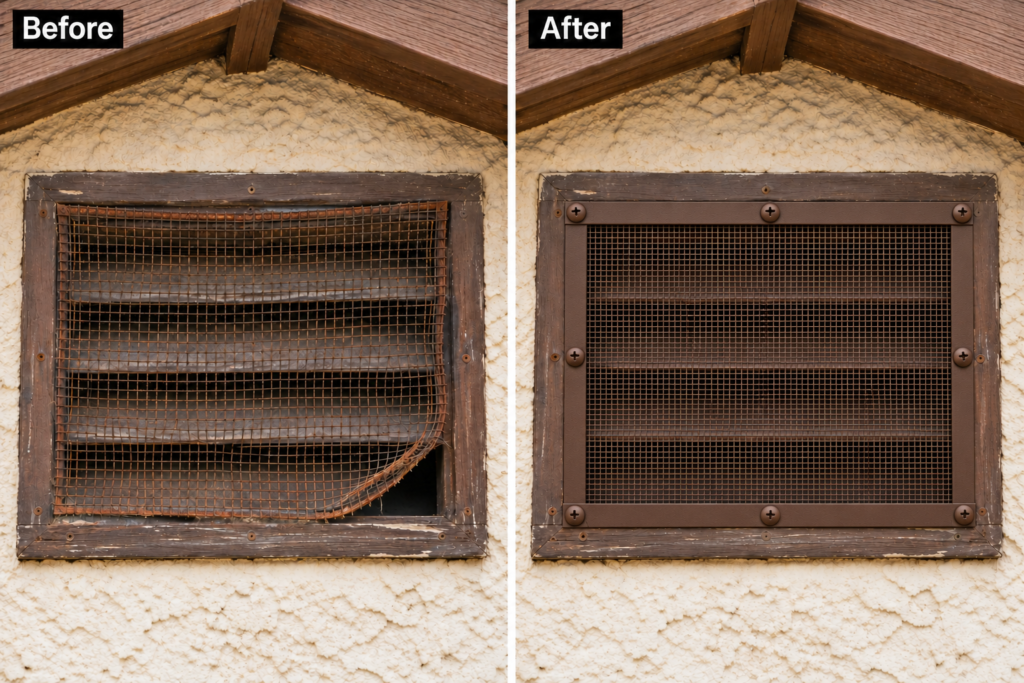
Can rats chew through metal mesh?
Thin or corroded wire can give way. Check the edges as well as the mesh itself: a rat can slip behind a loose corner without chewing through the screen. During an assessment, we check the screen, its fasteners, and the frame around the vent.
Did rats chew through your attic access door?
Gnaw marks along the hatch or trim are worth checking, especially if you also hear scratching overhead. An interior hatch can show where rats travel once inside. We check the roofline and exterior vents as well to trace how they reached the attic. Call 833-END-RATS for a proofing assessment.
Why Cleanup Is Part of Rat Proofing
Closing an entry point does not remove what rats left in the attic. Droppings, urine, nesting material, and contaminated insulation can continue to produce odor after the rodents are excluded. In some cases, the smell becomes more noticeable when attic temperatures rise.
Contamination can also affect stored belongings, HVAC-related areas, and the overall condition of the property. For landlords and commercial property owners, leaving contamination in place can create ongoing tenant or employee concerns even after rodent activity has stopped.
Professional cleanup focuses on removing contaminated materials safely, sanitizing affected surfaces, deodorizing the area, and restoring the space as needed. When insulation has been heavily affected by droppings, urine, or nesting debris, removal and replacement may be the more reliable solution. Light surface contamination and widespread insulation contamination are not the same situation, so the scope should be based on what the inspection finds.
The Difference Between Trapping and Long-Term Prevention
Trapping can reduce active rodent activity, but it does not correct the opening that allowed rodents inside. If access points remain open, new rats can follow the same routes to the attic. This is why some property owners feel stuck in a cycle of hearing activity, setting traps, and dealing with the problem again months later.
Tile roof rat proofing addresses the structural side of prevention. It should be combined with humane, poison-free rodent control methods and cleanup when contamination is present. This approach is especially valuable for homes with children and pets, multifamily properties, schools, warehouses, and occupied commercial spaces where safety and sanitation are central concerns.
Exterior conditions also influence results. Tree limbs that contact the roof, dense vegetation near walls, accessible utility lines, and unsecured storage areas can make roof access easier. Not every property needs the same corrections, but reducing easy routes to the roof can support the exclusion work.
When to Call a Professional
Call for an inspection when you hear repeated attic noises, find droppings, notice unexplained odors, or see damage around vents and eaves. It is also wise to schedule an inspection after a roof repair, before replacing attic insulation, or when a previous rodent service did not resolve recurring activity.
Avoid disturbing large amounts of droppings or pulling out contaminated insulation without proper protective procedures. Rodent waste can be spread through attic dust and debris, while nesting areas may conceal damage to wiring, ducts, and building materials. The larger the affected area, the more value there is in having trained cleanup specialists assess it first.
For apartment owners and property managers, early action can prevent an upper-unit complaint from becoming a broader building sanitation issue. For homeowners, it can protect the attic before contamination spreads beyond a small entry area.
Professional Roofline Exclusion and Attic Restoration
A complete service should connect the dots: inspect the property, identify rodent access, support exclusion work, remove contamination, neutralize odors, and restore affected attic or crawlspace areas. Treating only one part of the problem leaves the rest behind.
Rodent Cleanup Experts provides professional rodent cleanup, contaminated insulation removal, sanitation, deodorization, and entry-point identification throughout Southern California. With more than 20 years of hands-on experience, the focus is on the contamination and property damage traditional pest services may leave unaddressed.
If your tile roof may be giving rats access to the attic, do not wait for the odor or damage to get worse. Schedule a professional inspection with Rodent Cleanup Experts at 833-END-RATS (833-363-7287) and get a clear plan for cleanup, exclusion, and long-term prevention.