
Table of Contents
- What Is Rodent Attic Restoration?
- Why Rodent Attic Restoration Matters
- The Best Way to Clean Rat Urine and Contamination
- Rodent Waste Removal Protocols and Safety Standards
- Attic Insulation Replacement After Rodents
- Identifying and Sealing Rodent Entry Points
- Long-Term Prevention and Maintenance
- Frequently Asked Questions
Last Updated: September 28, 2026
What Is Rodent Attic Restoration?
Rodent attic restoration is the comprehensive process of cleaning, sanitizing, and restoring an attic space after a rodent infestation. It goes far beyond simply removing droppings and nesting materials. When rats or mice colonize an attic, they contaminate insulation with urine and fecal matter, damage wiring and structural components, create persistent odors through pheromone deposits, and leave behind pathogens that pose serious health risks.
The restoration process includes removal of contaminated insulation, deep cleaning and sanitization, HEPA vacuuming to capture allergens and pathogens, odor and pheromone treatment, and entry point identification. Rodent Cleanup Experts approaches each restoration as a complete remediation project, not just a cleanup.
Scope depends on infestation severity. A professional inspection and assessment is the critical first step.
Why Rodent Attic Restoration Matters
Rodent attic restoration matters for three reasons: health protection, structural preservation, and insurance claim recovery, an angle often overlooked but critical for cost recovery.
Health risks of rodent droppings and urine
Rodent droppings and urine contain bacteria, viruses, and allergens that become airborne and can be inhaled, particularly in homes with HVAC systems that pull air from the attic.
Hantavirus, carried in rodent urine and droppings, causes severe respiratory illness. Salmonella causes gastrointestinal illness. Leptospirosis, transmitted through urine, damages kidneys and liver. Rodent allergens trigger respiratory problems and asthma in sensitive individuals.
Unaddressed contamination intensifies danger. Urine soaks into insulation, creating a pathogen reservoir that spreads through air circulation systems. Families often experience unexplained respiratory issues that resolve only after remediation.
Structural and safety concerns
Rodents cause physical damage compromising safety and energy efficiency. Chewed wiring creates fire hazards. Damaged HVAC components reduce efficiency and increase utility costs. Compromised structural elements weaken roof supports and framing.
Rodent damage reduces insulation R-value, forcing heating and cooling systems to work harder and increasing energy costs. Structural damage, chewed beams, compromised vapor barriers, damaged ductwork, requires professional assessment to determine what can be salvaged.
Untreated damage attracts reinfestation. Urine pheromones signal to other rodents that the space is suitable for habitation. Without proper sanitization and deodorization, a sealed attic becomes vulnerable to future infestations.
Insurance coverage and documentation for restoration claims
Many homeowners don’t realize that homeowners insurance may cover rodent attic restoration, depending on the policy and the cause of infestation. Most standard homeowners policies cover sudden, accidental damage, including rodent damage that results from a sudden infestation, but exclude damage from lack of maintenance or pre-existing conditions. The key to recovering costs is proper documentation and professional assessment.
Professional restoration teams should provide documentation supporting insurance claims: before/after photographs, written assessment of infestation extent, itemized materials removed, description of treatments applied, and final inspection photos. This documentation becomes your claim evidence.
Report the infestation to your insurance company promptly before beginning work. Provide your adjuster with professional assessment and photographs. Many insurers require licensed, insured professionals. A professional team’s credentials strengthen your claim.
Coverage depends on cause. Storm damage or age-related gaps may be covered as “sudden and accidental.” Failure to maintain (unsealed gaps, untrimmed branches) may result in denial. Prior notice without action may be denied as pre-existing. Documentation of discovery date, steps taken, and hiring timeline establishes your diligence.
Keep all receipts, invoices, and reports from the restoration company for your claim file. If denied, you can appeal with this documentation. Without professional documentation, recovery is nearly impossible.
The Best Way to Clean Rat Urine and Contamination
Cleaning rat urine and fecal contamination requires specialized equipment and protocols. Regular vacuums spread pathogens; bleach alone doesn’t eliminate odors or pheromones.
HEPA vacuuming is the foundation of contamination removal. HEPA filters capture 99.97% of particles 0.3 microns and larger, including allergens, bacteria, and viral particles. The vacuum must have a sealed system to prevent contaminated air from re-entering living spaces.
After HEPA vacuuming, surfaces receive enzymatic cleaning and biocide treatment. Enzymes break down organic matter and eliminate odor sources. This multi-step approach separates professional remediation from DIY attempts.
Most homeowners underestimate contamination scope. Urine soaks through insulation and framing; fecal matter disperses throughout the attic. Surface-level cleaning leaves bulk contamination untouched, which is why odors and health risks persist.
Rodent Waste Removal Protocols and Safety Standards
Professional rodent waste removal follows strict safety protocols. Technicians wear respiratory protection (N95 or better), full-body suit, gloves, and eye protection. The attic must be properly ventilated during work.
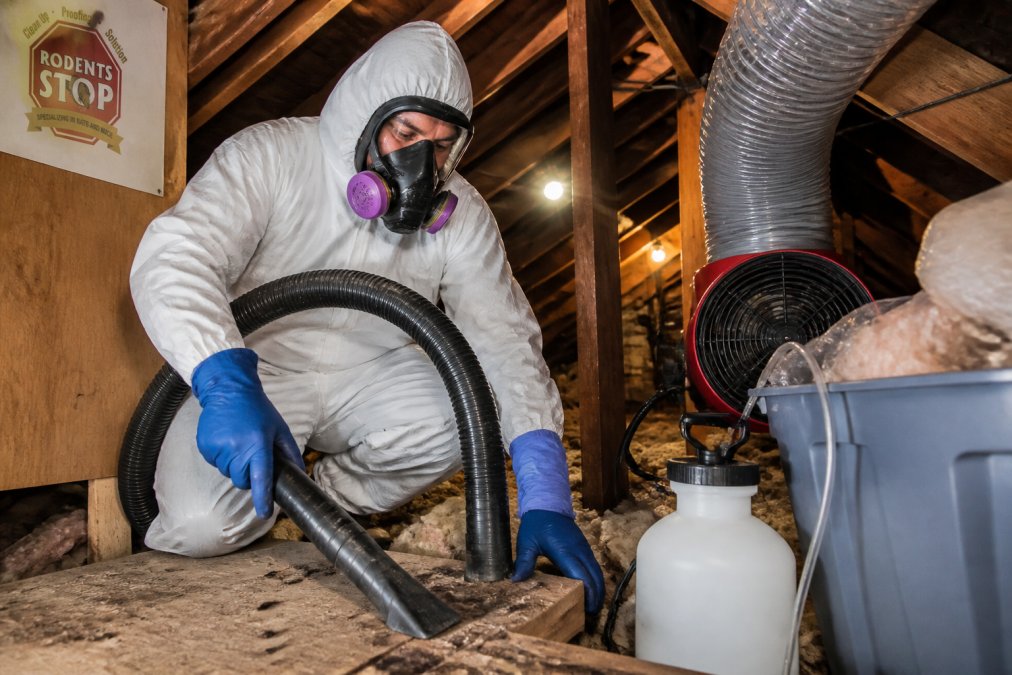
Contaminated materials must be sealed in biohazard bags and disposed of per local regulations. The work area is isolated from living spaces. After removal, surfaces receive enzymatic treatment and biocide application.
Professional teams document contamination extent, materials removed, treatments applied, and areas sealed, valuable for insurance claims and work records.
The reason these protocols exist is straightforward: rodent waste contains serious pathogens. Hantavirus, salmonella, and other harmful organisms require containment and proper disposal. Cutting corners on safety procedures exposes workers and residents to unnecessary risk. Professional teams follow these standards not as bureaucratic requirements, but as essential safeguards. Rodent infestation cleanup addresses these hazards comprehensively, ensuring that contaminated materials are properly removed and all affected surfaces are thoroughly treated.
Attic Insulation Replacement After Rodents
Once contaminated insulation is removed, replacement becomes necessary to restore the attic’s thermal performance. However, not all insulation materials perform equally in rodent-prone environments or after water damage from rodent-related moisture issues. The choice of material affects both energy efficiency and your home’s vulnerability to future infestations.
Fiberglass batts are the most common and affordable replacement option. They offer good R-value per inch and are relatively easy to install. However, fiberglass has significant drawbacks in rodent-recovery scenarios. The material absorbs and retains moisture, which creates conditions for mold growth if the attic experiences condensation, a common problem after rodent damage, since rodents often damage vapor barriers and ventilation. Additionally, fiberglass batts leave gaps around irregular framing and penetrations, creating spaces where rodents can nest and move undetected. Once installed, batts are difficult to inspect for new rodent activity without partial removal.
Blown-in cellulose insulation provides superior coverage of irregular spaces, attic penetrations, and gaps that batts leave open. It fills around wiring, ductwork, and structural elements more completely, reducing air leakage and the hidden pathways rodents exploit. Cellulose has a higher R-value per inch than fiberglass, meaning better thermal performance in the same depth. The material is also denser, making it less attractive for rodent nesting compared to fluffy batts. The tradeoff is higher material and installation cost, plus the requirement for professional equipment. Cellulose can absorb moisture if ventilation fails, though it dries faster than fiberglass and is less prone to mold growth.
Spray foam insulation offers the highest R-value and creates a continuous, air-tight seal that eliminates hidden cavities where rodents hide and travel. It’s particularly effective in attics with complex framing, multiple penetrations, or previous rodent damage that has compromised structural integrity.
Identifying and Sealing Rodent Entry Points
Rodents can enter through surprisingly small openings. Mice need only a gap the size of a dime. Rats require slightly larger openings but can squeeze through holes as small as a quarter. Finding these entry points requires systematic inspection.
Long-Term Prevention and Maintenance
After restoration is complete, preventing reinfestation requires ongoing attention. Rodents are opportunistic, they’ll return if conditions become favorable again. A maintenance checklist helps homeowners stay ahead of potential problems.
| Prevention Task | Frequency | Purpose |
|---|---|---|
| Inspect exterior for new gaps or damage | Quarterly | Catch entry points before rodents find them |
| Check attic for signs of activity | Every 6 months | Early detection prevents major infestations |
| Trim tree branches away from roof | Annually | Remove rodent highways to your home |
| Clear gutters and downspouts | Twice yearly | Prevent water damage that attracts rodents |
| Store food and trash in sealed containers | Ongoing | Eliminate attractants around the property |
| Maintain proper attic ventilation | Ongoing | Prevent moisture and mold that weaken exclusion |
Frequently Asked Questions
What is rodent attic restoration and why do I need it?
Rodent attic restoration is the professional process of removing contaminated insulation, rodent waste, nesting materials, and pathogens from your attic, followed by sanitization, deodorization, and replacement of damaged materials. It’s essential because rodents leave behind fecal matter, urine, and pathogens that pose serious health risks including hantavirus and salmonella exposure. DIY cleanup with a regular vacuum or bleach is insufficient and can spread contamination.
Do I need to replace attic insulation after rodents?
Yes, in most cases. Rodent-contaminated insulation cannot be safely restored and must be removed and replaced. Rodents damage insulation through nesting, and their urine and fecal matter saturate the material, reducing its R-value and creating health hazards. Professional remediation includes complete removal of contaminated insulation and installation of new, uncontaminated material to restore energy efficiency and safety.
What is the best way to clean rat urine from an attic?
Professional sanitization requires biocide treatment to neutralize urine pheromones and pathogens, followed by HEPA vacuuming to remove all contaminated particles. Simply wiping or spraying bleach is ineffective because rat urine soaks into insulation, wood, and structural materials. Professionals apply appropriate disinfectants and perform deodorization to eliminate odors at the source.
Can rodents return after professional restoration?
Professional restoration includes exclusion services and entry point sealing to prevent reinfestation. Technicians use physical inspection to identify how rodents entered, then seal those gaps with appropriate materials. Combined with proper maintenance and regular inspections, this approach significantly reduces the risk of future infestations, though ongoing vigilance is important.
How long does rodent attic restoration take?
The timeline depends on infestation severity and attic size. Most projects range from one to three days. Initial inspection and assessment typically takes a few hours. Removal of contaminated insulation, sanitization, and installation of new materials follow. Your technician will provide a specific timeline during the inspection phase based on the extent of damage.
Are the chemicals used in attic restoration safe for pets?
Professional-grade biocides and sanitizers used in attic restoration are safe when applied by trained technicians following EPA guidelines. However, it’s best to keep pets away from the attic during treatment and for the duration recommended by your restoration team. Ask your technician about specific products being used and any precautions needed for your pets.