Table of Contents
- What Attic Rodent Restoration Actually Costs
- Factors That Influence Attic Rodent Cleanup Cost
- Attic Rodent Cleanup Cost Breakdown by Service
- Attic Insulation Replacement Cost After Rodent Damage
- Attic Decontamination: Health Risks and Professional Standards
- Rodent Damage Repair Cost: Structural and Systems Damage
- Insurance Coverage for Attic Rodent Restoration
- Long-Term Maintenance and Prevention Checklist
- Frequently Asked Questions
Last Updated: October 6, 2026
What Attic Rodent Restoration Actually Costs
The average cost of attic rodent restoration depends on infestation size, contamination type, attic accessibility, and which services you need. It costs more than most homeowners expect, but it protects your home’s structure and your family’s health.
Cost per square foot
When estimating average cost of attic rodent restoration, contractors typically price per square foot of contaminated attic space. A heavily contaminated attic with structural damage, HVAC involvement, and difficult access costs considerably more than a straightforward insulation removal and replacement.
The range varies by what’s included. Some providers bundle sanitization, decontamination, and new insulation; others charge separately for removal, cleaning, and replacement.
Regional variation factors
Your location within Southern California influences pricing. Urban areas with higher labor costs and stricter building codes see higher estimates than rural regions, and areas with fewer rodent cleanup specialists may charge premium rates.
Local building codes and permits add another layer. Some jurisdictions require licensed contractors for insulation or HVAC duct work, and permit fees vary by county.
Factors That Influence Attic Rodent Cleanup Cost
Infestation severity and extent
Severity is the single largest cost driver. A light infestation affecting 200 square feet of insulation costs far less than widespread contamination across the entire attic.
Beyond visible droppings and nesting materials, contractors assess contamination depth. Rodent urine soaks into insulation and wood framing, requiring HEPA vacuuming and chemical treatment.
Duration also affects pricing. A six-month infestation causes less damage than one active for two years, since longer infestations allow more structural damage, duct contamination, and deep urine penetration.
Attic accessibility and structural complexity
An attic with adequate headroom, reinforced flooring, and clear access costs less than a cramped space where technicians work in contorted positions. A straightforward attic might take 8 hours; a difficult one 16 or more.
Structural complexity includes low-slope roofs, complex framing, multiple HVAC systems, and dense wiring. Technicians work carefully around these obstacles, slowing restoration.
Attic ventilation also plays a role. Poorly ventilated attics trap odors and moisture, requiring more intensive decontamination, while well-ventilated attics dry faster after sanitization and may need fewer chemical treatments.
Contamination type and health hazards
Not all infestations are identical. Rats cause more contamination than mice because they’re larger and leave more droppings and urine. The rodent type, roof rats, Norway rats, or house mice, influences both contamination pattern and decontamination approach.
Pathogens in rodent droppings and urine determine treatment intensity. Fecal matter can harbor hantavirus, leptospirosis, and other pathogens requiring professional biohazard cleanup standards.
Odor severity also factors in. Fresh contamination produces less odor than months-old droppings and urine, and severe odor requires extended treatment, pheromone removal, and sometimes multiple applications of deodorizers.
Attic Rodent Cleanup Cost Breakdown by Service
Insulation removal and disposal
Removing contaminated insulation is often the largest single cost component of attic rodent restoration. Disposal is regulated: contaminated insulation can’t go in a dumpster and must be bagged, labeled, and taken to appropriate facilities.
The removal method affects labor costs. Blown-in insulation requires HEPA vacuuming to extract safely without dispersing pathogens; fiberglass batts can be removed manually but still need careful handling.
Disposal fees vary by location and volume. A heavily infested 1,500-square-foot attic might generate several tons of contaminated insulation requiring multiple trips.
Sanitization and decontamination
Professional sanitization goes far beyond surface cleaning: HEPA vacuuming to remove fecal matter and nesting debris, chemical disinfection of affected surfaces, and treatment of wood framing and structural components to target pathogens left by droppings and urine.
Chemical treatments vary in scope and cost. Basic sanitization covers visible contamination; comprehensive decontamination treats hidden contamination in wall cavities, under insulation, and in structural voids where rodents traveled.
Odor treatment is often a separate line item. Removing the source eliminates some smell, but residual odor in wood framing and HVAC ducts requires specialized treatment.
Rodent-proofing and entry point sealing
Identifying and sealing entry points prevents future infestations and is critical to comprehensive attic rodent restoration. Contractors inspect attic vents, soffit gaps, roof penetrations, and foundation cracks to locate how rodents entered.
Sealing materials vary in cost. Caulking is cheap but may not withstand gnawing; steel mesh, hardware cloth, and one-way exclusion doors are more durable.
The number of entry points significantly impacts this portion of the bill. A home with two or three obvious gaps costs less to rodent-proof than one with a dozen scattered entry points.
HVAC duct cleaning and odor removal
If rodents accessed your HVAC system, duct cleaning becomes necessary. Contaminated ducts spread pathogens and odors throughout your home every time the system runs. Professional cleaning involves removing contaminated duct insulation, vacuuming internal surfaces, and applying antimicrobial treatment.
This requires specialized equipment and expertise, since standard duct cleaning may not address biohazard contamination. Comprehensive HVAC restoration includes replacing damaged duct insulation, sealing leaks, and ensuring the system doesn’t distribute odors afterward.
Attic Insulation Replacement Cost After Rodent Damage
Material options and R-value selection
Once contaminated insulation is removed, you’ll need to decide what type of new insulation to install. Your choice affects both immediate cost and long-term energy efficiency.
Blown-in fiberglass or cellulose insulation is common for attic restoration because it fills irregular spaces and conforms to existing structures. Fiberglass batts offer a middle-ground option between cost and performance.
Your choice also influences rodent-proofing effectiveness. Some materials resist rodent damage better than others. Pest-resistant insulation options exist but typically cost more than standard materials.
Installation labor and timeline
Labor costs for insulation installation depend on the complexity of your attic and the material chosen. Blown-in insulation requires specialized equipment but covers large areas quickly. Batt installation involves more manual labor but may be faster in accessible attics.
The timeline for complete restoration typically spans one to three weeks, depending on the scope. Removing contaminated insulation might take several days. Sanitization and decontamination add another week if extensive treatment is needed. Installation of new insulation usually completes within a few days once the attic is clean and dry.
Attic Decontamination: Health Risks and Professional Standards
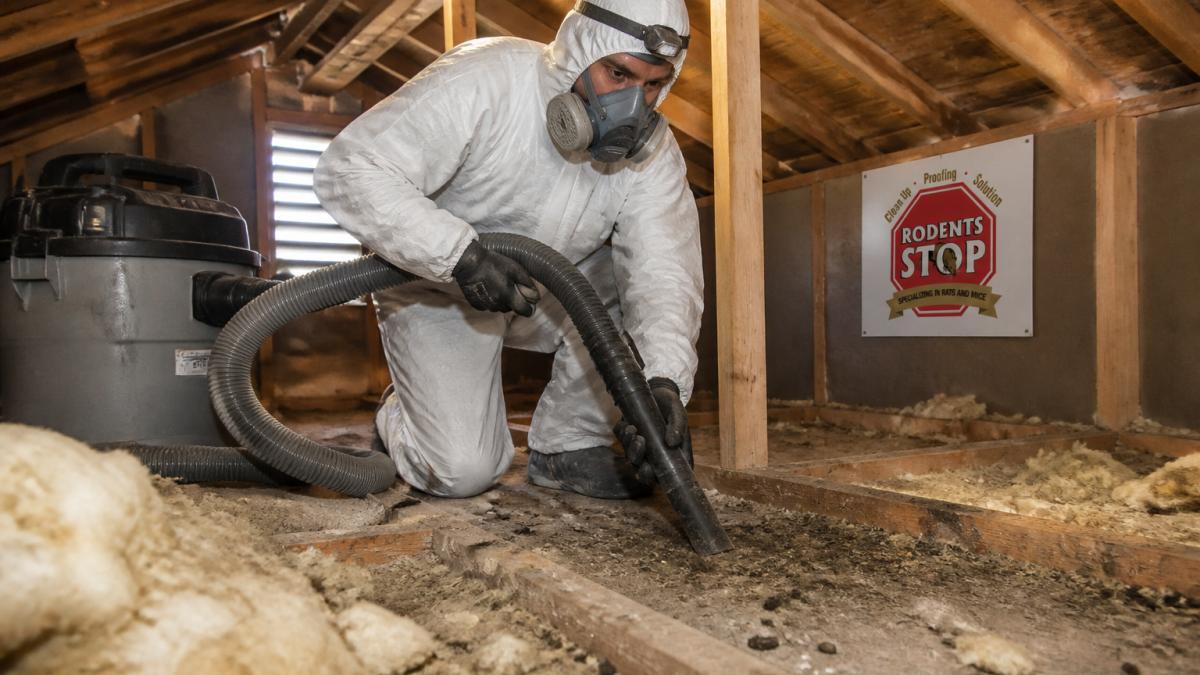
Attic decontamination removes pathogens and biohazards left by rodent infestations, protecting your home’s occupants from serious health risks. Professional decontamination follows established protocols that go far beyond what homeowners can safely accomplish with household cleaning supplies.
Pathogens in rodent droppings and urine
Rodent fecal matter and urine harbor multiple pathogens dangerous to human health. Hantavirus, transmitted through inhalation of aerosolized particles from dried droppings, can cause hantavirus pulmonary syndrome, a serious respiratory illness.
Salmonella contamination is common in rodent-infested spaces. Exposure occurs through inhalation or accidental ingestion of contaminated dust.
The health risks escalate when contamination goes unaddressed. Rodent urine soaks into insulation and wood framing, creating a persistent contamination source. Airborne particles circulate through your home’s ventilation system, spreading pathogens to living spaces.
Why DIY cleanup fails and creates health hazards
Attempting to clean rodent contamination yourself with a regular vacuum and household bleach creates serious health risks.
Household bleach doesn’t penetrate deep into contaminated insulation or wood. It kills surface pathogens but leaves subsurface contamination intact.
Protective equipment matters critically. Professional technicians wear full-body suits, respirators with appropriate filters, and double gloves. Without proper protection, you’re exposed to concentrated pathogens in a confined space.
Professional decontamination uses HEPA vacuuming, enzymatic cleaners that break down pathogens, and antimicrobial treatments that penetrate contaminated materials. This comprehensive approach eliminates health hazards that DIY attempts leave behind.
Rodent Damage Repair Cost: Structural and Systems Damage
Wiring and electrical damage
Rodents gnaw through electrical wiring to access the soft insulation inside. Damaged wiring creates fire hazards and electrical safety issues.
Identifying all damaged wiring requires a thorough inspection. Some damage is visible, but rodents often chew wiring hidden behind insulation or in wall cavities. An electrician must inspect the entire attic electrical system to identify all damage.
The extent of wiring damage depends on infestation duration and rodent population size. A light infestation might affect one or two circuits. A severe, long-standing infestation can damage multiple circuits, requiring extensive rewiring.
Structural repairs and vapor barrier replacement
Rodents damage wood framing by gnawing and by their acidic urine corroding wood over time. Joists, rafters, and other structural components weakened by rodent damage may require reinforcement or replacement.
Vapor barriers prevent moisture from entering insulation and causing mold growth. Rodents tear holes in vapor barriers, compromising their effectiveness. Replacing damaged vapor barriers prevents future moisture problems and mold growth.
Water damage often accompanies rodent infestations because damaged roofing or compromised sealing allows leaks. Wet wood attracts rodents and promotes mold growth.
Insurance Coverage for Attic Rodent Restoration
Homeowners insurance typically does not cover rodent infestation cleanup and restoration.
However, some policies cover secondary damage caused by rodents. If rodent damage caused a roof leak or electrical fire, your insurance might cover those specific repairs.
Damage from water intrusion that happened to occur in a rodent-infested attic may be covered if the water damage itself is a covered peril. This distinction matters when calculating your actual out-of-pocket costs.
Long-Term Maintenance and Prevention Checklist
After completing attic rodent restoration, ongoing maintenance prevents reinfestation and protects your investment. Regular inspections catch new entry points or damage before rodents exploit them.
| Maintenance Task | Frequency | Why It Matters |
|---|---|---|
| Inspect exterior for gaps and cracks | Quarterly | Early detection prevents entry |
| Check attic vents and soffit screens | Quarterly | Damaged screens allow rodent access |
| Trim tree branches near roof | Annually | Prevents rodent highway to attic |
| Inspect insulation condition | Annually | Identifies settling or damage |
| Check for new droppings or signs | Monthly | Early warning of reinfestation |
| Seal new gaps around utilities | As needed | Closes entry points before rodents find them |
| Clean gutters | Twice yearly | Removes nesting materials and standing water |
Rodent-proofing is an ongoing process, not a one-time fix. Even well-sealed homes develop new gaps as materials settle, expand, and contract with temperature changes. Regular inspection catches these vulnerabilities before rodents exploit them.
Professional pest control services can monitor your home and treat entry points as they develop.
Rodent contamination in your attic creates health hazards that extend far beyond visible droppings.
Frequently Asked Questions
How much does attic rodent restoration typically cost?
Attic rodent restoration costs depend on infestation severity, attic size, insulation damage, and structural repairs needed. Pricing varies significantly based on whether contaminated insulation requires complete removal, the extent of sanitization required, and whether entry point sealing and new insulation installation are included. Contact a professional for a detailed estimate based on your specific situation.
What factors affect the cost of attic rodent cleanup?
Key cost drivers include attic square footage, infestation severity, insulation contamination level, accessibility for technicians, presence of HVAC duct contamination, structural damage to wiring or framing, and whether rodent-proofing and new insulation installation are needed. Attic ventilation complexity and local labor rates also influence final pricing.
Does homeowners insurance cover rodent damage in an attic?
Most standard homeowners insurance policies do not cover rodent damage, as infestations are considered preventable maintenance issues. However, some policies may cover secondary damage like electrical fires caused by rodent-chewed wiring. Review your policy and contact your insurer directly. Damage from water intrusion that allows rodent entry might be covered depending on the cause.
Can I clean rodent droppings in my attic myself?
Cleaning rodent droppings yourself carries serious health risks. Rodent fecal matter and urine contain pathogens including hantavirus, which can become airborne when disturbed. Professional decontamination uses HEPA filtration, proper biohazard protocols, and sanitization chemicals to safely eliminate pathogens and odors. DIY cleanup with a regular vacuum spreads contamination throughout your home.
How long does attic rodent cleanup and restoration take?
Timeline depends on infestation extent and scope of work. Basic cleanup and sanitization may take 1-2 days, while comprehensive restoration including insulation removal, decontamination, rodent-proofing, and new insulation installation can take 3-7 days or longer. Your technician will provide a timeline estimate after inspecting the attic.
What does professional attic rodent cleanup include?
Professional cleanup typically includes removal of rodent droppings and nesting materials, contaminated insulation removal, HEPA vacuuming, deep sanitization and decontamination, odor and pheromone treatment, inspection for entry points, rodent-proofing and sealing, HVAC duct cleaning if needed, and new insulation installation. Services are customized based on damage severity.