Table of Contents
- Why Insulation Alone Won’t Stop Rodents
- 1. Closed-Cell Spray Foam: Highest Rodent Resistance
- 2. Rigid Foam Board: Durable and Chew-Resistant
- 3. Mineral Wool (Rockwool) and Rodent Nesting
- 4. Borate-Treated Cellulose: Chemical Deterrent
- 5. Fiberglass Insulation: Vulnerability and Limitations
- Removing Rodent-Contaminated Insulation Safely
- Sealing Entry Points: The Real Rodent Defense
- Frequently Asked Questions
Last Updated: October 7, 2026
Why Insulation Alone Won’t Stop Rodents
Here’s what most homeowners get wrong about rodent prevention: they think choosing the right insulation material will solve the problem. It won’t.
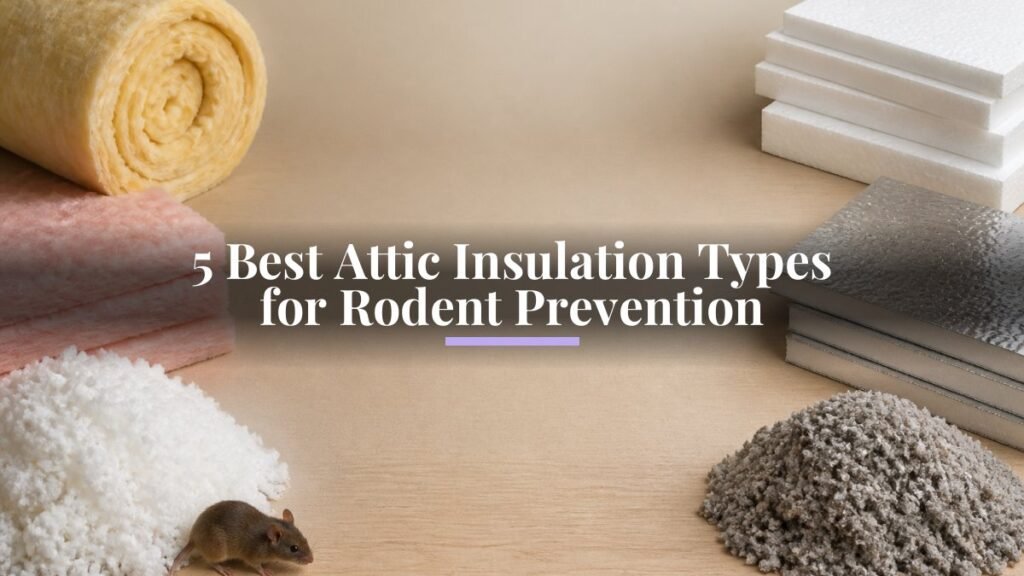
The 5 best attic insulation types for rodent prevention each have different strengths and weaknesses. Some resist chewing better than others. Some deter nesting more effectively. But none of them, not one, will keep rodents out of your attic on their own.
Rodents don’t enter attics because of the insulation. They enter because of gaps, cracks, and openings in the structure itself. Once they’re inside, the insulation becomes either a barrier they can’t penetrate or a material they’ll nest in and contaminate. That’s where material choice matters.
The real defense is a two-part strategy: seal the entry points first, then choose an insulation material that resists rodent damage if they somehow get past your barriers. We’ve cleaned up many contaminated attics across Southern California. The pattern is always the same: the homes that stayed rodent-free weren’t the ones with the “best” insulation. They were the ones that sealed their entry points properly and chose materials that discourage nesting and chewing.
This guide covers the 5 best attic insulation types for rodent prevention ranked by rodent resistance, explains why each one performs the way it does, and shows you how to combine material selection with entry-point sealing for actual protection.
1. Closed-Cell Spray Foam: Highest Rodent Resistance
Closed-cell spray foam is your best option if rodent resistance is the priority. When applied correctly, it creates a solid, impenetrable barrier that rodents cannot chew through.
Here’s why it works. Closed-cell foam expands and hardens into a dense, rigid structure. The cells are tightly packed and sealed. A mouse or rat’s teeth cannot grip and tear through it the way they can with softer, more fibrous materials. It’s simply too hard and too uniform.
Closed-cell spray foam also air-seals as it expands. It fills gaps and cracks that would otherwise serve as rodent entry points. This dual benefit, physical barrier plus air sealing, makes it the most comprehensive insulation choice for rodent prevention.
The trade-offs are real. Closed-cell spray foam costs more than other options. Installation requires a professional applicator with specialized equipment. Once installed, it’s difficult to remove or replace if you need to access wiring or make repairs. It also has a higher environmental impact during manufacturing compared to recycled-content materials.
For attics where rodent risk is high and budget allows, closed-cell spray foam is the strongest choice.
Closed-cell spray foam works best in combination with professional entry-point sealing. The foam alone won’t stop rodents if they have easy access routes into the attic.
2. Rigid Foam Board: Durable and Chew-Resistant
Rigid foam board, typically made from polystyrene or polyurethane, offers solid rodent resistance at a lower cost than spray foam. It comes in sheets that installers fit between rafters and joists.
Rodents can chew through rigid foam board, but it requires significant effort. The material is dense and uniform, unlike loose-fill options. A mouse will eventually breach it, but the resistance is notable. The real advantage is durability: rigid foam doesn’t settle, compress, or degrade the way loose-fill materials do.
Rigid foam board also provides consistent R-value over time. Loose-fill materials settle and lose effectiveness. Rigid board maintains its thermal performance for decades. For homeowners planning long-term rodent prevention, this stability matters.
The downside is installation and the difficulty of working around existing structures. Rigid board requires cutting and fitting around pipes, vents, and electrical work. It’s not as quick to install as loose-fill, and it doesn’t air-seal as comprehensively as spray foam.
Rigid foam board is a solid middle-ground option: better rodent resistance than loose-fill materials, lower cost than spray foam, and proven durability over time.
3. Mineral Wool (Rockwool) and Rodent Nesting
Mineral wool, often called rockwool, is made from melted rock or slag spun into fibrous strands. It has one clear advantage: rodents strongly prefer not to nest in it.
The reason is simple. Mineral wool fibers are irritating. They don’t compress easily into soft nesting material the way fiberglass does. Rodents will avoid it when softer alternatives exist nearby. If your attic is entirely mineral wool with no other nesting materials available, rodents are less likely to establish a nest there.
However, and this is important, mineral wool will not stop a determined rodent from entering the attic. It won’t block entry points. A mouse or rat can navigate through it and will if the attic is otherwise accessible. Mineral wool deters nesting, not entry.
Mineral wool also resists moisture better than fiberglass. In damp climates or attics with ventilation issues, this matters. It won’t absorb water and compress like fiberglass can. For attics in areas prone to humidity, mineral wool is a practical choice.
The trade-off is that mineral wool typically costs more than fiberglass. It’s also heavier and requires proper support during installation. Some installers charge more for mineral wool work because it’s less common and requires different handling.
Mineral wool works best as part of a broader rodent prevention strategy, not as a standalone solution.
Mineral wool deters nesting but does not prevent entry. Rodents can still access your attic through gaps and cracks. Sealing entry points is essential.
4. Borate-Treated Cellulose: Chemical Deterrent
Borate-treated cellulose is made from recycled paper treated with boric acid. The borate treatment serves two purposes: it makes the material fire-resistant and it deters rodents and insects.
The deterrent effect is real but limited. Rodents find the taste unpleasant and will avoid it when other nesting materials are available. However, a hungry or determined rodent will still chew through it. The borate treatment doesn’t make cellulose physically resistant to chewing the way rigid foam or spray foam does.
Cellulose also settles over time. It compresses under its own weight and loses R-value. In a typical attic, you’ll see settling within the first year. This means the insulation becomes thinner and less effective at blocking air leakage and maintaining thermal performance.
The advantage is environmental. Cellulose is made from recycled paper, so it has a lower manufacturing footprint than foam products. For homeowners prioritizing sustainability, this matters. It’s also less expensive than spray foam or rigid board.
Borate-treated cellulose is best suited for attics where rodent risk is moderate and entry points are already sealed. The chemical deterrent provides a secondary layer of protection, but it shouldn’t be your primary defense.
5. Fiberglass Insulation: Vulnerability and Limitations
Fiberglass is the most common attic insulation in older homes. It’s affordable, easy to install, and widely available. It’s also the most vulnerable to rodent damage.
Rodents love fiberglass. It compresses easily into soft nesting material. They shred it, pack it into wall cavities and attic corners, and create nests within days. Fiberglass offers zero physical resistance to rodent entry or nesting.
Additionally, fiberglass settles significantly. A batts-and-blankets installation will lose 10-15% of its R-value within the first year as the material compresses under its own weight. Loose-fill fiberglass settles even more. Over 5-10 years, the thermal performance degrades noticeably.
Fiberglass also absorbs moisture. If your attic has any humidity or condensation issues, fiberglass will soak it up and lose effectiveness. It can also harbor mold growth in damp conditions.
The only real advantage of fiberglass is cost and ease of installation. For homeowners on a tight budget with no current rodent problem, fiberglass works. But if rodents have already accessed your attic, fiberglass is the worst choice for replacement insulation.
Fiberglass is cheap and common, but it offers no rodent resistance. If you’ve had a rodent infestation, replacing contaminated fiberglass with a rodent-resistant material is worth the investment.
Removing Rodent-Contaminated Insulation Safely
Once rodents have nested in your insulation, that material is contaminated. It contains droppings, urine, nesting debris, and bacteria. Simply vacuuming it out isn’t enough.
Contaminated insulation must be removed completely and safely. This requires proper protective equipment, HEPA filtration, and careful disposal. Disturbing contaminated insulation without protection can spread bacteria and allergens throughout your home.
The removal process involves:
- Sealing off the attic to prevent contamination spread to living areas
- Using HEPA-filtered equipment to capture particles
- Removing all contaminated material, not just the visible nesting areas
- Cleaning and sanitizing exposed surfaces
- Treating for odor and pheromone residue
- Installing new insulation only after the space is fully cleaned and sealed
This is not a DIY job. Professional rodent infestation cleanup services handle contaminated insulation removal using industry-standard protocols. We inspect the affected areas, develop a cleanup plan based on the extent of contamination, and ensure the space is restored to a safe, sanitary condition before new insulation is installed.
Attempting to clean contaminated insulation yourself risks exposure to harmful bacteria and incomplete removal of nesting materials. Professional cleanup provides safety and thoroughness.
Sealing Entry Points: The Real Rodent Defense
Here’s the truth that changes everything: the insulation you choose matters far less than the entry points you seal.
Rodents enter attics through gaps and cracks in the structure. Common entry points include gaps around pipes and vents, cracks in the foundation or rim joist, openings where utilities enter the home, gaps in soffit or fascia, and holes in the roof or walls. A mouse needs an opening only the size of a dime.
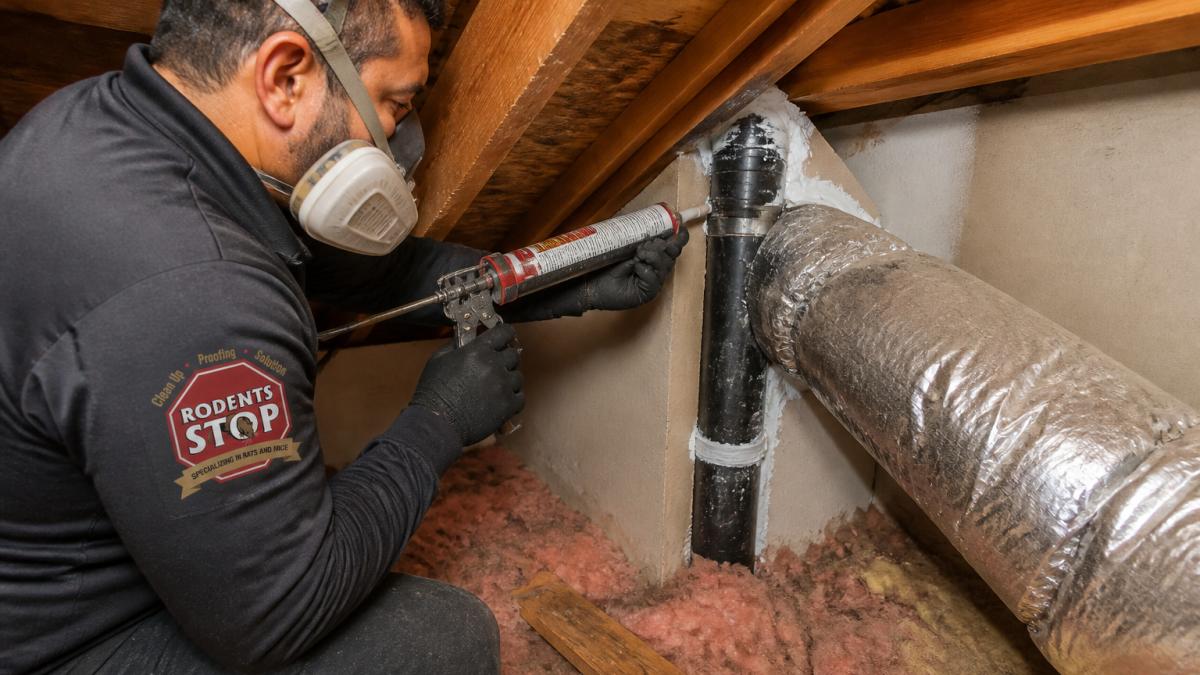
Sealing these openings is the primary defense. No insulation material will stop a rodent that has direct access to your attic. But seal the entry points properly, and you’ve eliminated the problem at its source.
The sealing process involves:
- Inspecting the entire attic perimeter and exterior for gaps and cracks
- Sealing gaps smaller than a quarter-inch with caulk
- Using hardware cloth or metal flashing for larger openings
- Sealing around pipes, vents, and utility penetrations
- Installing or repairing damaged soffit and fascia
- Trimming tree branches away from the roof
This work often requires professional help. It’s detailed, time-consuming, and requires access to areas that can be difficult to reach. We inspect properties throughout Southern California and identify entry points that pest control companies sometimes miss. We work with clients to understand where rodents are entering, help them prioritize sealing work, and ensure the cleanup process includes addressing the source of the problem.
Once entry points are sealed and contaminated insulation is removed, choosing a rodent-resistant insulation material provides a final layer of protection. The combination, sealed entry points plus resistant material, is your strongest defense against future infestations.
| Insulation Type | Rodent Resistance | Cost | Durability | Best Use Case |
|---|---|---|---|---|
| Closed-cell spray foam | Highest | High | Excellent | Maximum protection, budget allows |
| Rigid foam board | High | Medium-High | Excellent | Long-term durability needed |
| Mineral wool | Medium | Medium | Good | Moisture-prone attics |
| Borate-treated cellulose | Medium | Low-Medium | Fair | Moderate risk, eco-conscious |
| Fiberglass | Low | Low | Poor | Budget-only, no rodent history |
Choosing the right insulation is part of rodent prevention, but it’s not the whole solution. Entry-point sealing comes first. Material selection comes second. When rodents have already contaminated your attic, professional cleanup and removal of damaged insulation is essential before any new material goes in. We help homeowners throughout Southern California address both the cleanup and the prevention side of rodent problems.
Frequently Asked Questions
What type of attic insulation deters rodents best?
Closed-cell spray foam and rigid foam board offer the strongest rodent resistance because rodents cannot chew through them effectively. Borate-treated cellulose provides chemical deterrence, while mineral wool is less appealing for nesting than fiberglass. However, no insulation material alone stops rodents, exclusion and sealing entry points are equally critical to prevent infestations.
Do mice chew through rockwool insulation?
Mice can chew through mineral wool (rockwool), though they prefer softer materials like fiberglass and cellulose for nesting. Rockwool’s density makes it less attractive, but it is not rodent-proof. Rodents will still nest in it if they access your attic. Combining mineral wool with proper entry-point sealing is more effective than relying on the material alone.
Should contaminated attic insulation be removed after a rodent infestation?
Yes. Rodent-contaminated insulation poses health risks from droppings, urine, and bacteria. Professional removal using HEPA-filtered equipment is recommended to prevent airborne pathogen exposure. After removal, the attic should be sanitized before new insulation is installed. This is especially important in occupied homes with children or pets, as rodent waste can trigger allergic reactions and respiratory issues.
Is spray foam insulation truly rodent proof?
Closed-cell spray foam is highly rodent-resistant because its rigid structure resists chewing. However, ‘rodent-proof’ is misleading, rodents can still damage the foam’s edges or find gaps around it if entry points aren’t sealed. Spray foam works best as part of a complete strategy that includes exclusion, sealing gaps around pipes and vents, and removing food sources. Professional installation is essential to eliminate small gaps rodents could exploit.