Last Updated: October 22, 2026
Quick Summary
To learn how to tell if rodents are living in your vents, listen for scratching and scurrying that peaks after dark, sniff for a rancid odor near supply vents, and check the floor around registers for droppings, smears, or nesting scraps. Shine a light into the register from arm’s length and never reach inside.
- Stand still in each room for two minutes and listen, especially after dark.
- Run the HVAC fan: if scratching shifts or stops, the sound is likely ductwork.
- Never vacuum droppings with a standard shop vac or sweep them dry.
- Stop and call a professional if you find chewed wiring or live animals.
- Do not seal any entry point until the animals are removed.
Table of Contents
- Start With a Safe Inspection Checklist for Rodents in Vents
- Signs of Mice in Air Ducts You Can Hear and Smell
- Rodent Droppings Near Air Vents and Other Physical Evidence
- How to Tell Duct Activity From Wall, Ceiling, or Attic Noise
- How to Get Rodents Out of Air Ducts
- Cleaning Air Ducts After Rodents: What to Do and What to Skip
- When to Call Pest Control vs. an HVAC or Cleanup Professional
- Conclusion
- Frequently Asked Questions
Start With a Safe Inspection Checklist for Rodents in Vents
Learning how to tell if rodents are living in your vents starts with your ears, your nose, and a flashlight, not with a screwdriver.
Here is the safe inspection checklist we recommend:
- Listen before you look. Stand still in each room for two minutes, especially after dark.
- Sniff near registers. Cup your hand and waft air toward your nose. Never put your face against a vent.
- Check the floor around vents for droppings, smears, or nesting scraps.
- Shine a light into the register from arm’s length. Look, don’t reach.
- Walk the exterior and check gaps where pipes, wires, and vents meet the wall.
- Photograph everything with your phone and note the room and time.
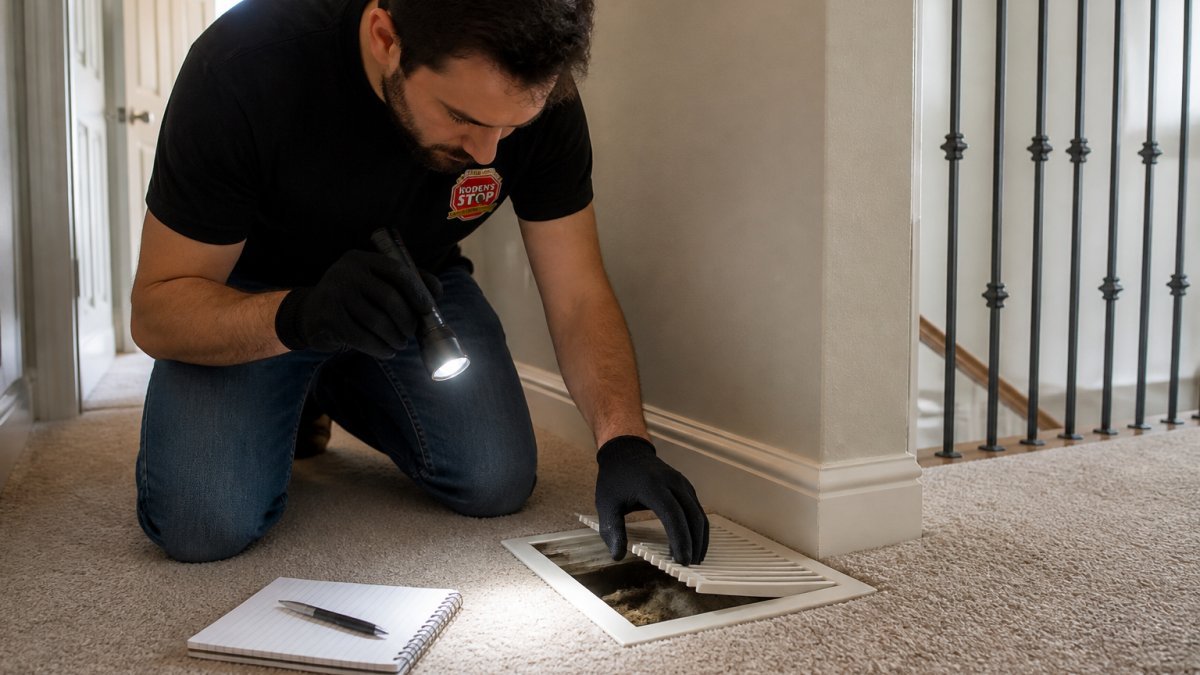
Never vacuum droppings with a standard shop vac or sweep them dry. Disturbing rodent waste can send dust and allergens into the air you breathe. The CDC guidance on rodent cleanup recommends gloves, ventilation, and wet methods instead.
Signs of Mice in Air Ducts You Can Hear and Smell
The clearest signs of mice in air ducts are sounds and smells, and both get worse at night. Mice and rats are most active after dark, so scratching, scurrying, and squeaking that peaks between dusk and dawn points straight at ductwork.
Listen for these:
- Scratching and gnawing inside walls or above ceilings
- Light scurrying that moves from room to room
- Squeaking from kits or adults
Smell matters just as much. A rancid odor near supply vents usually means urine, droppings, or a dead rodent in the duct run. Healthy ducts smell like dust, not decay.
Rodent Droppings Near Air Vents and Other Physical Evidence
Physical evidence is what confirms a suspicion. Rodent droppings near air vents are the most common find, but you should also look for urine stains, greasy rub marks, and shredded nesting materials. The trick is knowing what to inspect, what tools to use, and when to stop and call a professional instead of digging deeper.
What to look for, and what each clue means
- Droppings the size of grains of rice (mice) or larger pellets (rats). Fresh droppings are dark and soft; old ones are gray and crumbly. Finding them directly under a register points to activity in that duct run.
- Urine stains and dark smears on drywall, subfloor, or register frames. A faint ammonia smell plus a stain is stronger evidence than either alone.
- Greasy rub marks along duct joints, boot seals, and framing where rodents travel the same path repeatedly.
A safe inspection sequence
Work from the room side outward, and stop at any point where you would have to enter a crawl space, lift soiled insulation, or handle droppings directly.
- Start at the register. Remove the grille only if it lifts off without tools. Shine a light in from arm’s length. Look, don’t reach.
- Inspect the floor and wall within three feet of the register for droppings, smears, and nesting scraps.
- Check the boot, the metal or plastic fitting where the duct meets the floor or wall, for gaps and chew marks.
- Walk the exterior and check gaps where pipes, wires, and vent hoods meet the wall or foundation.
- Photograph everything with your phone and note the room and time so a professional can map the pattern.
Tools that help, and tools to avoid
A bright flashlight, nitrile gloves, a phone camera, and a notepad cover most of what a homeowner should do. Avoid a standard shop vac, a broom, or compressed air near droppings, those aerosolize dust and allergens. If you need to pick up a single dropping for a photo, use gloves and a plastic bag, then wash your hands.
When to stop and call a professional
Stop the inspection and call a licensed professional if you find:
- Droppings or nesting material inside a duct or crawl space you cannot reach safely
- Soiled insulation or a strong odor that persists after ventilation
- Chewed wiring or a crushed, disconnected, or torn duct
Mice can slip through gaps far smaller than most homeowners expect. The U.S. EPA indoor air quality guidance notes that sealing entry points is a core part of keeping pests and contaminants out of a home, but sealing only works after the animals are removed and the contamination is cleaned.
How to Tell Duct Activity From Wall, Ceiling, or Attic Noise
Duct noise follows airflow. Wall, ceiling, and attic noise does not. That single difference settles most of these calls, but only if you understand that sound travels through building cavities, so what you hear in one room may not be coming from that room’s duct at all.
Why location is harder than it sounds
A rodent scratching inside a wall cavity can sound like it is inside the duct, and a rodent in the attic can sound like it is in the ceiling below. Framing, insulation, and metal ductwork all carry vibration. Treat every sound as a clue, not a verdict, and use the tests below to narrow the source.
The tests, in order
- Run the system. Turn the HVAC fan on. If the scratching shifts, speeds up, or stops, you are likely hearing ductwork or a register boot. If nothing changes, the animal is probably in a wall, ceiling, or attic cavity.
- Tap the wall or ceiling. A hollow, echoing sound suggests a wall void or ceiling bay, not a sealed duct. A dull thud suggests solid framing or a duct run behind it.
- Compare rooms. Noise that moves with the thermostat, louder in rooms with open registers, quieter when the fan cycles off, points to duct activity.
- Check the attic. Droppings, trails, and nests up there point to attic activity that may be feeding into the ducts through a disconnected joint or torn flex duct.
- Listen at dusk and dawn. Rodents are most active after dark, so a sound that peaks between dusk and dawn and fades during the day is more likely an animal than a mechanical issue.
Species clues and their limits
Mice leave small, scattered droppings and light scratching. Rats leave larger pellets, rub marks, and heavier gnawing. Squirrels are active by day and often louder. You cannot confirm a species from sound alone, and you should not try, identification matters for choosing a removal method, so let a licensed professional confirm it.
Keep a simple log for two or three nights: room, time, sound type, and whether the HVAC was running. That pattern is often more useful to a professional than a single visit to one vent.
What this means for your next step
If the evidence points to ductwork, the priority is removal, sealing, and cleaning. If it points to a wall, ceiling, or attic, the priority is finding the entry point before the animal moves deeper into the structure. Either way, do not seal anything until the animals are gone, a sealed entry with an animal inside just pushes the problem into the living space.
How to Get Rodents Out of Air Ducts
Getting rodents out of air ducts means removing the animals first, sealing their entry points second, and cleaning third. Skip the order and they come back.
A practical sequence:
- Call a licensed pest control professional to trap and remove the animals. Wildlife rules vary by state, so confirm what applies to you.
- Find and seal entry points around vents, pipes, and foundation gaps.
- Repair damaged duct sections so airflow stays sealed.
- Clean and sanitize the duct run and surrounding surfaces.
Walk the exterior at dusk with a flashlight. Rodents often use the same gaps around vent hoods and utility penetrations, and you can spot fresh rub marks that are invisible in daylight.
Cleaning Air Ducts After Rodents: What to Do and What to Skip
Cleaning air ducts after rodents is not the same as routine duct cleaning. You are dealing with droppings, urine, nesting debris, and contaminated insulation, and a household vacuum makes that worse, not better.
What to do:
- Wear gloves, eye protection, and a respirator rated for fine particles
- Wet down droppings before removal to keep dust down
- Use a HEPA vacuum, never a standard shop vac
What to skip:
- Dry sweeping or compressed air
- Bleach fogging as a shortcut
- Reinstalling insulation that was soiled
This is where professional help earns its keep. Our team handles droppings and nesting removal, contaminated insulation removal, HEPA vacuuming, deep cleaning and sanitizing, and odor treatment, then replaces damaged insulation.
When to Call Pest Control vs. an HVAC or Cleanup Professional
Call a licensed pest control professional first when animals are still present. Call an HVAC technician when ducts are crushed, disconnected, or airflow has dropped. Call a cleanup professional when the animals are gone but droppings, odor, or contaminated insulation remain.
Use this guide:
| Situation | Who to Call | Why |
|---|---|---|
| Live scratching, sightings, droppings | Licensed pest control | Trapping and removal |
| Crushed or disconnected duct | HVAC technician | Airflow and system repair |
| Odor, droppings, soiled insulation | Rodent cleanup specialist | Sanitation and odor removal |
| Entry gaps around vents | Pest control, then sealing | Prevent re-entry |
| Landlord or property manager | Cleanup specialist | Multi-unit sanitation |
Removal, repair, and cleanup are three different jobs. Most failed fixes happen because someone tried to do all three with one call.
Conclusion
Rodents in your vents will not fix themselves, and the smell and contamination only spread with every cycle of the system. If your inspection turns up droppings, gnaw marks, or that rancid odor, get it handled properly. Rodent cleanup experts provides rodent infestation cleanup, including droppings and nesting removal, contaminated insulation removal, HEPA vacuuming, deep cleaning and sanitizing, and odor and pheromone treatment for homes and properties across Los Angeles, Ventura, San Bernardino, Riverside, and Orange Counties.
Frequently Asked Questions
What does it sound like when a rodent is in a vent?
Rodents in vents usually make scratching, scurrying, or gnawing sounds that are most noticeable at night when the house is quiet. You may hear light tapping or squeaking near supply vents or floor registers. The noise often travels through the ductwork, so it can seem louder in one room than another. If sounds stop when the HVAC system turns on, that is another clue. Keep a simple log of when and where you hear activity to share with a professional.
Can rodents in air ducts make you sick?
Rodents in air ducts can worsen indoor air quality. Their droppings and urine carry bacteria and allergens, and nesting materials can release particles into the airflow when the system runs. Some people notice coughing, sneezing, or irritation, especially those with allergies or asthma. The risk is higher when droppings are disturbed without proper protection. Avoid vacuuming droppings with a standard vacuum. A professional cleanup that includes HEPA vacuuming and sanitizing is the safer route.
What is the 5-day mouse rule?
The 5-day mouse rule is a common guideline suggesting that if you have not seen or heard signs of mice for five days after treatment, the activity may have stopped. It is not a formal standard, and it does not confirm the problem is solved. Rodents can be quiet for days and return through the same entry points. Use the five-day window as a prompt to re-inspect vents, check for fresh droppings, and verify that gaps around registers and ducts are sealed.
How do I know if I need duct cleaning after rodents?
You likely need duct cleaning after rodents if you have found droppings, nesting materials, or chewed insulation inside ducts or near registers. A musty or rancid odor that returns when the system runs is another sign. Cleaning air ducts after rodents is not just about removing debris. It should include sanitizing contaminated surfaces and addressing the source. If the infestation was heavy or has happened more than once, a professional inspection can confirm whether insulation or duct components need replacement.