A rodent problem does not end when the scratching stops. In many Woodland Hills homes and properties, the real issue is what rats and mice leave behind: droppings in the attic, urine-soaked insulation, nesting debris in crawlspaces, and a stubborn odor that returns whenever the weather warms up. Rodent infestation cleanup in Woodland Hills requires more than surface cleaning. It requires a careful process that removes contamination, restores affected areas, and addresses the openings that allowed rodents inside.
For homeowners, landlords, and facility managers, this is often the point where basic cleaning and standard pest control are no longer enough. The rodents may be gone or trapped, but contaminated materials remain. That is where professional cleanup matters.
When a Rodent Problem Becomes a Cleanup Problem
A few recent droppings near a garage wall may be manageable as part of a contained maintenance issue. A severe rat infestation cleanup is different. It is needed when rodent activity has spread through insulation, attic framing, crawlspaces, wall voids, storage areas, or HVAC-adjacent spaces.
Rats and mice use hidden spaces because they are quiet, dark, and protected. In a Woodland Hills property, attic heat can intensify urine odors, while older insulation can hold contamination deep below the surface. A property can look clean from the living area while the attic above it contains years of droppings, shredded nesting material, and damaged insulation.
Common signs that cleanup should be professionally evaluated include persistent urine or ammonia-like odors, visible droppings in more than one area, scratching in ceilings or walls, insulation that appears flattened or disturbed, and recurring rodent activity after trapping. Property managers may also notice tenant odor complaints, ceiling stains, damaged ducting, or contamination in utility rooms and shared storage areas.
The condition of the property determines the scope of work. Not every attic needs complete insulation removal. But when insulation has been heavily soiled by droppings or urine, cleaning only the visible surface does not solve the source of the odor or contamination.
Why Severe Rat Infestation Cleanup Needs a Full Process
Cleanup after a significant rat infestation is not simply sweeping up debris. Dry removal methods can disturb contaminated particles, and household deodorizing products may cover an odor briefly without removing the material causing it. The correct approach starts with identifying where the activity occurred and how far it spread.
A professional inspection looks beyond the first visible droppings. It evaluates attic insulation, crawlspace conditions, access points, nesting areas, damaged materials, and areas where rodents may have traveled. This matters because rodents rarely stay in one small location once they have established access to a building.
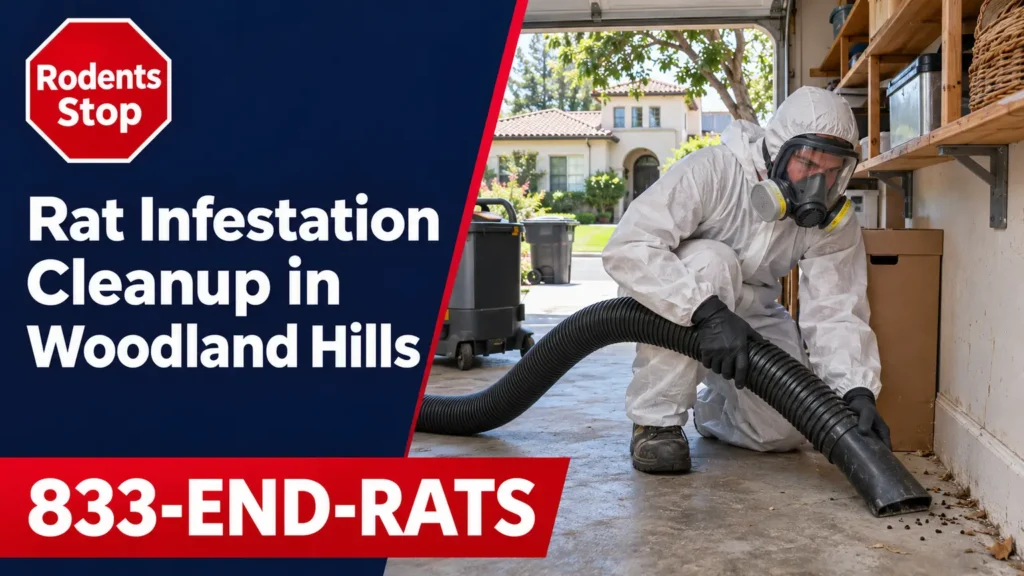
The cleanup process typically involves controlled removal of droppings and nesting debris, sanitation of affected structural surfaces, removal of contaminated insulation where needed, and targeted deodorization. Each step supports the next. If nesting material remains behind a duct line or urine-soaked insulation remains in an attic bay, odors can continue even after the area has been treated.
This is especially relevant for rental homes, apartment buildings, warehouses, schools, and commercial facilities. A partial cleanup may leave property owners dealing with repeat complaints and repeated maintenance calls. A thorough scope of work gives decision-makers a clear path for restoring the affected space.
Attics Hold the Evidence of Long-Term Activity
Attics are one of the most common locations for severe rodent contamination. Rodents enter through roof gaps, vents, utility openings, and construction gaps that are not visible from inside the home. Once inside, they can contaminate insulation across a wide area while traveling along framing and utility lines.
Rodent droppings in an attic are not just an appearance issue. They often indicate nearby urine deposits, nesting activity, and insulation damage. Insulation can lose its effectiveness when it is compressed, torn apart, or saturated with contamination. In some cases, a targeted cleanup is appropriate. In others, removing affected insulation is the more practical long-term choice.
The right decision depends on the amount of contamination, the age and condition of the insulation, and whether odor has spread into occupied areas. An honest inspection should distinguish between localized cleanup and broader restoration instead of treating every attic the same way.
Crawlspaces Can Trap Odors Below the Building
Crawlspaces create a different challenge. They are often damp, difficult to access, and rarely inspected until an odor becomes noticeable indoors. Rodents may nest around plumbing penetrations, under insulation, near ductwork, or in accumulated debris.
Because air can move between a crawlspace and living areas, contamination below the building can affect how the property smells above it. Simply placing fragrance products in the home will not correct the source. Crawlspace sanitation must address the actual debris, urine contamination, and rodent access points below the structure.
Professional Rodent Cleanup Is About Removal, Sanitation, and Prevention
Professional rodent cleanup should solve more than the immediate mess. It should remove contamination safely, reduce persistent odors, and identify the conditions that could lead to another infestation.
At Rodent Cleanup Experts, the work is built around a detailed inspection and a practical restoration plan. A crew removes rodent waste and nesting materials from affected spaces, handles contaminated insulation when necessary, sanitizes targeted surfaces, and applies a proprietary rodent scent neutralization treatment to address lingering odors at their source.
Prevention is part of the cleanup conversation. Rodents can return through surprisingly small gaps around rooflines, vents, pipes, conduits, and utility penetrations. Identifying and sealing these entry points helps protect the cleanup investment and reduces the chance of another infestation taking hold in the same attic or crawlspace.
The approach is humane and poison-free, designed with families, children, pets, tenants, and work environments in mind. That is a meaningful distinction for property owners who want the contamination removed without introducing unnecessary hazards into the building.
What Property Owners Should Do Before Cleanup Begins
Avoid entering a heavily contaminated attic or crawlspace without proper training and protective equipment. Do not dry sweep or use a standard household vacuum on visible droppings. Those actions can spread debris and create a larger cleanup issue.
Keep people and pets away from affected areas when possible, especially if droppings are visible in storage rooms, garages, or utility spaces. If an attic access hatch is located inside a bedroom, closet, or hallway, avoid disturbing the area until it has been inspected.
For landlords and commercial property managers, document odor reports, visible damage, and the locations where rodent activity has been observed. This helps establish the scope of the inspection and can prevent a hidden issue from being treated as a one-room complaint.
It also helps to separate the rodent control question from the cleanup question. Trapping or exclusion may stop new activity, but it does not remove the urine, droppings, damaged insulation, or nesting debris already present. Both issues need to be addressed for the property to feel clean and usable again.
Rodent Infestation Cleanup in Woodland Hills for Complex Properties
Woodland Hills properties range from single-family homes with large attic spaces to multi-unit buildings and commercial facilities with extensive utility areas. Each property has different access challenges, construction details, and contamination patterns. A cleanup plan should reflect those conditions rather than relying on a one-size-fits-all service.
A small, contained attic issue may need focused droppings removal, sanitation, deodorization, and entry-point sealing. A long-standing infestation may require contaminated insulation removal and a broader restoration plan. Warehouses and commercial properties may need work coordinated around operations, storage, or occupied areas.
The goal is straightforward: remove what rodents left behind, eliminate the odor source, and help prevent repeat access. With more than 20 years of Southern California experience, Rodent Cleanup Experts serves Los Angeles, Ventura, Orange, Riverside, and San Bernardino counties with professional workmanship and available warranties.
If your attic smells wrong, your crawlspace shows signs of activity, or rat droppings keep appearing after control efforts, schedule a professional inspection at 833-END-RATS (833-363-7287). The sooner the contamination is identified, the easier it is to protect the property and restore confidence in the space.