Table of Contents
- Can Rodents Damage HVAC Systems? The Short Answer
- How Rodents Get Inside Your HVAC System
- Rodent Damage to Electrical Wiring in HVAC: The Fire Hazard
- Beyond Wiring: 4 Other Types of HVAC Damage
- Signs of Rodent Damage in Walls and Ductwork
- How to Clean Rodent Droppings from HVAC Safely
- Preventing Rodent Damage: A Seasonal Checklist
- Insurance and Professional Cleanup
- Frequently Asked Questions
Last Updated: September 5, 2026
Can Rodents Damage HVAC Systems? The Short Answer
Yes, rodents can absolutely damage HVAC systems, and the consequences often go far beyond a simple loss of efficiency. Rodents damage HVAC systems by gnawing on electrical wiring, tearing insulation, and building nests that block airflow and contaminate the air you breathe. At Rodent Cleanup Experts, we’ve seen how a small mouse or rat can turn a functioning system into a costly repair project and a health hazard.
The damage isn’t always visible from the outside. Rodents can damage HVAC systems from the inside, using your ductwork as a highway to travel between rooms and nesting deep within the unit. Left unchecked, the damage compounds quickly.
Below, we’ll show you exactly how these pests get in, what they destroy, and the steps you can take to protect your system before the next season hits.
How Rodents Get Inside Your HVAC System
Rodents exploit the gaps that already exist in your system’s construction. The main entry points are where refrigerant lines and electrical conduit penetrate the exterior wall, the gaps around the condenser unit’s base, and the fresh air intake vents.
Mice can squeeze through a gap the size of a dime, and rats can fit through an opening the size of a quarter. Once inside the ductwork, they have a climate-controlled network that connects every room in your home, making it the perfect nesting ground and travel route.
A common mistake is sealing the obvious holes while ignoring the roof jack and the soffit vents that terminate near the air handler. These elevated entry points are often overlooked because homeowners focus on ground-level access.
Ignoring the entry points around your air intake vent is a critical mistake. A rodent that chews through the flexible duct connector at the air handler can cause the entire system to lose pressure, which drastically reduces efficiency and allows unconditioned outside air into your living space.
Rodent Damage to Electrical Wiring in HVAC: The Fire Hazard
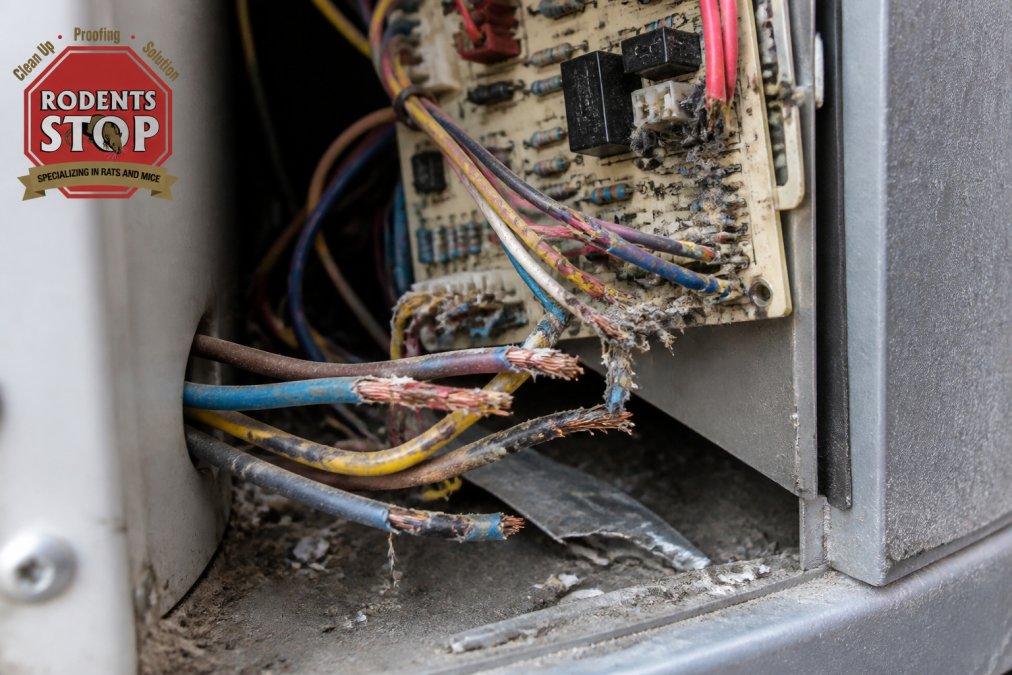
Rodent damage to electrical wiring in HVAC systems is the most dangerous consequence of an infestation. Rodents gnaw on wires to keep their constantly growing incisors worn down, and the thin plastic sheathing around wiring offers little resistance.
When the wire sheathing is stripped, the exposed copper conductors can short circuit. This is how rodent damage to electrical wiring in HVAC systems causes equipment failure and creates a genuine fire risk. A short circuit can also fry the control board, which is often the most expensive single component in the system.
The damage isn’t limited to the main unit. Rodents will climb into the air handler and chew the wiring for the blower motor and the condensate drain safety switch. This type of rodent damage to electrical wiring in HVAC systems is especially insidious because the system may appear to run normally, only to fail intermittently weeks later.
Beyond Wiring: 4 Other Types of HVAC Damage
Wiring is the headline risk, but rodents damage HVAC systems in several other ways that affect performance and indoor air quality. Understanding the specific components they target helps you know exactly what to inspect and what to tell a technician.
1. Insulation Damage: The Thermal Barrier Breach
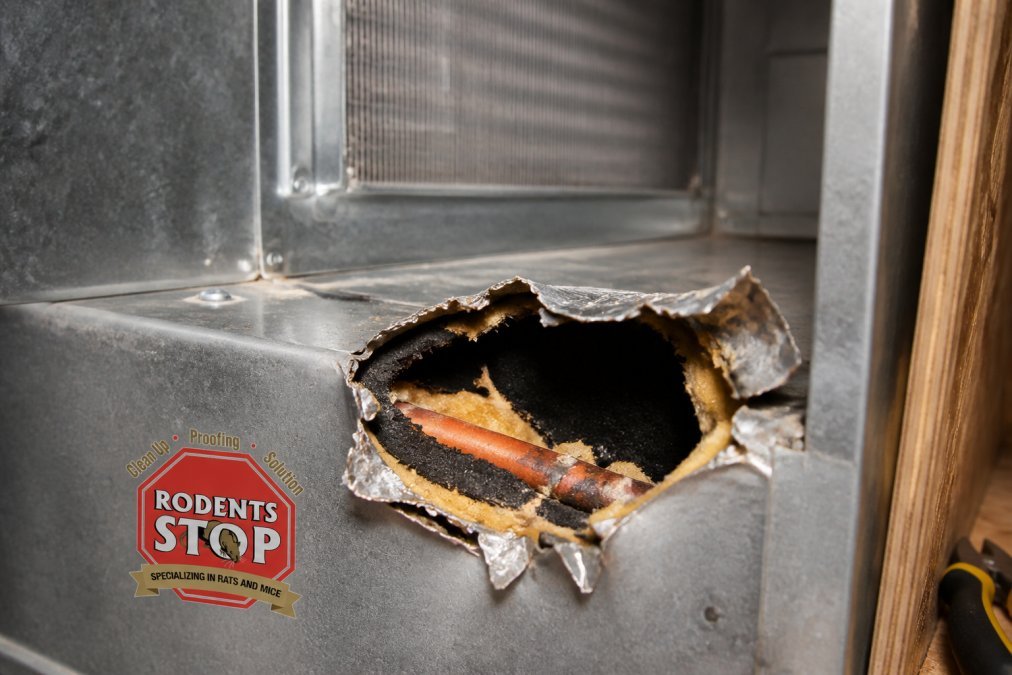
Rodents tear fiberglass insulation from the ductwork and the air handler to build nests, stripping the system of its thermal protection. The most vulnerable spots are the flexible duct connectors at the plenum and the insulation lining the air handler cabinet. When rodents strip flex duct, the inner wire helix collapses, creating a permanent restriction that changes static pressure, shortens blower motor lifespan, and causes uneven heating or cooling.
2. Blocked Airflow: The Blower Motor and Heat Exchanger Strain
Nests and food caches in the ductwork restrict airflow, straining the blower motor and potentially causing the heat exchanger to overheat. A nest near the return air drop or inside the air handler forces the blower to work against higher static pressure, increasing amp draw and leading to overheating and premature failure. In a gas furnace, restricted airflow prevents the heat exchanger from dissipating heat, leading to cracking, a carbon monoxide hazard and a common reason for red-tagging.
3. Condensate Drain Blockage: The Water Damage Chain
Nesting material and droppings clog the condensate drain line, leading to water backup and potential structural damage. When a rodent builds a nest in the drain line, water backs up into the pan. Rodents often chew the wiring to the float switch safety device, disabling it and causing a silent overflow that can saturate drywall and warp wood flooring. The water damage is often more expensive to remediate than the HVAC repair itself.
4. Contaminated Air: The Indoor Air Quality Hazard
Urine and feces left on ductwork and air handler surfaces become airborne when the fan kicks on, circulating allergens and pathogens. Urine soaks into porous materials like the duct liner, fiberglass insulation, and evaporator coil fins, creating a persistent odor. When the blower runs, airflow aerosolizes dried particles that travel through supply registers into your living space, particularly problematic for those with asthma, allergies, or compromised immune systems.
A rodent infestation can damage the evaporator coil. Urine is corrosive. Over time, urine that pools on the coil or the drain pan can corrode the aluminum fins and copper tubing, leading to refrigerant leaks. A refrigerant leak is not a DIY fix; it requires a licensed technician to recover the remaining refrigerant, locate the leak, and repair or replace the coil.
The financial impact adds up quickly. A blower motor replacement, a new control board, and re-insulating the ductwork are each significant expenses. When you call a technician, ask them to check the blower motor amp draw, the condensate float switch wiring, and the evaporator coil for corrosion, as these are the failure points that indicate a rodent problem.
Signs of Rodent Damage in Walls and Ductwork
Detecting signs of rodent damage early is the key to limiting repair costs. The most obvious sign is scratching, scurrying, or squeaking noises from the walls or ceiling, particularly at dawn and dusk.
Visible signs include grease marks along baseboards, small dark droppings near air vents or ductwork seams, and a musky odor that intensifies when the HVAC system kicks on.
A sudden increase in your energy bill without a change in your thermostat habits is another indicator. If the ductwork has holes or the insulation has been stripped, conditioned air escapes before it reaches the living space, forcing the system to run longer.
If you see droppings near the air intake vent or smell a persistent musky odor when the heat or AC runs, assume the ductwork is contaminated. Do not run the system until you have inspected the air handler and the first few feet of the main supply trunk.
How to Clean Rodent Droppings from HVAC Safely
Cleaning rodent droppings from HVAC components requires a different protocol than cleaning a hard floor. Sweeping or vacuuming with a standard household vacuum will aerosolize fine particles from dried droppings, which can carry pathogens. The process requires a specific sequence of steps to protect your health and ensure the system is actually decontaminated.
Step 1: System Shutdown and Isolation
Turn off the HVAC system completely at the thermostat and breaker panel. You want zero airflow during cleanup. If contamination is isolated to a single supply register, close it and seal the vent with plastic sheeting and painter’s tape. If it’s in the main trunk or air handler, isolate the entire system.
Step 2: Personal Protective Equipment (PPE)
Wear an N95 respirator (minimum standard; a half-face respirator with P100 filters offers better protection), gloves, and safety glasses. Do not use a standard dust mask. Wear disposable coveralls or clothing you can wash in hot water immediately after.
Step 3: Wet Wiping and HEPA Vacuuming
The Centers for Disease Control and Prevention provides guidance on safe rodent cleanup procedures, which emphasizes wetting the droppings with a disinfectant solution before removal to suppress dust. Prepare a disinfectant solution (a bleach-to-water ratio of 1:9 is a common household standard, but check the label on your chosen disinfectant for efficacy against Hantavirus). Using a spray bottle, thoroughly saturate the droppings and nesting material. Wait at least five minutes for the material to absorb the liquid. Then, carefully wipe up the material with paper towels and dispose of them in a sealed plastic bag.
After visible material is removed, use a HEPA-filtered vacuum to clean surrounding surfaces. The HEPA filter traps particles as small as 0.3 microns, preventing them from being exhausted back into the air. Vacuum around the air handler, the first few feet of ductwork, and the blower compartment.
Step 4: The Ductwork and Component Dilemma
This is where the DIY approach hits its limit. A HEPA vacuum can clean rigid metal ductwork but not porous materials. If rodents have nested inside the ductwork, the insulation lining is likely contaminated. Fiberglass duct liner and ductboard absorb urine and cannot be fully decontaminated; affected sections must be cut out and replaced. The same applies to contaminated insulation inside the air handler cabinet.
Step 5: Antimicrobial Treatment and Odor Neutralization
After cleaning, apply an antimicrobial treatment to kill lingering bacteria and neutralize odors. A professional approach uses an EPA-registered disinfectant and an odor-neutralizing enzyme treatment, which breaks down the uric acid crystals in dried urine, the source of the persistent musky odor. A standard bleach solution only masks the smell temporarily.
A DIY attempt with a shop vacuum and bleach may remove the visible mess but leaves behind the airborne contaminants and the pheromone scents that attract new rodents. The porous nature of duct insulation and air handler lining means that a thorough job often requires removing and replacing contaminated materials. If you have any doubt about the extent of the contamination, hire a professional who has the equipment to clean the entire duct system and the experience to identify which components must be replaced rather than cleaned.
Preventing Rodent Damage: A Seasonal Checklist
Preventing rodent damage is a year-round job, but the most effective window is before the weather turns cold, when rodents seek shelter indoors.
- Spring (March-May): Inspect the exterior for new gaps. Check the condenser unit pad for signs of digging and the refrigerant line penetration points for chewed sealant.
- Summer (June-August): Keep the area around the outdoor unit clear of vegetation and debris. Trim branches back at least 3 feet from the roofline.
- Fall (September-November): This is the critical season. Seal all gaps larger than a quarter-inch with metal mesh and expanding foam. Pay special attention to the roof jack and the soffit vents.
- Winter (December-February): Listen for activity. If you hear scratching, schedule a professional inspection before the rodents cause wiring damage.
The most durable method for sealing entry points is a combination of stainless steel mesh and spray foam. Rodents can chew through caulk and standard foam, but they cannot chew through the mesh. This technique, known as pest exclusion, is the only long-term solution.
Insurance and Professional Cleanup
Homeowners insurance policies vary widely on rodent damage. Many standard policies exclude damage caused by pests, treating it as a maintenance issue. However, secondary damage, such as a fire from chewed wiring or water damage from a blocked drain, may be covered under a different clause.
You should review your policy and speak with your agent before filing a claim. Document everything with photos and keep receipts for any temporary repairs. The distinction often comes down to whether the damage was sudden and accidental or the result of a gradual infestation.
When the infestation is established, professional cleanup is the recommended path. Rodent Cleanup Experts provides professional rodent infestation cleanup and sanitization for homeowners and property managers throughout Los Angeles, Ventura, San Bernardino, Riverside, and Orange Counties. Our process includes removal of droppings and nesting materials, contaminated insulation removal, HEPA vacuuming, deep cleaning, and odor treatment.
Beyond the cleanup, we help identify the entry points rodents used so you can seal them and reduce the risk of a repeat infestation. This inspection component is critical, because pest control removes the current population, but it does not address the structural gaps that allowed them in.
Rodent damage to an HVAC system is rarely a single, isolated problem. It is a chain of events that starts with a small entry point and ends with contaminated air, reduced efficiency, and expensive repairs. Addressing the infestation early, sanitizing affected components, and sealing entry points protect your system and your health. Contact Rodent Cleanup Experts to schedule an inspection and get your HVAC system back to a clean, safe condition.
Frequently Asked Questions
Can mice chew through metal HVAC ductwork?
Yes. While mice and rats prefer softer materials, they can and will gnaw on sheet metal ductwork, especially at the seams and joints where the metal is thinner. Their constant gnawing is a survival instinct, and they will create holes large enough to gain entry. Once inside, they can travel throughout your entire system. If you suspect damage, inspect your ductwork for small holes, especially near bends and connections.
Does homeowners insurance cover rodent damage to HVAC systems?
Typically, no. Standard homeowners insurance policies exclude damage caused by pests, including rodents. This is because infestations are generally considered a preventable maintenance issue. However, if the rodents cause a secondary event that is covered, like an electrical fire, the fire damage itself might be covered. It is best to check with your specific insurance provider to understand the terms of your policy.
What are the first signs of rats or mice in my air ducts?
Unusual noises like scratching, squeaking, or scurrying from your vents are often the first clue. You may also notice a distinct, musky odor coming from the vents when the system runs. Visible signs include droppings near vents or in the ductwork, and greasy rub marks along walls. If you see any of these, it’s time to inspect further and address the problem.
How do I keep rodents away from my outdoor AC unit?
Keep the area around your outdoor condenser unit clear of debris, tall grass, and stored items. Rodents use these as cover and nesting sites. Install a gravel barrier around the unit’s base to discourage burrowing. Regularly inspect the unit for signs of chewing and nesting, and ensure the unit’s wiring is protected with rodent-resistant conduit if you’ve had problems before.
This article was written using GrandRanker