
Table of Contents
- How to Identify Signs of Rodent Infestation in Walls
- Audible Signs: Noises in Walls at Night
- Visual Evidence: Droppings, Damage, and Nesting Materials
- Odors and Other Sensory Indicators
- Rodent Damage to Electrical Wiring and Structural Components
- Finding Rodent Entry Points in Your Home
- When to Call Professional Rodent Cleanup Services
- Frequently Asked Questions
Last Updated: September 29, 2026
How to Identify Signs of Rodent Infestation in Walls
Rodents in walls are more common than most homeowners realize. Once they get inside, they leave behind unmistakable evidence. At Rodent Cleanup Experts, we help property owners recognize the signs of rodent infestation early, before damage spreads and cleanup becomes expensive.
The key is knowing what to look for. Rodents make noise, leave droppings, create odors, and damage structural components. Each sign tells you something different about the severity of the problem.
This guide covers the major indicators of rodent activity. You’ll learn to spot the evidence yourself and understand when professional help is necessary.
Audible Signs: Noises in Walls at Night
Scratching and scurrying sounds in walls are often the first sign homeowners notice. These noises happen most often at night when rodents are active. The key to early diagnosis is learning to distinguish between rodent species by sound, each produces a distinct acoustic signature that tells you what you’re dealing with.
Identifying Rodents by Sound
Mice produce high-pitched, rapid scratching and squeaking sounds. Their movements are quick and light, creating a pattering noise similar to fingernails on wood or drywall. Squeaks are thin and piercing, often heard as brief chirps or distress calls. Mouse activity sounds delicate and fast-paced, typically lasting only a few seconds at a time before stopping.
Rats create heavier, more deliberate scurrying and dragging sounds. Their movements are slower and more forceful, producing louder thuds and scrapes as their larger bodies move through wall cavities. Rat vocalizations are deeper, grunts, chattering, or low-frequency squeaks. A rat moving through a wall sounds like something substantial is being dragged or pushed.
Squirrels (often mistaken for rats) produce loud, heavy thumping and running sounds, especially during daylight hours. Their movements are erratic and energetic, with pronounced jumping and landing sounds. Squirrel activity is almost always diurnal; hearing them at night is rare and suggests a different pest.
What Each Sound Pattern Means
Listen for these specific sounds and what they indicate:
- Rapid scratching or gnawing sounds, Rodents chewing on wood, drywall, or insulation. Frequency and intensity suggest how actively they’re feeding or nesting.
- Scurrying or running noises, Travel through wall voids or between studs. Consistent patterns indicate established routes.
- Squeaking or chirping calls, Communication between rodents, often a sign of multiple animals or a mother with young.
- Dragging sounds, Nesting material being pulled into wall cavities, or a rodent moving a food source. Suggests active nest-building.
- Gnawing followed by silence, Typical feeding behavior; rodents pause to listen for danger.
Location and Timing Matter
Noises coming from inside walls suggest activity in wall cavities or between studs. Sounds in the attic indicate rodents nesting above ceilings. Basement noises point to entry points or travel routes near the foundation. Sounds in crawl spaces often mean rodents are using the space as a highway to access upper levels.
Rodents are primarily nocturnal. If you hear activity during daylight hours, the infestation is likely severe, rodents are bold enough to forage when humans are awake, indicating either high population density or extreme hunger. A single mouse makes minimal noise. Multiple rodents create constant rustling and movement sounds throughout the night, often in different locations simultaneously.
Timing patterns also reveal behavior. Sounds that occur around dusk and dawn suggest rodents entering or leaving nesting areas. Constant activity throughout the night indicates they’ve established a permanent nest nearby. Sudden silence after weeks of noise can mean the infestation has moved on, or that rodents have died.
Record the noises on your phone if possible. Play them back during daylight hours to confirm what you heard. Note the time of day, duration, and location. This information helps professionals assess both the species present and the severity of infestation.
Visual Evidence: Droppings, Damage, and Nesting Materials
Fecal Matter and Urine Stains
Rodent droppings are the most visible proof of infestation. Fresh droppings appear dark, moist, and shiny. Old droppings turn gray and crumbly. Mouse droppings are small, about the size of a grain of rice. Rat droppings are larger, roughly the size of a raisin.
Look for droppings in these locations:
- Along baseboards and wall edges
- Inside cabinets and under sinks
- In attics and crawl spaces
- Near food sources or storage areas
- Along rodent travel routes
Urine stains appear as dark spots or streaks on surfaces. Under ultraviolet light, dried urine glows. The smell is distinctive, a strong, ammonia-like odor that gets worse in enclosed spaces.
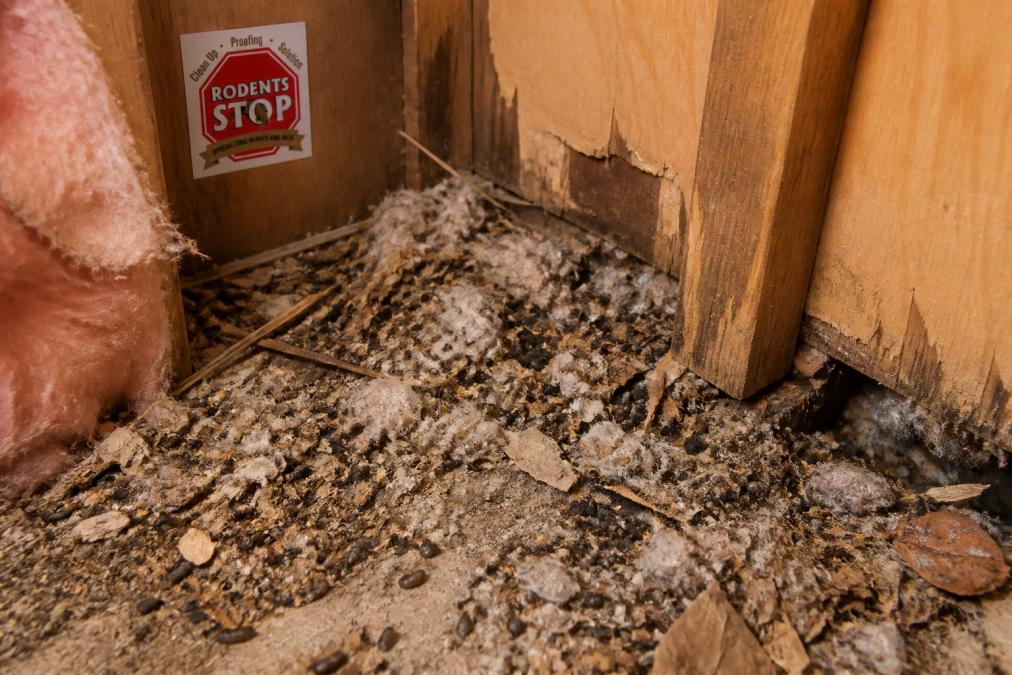
Fresh droppings mean active infestation. Old droppings suggest past activity that may or may not be ongoing. The amount matters too. A few droppings indicate light activity. Extensive deposits mean rodents have been present for weeks or months.
Gnaw Marks and Chewed Edges
Rodents gnaw constantly to keep their teeth sharp. They chew wood, drywall, insulation, electrical wiring, and food packaging. Gnaw marks are a clear sign of rodent damage in walls.
Look for these types of damage:
- Small, clean holes in drywall or wood
- Frayed or splintered edges on structural wood
- Chewed corners on boxes and containers
- Damaged electrical wires and cable insulation
- Holes in food packages
Mouse gnaw marks are small and precise.
Grease Marks on Baseboards
Rodents leave grease marks along their travel routes. These marks form from dirt and oils on their fur rubbing against surfaces as they move through tight spaces. Grease marks appear as dark smudges on baseboards, walls, and pipes.
The marks typically appear:
- Along baseboards near walls
- Around pipe penetrations
- On the edges of wall openings
- In corners where walls meet
Never touch grease marks with bare hands. Rodent urine and feces contain pathogens. Always wear gloves and wash hands thoroughly after inspection.
Odors and Other Sensory Indicators
A strong, musky odor is a reliable sign of rodent activity. The smell comes from multiple sources: urine, droppings, sebaceous gland secretions (which rodents use to mark territory), and decomposing rodents in wall cavities. The odor intensifies in enclosed spaces like attics and crawl spaces where air circulation is poor.
Identifying Rodent Odors by Source
Fresh urine and droppings produce a pungent ammonia-like scent, similar to stale cat litter. This smell is strongest in areas where rodents concentrate their waste, typically near nesting sites or along established travel routes. The ammonia odor is sharp and immediately noticeable when you enter a contaminated space.
What Odor Patterns Tell You
Localized odor in one room suggests the nest or entry point is nearby. Follow the smell to its strongest point; this often leads directly to where rodents are concentrated.
Using Odor as a Diagnostic Tool
Trust your nose. If you notice an unexplained odor, investigate. Rodents leave scent markers to communicate with other rodents. Other rodents smell these markers and are attracted to the area, so odor is both a sign of current infestation and a beacon for future rodents.
Never attempt to locate or remove a dead rodent yourself. Decomposing rodents release pathogens into the air. If you suspect a dead rodent in a wall, contact a professional. They have proper containment and respiratory protection to safely remove the carcass and decontaminate the area.
Rodent Damage to Electrical Wiring and Structural Components
Rodents damage far more than just insulation. They chew electrical wiring, HVAC ducts, and structural components. This damage creates safety hazards and expensive repairs.
Common damage includes:
- Stripped insulation on electrical wires
- Damaged HVAC ductwork and components
- Holes in water pipes
- Compromised wooden framing
- Chewed support beams in crawl spaces
Finding Rodent Entry Points in Your Home
Entry points are where rodents get inside. Finding these gaps stops new infestations. Rodents squeeze through surprisingly small openings, a gap the size of a dime is enough for a mouse.
Common entry points include:
- Gaps around pipes and utility lines
- Cracks in foundation or exterior walls
- Holes in siding or trim
- Loose vents or vent screens
- Gaps around doors and windows
- Openings where cables or wires enter
Rodents use the same routes repeatedly. Entry points are usually located near food sources or nesting areas. Finding one entry point often leads to finding others.
When to Call Professional Rodent Cleanup Services
DIY cleanup is risky and often incomplete. Rodent droppings and urine contain hantavirus and other pathogens. Improper cleanup spreads contamination. Professional rodent infestation cleanup is safer and more thorough.
Call professionals when you notice:
- Extensive droppings or urine stains
- Dead rodents or strong decay odor
- Widespread insulation damage
- Electrical wiring damage
- Signs of infestation in multiple rooms
Frequently Asked Questions
How do I know if I have rodents in my walls?
Signs of rodent infestation include scratching or scurrying sounds at night, especially in walls and attics. Look for droppings (small, tapered pellets), gnaw marks on wood and wiring, grease marks along baseboards, and a musky or stale odor. Nesting materials like shredded insulation in hidden areas also indicate an active infestation. If you notice multiple signs together, rodents are likely present in your walls.
What are the most common sounds of rodents in walls?
Rodents are nocturnal, so noises in walls at night are typical. Mice produce high-pitched squeaking and rustling sounds as they move through wall voids. Rats create louder scurrying and scratching noises, often heard in attics and between walls. You may also hear gnawing sounds as they chew through wood, insulation, and electrical wiring. These sounds are usually most noticeable in quiet hours or early morning.
Can rodents in walls cause structural damage to my home?
Yes. Rodents gnaw constantly, which damages insulation, wood framing, and electrical wiring. Rodent damage to electrical wiring poses a serious fire risk. They also contaminate insulation with urine and fecal matter, reducing its effectiveness and creating health hazards. Over time, extensive gnawing can weaken structural integrity. Professional inspection and cleanup are important to assess the full extent of damage and prevent further deterioration.
How do I find where rodents are entering my home?
Inspect the exterior foundation, siding, roof line, and utility penetrations for gaps larger than a quarter-inch. Look for rodent entry points in home around pipes, vents, and where utilities enter. Inside, check baseboards, corners, and areas where walls meet floors for small holes or droppings. Grease marks along walls indicate regular travel routes. Professional inspectors use specialized techniques to identify hidden entry points and can recommend exclusion methods to seal these gaps.