
Last Updated: November 4, 2026
Quick Summary
To prevent rodent infestations in Southern California homes, check for signs of activity, find and seal entry points, and reduce food, water, and shelter. Pay close attention to attics and crawl spaces, and arrange an inspection if signs keep returning or contamination is extensive.
- Check walls, attics, and crawl spaces for droppings, gnaw marks, nesting material, odors, or scurrying noises.
- Inspect around vents, pipes, doors, roof edges, and utility lines for possible entry points.
- Store food in sealed containers, clean up crumbs, fix leaks, and clear nesting clutter.
- Keep children and pets away from contaminated areas, and avoid dry-sweeping or using a regular vacuum on droppings.
Table of Contents
- Step 1: Check for signs of rodent damage in walls
- Step 2: Find the entry points behind rodent infestations
- Step 3: Remove food, water, and shelter
- Step 4: Learn how to seal rodent entry points
- Step 5: Focus on rodent proofing attic and crawl space
- Step 6: Decide when professional rodent cleanup is needed
- Step 7: Schedule an inspection and cleanup plan
- Frequently Asked Questions
Step 1: Check for signs of rodent damage in walls
Rodent infestations are easier to prevent when you spot activity before it spreads. Check for signs of rodent damage in walls, attics, and crawl spaces, then trace those signs to a possible entry point. Prevention works best when you remove what attracts rodents and block how they get in.
Rodent infestations are repeated or ongoing rodent activity inside or around a home. They can leave droppings, urine, nesting materials, odors, and damage. Our guide explains what to check and what to do next.
Look for:
- Scurrying noises in walls or ceilings
- Droppings near food, pipes, or wall edges
- Chewed materials or shredded nesting material
- A stale odor in an attic or closed space
According to UCANR guidance on managing urban rats and mice, total rodent removal in urban areas may not be realistic, but exclusion can help defend a home. The practical goal is to reduce access, food, and shelter.
For more examples, read our guide to signs of rodent damage in walls.
Step 2: Find the entry points behind rodent infestations
Rodents often get in through gaps around vents, pipes, doors, roof edges, and utility lines. Check the outside of the home first, then compare those spots with indoor clues such as droppings, gnaw marks, or sounds in a wall. Finding the route matters more than setting a trap near the latest sign.
The guidance is useful for choosing a barrier, but first locate the opening that needs repair.
A common mistake is sealing one visible gap while leaving nearby openings unchecked.
Use our guide to identify likely rodent entry points before you start repairs.
Step 3: Remove food, water, and shelter
Food, water, and shelter keep rodents close to a home, so reduce all three. Store food in sealed containers, clean up crumbs, fix leaks, and clear clutter where rodents could nest. These steps support rodent exclusion, but they do not replace sealing entry points.
Read the [CDC guidance on rodent prevention | https://www.cdc.gov/healthy-pets/rodent-control/index.html] for more detail.
Check these areas:
- Pet food bowls and food storage
- Leaks under sinks or near appliances
- Cardboard, fabric, and clutter in storage areas
- Outdoor items close to the house
Keep pet food sealed and remove uneaten food. A tidy attic or garage gives rodents fewer places to hide.
Step 4: Learn how to seal rodent entry points
Seal openings that could let rodents enter, and use materials they cannot easily chew through.
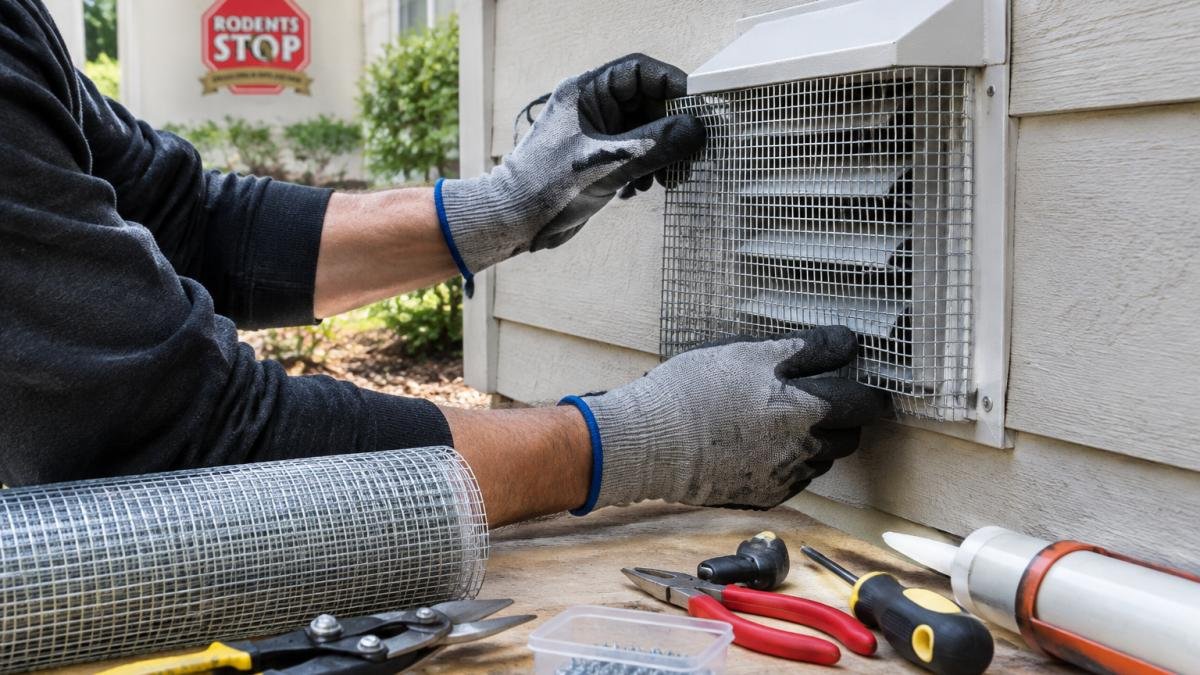
How to seal rodent entry points:
Follow these practical ways to seal rodent entry points for more repair ideas.
Step 5: Focus on rodent proofing attic and crawl space
Attic and crawl-space prevention works best as a cycle: remove access, reduce food and shelter, then check whether the signs return. Start outside, where roof edges, vents, utility penetrations, and gaps around pipes can provide routes into concealed spaces. Use materials suited to the opening.
Next, reduce nearby shelter and attractants. Keep stored items in sturdy, closed containers rather than loose cardboard, avoid leaving pet food outdoors overnight, and address leaks that provide water. In the attic, avoid storing food and keep belongings organized enough to make fresh droppings, gnawing, or nesting material visible during follow-up checks.
Inspect insulation for tunnels, compressed or displaced areas, droppings, and nesting material. These signs can indicate activity, but they do not by themselves establish that the entire attic or home is contaminated.
Revisit accessible areas for new droppings, gnaw marks, or disturbed barriers. Record where and when signs appear.
Watch out:
For extensive contamination or damaged insulation, ask a qualified professional to assess the affected area. Rodent Cleanup Experts provides cleanup services that may include droppings and nest removal, HEPA vacuuming, sanitizing, odor treatment, and insulation removal or replacement. Read more about long-term rodent exclusion strategies for attic and crawl-space prevention.
Step 6: Decide when professional rodent cleanup is needed
The amount and location of contamination matter.
- Keep children and pets out of the area. If the space is enclosed, ventilate it by opening doors or windows when possible, then leave the area for a period before cleaning. Avoid stirring up dust while entering.
- Put on disposable gloves. If the cleanup involves extensive contamination, insulation, or a confined space, stop and seek professional guidance rather than relying on household protective gear.
- Thoroughly wet droppings and urine with an appropriate disinfectant, following the product label’s contact time. Do not dry-sweep, brush, or use a regular vacuum on contaminated material.
- Pick up the wet material with paper towels and place it in a bag. Disinfect the surface, then dispose of the waste according to CDC guidance and local requirements.
- Remove gloves safely and wash hands with soap and water. Clean and disinfect reusable tools or surfaces that may have contacted contaminated material.
Watch out:
| What you find | Safer next step | Why it matters |
|---|---|---|
Rodent Cleanup Experts offers professional rodent infestation cleanup for affected areas. See signs that professional rodent cleanup may be needed.
Step 7: Schedule an inspection and cleanup plan
When signs keep returning, an inspection can help connect the damage, entry points, and cleanup needs. Rodent Cleanup Experts serves homes and businesses in Los Angeles, Ventura, San Bernardino, Riverside, and Orange Counties. The team inspects affected areas and plans cleanup based on the property’s condition.
Write down where you found droppings, odors, damaged insulation, or noises. Share whether the signs are near an attic, crawl space, garage, or HVAC system. That gives the inspection a useful starting point.
For rodent infestations with contaminated insulation or nesting material, ask about cleanup, sanitation, odor treatment, and entry-point concerns.
Frequently Asked Questions
What are the most common entry points for rodents in homes?
Rodents can enter through gaps around vents, utility pipes, doors, and other openings in the building envelope. Check the attic, crawl space, garage, and exterior walls for openings, droppings, nesting materials, or gnaw marks.
How can I tell if I have a rodent infestation in my attic?
Look for droppings, nesting materials, gnawing, unusual odors, and scurrying noises. Rodents can contaminate insulation and attic surfaces, so visible signs may point to a wider cleanup need. Avoid disturbing droppings or contaminated materials. If you find extensive contamination or damage, arrange an attic inspection and professional cleanup assessment rather than relying on a regular vacuum.
Why are rodents more active in homes during certain seasons?
Seasonal changes do not establish that a home has an infestation, so check for entry gaps and signs such as droppings or nesting materials.
Rodent infestations can return when entry gaps and nesting areas remain. Rodent Cleanup Experts provides inspection-based cleanup plans, HEPA vacuuming, sanitation, and insulation removal or replacement when needed. Contact Rodent Cleanup Experts to discuss an inspection and reduce the chance of rodents returning.
